Exodus 13
Luda yã takada kũ Bisã yão · Tap a verse to see its cross-references.
Burodi Futɛnasari dikpɛ kũ daudunↄ kpana Ludaaao
1Dikiri yã ò Musanɛ à pì: 2Àgↄ̃ Isaraila daudunↄ kũ pↄ́kãde nɛ́ sà káakunↄ kpáma, zaakũ ma pↄ́nↄmɛ ń pínki.
3Musa pì Isarailanↄnɛ: Á bona Misila zↄ̀blen gↄrↄ díkĩna yã gↄ̃ dↄágu, zaakũ Dikiri mɛ́ à á bↄ́tɛ Misila kũ a ↄ gbãnao. Àsun pↄ́futɛna só gↄrↄ pìiaro. 4Átɛn bↄtɛ Misila gbãramɛ mↄ káaku kũ òdi pi Abibu gũn. 5Dikiri lɛ́ sɛ̀ á dizinↄnɛ à pì áni bùsu kũ à vĩ kũ zↄ́'io din, kũ Kanaanↄ kũ Itinↄ kũ Amↄrinↄ kũ Ivinↄ kũ Yebusinↄn kun kpááwa. Tó à tò a ka, à dikpɛ pì kɛ mↄ dín. 6Àgↄ̃ burodi futɛnasari só ari gↄrↄ suppla. A gↄrↄ supplade pì zĩ nigↄ̃ deárɛ Dikiri dikpɛ gↄrↄ ũ. 7Àgↄ̃ burodi futɛnasari só ari gↄrↄ suppla pì papa. Pↄ́futɛna ke lùbɛnɛ ke súngↄ̃ kú ↄn ke gũn á bùsunlo. 8Zĩ pìia àgↄ̃ o á nɛ́gↄ̃gbɛ̃nↄnɛ átɛn kɛ lɛ yã kũ Dikiri kɛ̀árɛ kũ à á bↄ́tɛ Misila yãimɛ. 9Dikpɛ pì nigↄ̃ deárɛ sèeda ũ lán pↄ́ dana ↄaa bà, ke lán dↄngu pↄ́ yĩna mì'arɛaa bà, de Dikiri doka gↄ̃ kú á lɛ́n, zaakũ àkũ mɛ́ à á bↄ́tɛ Misila kũ a ↄ gbãnao. 10Àgↄ̃ dokayã pì kɛ a gↄrↄa wɛ̃̀ kũ wɛ̃̀ɛo.
11Tó Dikiri tò a ka Kanaanↄ bùsun, akũ à kpàáwa lákũ à a lɛ́ sɛ̀árɛ nà kũ á dizinↄ, 12àgↄ̃ á daudunↄ kpáa ń pínki. Á pↄ́kãde nɛ́ sà káakunↄ dìgↄ̃ de a pↄ́ ũ ń pínki. 13Àgↄ̃ á zaaki nɛ́ sà káaku tↄrↄma bo kũ sãnɛo. Tó ádi boro, à a waka fĩ. Àgↄ̃ á daudunↄ tↄrↄma bo ń pínki. 14Tó á nɛ́gↄ̃gbɛ̃nↄ á lá a mìii zia ò pì, bↄ́ yãn gwee, à pińnɛ Dikiri á bↄ́tɛ zↄ̀blen Misila yã kũ a ↄ gbãnao yãimɛ. 15Kũ Firi'auna kùgbãna kɛ̀ à gì ó gbarɛi, akũ Dikiri Misila daudunↄ dɛ̀dɛ ń pínki kũ pↄ́kãde nɛ́ sà káakunↄ ń pínki. A yã mɛ́ à tò odì sa oa kũ pↄ́kãde nɛ́ sà káakunↄ pínki, odì ó daudunↄ tↄrↄma bo. 16Adikĩna nigↄ̃ de sèeda ũ lán pↄ́ dana ó ↄaa bà ke pↄ́ yĩna ó mì'arɛaa bà, zaakũ Dikiri mɛ́ à ó bↄ́tɛ Misila kũ a ↄ gbãnao.
Isarailanↄ bona Misila
17Kũ Firi'auna Isarailanↄ gbàrɛ, Luda dí bo kũńwo Filisitini bùsu zɛ́ kparo, bee kũ a kãnikɛo, zaakũ à pì: Tó ò fùtɛńyĩ kũ zĩ̀io, oni ǹ nɛ̀sɛ litɛ ò ɛra Misila. 18Luda pã̀ zɛ́ pìinɛ, akũ à gbáranna zɛ́ sɛ̀ kũńwo Isira Tɛ̃ra kpa. Isarailanↄ bↄ̀tɛ Misila ò ń zĩ̀kabↄnↄ kũna.
19Musa Yusufu wánↄ sɛ̀ àtɛn táo, zaakũ Yusufu tò Isarailanↄ lɛ́ sɛ̀arɛ yã à pì, tó Luda sù ń bo, oni a wánↄ sɛ́tɛ ò boo gwe.
20Kũ ò bò Suko, ò gɛ̀ɛ ò bùraa kàtɛ gbáranna lɛ́a zaa Etamu. 21Dikiri dìgↄ̃ dońnɛ arɛ tɛ́luku gũn fãnantɛ̃ de àgↄ̃ zɛ́ mↄńnɛ. Gwãani sↄ̃ àdigↄ̃ dońnɛ arɛ tɛ́nɛnɛ gũn, de àgↄ̃ gu puńnɛ ògↄ̃ táa o fãnantɛ̃ kũ gwãanio. 22Tɛ́luku pìi dì go ń arɛ fãnantɛ̃ro, tɛ́nɛnɛ pìi dì go ń arɛ gwãaniro.
Did you know?
The Firstborn and the Departure from Egypt
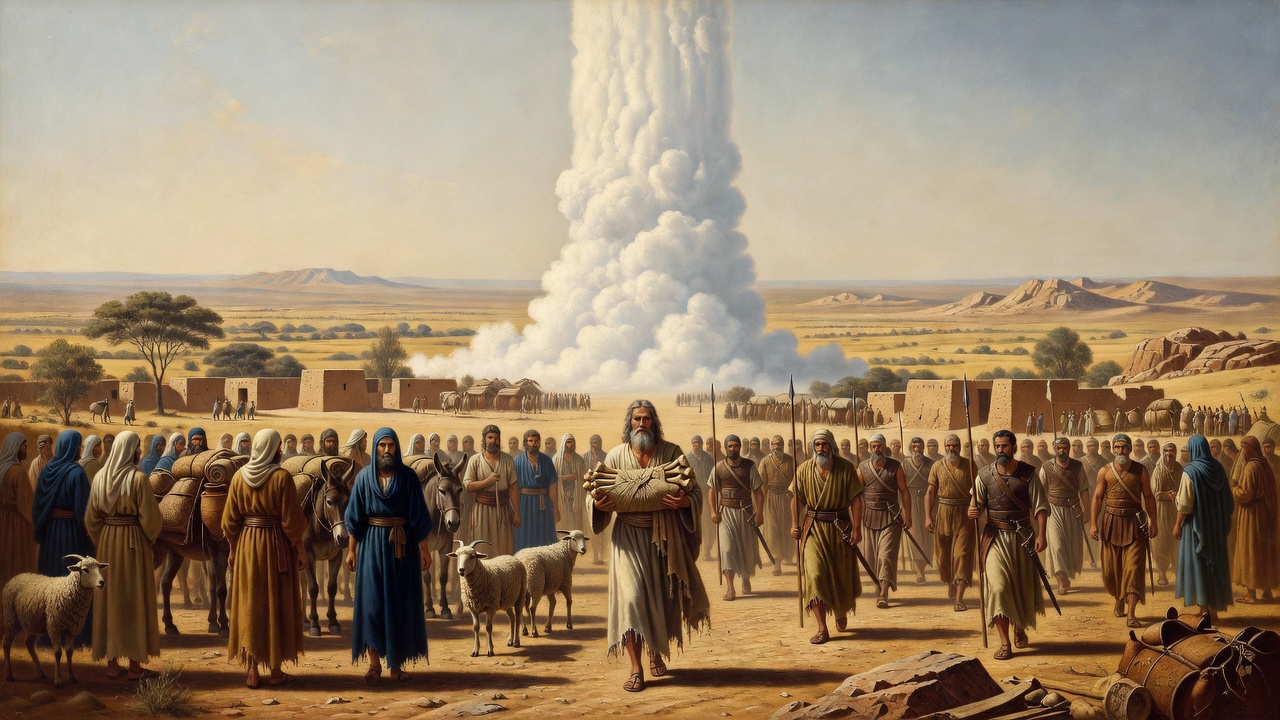
- God did not lead them by the shorter road through the land of the Philistines, lest war make them return to Egypt, but by the wilderness toward the Red Sea, which separates Asia from Africa. They set out from Succoth, the first encampment after leaving Ramesses and also the civil name of Pithom, and made their third camp at Etham, on the edge of the wilderness. Etham is perhaps another name for Khetam, or “fortress,” on the wall of Shur, which ran from the Mediterranean to the Gulf of Suez, and the camp was probably a little west of modern Ismailia.Sources: the Bible text itself · Succoth · Etham · Red Sea
- Moses took the bones of Joseph with him, because Joseph had made the sons of Israel swear that, when God attended to them, they must carry his bones from that place. Joseph was the elder of the two sons of Jacob by Rachel.Sources: the Bible text itself · Joseph (son of Jacob)
- The LORD told Moses to consecrate every firstborn male; the firstborn from every womb among the Israelites, both of people and of animals, belonged to him. Every firstborn donkey was to be redeemed with a lamb, or else have its neck broken, and every firstborn son was to be redeemed. When a son asked what this meant, he was to be told that Pharaoh had stubbornly refused to let them go, so the LORD killed every firstborn in Egypt, of people and of animals, and brought them out of the house of slavery.Sources: the Bible text itself
Notes written with AI assistance from open sources (Theographic Bible Metadata, CC BY-SA 4.0; Easton’s Bible Dictionary, public domain) and reviewed before publishing.
Places in this chapter
Only places identified with high confidence are shown (90% or more according to the scholarly sources compiled by OpenBible). Period map: DARE (Digital Atlas of the Roman Empire), CC BY 4.0; modern map: © OpenStreetMap contributors; places: OpenBible.info (CC BY 4.0).
Credits and license for this translation
Luda yã takada kũ Bisã yão
Portions of the Holy Bible in the Busa language of Nigeria
copyright © 2005 SIM International
Language: Bisã (Busa)
Translation by: SIM
This translation text is made available to you under the
terms of the Creative Commons License: Attribution-Noncommercial-No Derivative Works.
( http://creativecommons.org/licenses/by-nc-nd/3.0/ )
In addition, you have permission to port the text to different file formats, as long as you
do not change any of the text or punctuation of the Bible.
You may share, copy, distribute, transmit, and extract portions
or quotations from this work, provided that you include the above copyright
information:
You must give Attribution to the work.
You do not sell this work for a profit.
You do not make any derivative works that change any of the actual words or punctuation of the Scriptures.
Permissions beyond the scope of this license may be
available if you contact
us with your request.
This translation is made available to you under the terms of the
Creative Commons Attribution-Noncommercial-No Derivatives license 4.0.
You may share and redistribute this Bible translation or extracts from it in any format, provided that:
You include the above copyright and source information.
You do not sell this work for a profit.
You do not change any of the words or punctuation of the Scriptures.
Pictures included with Scriptures and other documents on this site are licensed just for use with those Scriptures and documents.
For other uses, please contact the respective copyright owners.
2014-10-10
Source: http://ebible.org/bqp/ · eBible.org