Amos 5
Luda yã takada kũ Bisã yão · Tap a verse to see its cross-references.
Isirelibɑ, i de i gɔ̃ru gɔsiɑ
1Bɛɛ Isirelibɑ, i swɑɑ dɑkio i nɔ gɔɔ swĩi yi nɑ mɔ̀ bɛɛn sɔ̃.
2Bɛɛ be i wɔrumɛ temɔ nge wɔndiɑ be bɑ gu,
i ǹ mɑɑ seemɔ.
Goo sɑri wi u koo bɛɛ seeyɑ.
3Domi Yinni Gusunɔ u geruɑ u nɛɛ,
bɛɛn wuu ge gɑ tɑbu durɔbu nɔrɔbu (1.000) mɔ,
bɑ̀ n tɑbu dɑ, tɔmbu wunɔbuwɑ (100) bɑ koo wurɑmɑ.
Ge gɑ mɑɑ tɑbu durɔbu wunɔbu mɔ,
tɔmbu wɔkurɑ bɑ koo tiɑ.
I wurɑmɑ Gusunɔn mi
n sere dɑ̃kuru ko
4Wee ye Yinni Gusunɔ u mɑɑ bɛɛ Isirelibɑ sɔ̃ɔmɔ.
U nɛɛ; ì n kĩ i n wɑ̃ɑ, wiyɑ i ko kɑsu.
5I ku mɑɑ sɑ̃ɑru dɑ Betɛliɔ kɑ Giligɑliɔ kɑ Beri Sebɑɔ.
Domi u koo de bu Giligɑligibu yoru mwɛɛri.
Kpɑ bu Betɛligibu kɑm koosiɑ.
6Bɛɛ be i rɑ gem gɔsie weesu,
kpɑ i kun mu gɑrisi gɑ̃ɑnu,
i nɑ wi, Yinni Gusunɔn mi,
kpɑ i wɑ i n wɑ̃ɑ,
kpɑ u ku rɑɑ bɛɛ Isirelibɑ wɔri u mwɑ nge dɔ̃ɔ.
Kpɑ i goo biɑ Betɛliɔ wi u koo dɔ̃ɔ wi go.
8Yinni Gusunɔwɑ u kperi bwese bwesekɑ kuɑ,
mɑ u yen bɑɑyere yi yen ɑyerɔ.
U rɑ yɑm wɔ̃kuru gɔsie yɑm bururɑm.
Kpɑ u de sɔ̃ɔ sɔɔ gu tĩrɑ, gu gɔsiɑ wɔ̃kuru.
U rɑ nim wɔ̃kun nim mɛnnɛ,
kpɑ u mu yɛ̃kɑnɑ tem kpuro sɔɔ.
9Wiyɑ u rɑ dɑmgibun dɑm bue.
Kpɑ u de bu ben wusun gbɑ̃rɑnu kɔsuku.
Kɑ gem, win yĩsirɑ Yinni Gusunɔ.
10Bɛɛ Isirelibɑ, be bɑ bɛɛ sirimɔ dee dee,
i rɑ n bu tusɑ,
kpɑ i n kɑ wi u gem gerumɔ kɔ̃ruɑ.
11I rɑ bwɛ̃ɛbwɛ̃ɛbu dɑm dɔre,
i n ben gbeɑn dĩɑnu mwɛɛrimɔ kɑ dɑm.
Yen sɔ̃, i ǹ sinɑmɔ bɛɛn diɑ sɔɔ
ye i bɑnɑ kɑ kpee ni i dɑ̃kɑ.
Mɛyɑ i ǹ mɑɑ bɛɛn resɛm ye i duurɑn bii duronun tɑm nɔrumɔ.
12Domi u bɛɛn torɑnu yɛ̃ nu kpɑ̃,
u mɑɑ yɛ̃ mɑ i durum kuɑ too.
I gemgibu nɔni sɔ̃ɔmɔ.
I nɔm birɑn kɛ̃nu mwɑɑmɔ.
Mɑ i yinɑmɔ bu sɑ̃ɑrobu ben gem wɛ̃ siri yerɔ.
13Sɑnɑm mɛni, sɑnɑm kɔ̃sumɑ.
Yen sɔ̃, wi u lɑɑkɑri mɔ, wiyɑ u ko n nɔɔ mɑɑri.
14I de i n geɑ mɔ̀ n kun mɔ kɔ̃sɑ.
Kpɑ i wɑ i n wɑ̃ɑ.
Nge mɛyɑ Gusunɔ wɔllu kɑ tem Yinni u ko n kɑ bɛɛ wɑ̃ɑ nge mɛ i rɑ gere.
15I kɔ̃sɑ tusio kpɑ i geɑ kĩɑ.
I de gem mu siribu di siri yerɔ.
Sɔrɔkudo Gusunɔ, wɔllu kɑ tem Yinni u koo bɛɛ Isirelibɑn tɔn be bɑ tiɑrɑ wɔnwɔndu kuɑ.
16Yen sɔ̃, Gusunɔ wɔllu kɑ tem Yinni u geruɑ u nɛɛ,
tɔmbɑ koo gɔɔ wuri ko yɑm kpuro,
kpɑ bɑ n sumɔ swɛɛ sɔɔ, bɑ n mɔ̀, wee, wee!
Bɑ koo gbɑɑ wukobu sokumɑ bu gɔɔ wooru sinɑ,
kpɑ bu gɔɔ swĩigibu mɛnnɑmɑ.
17Sɑnɑm mɛ u koo bɛɛ wɔrimɑ,
kɑ be bɑ wɑ̃ɑ gberɔ kpuro bɑ koo gɔɔ swĩwɑ.
Yinni Gusunɔwɑ u yeni geruɑ.
Yinni Gusunɔn siribun tɔ̃ru
18Bɔ̃rurobɑ bɛɛ be i Yinni Gusunɔn siribun tɔ̃ru mɑrɑ.
Mbɑ i yĩiyɔ i wɑ tɔ̃ɔ te sɔɔ.
I n yɛ̃ mɑ tɑ ko n sɑ̃ɑwɑ yɑm wɔ̃kuru, n ǹ mɔ yɑm bururɑm.
19I ko i n sɑ̃ɑwɑ nge tɔnu wi u gbee sunɔ dukɑ suurimɔ,
mɑ u kɑ yɑɑ gɔbɑ gɑɑ yinnɑ.
Ye u duɑ win dirɔ u gɑnɑ nɛnuɑ,
mɑ wɑɑ yɑ nùn dɔmɑ.
20Yinni Gusunɔn tɔ̃ɔ te, tɑ sɑ̃ɑwɑ yɑm wɔ̃kuru n ǹ mɔ yɑm bururɑm.
Tɑ tĩriwɑ niki niki, yɑm bururɑm sɑri.
Sɑ̃ɑ te Yinni Gusunɔ u tusɑ
21Yinni Gusunɔ u nɛɛ, u bɛɛn tɔ̃ɔ bɑkɑ ni i rɑ nùn diiye tusɑ.
U ǹ mɑm mɑɑ kĩ u bɛɛn mɛnnɔsun woo nɔ.
22Ì n nùn yɑ̃ku dɔ̃ɔ mwɑɑrɑrugiru kuɑ kɑ mɑɑ kɛ̃nu,
u ku rɑ nu mwɛ.
Mɛyɑ u ku rɑ mɑɑ bɛɛn siɑrɑbun yɑ̃kunu mɛɛri
ni i rɑ ko kɑ yɑɑ sɑbe ni nu gum mɔ.
23I kɑ bɛɛn womusun wɔkinu doonɔ win bɔkun di.
U ǹ mɑɑ kĩ u bɛɛn mɔrɔkunun wurenu nɔ.
24Adɑmɑ i de gem mu n wɑ̃ɑ bɛɛn suunu sɔɔ,
mu n kokumɔ nge nim mɛ mu ku rɑ kpe.
25Bɛɛ Isirelibɑ, i kɑ kuɑ wɔ̃ɔ weeru gbɑburu sɔɔ, i nùn yɑ̃kunu kɑ kɛ̃nu kuɑre nge mɛ? 26Bũu wi bɑ mɔ̀ Sɑkutu wi i gɑrisi bɛɛn sunɔ kɑ sere kperɑ ye i sɑ̃ɑmɔ i mɔ̀ Kewɑni, i nin bwɑ̃ɑroku ni i tii kuɑ sɔɔre nge mɛ i sɔɔwɑ gisɔ? Bɛɛn tii i yɛ̃ mɑ i ǹ koore mɛ.
27Yen sɔ̃, u koo de bu bɛɛ yoru mwɛɛri
bu kɑ dɑ sere Dɑmɑsin berɑ giɔ.
Wi, Gusunɔ wɔllu kɑ tem Yinniwɑ u yeni geruɑ.
Did you know?
A Call to Justice and Lamentation
- Amos urged the northern kingdom of Israel not to seek ancient pilgrimage sites such as Bethel, Gilgal, or Beersheba, warning that these sanctuaries would not save them from destruction. Bethel and Gilgal were prominent historical worship centers, while Beersheba lay far to the south, but the prophet insisted that ritual devotion at these locations was worthless without moral obedience.Sources: the Bible text itself · Bethel (of Palestine) · Gilgal · Beersheba
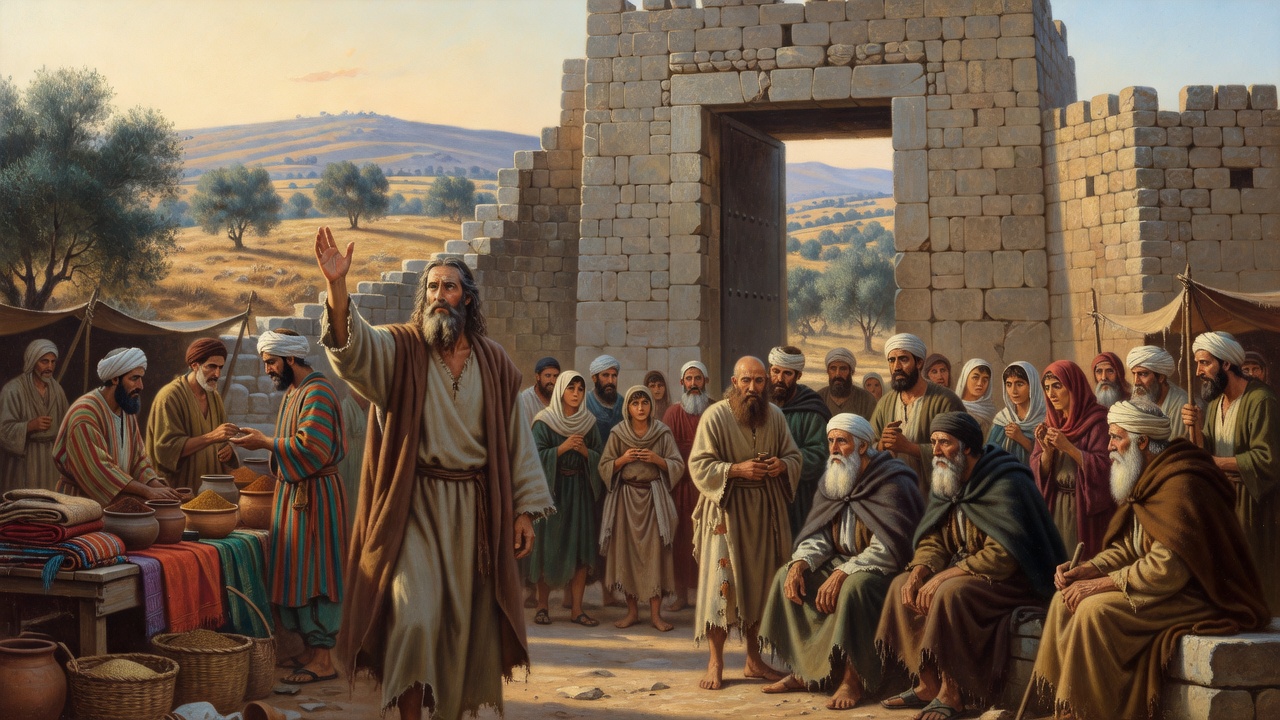
- In ancient Israelite cities, the gate served as the primary civic and judicial center where legal disputes were heard and elders administered justice. Amos condemned the ruling elite for accepting bribes, silencing honest witnesses, and trampling the rights of the poor in these legal assemblies.Sources: the Bible text itself
- The warning that Israel would be exiled beyond Damascus pointed to a coming defeat and deportation far northeast of the ancient Syrian capital. Damascus was a major political and commercial power located north of Jerusalem, marking a key geographical boundary for northern campaigns.Sources: the Bible text itself · Damascus
Notes written with AI assistance from open sources (Theographic Bible Metadata, CC BY-SA 4.0; Easton’s Bible Dictionary, public domain) and reviewed before publishing.
Places in this chapter
- Damascus · 33.511, 36.306 · verse 27
Only places identified with high confidence are shown (90% or more according to the scholarly sources compiled by OpenBible). Period map: DARE (Digital Atlas of the Roman Empire), CC BY 4.0; modern map: © OpenStreetMap contributors; places: OpenBible.info (CC BY 4.0).
Credits and license for this translation
Luda yã takada kũ Bisã yão
Portions of the Holy Bible in the Busa language of Nigeria
copyright © 2005 SIM International
Language: Bisã (Busa)
Translation by: SIM
This translation text is made available to you under the
terms of the Creative Commons License: Attribution-Noncommercial-No Derivative Works.
( http://creativecommons.org/licenses/by-nc-nd/3.0/ )
In addition, you have permission to port the text to different file formats, as long as you
do not change any of the text or punctuation of the Bible.
You may share, copy, distribute, transmit, and extract portions
or quotations from this work, provided that you include the above copyright
information:
You must give Attribution to the work.
You do not sell this work for a profit.
You do not make any derivative works that change any of the actual words or punctuation of the Scriptures.
Permissions beyond the scope of this license may be
available if you contact
us with your request.
This translation is made available to you under the terms of the
Creative Commons Attribution-Noncommercial-No Derivatives license 4.0.
You may share and redistribute this Bible translation or extracts from it in any format, provided that:
You include the above copyright and source information.
You do not sell this work for a profit.
You do not change any of the words or punctuation of the Scriptures.
Pictures included with Scriptures and other documents on this site are licensed just for use with those Scriptures and documents.
For other uses, please contact the respective copyright owners.
2014-10-10
Source: http://ebible.org/bqp/ · eBible.org