2 Kings 6
Luda yã takada kũ Bisã yão · Tap a verse to see its cross-references.
Kpásawɛ funa íla
1Annabi gã̀ gbɛ̃nↄ pì Ɛlisanɛ: Ǹ gwa, gu kũ òtɛn kↄ̃kakarana kɛn kɛ̀wɛrɛ fíti. 2Ò gɛ́ Yodai, ó baadi ni lí zↄ̃ ò kpɛ́ boo gwe, gu kũ ónigↄ̃ kun. Akũ Ɛlisa pì: À gɛ́. 3Akũ ń gbɛ̃ke pì: Ĩni sùru kɛ ǹ gɛ́ kũooroo? Akũ à pì: Mani gɛ́. 4Akũ à gɛ̀ɛ kũńwo. Kũ ò kà Yodai, òtɛn lí zↄ̃zↄ̃. 5Kũ ń gbɛ̃ke tɛn lí zↄ̃, akũ a kpásawɛ wò a pán à zù ín bùdum, akũ à wiki lɛ̀ Ɛlisaa à pì: O'o dikiri, ma kpása pìi sɛ̀ḿmamɛ fá! 6Akũ Luda gbɛ̃ pì: Mákpan à zùn súsuu? Kũ à mↄ̀nɛ, akũ Ɛlisa lí zↄ̃̀ à zù ín gwe, à tò kpásawɛ pìi fù íla. 7Ɛlisa pì: Ǹ sɛ́ ǹ boo! Akũ gbɛ̃ pì ↄ bò à kũ̀.
Siria zĩ̀karinↄ vĩ̀nakũnaa
8Siria kína fùtɛ Isarailanↄi kũ zĩ̀io. À lɛ́ kpàkũsũ kũ a ìbanↄ, akũ à pìńnɛ gukean oni bùra kátɛn. 9Akũ Luda gbɛ̃ lɛ́gbãzã kɛ̀ Isarailanↄ kínanɛ à pì, àgↄ̃ gu pì dãkpã àsun gɛ̃alaro, zaakũ Sirianↄ tɛn su gwemɛ. 10Akũ Isarailanↄ kína gbɛ̃nↄ zĩ̀ gu kũ Luda gbɛ̃ a yã òarɛ pìi gũn. Lɛn Ɛlisa dìgↄ̃ lɛ́ daa gɛ̃̀n baaakↄ̃ lɛ, akũ àdi tó ògↄ̃ gu pìnↄ dãkpã. 11Akũ Siria kína laakarii fùtɛ yã pìi yãi. À a ìbanↄ kàkara, akũ à ń lá à pì: Ó dí mɛ́ à de Isarailanↄ kína gbɛ̃ ũu? À omɛnɛ. 12A ìbaa pìnↄ doke wèa à pì: Ma dikiri kí, adi kɛ ó gbɛ̃ke bi a gbɛ̃nlo. Isarailanↄ bùsu annabi Ɛlisa mɛ́ àdi yã kũ ndì o zaa n kpɛ́nɛ gũn gbã Isarailanↄ kínanɛ. 13Akũ kína pì: À gɛ́ à a wɛtɛ gu kũ à kún, mani gbɛ̃nↄ zĩ ò a kũ. Akũ ò pìnɛ: À kú Dotãmɛ. 14Akũ kína zĩ̀karinↄ gbàrɛ gwe dasidasi kũ sↄ̃denↄ kũ sↄ̃gonↄ. Ò gɛ̀ɛ gwe gwãani ò lìka wɛ̃tɛ pìii.
15Kũ Luda gbɛ̃ zĩkɛrii fùtɛ kↄnkↄ káaku, à bò, akũ à zĩ̀karii pìnↄ è likana wɛ̃tɛi kũ sↄ̃denↄ kũ sↄ̃gonↄ. Akũ à pì Ɛlisanɛ: O'o dikiri, óni kɛ deramɛɛ? 16À wèa à pì: Ǹsun tó vĩna n kũro. Gbɛ̃ kũ ò kú kũoonↄn dasi de gbɛ̃ kũ ò kú kũńwonↄla. 17Akũ Ɛlisa wɛ́ kɛ̀ à pì: Dikiri, ǹ a wɛ́ kɛ̃nɛ. Akũ Dikiri zĩkɛrii pì wɛ́ kɛ̃̀nɛ. Kũ à gu gwà dↄ, akũ à sↄ̃denↄ kũ sↄ̃go tɛ́denↄ è likana Ɛlisai, ò dà sĩ̀sĩi pìla. 18Kũ Sirianↄ tɛn su Ɛlisa kũ, akũ à wɛ́ kɛ̀ Dikiria à pì: Ǹ tó gbɛ̃ pìnↄ vĩ̀na kũ. Akũ Dikiri tò ò vĩ̀naa kũ̀ lákũ Ɛlisa wɛ́ kɛ̀awa nà. 19Akũ Ɛlisa pì Siria zĩ̀karii pìnↄnɛ: Zɛ́ díkĩnanlo! Wɛ̃tɛ díkĩnanlo! À tɛ́mai mà gɛ́ kãáo gbɛ̃ kũ átɛn wɛtɛ kĩnaa. Akũ à gɛ̀ɛ kũńwo Samaria. 20Kũ ò gɛ̃̀ wɛ̃tɛ pìi gũn, akũ Ɛlisa pì: Dikiri, ǹ ń wɛ́ wɛ̃ńnɛ sà. Kũ Dikiri ń wɛ́ wɛ̃̀ńnɛ, ò gu gwà ò è Samarian ò kún. 21Kũ Isarailanↄ kína ń é, à Ɛlisa là à pì: Mà ń dɛdɛn yá? Baa, mà ń dɛdɛn yá? 22Akũ Ɛlisa wèa à pì: Ǹsun ń dɛdɛro. Ndì gbɛ̃ kũ n ń kũkũ zĩ̀lannↄ dɛdɛn yá? Ǹ pↄ́ble kpáḿma ò ble. Ǹ í kpáḿma ò mi, gbasa ò ta ń dikiri kĩnaa. 23Akũ kína pↄnna pↄ́ble kɛ̀ńnɛ, ò blè ò í mì, akũ ò ń gbárɛ, ò tà ń dikiri kĩnaa. Abire gbɛra Siria gbãnamↄnnɛrinↄ dí ɛra ò sù lɛ́tɛ Isarailanↄ bùsuua doro.
Sirianↄ Samaria kagurakɛnaa
24Gↄrↄ pla gbɛra Siria kína Bɛnadada a zĩ̀karinↄ kàkara ń pínki, akũ ò sù ò Samaria kaguraa kɛ̀. 25Akũ nà gbãna kũ̀ wɛ̃tɛ pìn, ò a kaguraa kɛ̀ à gìi kɛ̀ ari òtɛn zaaki mì yía andurufu kiloo do, lukuluku gbↄ̃̀ zaka fítinna lɛ́ do sↄ̃ andurufu ↄgↄ mɛ̀n sↄↄro. 26Kũ Isarailanↄ kína tɛ́ bĩni musu, akũ nↄgbɛ̃ ke ↄ́ↄ dↄ̀nɛ à pì: Ma dikiri kí, ǹ ma sura ba. 27Akũ kína pìnɛ: Tó Dikiri dí n sura baro, mani le mà n sura ba deramɛɛ? Má pↄ́wɛ ke wɛ̃ vĩn yá? 28Akũ à ɛ̀ra à a là à pì: Bↄ́ mɛ́ à n lee? Akũ nↄgbɛ̃ pìi wèa à pì: Nↄgbɛ̃ ke mɛ́ à pìmɛnɛ mà su kũ ma nɛ́gↄ̃gbɛ̃o ò só gbãra, zia sↄ̃ ó a pↄ́ só. 29Akũ o ma nɛ́ kùku o sò. Kũ gu dↄ̀, akũ ma pìnɛ à su kũ a pↄ́o se ò só, akũ à a pↄ́ ki ùtɛ. 30Kũ kína mà yã kũ nↄgbɛ̃ pìi ò, akũ à a uta zↄ̃kↄ̃ↄ gà à kɛ̃̀. Kũ ò wɛ́ sɛ̀ ò a gwà lákũ à tɛ́ bĩni musu nà, ò a è kũ uta kasanↄ dana a uta zↄ̃kↄ̃ↄ gɛ̃i. 31Akũ kína pì: Tó mádi Safata nɛ́ Ɛlisa mì zↄ̃ gbãraro, Luda yã kɛmɛnɛ pãsĩpãsĩ.
32Ɛlisa vutɛna a kpɛ́n kũ gbɛ̃ zↄ̃kↄ̃nↄ. Akũ kína gbɛ̃ zĩ̀ à doarɛ arɛ à gɛ́ Ɛlisa kũ ari àgↄ̃ ká. Ari zĩ̀rii pì gↄ̃ ká gwe, akũ Ɛlisa pì gbɛ̃ zↄ̃kↄ̃ↄ pìnↄnɛ: Gbɛ̃dɛri pì gbɛ̃ zĩ̀, àtɛn su à ma mì zↄ̃. À laakari kɛ! Tó zĩ̀rii pìi kà, à zɛ́ tatanɛ, àsun tó à gɛ̃ro. Ádi a dikiri gɛ̀sɛ kĩni ma dↄ a kpɛroo? 33Kũ à kpɛ́ àtɛn yã ońnɛ, akũ zĩ̀rii pìi kà. Akũ kína pìi kà à pì: Sunyĩ dí bò Dikiri kĩnaamɛ, bↄ́ mani wɛ́ dↄi dↄↄ?
Did you know?
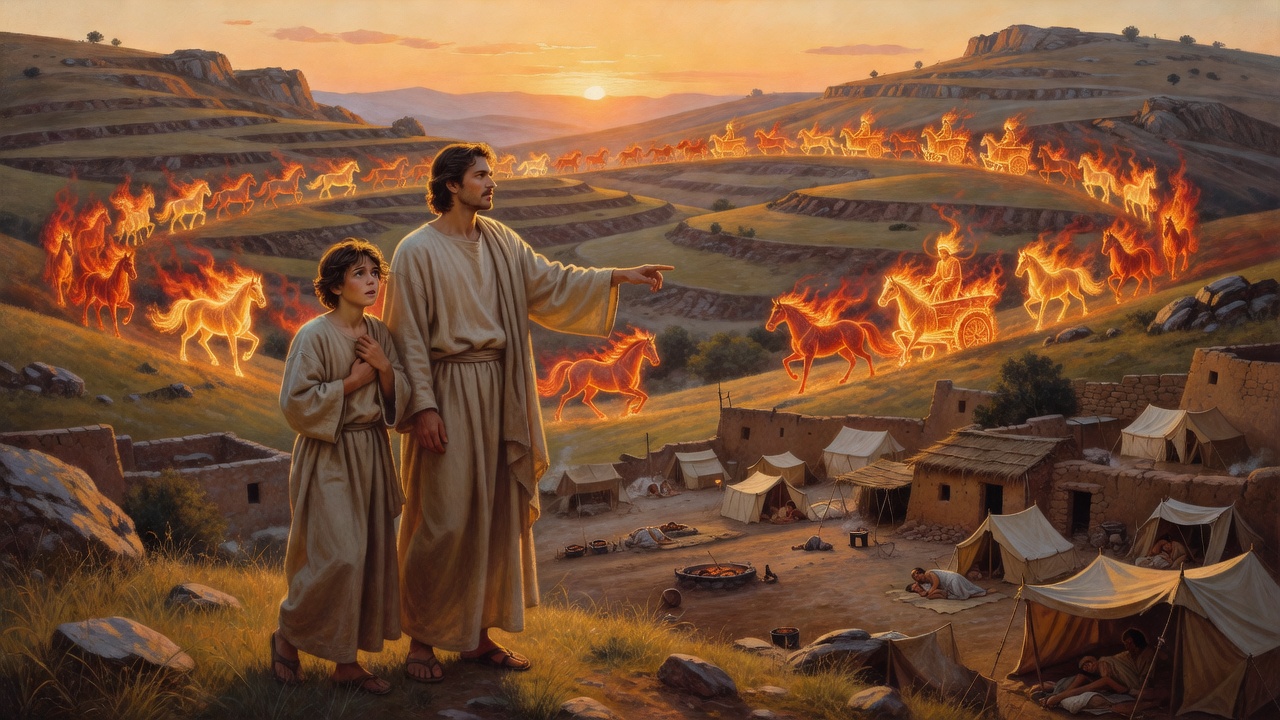
Chariots of Fire and the Siege of Samaria
- Dothan, located about 12 miles north of Samaria and known in earlier times as the place where Joseph was sold by his brothers, was the city where the Aramean army surrounded Elisha. When Elisha prayed for his frightened servant's eyes to be opened, the young man saw the surrounding hills filled with horses and chariots of fire.Sources: Dothan · the Bible text itself
- Samaria, the capital of Israel situated on a steep hill, was placed under a devastating siege by Ben-hadad of Aram. The resulting starvation became so severe that normally unusable items fetched exorbitant prices in silver, and citizens resorted to cannibalism.Sources: Samaria · Ben-hadad · the Bible text itself
- When Elisha led the temporarily blinded Aramean raiders directly into the walled capital of Samaria, he forbade the king of Israel from executing them. Instead, the king prepared a large feast for the enemy soldiers and sent them back unharmed to their master.Sources: the Bible text itself
Notes written with AI assistance from open sources (Theographic Bible Metadata, CC BY-SA 4.0; Easton’s Bible Dictionary, public domain) and reviewed before publishing.
Places in this chapter
- Jordan · Today: Jordan River · 31.761, 35.558 · verses 2, 4
- Syria · Today: Aram · 33.511, 36.306 · verses 8, 9, 11, 23, 24
- Aram · 33.511, 36.306 · verse 14
- Samaria · 32.276, 35.195 · verses 19, 20, 24, 25
Only places identified with high confidence are shown (90% or more according to the scholarly sources compiled by OpenBible). Period map: DARE (Digital Atlas of the Roman Empire), CC BY 4.0; modern map: © OpenStreetMap contributors; places: OpenBible.info (CC BY 4.0).
Credits and license for this translation
Luda yã takada kũ Bisã yão
Portions of the Holy Bible in the Busa language of Nigeria
copyright © 2005 SIM International
Language: Bisã (Busa)
Translation by: SIM
This translation text is made available to you under the
terms of the Creative Commons License: Attribution-Noncommercial-No Derivative Works.
( http://creativecommons.org/licenses/by-nc-nd/3.0/ )
In addition, you have permission to port the text to different file formats, as long as you
do not change any of the text or punctuation of the Bible.
You may share, copy, distribute, transmit, and extract portions
or quotations from this work, provided that you include the above copyright
information:
You must give Attribution to the work.
You do not sell this work for a profit.
You do not make any derivative works that change any of the actual words or punctuation of the Scriptures.
Permissions beyond the scope of this license may be
available if you contact
us with your request.
This translation is made available to you under the terms of the
Creative Commons Attribution-Noncommercial-No Derivatives license 4.0.
You may share and redistribute this Bible translation or extracts from it in any format, provided that:
You include the above copyright and source information.
You do not sell this work for a profit.
You do not change any of the words or punctuation of the Scriptures.
Pictures included with Scriptures and other documents on this site are licensed just for use with those Scriptures and documents.
For other uses, please contact the respective copyright owners.
2014-10-10
Source: http://ebible.org/bqp/ · eBible.org