1 Samuel 9
Luda yã takada kũ Bisã yão · Tap a verse to see its cross-references.
Samuɛli kↄ̃'ena kũ Soluo
1Biliaminu buri ke kun, a tↄ́n Kisi. Aruzɛkɛdemɛ. Biliaminu buri mɛ́ à Afia ì, Afia Bekora ì, Bekora Zero ì, Zero Abiɛli ì, akũ Abiɛli Kisi pìi ì. 2À nɛ́gↄ̃gbɛ̃ vĩ, a tↄ́n Solu. Kɛfɛnna manamɛ. A mana sára kú Isarailanↄ tɛ́ro, ń gbɛ̃ke gbã̀na dí vĩ a gã̀nlaro.
3Kũ Kisi pì zaakinↄ sã̀tɛ, akũ à pì a nɛ́ pìinɛ: Ǹ futɛ ǹ zĩkɛrinↄ doke sɛ́ à gɛ́ zaaki pìnↄ wɛtɛ. 4Akũ ò Ɛflaimu bùsu gusĩsĩde pàra kũ Salisa bùsuuo, odi ń lero. Akũ ò Salimu bùsuu pàra, ama ò kú gwero. Akũ ò Biliaminu bùsuu pàra, odi zaaki pìnↄ lero. 5Kũ ò kà Zufu bùsun, Solu pì zĩkɛri kũ ò lɛɛlɛ pìinɛ: Ǹ mↄ́ ò ɛra. Tó ódi táro, ma mare ni damu kɛ ó yã musu, ani zaakinↄ yã da doro. 6Akũ à wèa: Ǹ ma! Luda gbɛ̃ke kú wɛ̃tɛ dí gũn. À bɛ̀ɛrɛ vĩ, yã kũ à pì ani kɛ, àdi kɛmɛ. Ò gɛ́ gwe. Ke ani zɛ́ kũ óni sɛ́ ò ó zaaki pìnↄ leo owɛrɛ gwɛɛ. 7Akũ Solu wèa à pì: Tó ótɛn gɛ́, bↄ́n óni gɛ́onɛɛ? Pↄ́ble ke dí gↄ̃ ó bↄ̀kↄn doro. Ó pↄ́ke vĩ ò Luda gbɛ̃ pì gbaro. Ke bↄ́n ó vĩi? 8Akũ zĩkɛrii pìi ɛ̀ra à pì Solunɛ: Ǹ gwa! Má ↄgↄ vĩ fítinle la. Mani a gba, ani ó da zɛ́ kũ à de ò sɛ́a. 9Isarailanↄ bùsun yã, tó gbɛ̃ tɛn gɛ́ yã gbɛka Ludaa àdi pi: Ǹ mↄ́ ò gɛ́ wɛ́gupu'eri kĩnaa. Zaakũ gbɛ̃ kũ òdi pi gbãra annabi ũ gbãra, àkũmɛ òdi sísi yã wɛ́gupu'eri ũ. 10Akũ Solu pì a zĩkɛriinɛ: N yã mana ò. Ò gɛ́. Akũ òtɛn gɛ́ wɛ̃tɛ kũ Luda gbɛ̃ pì kunwa.
11Kũ òtɛn wɛ̃tɛ pìi sĩ̀sĩ kũ, ò dàkarɛ kũ nↄkparenↄ, òtɛn gɛ́ í tↄ́. Akũ ò ń lá ò pì: Wɛ́gupu'eri kú bɛ yá? 12Ò wèḿma ò pì: Ee, à kú arɛ gwe. À kɛ likalika. Gbãran à sù, zaakũ ò ye ò sa o gbagbakiamɛ. 13Tó a gɛ̃ wɛ̃tɛn, áni a e ari àgↄ̃ gɛ́ pↄ́ ble gbagbaki pìia. Zaakũ oni pↄ́ ble gĩaro ari à su, àkũ mɛ́ ani arubarika da sa'opↄblen gĩa, gbasa gbɛ̃ kũ ò ń sísinↄ pↄ́ ble. Àgↄ̃ wãna, zaakũ a lenagↄrↄn dí.
14Kũ ò gɛ̃̀ wɛ̃tɛ pìi gũn, akũ ò dàkarɛ kũ Samuɛlio gↄ̃̀nↄ, à bò àtɛn gɛ́ gbagbaki pìia. 15Ari Solu gↄ̃ gɛ́ su, Dikiri gĩnakɛ à yã dí dà Samuɛlinɛ a sãn à pì: 16Zia mandara'i mani Biliaminu bùsu gbɛ̃ zĩmma. Ǹ nísi kúa ǹ a ditɛ ma gbɛ̃ Isarailanↄ don'arɛde ũ. Ani ma gbɛ̃ pìnↄ bo Filisitininↄ ↄĩ. Ma a gbɛ̃ pìnↄ wiki mà, akũ ma ń wɛ̃nda gwà.
17Kũ Samuɛli Solu è, Dikiri pìnɛ: Gbɛ̃ kũ ma a yã ònnɛ pìin gwe. Àkũ mɛ́ ani kí ble ma gbɛ̃nↄa. 18Akũ Solu nà Samuɛlii wɛ̃tɛ bĩnilɛa à a là à pì: Wɛ́gupu'eri bɛ kú mámɛɛ? Ǹ mↄmɛnɛ. 19Akũ Samuɛli wèa à pì: Makũmɛ ade pì ũ. Ǹ domɛnɛ arɛ ò gɛ́ gbagbakia, ĩni pↄ́ ble kũmao gbãra. Zia kↄnkↄ mani n nɛ̀sɛgũnyã onnɛ pínki, gbasa mà n gbarɛ. 20Ǹsun n zaaki kũ ò sã̀tɛ zaa gↄrↄ aakↄ̃ damu kɛro, zaakũ ò ń lé. Dín Isarailanↄn yei ń pínkii, tó adi kɛ mↄkↄ̃n kũ n de bedenↄ baasiro? 21Akũ Solu pì: Biliaminu burin ma ũroo? Ma buri mɛ́ à fíti de Isaraila burinↄla ń pínki, akũ ma danɛnↄ mɛ́ ò kĩ̀ańyĩ Biliaminu burinↄ tɛ́. Bↄ́yãi ntɛn yã dí taka omɛnɛɛ?
22Akũ Samuɛli Solu kũ a zĩkɛriioo sɛ̀ à gɛ̃̀ kũńwo pↄ́blekpɛn, à vutɛki mana kpàḿma gbɛ̃ kũ ò ń sísinↄ tɛ́. Gbɛ̃ pìnↄ kà gbɛ̃nↄn baraakuri taka bà. 23Akũ Samuɛli pì pↄ́blekɛriinɛ: Ǹ nↄ̀bↄ kũ ma kpàmma ma pì ǹ a ditɛki kɛ pì sɛ́ ǹ mↄ́o. 24Akũ pↄ́blekɛrii pìi sù kũ nↄ̀bↄ gbá pìio à dìtɛ Solu arɛ. Akũ Samuɛli pì: Pↄ́ kũ ò dìtɛnnɛn dí. Ǹ só, zaakũ ò dìtɛnnɛ ari mandara'i kũ gbɛ̃ kũ ma ń sísinↄ. Akũ Solu pↄ́ blè kũ Samuɛlio zĩ birea.
25Kũ ò kìpa gbagbaki pìia, ò gɛ̃̀ wɛ̃tɛ gũn, akũ Samuɛli gɛ̀ɛ à yã ò kũ Soluo a kpɛ́ musu. 26Akũ ò ì gwe. Kũ gu ye à dↄ, akũ Samuɛli lɛ́ zù Solui kpɛ́ musu gwe à pì: Ǹ futɛ, mà gɛ́ zɛnnɛ. Kũ Solu fùtɛ, àkũ kũ Samuɛlio ò bò bàai ń pla. 27Kũ ò kà wɛ̃tɛ kpɛ, akũ Samuɛli pì Solunɛ: Ǹ o n zĩkɛriinɛ àgↄ̃ gɛ́, mↄkↄ̃n ǹ zɛ gĩa de mà yã kũ Dikiri ò onnɛ.
Did you know?
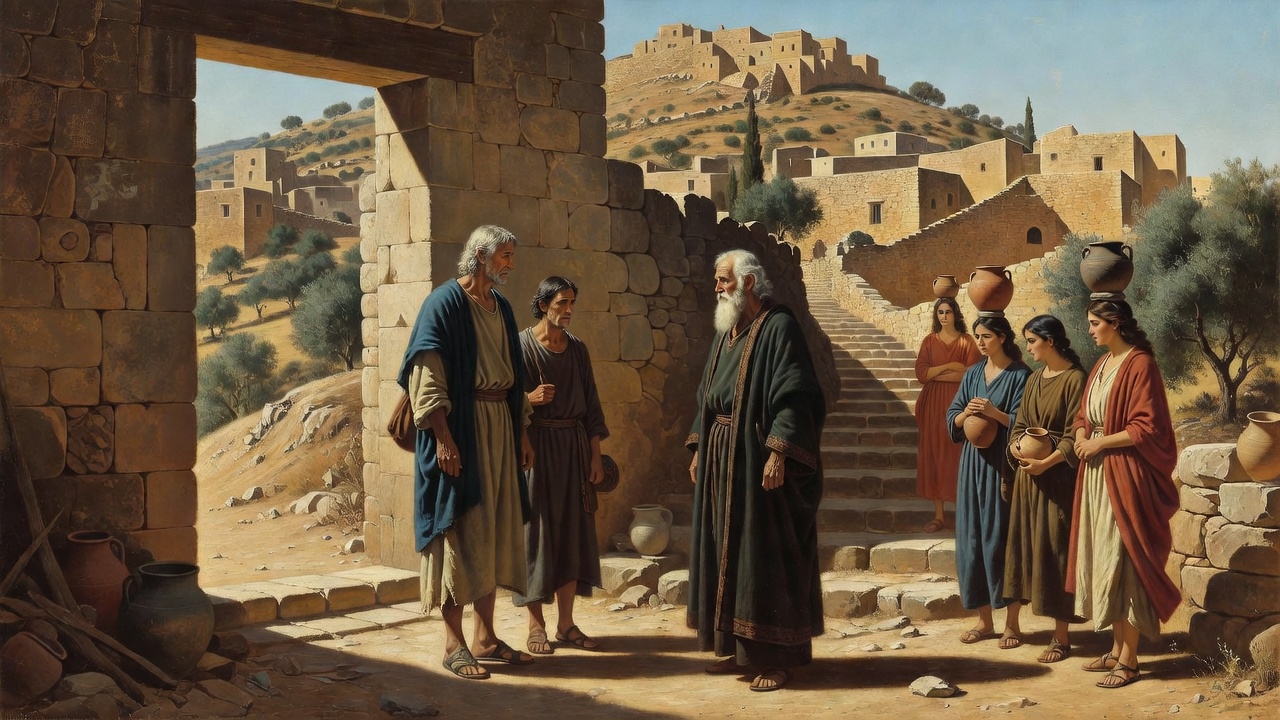
Saul's Search and Meeting with Samuel
- Saul's journey in search of his father's lost donkeys took him through the hill country of Ephraim, the land of Shalishah, the region of Shaalim, and finally to the district of Zuph, where Samuel's hometown of Ramah was located.Sources: the Bible text itself · Saul · Zuph
- The narrative notes that the title 'prophet' had replaced the older term 'seer' by the time the text was written down. Approaching a seer to inquire of God often involved bringing a customary modest gift or token, such as the quarter shekel of silver offered by Saul's servant.Sources: the Bible text itself
- At local sacrificial feasts held on high places, the presiding priest or prophet had to bless the offering before the guests could eat. Samuel honored Saul by seating him at the head of about thirty invited guests and serving him a special reserved portion of meat.Sources: the Bible text itself
Notes written with AI assistance from open sources (Theographic Bible Metadata, CC BY-SA 4.0; Easton’s Bible Dictionary, public domain) and reviewed before publishing.
Credits and license for this translation
Luda yã takada kũ Bisã yão
Portions of the Holy Bible in the Busa language of Nigeria
copyright © 2005 SIM International
Language: Bisã (Busa)
Translation by: SIM
This translation text is made available to you under the
terms of the Creative Commons License: Attribution-Noncommercial-No Derivative Works.
( http://creativecommons.org/licenses/by-nc-nd/3.0/ )
In addition, you have permission to port the text to different file formats, as long as you
do not change any of the text or punctuation of the Bible.
You may share, copy, distribute, transmit, and extract portions
or quotations from this work, provided that you include the above copyright
information:
You must give Attribution to the work.
You do not sell this work for a profit.
You do not make any derivative works that change any of the actual words or punctuation of the Scriptures.
Permissions beyond the scope of this license may be
available if you contact
us with your request.
This translation is made available to you under the terms of the
Creative Commons Attribution-Noncommercial-No Derivatives license 4.0.
You may share and redistribute this Bible translation or extracts from it in any format, provided that:
You include the above copyright and source information.
You do not sell this work for a profit.
You do not change any of the words or punctuation of the Scriptures.
Pictures included with Scriptures and other documents on this site are licensed just for use with those Scriptures and documents.
For other uses, please contact the respective copyright owners.
2014-10-10
Source: http://ebible.org/bqp/ · eBible.org