1 Kings 19
Luda yã takada kũ Bisã yão · Tap a verse to see its cross-references.
Dikiri yã'ona kũ Iliasuo Orɛbu
1Akũ Ahabu yã kũ Iliasu kɛ̀ɛ bàba Yɛzɛbɛlinɛ pínki, lákũ à tãnade pìnↄ dɛ̀dɛ nà kũ fɛ̃nɛdao ń pínki. 2Akũ Yɛzɛbɛli lɛ́gbãzã kɛ̀ Iliasunɛ à pì: Ari zia mandara'i, tó mádi kɛnnɛ lákũ n kɛ̀ tãnadenↄnɛ nàro, tãnanↄ yã kɛmɛnɛ pãsĩpãsĩ! 3Akũ vĩna Iliasu kũ̀, akũ à fùtɛ à bàa sì à a zĩda mìboki wɛ̀tɛ. Kũ à kà Bɛsɛba, Yudanↄ bùsun, gwen à a zĩkɛrii tòn, 4akũ à táa ò gbárannan gↄrↄ do. À gɛ̀ɛ à vùtɛ sɛ̃ lí gbáru, akũ à adua kɛ̀ à le à ga à pì: Dikiri, yã díkĩna mↄ̀ma lɛ. Ǹ ma wɛ̃̀ndi sɛ́ gↄ̃̀nↄ, zaakũ má de ma dizinↄlaro. 5Akũ à wùtɛ àtɛn i o sɛ̃ lí pì gbáru.
Kãnto malaikaa sù à ↄ kɛ̀a à pì: Ǹ futɛ ǹ pↄ́ ble. 6Kũ Iliasu gu gwà, akũ à kàra asãna è kũ í tùruuo katɛna a mìii. Akũ à pↄ́ blè à í mì à ɛ̀ra à wùtɛ. 7Dikiri Malaikaa ɛ̀ra à sù a gɛ̃̀n pladeo, à ↄ kɛ̀a à pì: Ǹ futɛ ǹ pↄ́ ble, zaakũ tá gbã̀nan ntɛn su o. 8Akũ à fùtɛ à pↄ́ blè à í mì. Pↄ́ble pìi tò à gbãna lè, akũ à táa ò gↄrↄ bupla fãnantɛ̃ kũ gwãanio ari à gɛ̀ɛ à kà Luda kpi kũ òdi pi Orɛbua. 9Akũ à gɛ̃̀ gbɛ̀wɛɛn à ì gwe, akũ Dikiri yã sùa à pì: Iliasu, bↄ́n ntɛn kɛ laa? 10À wèa à pì: Dikiri Luda Zĩ̀karide, ma laakarii fùtɛ manamana, zaakũ Isarailanↄ pã kpà n bàka kunna kũńwo yãi, akũ ò n gbagbakinↄ gbòro ò n annabinↄ dɛ̀dɛ kũ fɛ̃nɛdao. Makũ mɛ́ ma gↄ̃ mado, akũ òtɛni ma wɛ se. 11Akũ Dikiri pì: Ǹ bo ǹ gɛ́ zɛ ma arɛ kpi musu, mani gɛ̃tɛ n arɛ.
Zàga'ĩa gbãna fùtɛ, àtɛn kpi pìnↄ para àtɛn gbɛ̀nↄ wíwi Dikiri arɛ, ama Dikiri kú ĩa pìi gũnlo. Ĩa pìi gbɛra zĩtɛ yĩ̀gãyĩgã, ama Dikiri kú zĩtɛ yĩgãyĩgãnaa pìi gũnlo. 12Zĩtɛ yĩgãnaa pìi gbɛra akũ tɛ́ bò, ama Dikiri kú tɛ́ pìi gũnlo. Tɛ́ pìi gbɛra akũ kòto busɛɛ bò tɛɛnɛ. 13Kũ Iliasu kòtoo pìi mà, à a uta zↄ̃kↄ̃ↄ kù a wɛ́a. Akũ à bò à gɛ̀ɛ à zɛ̀ gbɛ̀wɛɛɛ pì lɛ́a, à mà ò pìarɛ: Iliasu, bↄ́n ntɛn kɛ laa? 14À wèa à pì: Dikiri Luda Zĩ̀karide, ma laakarii fùtɛ manamana, zaakũ Isarailanↄ pã kpà n bàka kunna kũńwo yãi, akũ ò n gbagbakinↄ gbòro ò n annabinↄ dɛ̀dɛ kũ fɛ̃nɛdao. Makũ mɛ́ ma gↄ̃ mado, akũ òtɛni ma wɛ se. 15Akũ Dikiri pìnɛ: Ǹ ɛra ǹ tá Damasuku gbárannan. Tó n ka gwe, ǹ Azaili ká Siria kína ũ, 16ǹ Nimisi daikore Yehu ká Isarailanↄ kína ũ, ǹ Abɛli Mɛↄla gbɛ̃ Safata nɛ́ Ɛlisa kɛ n gɛ̃nɛ ũ annabi ũ. 17Gbɛ̃ kũ bò Azaili fɛ̃nɛda lɛ́i, Yehu mɛ́ ani a dɛ. Tó à bò Yehu fɛ̃nɛda lɛ́i sↄ̃, Ɛlisa mɛ́ ani a dɛ. 18Bee kũ abireo má Isarailanↄ kũna gbɛ̃nↄn dúbu suppla, kũ ń gbɛ̃ke dí kútɛ Baalinɛ à lɛ́ pɛ̀aro.
Ɛlisa sisinaa
19Akũ Iliasu fùtɛ à bò gwe à gɛ̀ɛ à Safata nɛ́ Ɛlisa lè, àtɛn bú wí kũ zùnↄ swa kuri awɛɛpla. Àkũ mɛ́ à tɛ́ zù swa kpɛdei. Akũ Iliasu nài à a gyabaa gò à dàala. 20Akũ Ɛlisa a zùnↄ tò gwe à bàa lɛ̀ à bò à tɛ́ Iliasu kpɛ, akũ à pìnɛ: Ǹ tó mà gɛ́ lɛ́ za ma de kũ ma daooa gĩa, gbasa mà su mà tɛ́nyĩ sà. Akũ Iliasu pìnɛ: Ǹ gɛ́ ǹ ɛra ǹ su. Ń dↄ̃ yã kũ ma kɛ̀nnɛ. 21Akũ Ɛlisa ɛ̀ra à gɛ̀ɛ à a zùnↄ kùtu kpà à tɛ́ kà kũ a zù swa gbãngoo, akũ à zùu pìnↄ nↄ̀bↄↄ fùfuu kɛ̀ à kpà gbɛ̃nↄa ò sò. Akũ à bò à tɛ̀ Iliasui, à gↄ̃̀ a plade ũ.
Did you know?
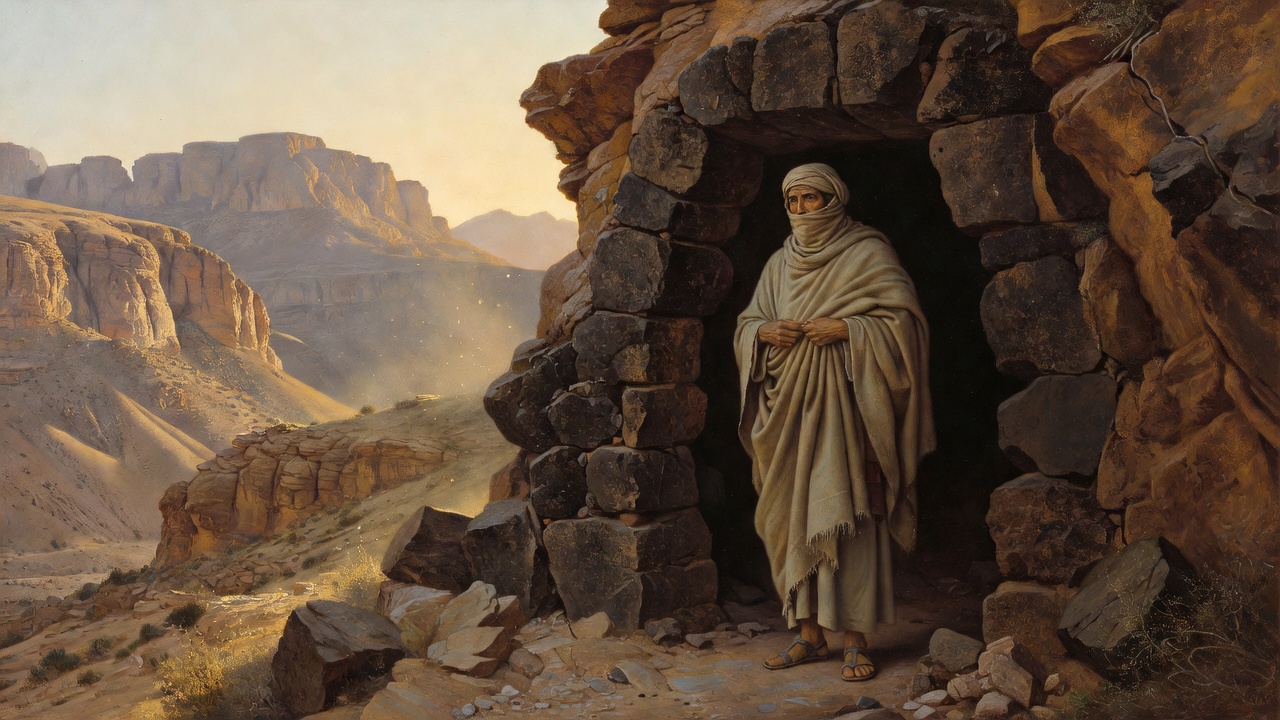
Elijah at Mount Horeb and the Call of Elisha
- Mount Horeb, also identified in biblical tradition with Mount Sinai, was the mountain range where Israel had received the covenant and the law. Elijah's forty-day journey south to Horeb places his encounter with God in the exact setting of Moses' earlier revelations.Sources: the Bible text itself · Horeb
- When God commands Elijah to anoint Hazael as king of Syria and Jehu as king of Israel, the narrative connects prophetic authority to geopolitical succession in both nations, while assuring Elijah that seven thousand faithful Israelites remained.Sources: the Bible text itself · Hazael · Jehu
- Casting a cloak over Elisha's shoulders while he plowed with twelve yoke of oxen at Abel-meholah was a symbolic act that marked Elisha as Elijah's disciple, adoptive heir, and prophetic successor.Sources: the Bible text itself · Elisha · Abel-meholah
Notes written with AI assistance from open sources (Theographic Bible Metadata, CC BY-SA 4.0; Easton’s Bible Dictionary, public domain) and reviewed before publishing.
Places in this chapter
- Mount Horeb · Today: Jebel Musa · 28.540, 33.973 · verse 8
- Damascus · 33.511, 36.306 · verse 15
- Syria · Today: Aram · 33.511, 36.306 · verse 15
Only places identified with high confidence are shown (90% or more according to the scholarly sources compiled by OpenBible). Period map: DARE (Digital Atlas of the Roman Empire), CC BY 4.0; modern map: © OpenStreetMap contributors; places: OpenBible.info (CC BY 4.0).
Credits and license for this translation
Luda yã takada kũ Bisã yão
Portions of the Holy Bible in the Busa language of Nigeria
copyright © 2005 SIM International
Language: Bisã (Busa)
Translation by: SIM
This translation text is made available to you under the
terms of the Creative Commons License: Attribution-Noncommercial-No Derivative Works.
( http://creativecommons.org/licenses/by-nc-nd/3.0/ )
In addition, you have permission to port the text to different file formats, as long as you
do not change any of the text or punctuation of the Bible.
You may share, copy, distribute, transmit, and extract portions
or quotations from this work, provided that you include the above copyright
information:
You must give Attribution to the work.
You do not sell this work for a profit.
You do not make any derivative works that change any of the actual words or punctuation of the Scriptures.
Permissions beyond the scope of this license may be
available if you contact
us with your request.
This translation is made available to you under the terms of the
Creative Commons Attribution-Noncommercial-No Derivatives license 4.0.
You may share and redistribute this Bible translation or extracts from it in any format, provided that:
You include the above copyright and source information.
You do not sell this work for a profit.
You do not change any of the words or punctuation of the Scriptures.
Pictures included with Scriptures and other documents on this site are licensed just for use with those Scriptures and documents.
For other uses, please contact the respective copyright owners.
2014-10-10
Source: http://ebible.org/bqp/ · eBible.org