Zephaniah 1
Bibeli Luayãtaalá · Tap a verse to see its cross-references.
About this book
About Zephaniah
- Easton's Bible Dictionary (1897) presents Zephaniah, whose name it explains as "Jehovah has concealed" or "Jehovah of darkness," as the son of Cushi and great-grandson of Hezekiah, and as the ninth of the minor prophets. It dates his prophecy to the reign of Josiah, king of Judah (641–610 B.C.), and says he was contemporary with Jeremiah, with whom he had much in common.Sources: Easton: Zephaniah · Zephaniah · Cushi
- Amon, Josiah's father, restored idolatry in Judah, and Easton reads Zephaniah 1:4 and 3:4, 11 as referring to that reign. The same dictionary links Zephaniah 1:4–6 with the worship of Baal and Zephaniah 1:5 with Malcham, described as the national idol of the Ammonites. Josiah, who came to the throne at eight, is presented as later acting against the idolatry that prevailed.Sources: Amon · Josiah · Baal · Malcham
- Easton's Bible Dictionary outlines the book as an introduction announcing judgment on the world and on Israel because of their transgressions (1:1–6), a description of the judgment (1:7–18), an exhortation to seek God while there is still time (2:1–3), judgment on other peoples (2:4–15), what it calls the hopeless misery of Jerusalem (3:1–7), and a promise of salvation (3:8–20).Sources: Easton: Zephaniah
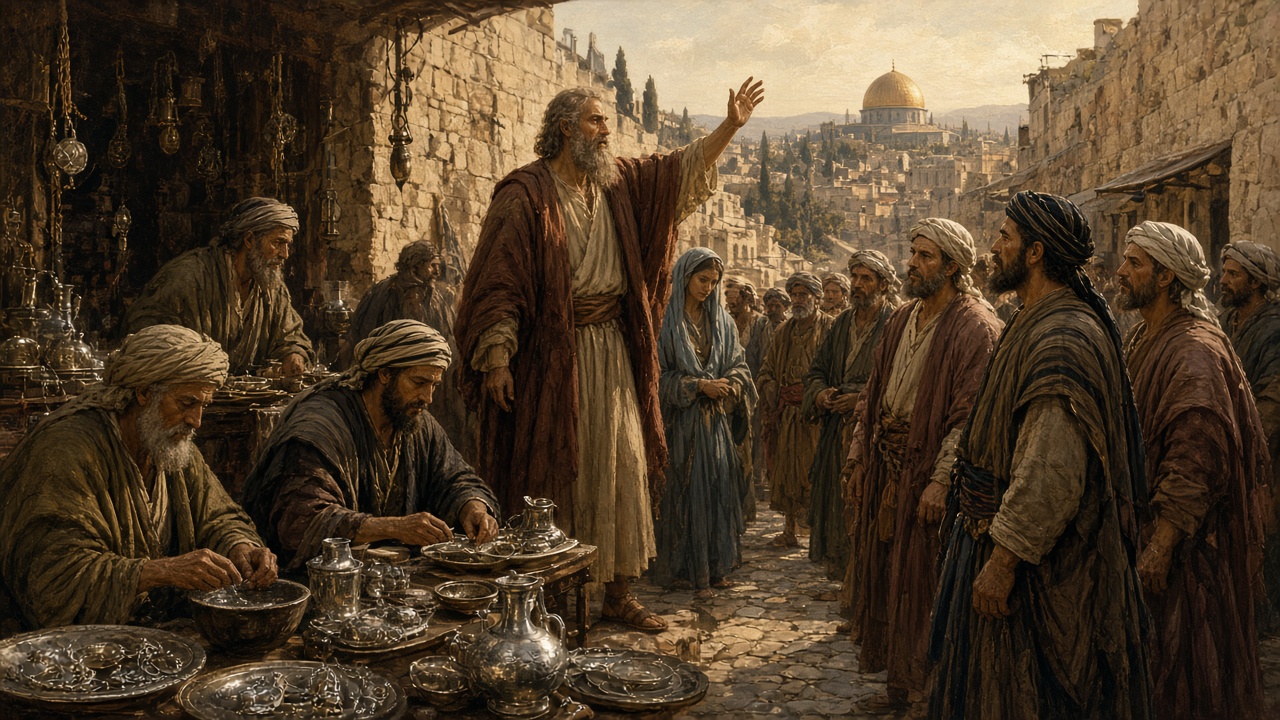
- Zephaniah 1:11 names the Mortar, a place in or near Jerusalem inhabited by silver merchants. It has been conjectured that this was the Phoenician quarter of the city, where traders of that nation lived.Sources: Mortar
Notes written with AI assistance from open sources (Theographic Bible Metadata, CC BY-SA 4.0; Easton’s Bible Dictionary, public domain) and reviewed before publishing.
Dii yã́kpalɛkɛa ń dṹniao
1Dii yã'ò Kusi nɛ́ Sofoniɛ gↄↄ pↄ́ Amↄ nɛ́ Yosia dɛ Yudaↄ kía ũ. Sofonipiá Gedalia tↄũnaɛ, Amalia sĩ́wɛnaɛ, Ezekia sↄ̃kpaɛɛ.
2Má pↄ́pii waa tↄↄlɛwa.
Ma Dii mámɛ má ò.
3Má gbɛ̃nazĩnaↄ ń nↄ̀bↄↄ waa píiɛ,
má bãↄ ń kpↄↄ waa píiɛ.
Má vãikɛnaↄ fu,
mí gbɛ̃nazĩnaↄ kaalɛ tↄↄlɛ.
Ma Dii mámɛ má ò.
4Má ↄloo Yudaↄ ń Yelusalɛũdeↄla píiɛ.
Má guɛ bee zↄ̃ Baali gbàgbana pↄ́ gↄ̃̀ↄnɛ,
mí gulɛsĩ sa'onaↄ ń tã́a sa'onaↄ tↄ́ bãdɛ,
5gbɛ̃́ pↄ́ aaì kúlɛ musupↄↄnɛ kpɛ́ musuↄ
ń gbɛ̃́ pↄ́ aaì kúlɛmɛɛ
aaì lɛgbɛ̃ ń ma tↄ́o,
aaì ɛa gbɛ̃ ń tã́a Mↄlↄkuoↄ,
6gbɛ̃́ pↄ́ pↄ̀ↄbↄzãkɛ̀ aai tɛmazi lↄoↄ.
Aali ma kĩ́i wɛɛlɛ aa yãgbɛaao.
7À kɛ kílikili Dii Lua aɛ,
asa Dii gↄↄ kãikũ̀.
À sa'obↄ dìlɛ Yudaↄ ũ,
à gbãbↄ̀ gbɛ̃́ pↄ́ à ń sisiↄnɛ.
8Ma gbagbagↄↄzĩ
má ĩada kíaↄ ń kíanɛↄwa
ń gbɛ̃́ pↄ́ buipãle pↄkasa daaↄ píi.
9Gↄↄ bee má ĩada
gbɛ̃́ pↄ́ aaì vĩvĩ kpɛɛlɛ bèeↄwa,
gbɛ̃́ pↄ́ aaì ń dii kpɛ́ pa
ń yãpãsĩo ń mↄafilioↄ.
10Ma Dii ma mɛ̀,
gↄↄpi zĩ́ wa ↄ́ gbãa dↄ Kpↄ̀ Bↄlɛu,
Fã́ani dafu a wã ń wiio,
mɛ́ wa zↄa zↄ̃ↄ ma gbɛ̀sĩsĩↄ musu.
11Ɛlɛfãanideↄ, à wiipɛ,
asa laatanaↄ midɛ píiɛ,
mɛ́ ↄde gbãngbooↄ kaalɛ míↄmiↄɛ.
12Zĩbeezĩ má Yelusalɛũ kɛɛlɛ ń filiaↄ,
mí ĩada gbɛ̃́ pↄ́ kálɛa we
lán wɛ̃ pↄ́ kú ń a gbↄ̃oↄwa.
Gbɛ̃́piↄ ì o ń sↄ̃ guu aa mɛ
má yãe kɛo, a maa ge a vãin nò.
13Wa ń àizɛɛↄ naaa,
an bɛↄ i gↄ̃ yàaa.
Aa bɛkpakpa,
kási aa e zↄ̃lɛuo,
aa vɛ̃ɛli pɛ́pɛ,
kási aa e a imio.
14Dii gↄↄ zↄ̃ↄ kãikũ̀,
À kà kãi, àlɛ ká ń bao.
Dii gↄↄ zↄa aↄ dↄ wɛ̃nannↄ,
baa nɛgↄ̃na a wiipɛ.
15Gↄↄpiá kpɛ̃nɛmuugↄↄɛ,
taasi ń yeelɛao gↄↄɛ lↄ.
Músi ń gudɛao gↄↄɛ,
gubeebee gↄↄɛ, gu a siakũ,
lou guduuduu gↄↄɛ.
16Zĩbeezĩ kã̀ae'ↄ ń zĩkawiio aↄ dↄ
wɛ̃́lɛ bĩ́ideↄ ń bĩ́ipi gulɛsĩↄu.
17Má gbɛ̃nazĩnaↄ da taasiu,
aai táa'o lán vĩ̀aↄwa,
asa aa duunakɛ̀mɛɛɛ.
Wa ń au daada lán íwa,
an gɛↄ aↄ kpálɛa lán bìsawa.
18An ã́nusu ge an vua a fↄ̃ ń bↄ
Dii kpɛ̃nɛmuugↄↄpi zĩ́o.
Aà zafɛ̃a tɛ́ a kṹ dṹniawa píiɛ,
a gbɛ̃́ pↄ́ kú a guuↄ midɛ kã́ndo.
Did you know?
The Day of the LORD and Judgment on Idolatry
- Zephaniah traces his lineage back four generations to Hezekiah, dating his prophetic ministry to the reign of King Josiah of Judah. Josiah came to power after his father, King Amon, had restored idolatry across Judah before being assassinated by his own servants.Sources: the Bible text itself · Josiah · Amon · Hizkiah
- The chapter denounces religious syncretism in Jerusalem, where people bowed on rooftops to the host of heaven and combined their devotion to the LORD with oaths to Baal and Malcham, the national idol of the Ammonites.Sources: the Bible text itself · Baal · Malcham
- The prophecy specifies landmarks in Jerusalem that would experience turmoil, including the Fish Gate and the Mortar (or Hollow), a district inhabited by merchants who weighed out silver.Sources: the Bible text itself · Fish Gate · Mortar
Notes written with AI assistance from open sources (Theographic Bible Metadata, CC BY-SA 4.0; Easton’s Bible Dictionary, public domain) and reviewed before publishing.
Places in this chapter
- Jerusalem · 31.777, 35.234 · verses 4, 12
- Fish Gate · Today: in Jerusalem · 31.777, 35.234 · verse 10
- Second Quarter · Today: in Jerusalem · 31.777, 35.234 · verse 10
- Canaan · 32.767, 35.333 · verse 11
- Mortar · Today: in Jerusalem · 31.777, 35.234 · verse 11
Only places identified with high confidence are shown (90% or more according to the scholarly sources compiled by OpenBible). Period map: DARE (Digital Atlas of the Roman Empire), CC BY 4.0; modern map: © OpenStreetMap contributors; places: OpenBible.info (CC BY 4.0).
Credits and license for this translation
Bibeli Luayãtaalá
The Holy Bible in the Boko language spoken in Benin and Nigeria
copyright © 2010 SIM International
Language: Boko
Translation by: SIM International
Boko Bibeli Luayãtaala
This translation, published by the SIM au Benin, was published in 2010.
If you are interested in obtaining a printed copy, please contact the SIM at ECWA/SIM H.Q., P.M.B. 2009, Jos, Plateau State, NIGERIA.
This translation text is made available to you under the
terms of the Creative Commons License: Attribution-Noncommercial-No Derivative Works.
( http://creativecommons.org/licenses/by-nc-nd/3.0/ )
In addition, you have permission to port the text to different file formats, as long as you
do not change any of the text or punctuation of the Bible.
You may share, copy, distribute, transmit, and extract portions
or quotations from this work, provided that you include the above copyright
information:
You must give Attribution to the work.
You do not sell this work for a profit.
You do not make any derivative works that change any of the actual words or punctuation of the Scriptures.
Permissions beyond the scope of this license may be
available if you contact
us with your request.
This translation is made available to you under the terms of the
Creative Commons Attribution-Noncommercial-No Derivatives license 4.0.
You may share and redistribute this Bible translation or extracts from it in any format, provided that:
You include the above copyright and source information.
You do not sell this work for a profit.
You do not change any of the words or punctuation of the Scriptures.
Pictures included with Scriptures and other documents on this site are licensed just for use with those Scriptures and documents.
For other uses, please contact the respective copyright owners.
2014-09-25
Source: http://ebible.org/bqcsim/ · eBible.org