Song of Songs 6
Bibeli Luayãtaalá · Tap a verse to see its cross-references.
1N gbɛ̃́ pↄ́ ń kɛfɛũ dɛ nↄɛↄla píi,
n yenzide gɛ̀ má ni?
N yenzide mi dì má oiɛ
kɛ́ wà e wà aà wɛɛlɛnnↄi?
2Ma yenzide gɛ̀ a pↄ́ gĩnana buaɛ,
à gɛ̀ pↄblei a kaauɛ,
i lávuↄ wɛ.
3Ma yenzideá ma pↄ́ɛ,
mɛ́ aà pↄ́n ma ũ,
àlɛ pↄble sũmaavuↄ guuɛ.
4Ma gbɛ̃na, ń kɛfɛũ lán Tiizawa,
ń maa lán Yelusalɛũwa.
N yã́ ì dimá
lán zĩgↄ̃ pↄ́ dàlapoo kũaↄwa.
5Wɛgoa, asa málɛ liɛ.
N mikã dɛ lán blè wiilaↄ pilaa Galada sĩ̀sĩwawa.
6N swaa pua lán sã pↄ́ aa bↄ̀lɛ zu'okĩi aalɛ suↄwa.
Aa kↄ̃sɛ̀ plapla píi,
an kee i pↄsɛ bↄo.
7N gɛɛ dɛ lán gbɛafu pɛɛwa
n sálana fòou.
8Ma naↄ kà bàaↄ̃,
a pↄ́ mi mɛ́sɛdilɛnɛ́oↄ basiiↄ̃,
a lɛ́soↄ lɛ́ vĩo,
9ãma ma felen sãasai adoaɛ,
aà da nɛ́ mɛ̀ndonan we,
aà da'iapi pↄ dↄwàɛ.
Tó nɛnↄnaↄ aà è, aaì aà sáaukpaɛ,
ma nↄpiↄ ì aà tↄbↄ ḿpii.
10Démɛ bↄ̀ lɛ́ mↄ́ kee lán gudↄawai?
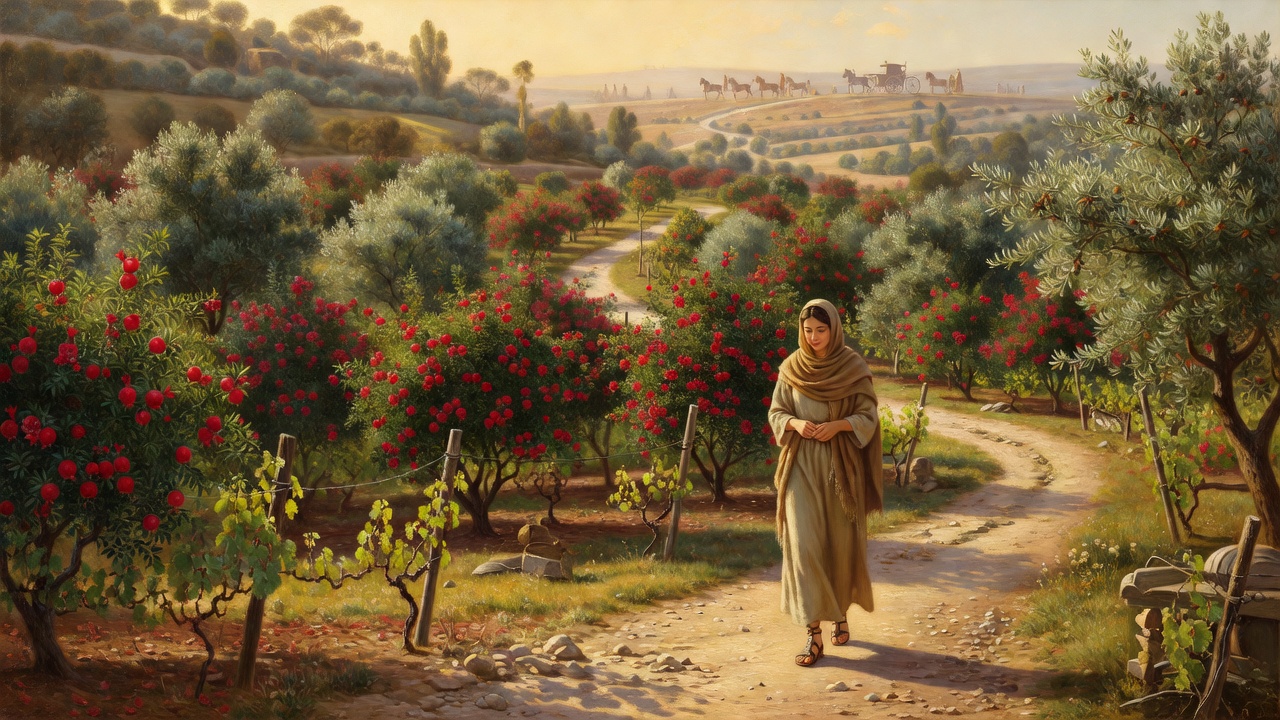
A kɛfɛũ lán mↄvuawa,
a pípia lán ĩatɛ̃wa.
Aà yã́ ì dimá
lán zĩgↄ̃ pↄ́ dàlapoo kũaↄwa.
11Ma gɛ lí pↄ́ wì a wɛ́na só kaau,
ma pila swa'ɛu pↄ́ↄ lá taa gwaiɛ.
Ma gɛ gwai tó vɛ̃ɛↄ bↄlↄbↄ̀,
tó gbɛafuↄ vukɛ̀.
12Mi dↄ̃ kɛ́ ma nisĩna ma sɛ
gɛ̀manↄ ma kía deeↄ sↄ̃́goↄ guuo.
Did you know?
Beauty and Royal Splendor
- The poem praises the woman's beauty by comparing her to Tirzah and Jerusalem, two prominent royal centers. Tirzah was an ancient Canaanite city celebrated for its charm that later served as an early capital of the northern kingdom of Israel, while Jerusalem stood as the mountain capital of Judah.Sources: Tirzah · Jerusalem · the Bible text itself
- The description of hair streaming down like a flock of goats from Gilead evokes the rugged, mountainous territory east of the Jordan River, where herds grazed along the steep slopes.Sources: Gilead · the Bible text itself
Notes written with AI assistance from open sources (Theographic Bible Metadata, CC BY-SA 4.0; Easton’s Bible Dictionary, public domain) and reviewed before publishing.
Places in this chapter
Only places identified with high confidence are shown (90% or more according to the scholarly sources compiled by OpenBible). Period map: DARE (Digital Atlas of the Roman Empire), CC BY 4.0; modern map: © OpenStreetMap contributors; places: OpenBible.info (CC BY 4.0).
Credits and license for this translation
Bibeli Luayãtaalá
The Holy Bible in the Boko language spoken in Benin and Nigeria
copyright © 2010 SIM International
Language: Boko
Translation by: SIM International
Boko Bibeli Luayãtaala
This translation, published by the SIM au Benin, was published in 2010.
If you are interested in obtaining a printed copy, please contact the SIM at ECWA/SIM H.Q., P.M.B. 2009, Jos, Plateau State, NIGERIA.
This translation text is made available to you under the
terms of the Creative Commons License: Attribution-Noncommercial-No Derivative Works.
( http://creativecommons.org/licenses/by-nc-nd/3.0/ )
In addition, you have permission to port the text to different file formats, as long as you
do not change any of the text or punctuation of the Bible.
You may share, copy, distribute, transmit, and extract portions
or quotations from this work, provided that you include the above copyright
information:
You must give Attribution to the work.
You do not sell this work for a profit.
You do not make any derivative works that change any of the actual words or punctuation of the Scriptures.
Permissions beyond the scope of this license may be
available if you contact
us with your request.
This translation is made available to you under the terms of the
Creative Commons Attribution-Noncommercial-No Derivatives license 4.0.
You may share and redistribute this Bible translation or extracts from it in any format, provided that:
You include the above copyright and source information.
You do not sell this work for a profit.
You do not change any of the words or punctuation of the Scriptures.
Pictures included with Scriptures and other documents on this site are licensed just for use with those Scriptures and documents.
For other uses, please contact the respective copyright owners.
2014-09-25
Source: http://ebible.org/bqcsim/ · eBible.org