Psalms 65
Bibeli Luayãtaalá · Tap a verse to see its cross-references.
Bui píi wɛ́ dↄ Luazi
1Davidi lɛ.
2Lua, à kũ̀ wà n táasilɛ Siↄnaɛ,
wi lɛ́ pↄ́ wa kɛ̀maↄ fĩabo.
3Lá ni gbɛ̃́ wabikɛa ma,
bui píi a wi danlaɛ.
4Wá yãvãiↄ làasoo wá kṹ gbãa,
ↄ̃ n wá tàaeↄ kɛ̃̀wá.
5Báaaden gbɛ̃́ pↄ́ ń sɛ̀
n gɛ̃aànↄ n ua ũ.
N kpɛ́ pↄmaaↄ wá kã́,
n kpɛ́ pↄ́ a kua adoapi.
6Ni wewá a zɛ́wa ń yãbↄnsaɛkɛao,
Lua wá Suabana.
Za dṹnia lɛ́wa ń ísia baaleo
gbɛ̃́ↄ wɛ́ dↄnzi.
7Ń gbãa daa ula ũ,
n gbɛ̀sĩsĩↄ kɛ̀ ń n ikoo.
8Ni ísia ń a ísↄ̃ↄ kↄ̃fĩo kpálɛ,
ni buipãleↄ zↄa midɛ.
9N dabudabukɛa dì gbɛ̃́ pↄ́ kú tↄↄlɛ lɛ́ↄwa,
wì guladↄma za ĩatɛ̃bilɛkĩi ń a gɛ̃kpɛukĩio.
10Ni laaidↄ dṹniawa,
ni táaekɛ tↄↄlɛɛ.
Ni aà gba í, n swaↄ pai ń ío,
ni to blɛwɛna kɛ, asa màa n zɛò.
11Ni idagua e bugbaanaↄ pa,
ni guↄ foofↄ̃ ń louo,
ni báaada pↄ́ pↄ́ bↄ̀lɛu.
12Ni ɛ̀fãaida buazĩu wɛ̃ ń wɛ̃o,
blɛ níside ì kwɛ n iau.
13Sɛ̃sao dã́dãkɛkĩiↄ sɛ̃̀bↄlↄ kɛ̀,
sĩ̀sĩↄ pↄna ula dà.
14Pↄtuoↄ lì dã́dãkɛkĩiↄla,
blɛwɛna daa gua sĩ̀sĩpↄlɛu.
Wàlɛ wiilɛ ń pↄnao, wàlɛ lɛsi.
Did you know?
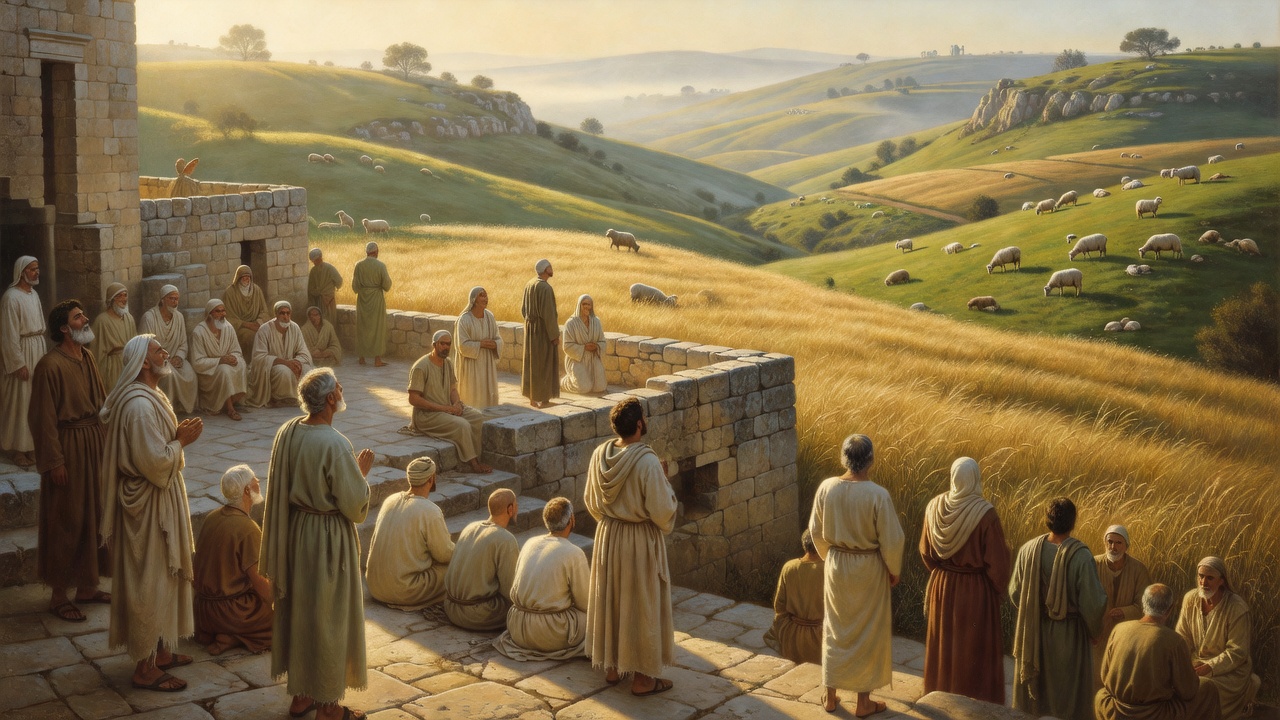
Praise for God's Care and Harvest
- The psalm opens with praise in Zion, the southeastern hill of Jerusalem captured by King David. It became the site of his citadel and palace, as well as a central poetic designation for the place of God's temple and presence.Sources: Zion · the Bible text itself
- The latter portion of the psalm celebrates divine provision through seasonal rainfall. It vividly depicts agrarian life, describing how gentle showers soften plowed furrows and ridges to produce abundant grain, thriving pastures, and flourishing livestock.Sources: the Bible text itself
Notes written with AI assistance from open sources (Theographic Bible Metadata, CC BY-SA 4.0; Easton’s Bible Dictionary, public domain) and reviewed before publishing.
Places in this chapter
- Zion · Today: Jerusalem · 31.777, 35.234 · verse 1
Only places identified with high confidence are shown (90% or more according to the scholarly sources compiled by OpenBible). Period map: DARE (Digital Atlas of the Roman Empire), CC BY 4.0; modern map: © OpenStreetMap contributors; places: OpenBible.info (CC BY 4.0).
Credits and license for this translation
Bibeli Luayãtaalá
The Holy Bible in the Boko language spoken in Benin and Nigeria
copyright © 2010 SIM International
Language: Boko
Translation by: SIM International
Boko Bibeli Luayãtaala
This translation, published by the SIM au Benin, was published in 2010.
If you are interested in obtaining a printed copy, please contact the SIM at ECWA/SIM H.Q., P.M.B. 2009, Jos, Plateau State, NIGERIA.
This translation text is made available to you under the
terms of the Creative Commons License: Attribution-Noncommercial-No Derivative Works.
( http://creativecommons.org/licenses/by-nc-nd/3.0/ )
In addition, you have permission to port the text to different file formats, as long as you
do not change any of the text or punctuation of the Bible.
You may share, copy, distribute, transmit, and extract portions
or quotations from this work, provided that you include the above copyright
information:
You must give Attribution to the work.
You do not sell this work for a profit.
You do not make any derivative works that change any of the actual words or punctuation of the Scriptures.
Permissions beyond the scope of this license may be
available if you contact
us with your request.
This translation is made available to you under the terms of the
Creative Commons Attribution-Noncommercial-No Derivatives license 4.0.
You may share and redistribute this Bible translation or extracts from it in any format, provided that:
You include the above copyright and source information.
You do not sell this work for a profit.
You do not change any of the words or punctuation of the Scriptures.
Pictures included with Scriptures and other documents on this site are licensed just for use with those Scriptures and documents.
For other uses, please contact the respective copyright owners.
2014-09-25
Source: http://ebible.org/bqcsim/ · eBible.org