Numbers 6
Bibeli Luayãtaalá · Tap a verse to see its cross-references.
Gbɛ̃́ pↄ́ azĩa kpà Luawa yã́
1Dii yã'ò Mↄiziɛ à mɛ̀: 2O Isailiↄnɛ, tó gↄ̃ɛ ge nↄɛ lɛkɛ̀a à mɛ̀ a azĩa kpàa ma gbɛ̃́ ũɛ zálala, 3ade vɛ̃ɛ ń í gbãao tɛ̃́. Asu vɛ̃ɛbɛ'i buie kã a lɛ́wao, mɛ́ asu vɛ̃ɛbɛ ísi ge a gii bleo. 4Gↄↄ pↄ́ a ku ma gbɛ̃́ ũ zálala, asuli vɛ̃ɛli pↄe bleo, baa a wɛ́na ge a tɛɛ.
5E lɛ́ pↄ́ a kɛ̀api gↄↄ gɛ paò, gɛ̃ su táa'o aà miwao. Aↄ dɛ ma pↄ́ ũ e gↄↄ pↄ́ à azĩa kpàapi lɛ́ gɛ paòɛ, i to a mikã gbã a laaiwa. 6E gↄↄ pↄ́ à azĩa kpàa ma gbɛ̃́ zálala ũpi lɛ́ gɛ paò, asu sↄ̃ gɛio. 7Baa tó aà mae ge aà da ge aà vĩ̀i ge aà dãuna gà, asu sↄ̃ aà gɛi à gbãlɛo, asa aàzĩa kpaaa seela ku aà miwaɛ. 8Aↄ dɛ ma pↄ́ ũɛ e gↄↄ pↄ́ à azĩa kpàa ma gbɛ̃́ zálala ũpi lɛ́ gɛ paò. 9Tó gbɛ̃e gà aà wáa kã́ndo, mɛ́ aà kua ma pↄ́ ũ mikã gbãlɛ̀, aà a mipi bo gbáigbai a gbãbↄgↄↄ, gↄↄ sopla gbɛa. 10A gↄↄ swaaↄ̃de zĩ́ i mↄ sa'onaɛ ń felenaↄ ge felenguulu bↄlↄnaↄ mɛ̀n pla kpaaũkpɛ kpɛɛlɛ, 11sa'ona i sa'o ń a mɛ̀ndoo duun awakpabↄ ũ, i sa pↄ́ wì a pↄ́ kátɛu à tɛ́kũ o ń a mɛ̀ndoo, i gbãbↄɛ̀ aà kua gɛ saɛ yã́i. Zĩbeezĩ i a mi bo, 12i ɛa à azĩa kpaa e a kua ma pↄ́ ũ gↄↄ lɛ́u, i mↄ́ ń sãsa wɛ̃donao tàae fĩabobↄ ũ. Wasu aà kua ma gbɛ̃́ zálala ũ sɛ̃́ia gↄↄ dauo, asa aà kua ma gbɛ̃́ zálala ũ káaupi ↄ̃̀ↄkpàɛ.
13Ikoyã pↄ́ má dìlɛ gbɛ̃́ pↄ́ azĩa kpàaɛn kɛ lↄ. Tó gↄↄ pↄ́ a dìlɛ àↄ ku ma pↄ́ ũ pà, wà mↄaànↄ kpaaũkpɛ kpɛɛlɛ, 14i sa'oa ń sãsa wɛ̃dona pↄ́ sãa vĩoo sa pↄ́ wì a pↄ́ kátɛu à tɛ́kũ obↄ ũ ń sãda wɛ̃dona pↄ́ sãa vĩoo duun awakpabↄ ũ ń sãsakao pↄ́ sãa vĩoo sáaukpa sa'obↄ ũ 15apii ń a pↄ́wɛntio ń a vɛ̃ɛo ń kàao gbí do, kàa pↄ́ wa tòto ń nísioↄ ń kàawana pↄ́ wà nísi fã̀wàↄ. 16Sa'ona i mↄ́ ń pↄ́piↄ ma aɛ píi, i sa pↄ́ wì o duuna awakpabↄ ũ o ń sa pↄ́ wì a pↄ́ kátɛu à tɛ́kũo, 17i sáaukpa sa'oa ń sãsakaoo ń a pↄ́wɛntio ń a vɛ̃ɛo ń kàao gbí do. 18Gbɛ̃́ pↄ́ azĩa kpàapi i a mi bo kpaaũkpɛ kpɛɛlɛ we, i a kua ma pↄ́ ũ mikã sɛ́lɛ kátɛu sáaukpasa nísi zĩ́lɛ. 19Tó à a mi bò màa, sa'ona i sãsakao ↄ do pↄ́ wà a fùukɛ̀ sɛ́ ń kàa pↄ́ a bↄ̀ gbíuo mɛ̀ndo ń kàawanao mɛ̀ndo, i na gbɛ̃́ pↄ́ mibòpiɛ a ↄzĩ. 20Sa'onapi i ɛa sí, i mↄmɛɛ. Lá pↄ́piↄá ma pↄ́ɛ, a gↄ̃ sa'onapi pↄ́ ũɛ ń a kùla pↄ́ wì mↄmɛɛo ń a gbá pↄ́ wì bↄ adoao. Bee gbɛa gbɛ̃́ pↄ́ azĩa kpàapi i gbasa ɛa na vɛ̃ɛmiawa.
21Ikoyã pↄ́ má dìlɛ gbɛ̃́ pↄ́ azĩa kpàaɛn we ń sa pↄ́ a oa a lɛkɛa yã́io, pↄ́ pↄ́ asu ye kã́fĩ a gbãa lɛ́u bàasi. Lɛ́ pↄ́ a kɛ̀ gↄↄ pↄ́ à azĩa kpàa, sema aà a fĩabo.
Sa maa pↄ́ sa'onaↄ lí o gbɛ̃́ↄnɛ
22Dii yã'ò Mↄiziɛ à mɛ̀: 23O Aalonaɛ ń a nɛ́ↄ, tó aalɛ samaa'o Isailiↄnɛ, aali mɛ:
24Dii báaadaágu, i ↄkuála,
25Dii á gwa, i gbɛ̃kɛkɛɛ́,
26Dii wɛ́tɛázi, i á nↄ̀sɛ daɛ́ doũ.
27Aali samaa'o Isailiↄnɛ ń ma tↄ́o màa, míli báaadańgu.
Did you know?
The Nazirite Vow and the Priestly Blessing
- The Nazirite vow was a voluntary period of special consecration to God available to both men and women. During this time, the person had to abstain completely from grape products and fermented drinks, leave their hair uncut, and avoid ritual defilement from any dead body, even that of an immediate family member.Sources: the Bible text itself
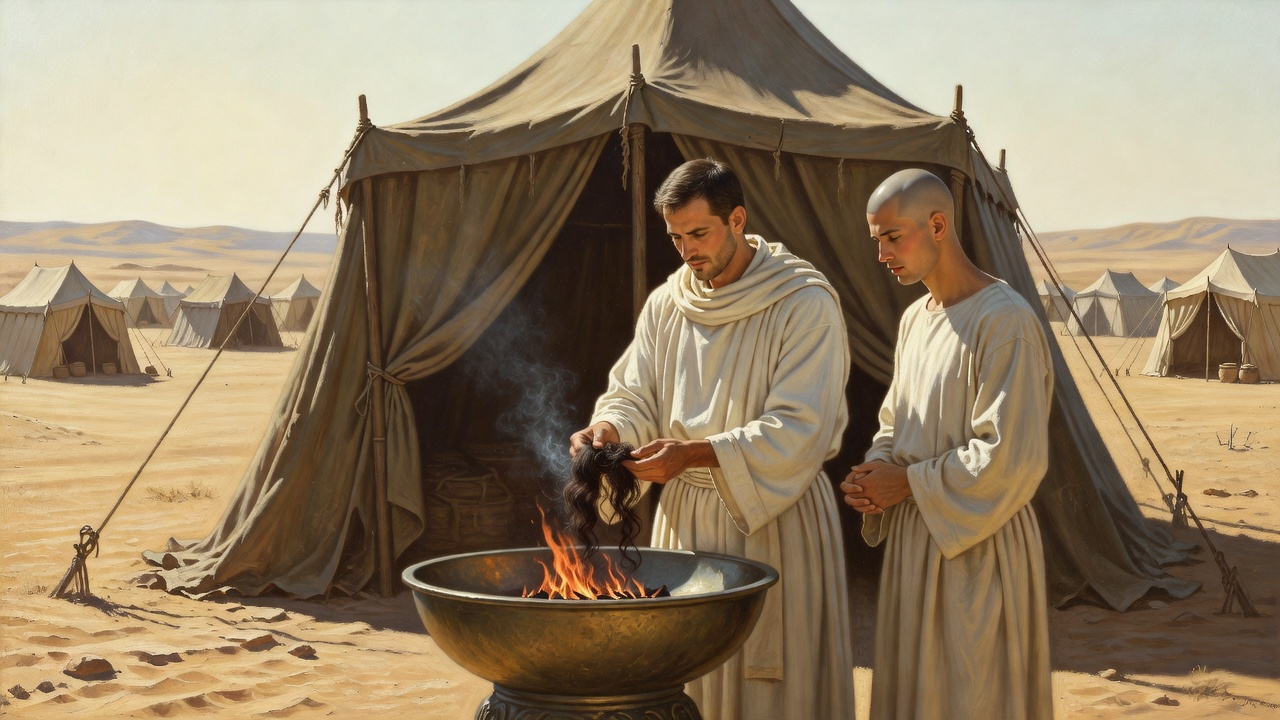
- When the period of separation ended, the Nazirite brought sacrifices to the entrance of the Tent of Meeting, shaved their head of hair, and burned the hair in the fire beneath the peace offering sacrifice. After the priest offered the required portions before God, the vow concluded and the person was allowed to drink wine again.Sources: the Bible text itself
- The chapter concludes with the priestly blessing that God instructed Moses to give to Aaron and his sons. By invoking God's protection, shining face, grace, and peace, the priests placed the divine name upon the people of Israel.Sources: the Bible text itself · Moses · Aaron
Notes written with AI assistance from open sources (Theographic Bible Metadata, CC BY-SA 4.0; Easton’s Bible Dictionary, public domain) and reviewed before publishing.
Credits and license for this translation
Bibeli Luayãtaalá
The Holy Bible in the Boko language spoken in Benin and Nigeria
copyright © 2010 SIM International
Language: Boko
Translation by: SIM International
Boko Bibeli Luayãtaala
This translation, published by the SIM au Benin, was published in 2010.
If you are interested in obtaining a printed copy, please contact the SIM at ECWA/SIM H.Q., P.M.B. 2009, Jos, Plateau State, NIGERIA.
This translation text is made available to you under the
terms of the Creative Commons License: Attribution-Noncommercial-No Derivative Works.
( http://creativecommons.org/licenses/by-nc-nd/3.0/ )
In addition, you have permission to port the text to different file formats, as long as you
do not change any of the text or punctuation of the Bible.
You may share, copy, distribute, transmit, and extract portions
or quotations from this work, provided that you include the above copyright
information:
You must give Attribution to the work.
You do not sell this work for a profit.
You do not make any derivative works that change any of the actual words or punctuation of the Scriptures.
Permissions beyond the scope of this license may be
available if you contact
us with your request.
This translation is made available to you under the terms of the
Creative Commons Attribution-Noncommercial-No Derivatives license 4.0.
You may share and redistribute this Bible translation or extracts from it in any format, provided that:
You include the above copyright and source information.
You do not sell this work for a profit.
You do not change any of the words or punctuation of the Scriptures.
Pictures included with Scriptures and other documents on this site are licensed just for use with those Scriptures and documents.
For other uses, please contact the respective copyright owners.
2014-09-25
Source: http://ebible.org/bqcsim/ · eBible.org