Leviticus 5
Bibeli Luayãtaalá · Tap a verse to see its cross-references.
1Tó gbɛ̃́ mà wàlɛ seeladeↄ wɛɛlɛ, mɛ́ aàpi sↄ̃ à yãe è ge a yãe dↄ̃ yã́pi guu, tó a nílɛ, à duunakɛ̀n we, yã́pi a wi aà musuɛ. 2Tó gbɛ̃́ ↄkã̀ pↄ́ gbãlɛawa, nↄ̀bↄ ge pↄtuo ge pↄ́taa'onkuawa pↄ́ dɛ tɛ̃ ũ gɛn nò, baa tó a a yã́ dↄ̃o, à gↄ̃̀ gbãlɛaɛ, tàaeɛ. 3Tó gbɛ̃́ ↄkã̀ gbɛ̃nazĩn bↄlↄwa ge pↄ́ pↄ́ ì to gbɛ̃́ gↄ̃ gbãlɛa píin nò, baa tó a a yã́ dↄ̃o, gbɛzã tó a dↄ̃̀, tàaeɛ. 4Tó gbɛ̃́ lɛkɛ̀ Luawa làasoosai, à mɛ̀ á yãkɛ, yãvãi ge yãmaan nò, yã́ pↄ́ gbɛ̃́ a lɛkɛ̀ làasoosai píi lé, baa tó a dↄ̃o, tó a dↄ̃̀ gbɛzã, tàaeɛ. 5Tó gbɛ̃́ gↄ̃̀ tàaede ũ yã́piↄ do musu, aàli yã́ pↄ́ à zã̀wà o gupuau, 6i mↄ Diiɛ ń sãdao ge bleda duuna pↄ́ á kɛ̀ fĩabobↄ ũ, iↄ dɛɛ̀ duun awakpabↄ ũ, sa'ona i aà duuna kɛ̃wà.
7Tó aà gbãa i ka aà mↄ́ ń sãoo, aàli mↄ́ Diiɛ ń felenkↄpunao mɛ̀n pla ge felenguulu bↄlↄna mɛ̀n pla duuna pↄ́ á kɛ̀ fĩabobↄ ũ, ado ìↄ dɛ duun awakpabↄ ũ, ado sↄ̃ sa pↄ́ wì a pↄ́ kátɛu à tɛ́kũ obↄ ũ. 8Aàli mↄò sa'onaɛ, sa'onapi i a sɛ̃́ia kpá duun awakpabↄ ũ. Aàli a kòlokpa ń ↄkↄↄo mizↄ̃sai, 9i awakpabↄpi au fã́ sa'okĩi saalowa, i ↄtↄ̃wà, au pↄ́ gↄ̃̀ i bↄlɛ sa'okĩipi gbázĩ. Duun awakpabↄɛ. 10Sa'ona i ado kpa sa pↄ́ wì a pↄ́ kátɛu à tɛ́kũ ũ lá wì kɛwa, i duuna pↄ́ a kɛ̀pi kɛ̃wà, Dii i sùuukɛaànↄ.
11Tó aà gbãa i ka aà felena kpá mɛ̀n plao, aàli mↄ́ ń pↄ́wɛntio kiloo pla duuna pↄ́ á kɛ̀ awakpabↄ ũ. Asuli nísi ge tulaleti káuo, asa duun awakpabↄɛ. 12Aàli mↄò sa'onaɛ, sa'onapi i dã ↄkũ do yãdↄa Diigu gba ũ, i kpasa sa'okĩiwa pↄ́ pↄ́ wa kà Diiɛ tɛ́u àlɛ tɛ́kũ musu. Duun awakpabↄɛ. 13Màa sa'ona ali aà duuna kɛ̃wà yã́piↄ do pↄ́ a kɛ̀ musu, Dii i sùuukɛaànↄ. Pↄ́wɛnti pↄ́ gↄ̃̀ líↄ dɛ sa'ona pↄ́ ũ lán pↄ́wɛn gbawa.
Tàae fĩabobↄ
14Dii yã'ò Mↄiziɛ, ↄ̃ Mↄizi mɛ̀: 15Tó gbɛ̃́ náaisaiyãkɛ̀, à zã̀ yã́wa Dii gbaa pↄ́ yã́ musu, duunaɛ. Aàli mↄ́ Diiɛ ń sãsakao sãasaio a fĩabobↄ ũ. Tàae fĩabobↄpi ↄ̃a lí ká, lá wà a lɛ́ dìlɛ Dii kpɛ́uwa. 16Aàli pↄ́ pↄ́ i Dii gbao fĩaboɛ̀, i ɛa à a ↄ̃a sↄode nawà, i kpa sa'onawa, sa'onapi i aà tàae kɛ̃wà, Dii i sùuukɛaànↄ.
17Tó gbɛ̃́ duunakɛ̀, à yã́ pↄ́ Dii gì a kɛai kɛ̀, baa tó a dↄ̃o, tàaeɛ, a wi aà musuɛ. 18Aàli mↄ́ sa'onaɛ ń sãsakao sãasaio tàae fĩabobↄ ↄ̃a lɛ́u, sa'onapi i yã́ pↄ́ à zã̀wà a dↄ̃opi kɛ̃wà, Dii i sùuukɛaànↄ. 19Tàae pↄ́ a kɛ̀ Diiɛ fĩabobↄɛ.
20Dii yã'ò Mↄiziɛ, ↄ̃ Mↄizi mɛ̀: 21Tó gbɛ̃́ ↄ̃nↄkɛ̀ a gbɛ̃́deeɛ pↄ́ pↄ́ gbɛ̃́pi kpàwà ge à nàɛ a ↄzĩ yã́ musu ge à aà kpã́i'ò ge à aà blè, duunaɛ, à náaisaiyãkɛ̀ Diiɛɛ. 22Màaɛ lↄ tó gbɛ̃́ pↄ́ kↄ̃mpa, mɛ́ à gì kpái ge à ɛɛtò à mɛ̀ ń Diio ge duuna pↄ́ wì kɛ lán bee taawaↄ píi. 23Tó gbɛ̃́ duunakɛ̀ à gↄ̃̀ tàaede ũ màa, aàli pↄ́ pↄ́ à a kpã́i'òpi sↄaa adeɛ ge pↄ́ pↄ́ à aà blèò ge pↄ́ pↄ́ wa kpàwà ge pↄ́ pↄ́ à a kↄ̃mpa 24ge pↄ́ pↄ́ à ɛɛtò à mɛ̀ ń Diio a yã́ musu. Aàli fĩabo pↄdeɛ a bɛɛɛ lɛ́u, i ɛa à a ↄ̃a sↄode nawà, i kpawà gↄↄ pↄ́ àlɛ mↄ́ ń a tàae fĩabobↄo. 25Aàli mↄ́ Diiɛ ń sãsakao sãasai pↄ́ kàò a tàae fĩabobↄ ũ, i kpa sa'onawa, 26sa'ona i yã́ pↄ́ a kɛ̀ a tò à gↄ̃̀ tàaede ũpi kɛ̃wà, Dii i sùuukɛaànↄ.
Did you know?
Guilt Offerings and Restitution
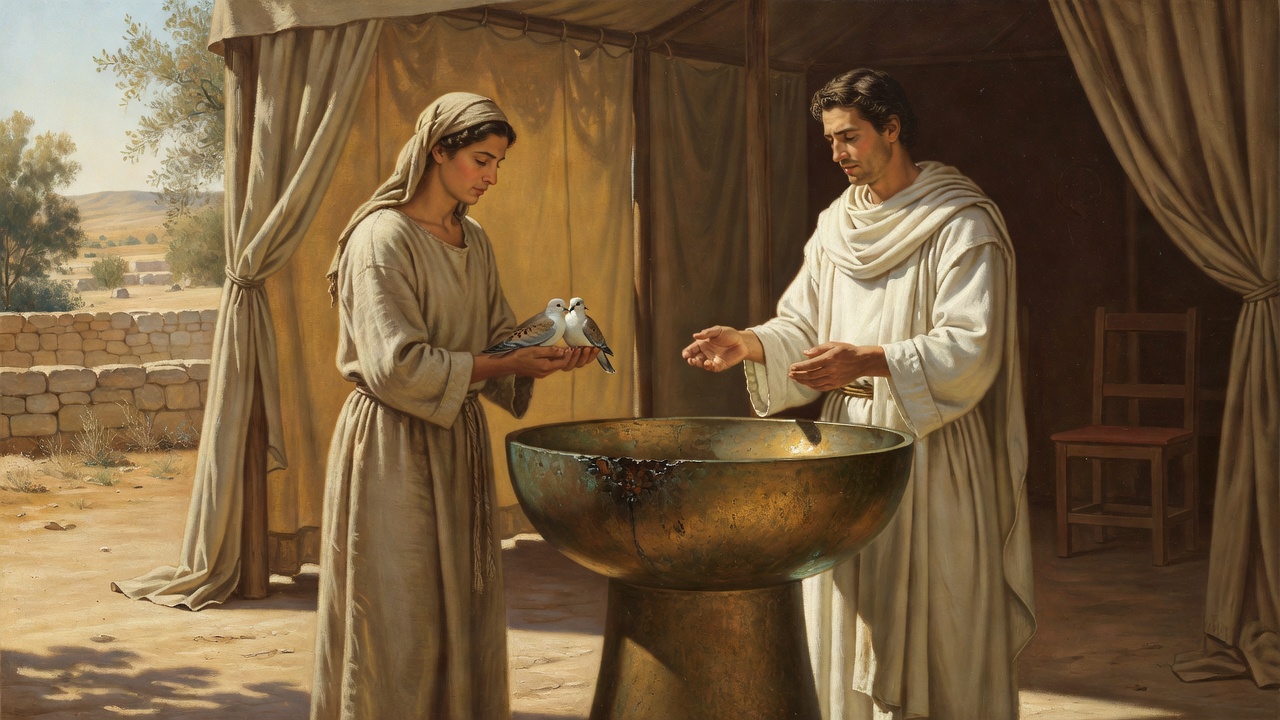
- Leviticus 5 accommodates worshippers of varying economic means by offering a sliding scale for sin offerings. A person who could not afford a lamb or goat was permitted to bring two turtledoves or young pigeons, and someone who could not afford birds could bring a tenth of an ephah of fine flour without oil or incense.Sources: the Bible text itself
- For unintentional offenses involving the Lord's holy things, the offender was required to bring an unblemished ram assessed in sanctuary shekels as a guilt offering. In addition, the person had to make full restitution for what was harmed and add a twenty percent penalty (one-fifth) paid to the priest.Sources: the Bible text itself
- The chapter highlights communal responsibility and speech, identifying specific offenses such as refusing to testify after hearing a public charge to give evidence and making thoughtless or rash oaths.Sources: the Bible text itself
Notes written with AI assistance from open sources (Theographic Bible Metadata, CC BY-SA 4.0; Easton’s Bible Dictionary, public domain) and reviewed before publishing.
Credits and license for this translation
Bibeli Luayãtaalá
The Holy Bible in the Boko language spoken in Benin and Nigeria
copyright © 2010 SIM International
Language: Boko
Translation by: SIM International
Boko Bibeli Luayãtaala
This translation, published by the SIM au Benin, was published in 2010.
If you are interested in obtaining a printed copy, please contact the SIM at ECWA/SIM H.Q., P.M.B. 2009, Jos, Plateau State, NIGERIA.
This translation text is made available to you under the
terms of the Creative Commons License: Attribution-Noncommercial-No Derivative Works.
( http://creativecommons.org/licenses/by-nc-nd/3.0/ )
In addition, you have permission to port the text to different file formats, as long as you
do not change any of the text or punctuation of the Bible.
You may share, copy, distribute, transmit, and extract portions
or quotations from this work, provided that you include the above copyright
information:
You must give Attribution to the work.
You do not sell this work for a profit.
You do not make any derivative works that change any of the actual words or punctuation of the Scriptures.
Permissions beyond the scope of this license may be
available if you contact
us with your request.
This translation is made available to you under the terms of the
Creative Commons Attribution-Noncommercial-No Derivatives license 4.0.
You may share and redistribute this Bible translation or extracts from it in any format, provided that:
You include the above copyright and source information.
You do not sell this work for a profit.
You do not change any of the words or punctuation of the Scriptures.
Pictures included with Scriptures and other documents on this site are licensed just for use with those Scriptures and documents.
For other uses, please contact the respective copyright owners.
2014-09-25
Source: http://ebible.org/bqcsim/ · eBible.org