Job 4
Bibeli Luayãtaalá · Tap a verse to see its cross-references.
Gbɛ̃́ pↄ́ Lua ì aà toto mɛ́ báaa vĩ
1Ɔ̃ Temani gbɛ̃́ Ɛlifaza yã́zãsìwà à mɛ̀:
2Tó gbɛ̃́ wↄ́ↄ fↄ̃̀ yã'ònɛ, ńyↄ̃ mɛnaòoa?
Asa ma lɛ́ a fↄ̃ àↄ kpaaũao.
3Gwa, n lɛdà gbɛ̃́ↄwa dasi,
n gbɛ̃́ pↄ́ an yɛ̃̀ɛɛ làaↄ gbà sↄ̃.
4N yã́ gbɛ̃́ pↄ́ lɛ́ fuↄ sɛ̀ lɛsĩ,
n gbɛ̃́ pↄ́ naalɛaↄ gbà gbãa.
5Kɛ́ yã́ n le sa sↄ̃, ńlɛ fu,
kɛ́ à n le, ↄ̃ bíli n kũ.
6N vĩakɛa Luaɛ lí tó n mi àↄ daa íao lé?
N kua tàaesai lí tó n nↄ̀sɛ àↄ daa doũo lé?
7Làasookɛ!
Démɛ i yãe kɛo, ↄ̃ à mìdɛi?
Gbɛ̃maa ku má ↄ̃ wà aà suumpai?
8Gbɛ̃́ pↄ́ vãi sa pà à yãkele tↄ̃̀wà,
málɛ e bee mɛ́ ì bↄlɛɛ̀.
9Lua lɛ́'ĩana ì aà midɛ,
aà pↄbↄa a níu ì aà tↄ̀lↄzↄ̃.
10Aà kãaa lán nↄ̀ↄmusuwa lɛ́ ì ká,
Lua ì aà swaa ɛ́'ɛɛ̀.
11Ì ga lán nↄ̀ↄmusu pↄ́ nↄ̀ↄ wɛ̀ɛlɛ kùawàwa,
aà nɛ́ↄ i fãaa.
12Yã́kpãina mↄ̀a ĩ́ana guu,
yã́pi feena gɛ̃̀ ma swã́u,
13gↄↄ pↄ́ málɛ nana yàaa o gwãasĩna,
gↄↄ pↄ́ izↄ̃ↄ daa gbɛ̃́ↄla.
14Vĩa ma kũ, málɛ lualua,
ma mɛ̀ bṹu lɛ́ dee.
15Ĩana ma oa pà,
ma mɛkã fɛ̀lɛ sĩ̀.
16À zɛ̀, mi a taa dↄ̃o,
pↄ́pi ku ma aɛ,
ↄ̃ ma aà lↄↄ kpã́ina mà à mɛ̀:
17Gbɛ̃nazĩna yã́ aↄ na Luaɛe?
Démɛ a fↄ̃ àↄ zɛ̃a a Kɛna aɛi?
18Lá Lua lí a malaikaↄ náaikɛo,
mɛ́ ì a zↄ̀blenapiↄ tàae e,
19wa wá gbɛ̃́ pↄ́ wá mɛ dɛ gĩ̀ kpɛ́ ũ,
mɛ́ wá daalɛa dɛ bùsu giina ũ,
wì wá suumpa lán kitolowa pↄ́ oa?
20Za kↄↄ e oosi gbɛ̃́ↄ ì gaga,
aaì sãalɛ e gↄↄpii, wìli ń fãnkɛo.
21Lua ì ń kpɛ́pi gbapɛlɛ wolɛnɛ́,
ↄ̃ aaì ga ↄ̃nↄkũsai.
Did you know?
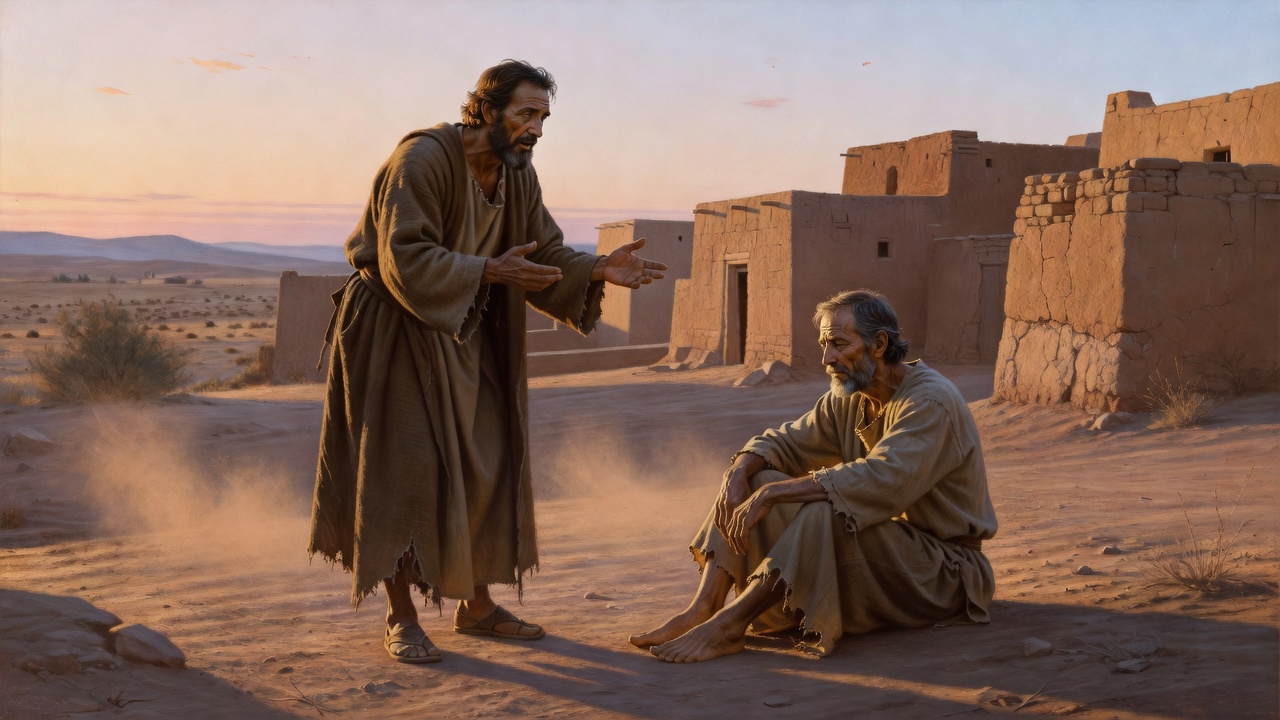
Eliphaz's First Speech
- Eliphaz the Temanite is the first of Job's companions to respond, breaking their week of silence. He acknowledges Job's past reputation for comforting and strengthening the distressed before questioning why Job cannot apply that same endurance to his own suffering.Sources: the Bible text itself · Eliphaz
- Eliphaz introduces the traditional principle of retribution, arguing that the innocent never perish and that individuals reap what they sow in life.Sources: the Bible text itself
- To support his theological claim, Eliphaz describes a chilling night vision where a mysterious spirit stood before him in the dark, declaring that fragile mortals dwelling in houses of clay cannot be more righteous or pure than their Maker.Sources: the Bible text itself
Notes written with AI assistance from open sources (Theographic Bible Metadata, CC BY-SA 4.0; Easton’s Bible Dictionary, public domain) and reviewed before publishing.
Credits and license for this translation
Bibeli Luayãtaalá
The Holy Bible in the Boko language spoken in Benin and Nigeria
copyright © 2010 SIM International
Language: Boko
Translation by: SIM International
Boko Bibeli Luayãtaala
This translation, published by the SIM au Benin, was published in 2010.
If you are interested in obtaining a printed copy, please contact the SIM at ECWA/SIM H.Q., P.M.B. 2009, Jos, Plateau State, NIGERIA.
This translation text is made available to you under the
terms of the Creative Commons License: Attribution-Noncommercial-No Derivative Works.
( http://creativecommons.org/licenses/by-nc-nd/3.0/ )
In addition, you have permission to port the text to different file formats, as long as you
do not change any of the text or punctuation of the Bible.
You may share, copy, distribute, transmit, and extract portions
or quotations from this work, provided that you include the above copyright
information:
You must give Attribution to the work.
You do not sell this work for a profit.
You do not make any derivative works that change any of the actual words or punctuation of the Scriptures.
Permissions beyond the scope of this license may be
available if you contact
us with your request.
This translation is made available to you under the terms of the
Creative Commons Attribution-Noncommercial-No Derivatives license 4.0.
You may share and redistribute this Bible translation or extracts from it in any format, provided that:
You include the above copyright and source information.
You do not sell this work for a profit.
You do not change any of the words or punctuation of the Scriptures.
Pictures included with Scriptures and other documents on this site are licensed just for use with those Scriptures and documents.
For other uses, please contact the respective copyright owners.
2014-09-25
Source: http://ebible.org/bqcsim/ · eBible.org