Jeremiah 9
Bibeli Luayãtaalá · Tap a verse to see its cross-references.
1Tó má pilakĩi vĩ gbáau yãaɛ lé,
má a gbɛ̃́ↄ to we mà gɛ́ weɛ,
asa gbãsĩkɛnaↄnɛ ḿpii,
náaisaideↄ gãliɛ.
2Aaì lɛ́sakã aa ɛgɛ zuò,
aaliↄ gbãa ń bùsuu ń náaiyãoo.
Aaìↄ vãikɛ wàↄ gɛɛ, aa ma dↄ̃o.
Ma Dii mámɛ má ò.
3Á baade laaika a gbɛ̃nai,
ásu à a daɛ náaikɛo,
asa daɛ píiá gbɛ̃sãsãnaɛ,
gbɛ̃naↄ ì kↄ̃ peɛ.
4Gbɛ̃na ń gbɛ̃nao aaì ↄ̃nↄkɛkↄ̃ɛ,
aali sĩana'okↄ̃ɛo.
An lɛ́ dↄ́ɛkɛ̀ ń ɛɛo,
aaì tàaekɛkↄ̃ɛ e wà kpàsa.
5Ń kú mↄafilideↄ guuɛ,
mↄafilipi mɛ́ tò aa gì ma dↄ̃i.
6A yã́i tò ma Dii Zĩgↄ̃de ma mɛ̀,
má ń baasa mà gwaɛ.
Bↄ́ má kɛ ma gbɛ̃́ↄnɛ
an vãipi yã́ musu lↄi?
7An lɛ́naá kagbaɛ,
mↄafili mɛ́ ìↄ dↄ ń lɛ́u.
Na'onwaaↄnɛ,
mɛ́ yaalↄma ba da ń bↄ̀ↄuↄnɛ.
8Yã́ bee yã́i má ĩadamáo lé?
Má tↄsi buipi taawao lé?
Ma Dii mámɛ má ò.
9Má ↄ́ↄlↄ mà búbuapɛ sĩ̀sĩↄnɛ,
má wɛ̃nalɛ si dã́dãkɛkĩiↄnɛ.
À sɛ̃kù, gbɛ̃e lɛ́ a baa vĩ lↄo,
wìli zù ↄↄlↄ ma we lↄo.
Bãↄ ń nↄ̀bↄↄ gɛ̃̀zɛa píi.
10Má tó Yelusalɛũ gↄ̃ bɛzia ũɛ,
gbɛ̃gbonaↄ tòo ũ.
Mí Yuda bùsu wɛ̃́lɛↄ dɛ̃ↄnzↄ̃,
gbɛ̃e aↄ ku we lↄo.
11Dé ↄ̃nↄ mɛ́ kà yã́pi gbadↄ̃ai?
Dé Dii yãdàɛ̀ aà a bↄↄlɛkɛi?
Àkɛa bùsu gↄ̃̀ gii lán gbáawa,
à gà, gbɛ̃e lɛ́ a baa vĩ lↄo ni?
12Ma Dii ma mɛ̀,
kɛ́ aa pãkpà ma ikoyã pↄ́ má dìlɛnɛ́i yã́iɛ,
aai ma yã́pi mao, aai zĩkɛwào.
13An swã́gbãa mɛ́ dↄ̀aanɛ́,
ↄ̃ aa tɛ tã́aↄzi lá ń maeↄ dànɛ́wa.
14A yã́i ma Dii Zĩgↄ̃de Isailiↄ Lua ma mɛ̀,
má gↄ̃i kpámá aa soɛ,
mí kona í kpámá aa mi.
15Má ń fãaa buiↄ guuɛ,
bui pↄ́ ampiↄ ń ń maeↄ dↄ̃ yãaoↄ.
Mí tó wà pɛ́má ń fɛ̃ndao
e wà gɛ̀ ń mìdɛ.
16Ma Dii Zĩgↄ̃de ma mɛ̀:
À yã́pi da,
í gɛ nↄɛ gɛ'ↄↄlↄnaↄ sísi,
í gbɛ̃́ↄ zĩ nↄɛ wɛ̃nalɛdↄ̃naↄwa aa mↄ́.
17Aai mↄ búbuapɛɛ́,
á wɛ́ i ibↄ e à kwɛ́.
18Wà ↄↄlↄ mà dↄ Siↄna, wàlɛ mɛ,
wa ↄ̃̀ↄkpàɛ fá, wí wá kṹ maamaaɛ.
Wálɛ wá bùsu to we,
asa wà wá uaↄ dúuzↄ̃̀ɛ.
19Nↄɛↄ, à Dii yãma sa,
à swã́kpa yã́ pↄ́ lɛ́ bↄ aà lɛ́ui.
À ↄↄlↄ dada á nɛnↄɛↄnɛ,
í wɛ̃nalɛ dadakↄ̃ɛ.
20Asa gaga gɛ̃̀ wá fɛnɛntiↄuɛ,
ↄ̃ à sì wá zɛgikĩiↄu.
Gapi wá nɛ́ↄ dɛ̀dɛ zɛaↄ guu,
à wá ɛ̀waasoↄ mìdɛ gãaɛ.
21Onɛ́ ma Dii ma mɛ̀:
Gbɛ̃nazĩn gɛↄ gↄ̃ kpálɛ sɛ̃u lán pↄtuo gbↄ̃wa,
lán ése pↄ́ wa kɛ̃̀ kálɛa gbɛ̃e i mↄ sɛ́lɛowa.
22Ma Dii ma mɛ̀:
Ɔ̃nↄna su ĩ́anadã a ↄ̃nↄyã musuo,
gↄ̃gbãa su yↄ̃̀ↄkɛ a gↄ̃sakɛ yã́io,
ↄde su azĩa sɛ lɛsĩ a ↄda yã́io.
23Tó gbɛ̃́ ye ĩ́anadã,
aà dã kɛ́ a wɛ́ kɛ̃̀ a ma dↄ̃ yã́i.
A dↄ̃ kɛ́ má gbɛ̃kɛ vĩ,
mi yãmaakɛ dṹniau a zɛ́waɛ,
asa yã́ beeↄ mɛ́ ì kamagu.
Ma Dii mamɛ má ò.
24Ma Dii ma mɛ̀ a gↄↄ a mↄ́ kɛ́ má ĩada gbɛ̃́ pↄ́ aa tↄ̃zↄ̃̀ↄwa, 25Egipiↄ ń Yudaↄ ń Ɛdↄũↄ ń Amↄniↄ ń Mↄabuↄ ń gbɛ̃́ pↄ́ aa ku guwaiwaiu aaì ń kã̀kãmↄ kɛ̃ɛlɛↄ. Asa buipiↄ ń Isailiↄ píi, gyafↄↄdeↄnɛ ń sↄ̃u.
Did you know?
A Lament over Deceit and Ruin
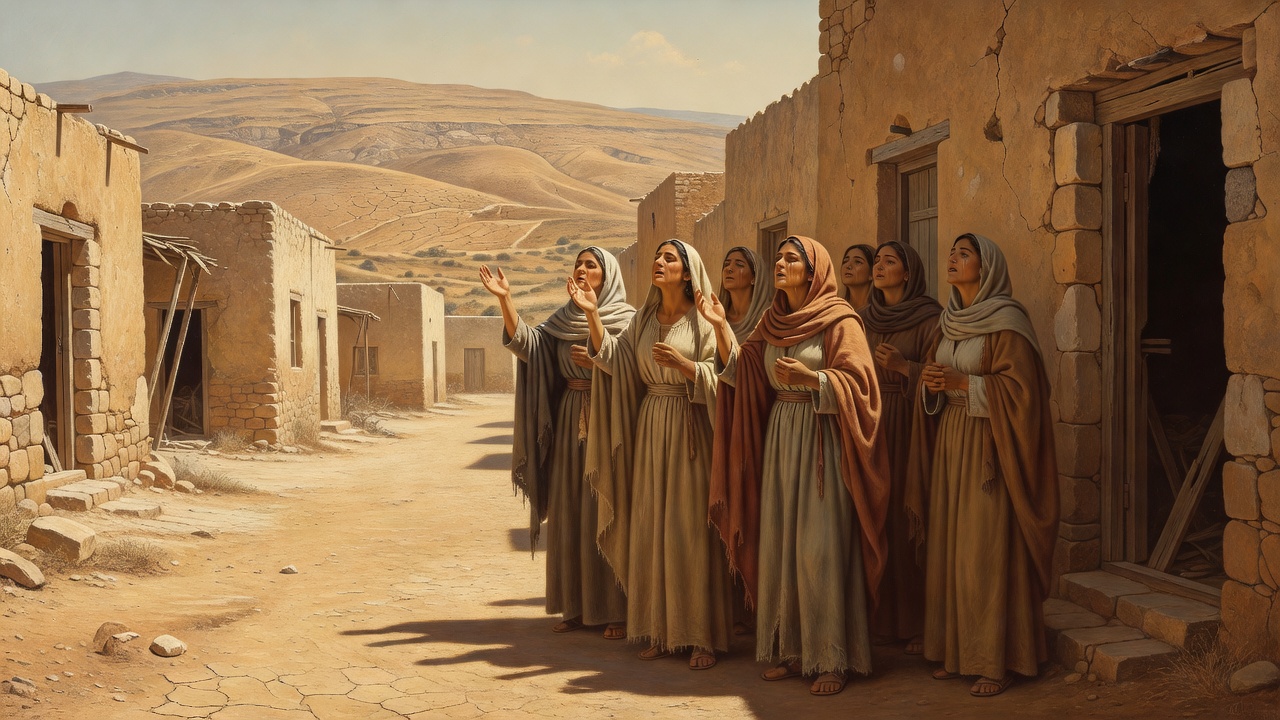
- In ancient Near Eastern culture, skilled professional mourning women were summoned during major calamities and funerals to lead communal laments and teach dirges to the next generation.Sources: the Bible text itself
- The passage warns against boasting in human wisdom, military power, or material riches, presenting the true knowledge of God—characterized by loving devotion, justice, and righteousness—as the only legitimate ground for confidence.Sources: the Bible text itself
- The chapter groups Judah with its regional neighbors—Egypt, Edom, Ammon, and Moab—warning that external religious marks like physical circumcision offer no protection if the heart remains uncircumcised and disobedient.Sources: the Bible text itself · Edom · Ammon · Moab
Notes written with AI assistance from open sources (Theographic Bible Metadata, CC BY-SA 4.0; Easton’s Bible Dictionary, public domain) and reviewed before publishing.
Places in this chapter
- Jerusalem · 31.777, 35.234 · verse 11
- Zion · Today: Jerusalem · 31.777, 35.234 · verse 19
- Ammon · 31.955, 35.934 · verse 26
- Edom · 30.746, 35.604 · verse 26
- Egypt · 30.129, 31.308 · verse 26
- Moab · Today: Moab 1 · 31.181, 35.701 · verse 26
Only places identified with high confidence are shown (90% or more according to the scholarly sources compiled by OpenBible). Period map: DARE (Digital Atlas of the Roman Empire), CC BY 4.0; modern map: © OpenStreetMap contributors; places: OpenBible.info (CC BY 4.0).
Credits and license for this translation
Bibeli Luayãtaalá
The Holy Bible in the Boko language spoken in Benin and Nigeria
copyright © 2010 SIM International
Language: Boko
Translation by: SIM International
Boko Bibeli Luayãtaala
This translation, published by the SIM au Benin, was published in 2010.
If you are interested in obtaining a printed copy, please contact the SIM at ECWA/SIM H.Q., P.M.B. 2009, Jos, Plateau State, NIGERIA.
This translation text is made available to you under the
terms of the Creative Commons License: Attribution-Noncommercial-No Derivative Works.
( http://creativecommons.org/licenses/by-nc-nd/3.0/ )
In addition, you have permission to port the text to different file formats, as long as you
do not change any of the text or punctuation of the Bible.
You may share, copy, distribute, transmit, and extract portions
or quotations from this work, provided that you include the above copyright
information:
You must give Attribution to the work.
You do not sell this work for a profit.
You do not make any derivative works that change any of the actual words or punctuation of the Scriptures.
Permissions beyond the scope of this license may be
available if you contact
us with your request.
This translation is made available to you under the terms of the
Creative Commons Attribution-Noncommercial-No Derivatives license 4.0.
You may share and redistribute this Bible translation or extracts from it in any format, provided that:
You include the above copyright and source information.
You do not sell this work for a profit.
You do not change any of the words or punctuation of the Scriptures.
Pictures included with Scriptures and other documents on this site are licensed just for use with those Scriptures and documents.
For other uses, please contact the respective copyright owners.
2014-09-25
Source: http://ebible.org/bqcsim/ · eBible.org