Jeremiah 41
Bibeli Luayãtaalá · Tap a verse to see its cross-references.
Gedalia dɛa
1Wɛ̃pi mↄ soplade guu ↄ̃ Nɛtania nɛ́ Isimaɛla, Ɛlisama tↄũna mↄ̀ ń gbɛ̃ↄn kwiↄ, aa Aikaũ nɛ́ Gedalia lè Mizipa. Kía buiɛ, mɛ́ kía ìwaɛ. Gↄↄ pↄ́ aalɛ pↄble Mizipa we sãnu, 2ↄ̃ Isimaɛlapi ń gbɛ̃ↄn kwi pↄ́ kuaànↄↄ fɛ̀lɛ Aikaũ nɛ́ Gedalia, Safana tↄũna lɛ̀ ń fɛ̃ndao, aa gbɛ̃́ pↄ́ Babɛli kía aà dìlɛ bùsu gbɛ̃zↄ̃ↄ ũpi dɛ̀. 3Isimaɛlapi Yuda pↄ́ kuaànↄ Mizipa weↄ dɛ̀dɛ píi ń Babiloni zĩgↄ̃ pↄ́ kú weↄ.
4Kɛ́ a gu dↄ̀, gbɛ̃e Gedalia dɛa yã́ dↄ̃ gĩao, 5ↄ̃ gbɛ̃ↄn basiiↄ̃ↄ bↄ̀ Sikɛũ ń Siloo ń Samalio. Gbɛ̃́piↄ ń lɛkãnaↄ wà, aa ń pↄkasaↄ ga kɛ̃̀kɛ̃, aa ń mɛ lìli kpɛ́lɛkpɛlɛ, aalɛ gɛ́ Dii ua ń pↄ́wɛntio ń tulaletio. 6Ɔ̃ Isimaɛla fɛ̀lɛ Mizipa, àlɛ gɛ́ daińlɛ ń ↄↄlↄo. Kɛ́ à kà ń kĩ́i, a ònɛ́: À mↄ wà gɛ́ Aikaũ nɛ́ Gedalia kĩ́i. 7Kɛ́ aa gɛ̃̀ wɛ̃́lɛu, ↄ̃ Isimaɛla ń gbɛ̃́ pↄ́ kuaànↄↄ ń kòlokpakpa, à ń ká lↄ̀ↄ'ɛu. 8À mↄ lè an gbɛ̃ↄn kwiↄ ò Isimaɛlaɛ: Ńsu wá dɛdɛo, asa wa mase ń naao ń nísio ń zↄ́o ùlɛ sɛ̃uɛ. Ɔ̃ à ń tó we, i ń dɛdɛ ń ń gbɛ̃́ↄo. 9Lↄ̀ↄ pↄ́ kí Asa yↄ̃̀ gↄↄ pↄ́ àlɛ zĩka ń Isailiↄ kí Baasao ↄ̃ Isimaɛla gbɛ̃́ pↄ́ à ń dɛdɛpiↄ kàu Gedalia pↄ́ saɛ. Lↄ̀ↄpi ↄ̃ Isimaɛla gbɛ̃́ pↄ́ gàgaↄ kàu pã́upãu.
10Ɔ̃ Isimaɛla gbɛ̃́ pↄ́ aa gↄ̃̀ Mizipaↄ kũ̀kũ píi, kía nɛnↄɛↄ ń gbɛ̃́ pↄ́ dↄaiↄ dↄaana Nɛbuzaladã Gedalia dìlɛ ń dↄaana ũ aa gↄ̃̀ weↄ, ↄ̃ à dàzɛu àlɛ tá Amↄniↄ bùsuu.
11Kɛ́ Kalea nɛ́ Yohanani ń zĩgↄ̃ dↄaana pↄ́ kuaànↄↄ yãvãi pↄ́ Isimaɛla kɛ̀ mà píi, 12aa ń gbɛ̃́ↄ sɛ̀lɛ píi, aa gɛ̀ zĩkai ń Isimaɛlapio. Aa aà lè íkalɛkĩi zↄ̃ↄ pↄ́ kú Gabaↄ̃ↄ saɛ. 13Kɛ́ gbɛ̃́ pↄ́ aa kú ń Isimaɛlaoↄ Yohanani ń zĩgↄ̃ dↄaana pↄ́ kuaànↄↄ è, an pↄ kɛ̀na. 14Ɔ̃ gbɛ̃́ pↄ́ Isimaɛla ń kũkũ Mizipapiↄ Isimaɛlapi tò we, aa tà Yohanani kĩ́i. 15Ɔ̃ Isimaɛla ń a gbɛ̃ↄn swaaↄ̃ↄ pìliwà, aa tilɛ̀ wà tà Amↄniↄ bùsuu.
16Yohanani ń zĩgↄ̃ dↄaana pↄ́ kuaànↄↄ Mizipa gbɛ̃́ kↄ̃napiↄ sì Isimaɛlawa Gedalia dɛa gbɛa, aa ń sɛ́lɛ, zĩgↄ̃ↄ ń nↄɛↄ ń nɛ́ↄ ń kía nↄↄ gwana pↄ́ à sùńnↄ ń Gabaↄ̃ↄoↄ, 17ↄ̃ aa dàzɛu aa zɛ̀ Kimaũ pilakĩi pↄ́ kú Bɛtɛlɛũ saɛ. Aalɛ tá Egipi, 18kɛ́ aalɛ bàalɛ Babiloniↄnɛ yã́i. Aalɛ vĩakɛnɛ́, asa Isimaɛla Gedalia pↄ́ Babɛli kía aà dìlɛ bùsu dↄaana ũ dɛ̀ɛ.
Did you know?
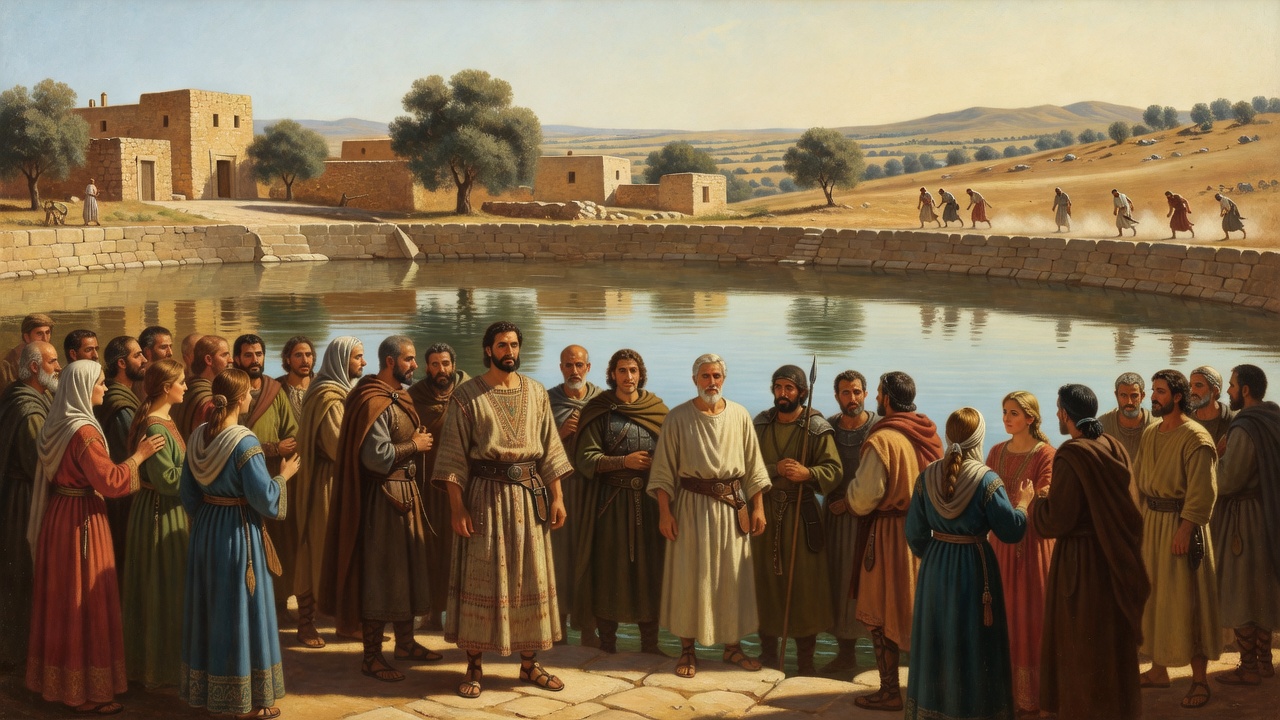
The Assassination of Gedaliah and Flight from Mizpah
- Ishmael son of Nethaniah was a member of the royal family who opposed Babylonian rule. He came with ten men to Mizpah under the guise of sharing a meal, where he assassinated Gedaliah, the governor appointed by the king of Babylon, along with his Judean and Chaldean associates.Sources: Ishmael · Gedaliah · the Bible text itself
- The cistern where Ishmael dumped the bodies of the murdered pilgrims from Shechem, Shiloh, and Samaria had historical military origins. It had been constructed centuries earlier by King Asa of Judah for defense against King Baasha of Israel.Sources: Asa · Baasha · the Bible text itself
- After Ishmael seized the survivors at Mizpah to take them to Ammon, Johanan son of Kareah intercepted him at the great pool in Gibeon and freed the captives. Fearing Babylonian retaliation for the murder of the governor, Johanan and the remaining Judeans prepared to flee to Egypt.Sources: Johanan · Gibeon · the Bible text itself
Notes written with AI assistance from open sources (Theographic Bible Metadata, CC BY-SA 4.0; Easton’s Bible Dictionary, public domain) and reviewed before publishing.
Places in this chapter
- Babylon · 32.543, 44.422 · verses 2, 18
- Jerusalem · 31.777, 35.234 · verse 5
- Samaria · 32.276, 35.195 · verse 5
- Shechem · Today: Tell Balatah · 32.214, 35.282 · verse 5
- Shiloh · Today: Khirbet Seilun · 32.056, 35.290 · verse 5
- Ammon · 31.955, 35.934 · verses 10, 15
- Gibeon · Today: El Jib · 31.847, 35.183 · verses 12, 16
- Bethlehem · 31.704, 35.208 · verse 17
- Egypt · 30.129, 31.308 · verse 17
- Geruth Chimham · Today: within 5 km of Bethlehem · 31.704, 35.208 · verse 17
- Chaldea · 30.962, 46.104 · verse 18
Only places identified with high confidence are shown (90% or more according to the scholarly sources compiled by OpenBible). Period map: DARE (Digital Atlas of the Roman Empire), CC BY 4.0; modern map: © OpenStreetMap contributors; places: OpenBible.info (CC BY 4.0).
Credits and license for this translation
Bibeli Luayãtaalá
The Holy Bible in the Boko language spoken in Benin and Nigeria
copyright © 2010 SIM International
Language: Boko
Translation by: SIM International
Boko Bibeli Luayãtaala
This translation, published by the SIM au Benin, was published in 2010.
If you are interested in obtaining a printed copy, please contact the SIM at ECWA/SIM H.Q., P.M.B. 2009, Jos, Plateau State, NIGERIA.
This translation text is made available to you under the
terms of the Creative Commons License: Attribution-Noncommercial-No Derivative Works.
( http://creativecommons.org/licenses/by-nc-nd/3.0/ )
In addition, you have permission to port the text to different file formats, as long as you
do not change any of the text or punctuation of the Bible.
You may share, copy, distribute, transmit, and extract portions
or quotations from this work, provided that you include the above copyright
information:
You must give Attribution to the work.
You do not sell this work for a profit.
You do not make any derivative works that change any of the actual words or punctuation of the Scriptures.
Permissions beyond the scope of this license may be
available if you contact
us with your request.
This translation is made available to you under the terms of the
Creative Commons Attribution-Noncommercial-No Derivatives license 4.0.
You may share and redistribute this Bible translation or extracts from it in any format, provided that:
You include the above copyright and source information.
You do not sell this work for a profit.
You do not change any of the words or punctuation of the Scriptures.
Pictures included with Scriptures and other documents on this site are licensed just for use with those Scriptures and documents.
For other uses, please contact the respective copyright owners.
2014-09-25
Source: http://ebible.org/bqcsim/ · eBible.org