Isaiah 60
Bibeli Luayãtaalá · Tap a verse to see its cross-references.
Siↄna gawi zia
1Fɛlɛ tɛkɛ, asa n gupua mↄ̀,
Dii gawi pìsima.
2Gwa! Guluuluu kù dṹniaa,
gusia kùlɛ a gbɛ̃́ↄwa.
Mpi sↄ̃, Dii a bilɛma,
aà gawi i bↄma.
3Buiↄ mↄ n gupuau,
kíaↄ sↄ̃ n pípia í gbãai.
4Wɛzu gugwa ǹ liai,
aa kã̀aa píi, aalɛ mↄ́ n kĩ́i.
N nɛgↄ̃ɛↄ bↄ̀ za zã̀zã, aalɛ su,
wa n nɛnↄɛↄ naaa ń gbã̀tɛ̃ɛu, wàlɛ suńnↄ.
5Tó n bee è, n pↄna a pisi n oawa,
n nↄ̀sɛ a yáalↄ kua nzĩa dakĩiwa.
Wa n gba ísia baa àizɛɛↄ,
wa mↄnɛ ń buiↄ pↄmaaↄ.
6Yiongo waiↄ li n bùsua,
Madiã ń Efa bùsu yiongo nɛ́ bↄlↄↄ.
Seba bùsudeↄ mↄ píi
vua ń tulaleti gĩnanaↄ sɛa,
aalɛ ma yãkɛaↄ baokpa.
7Wa Kedaa bùsu pↄtuoↄ kãaanɛ píi,
wa Nɛbaioↄ sãsaↄ kpama ǹ n bↄↄlɛkɛò,
wi sa pↄ́ ì kamagu oò ma gbagbakĩiwa,
mí a kpɛ́ gawide gawi kã́fĩò.
8Bↄ́mɛ táa'ò lɛ́ su lán louwa,
lán felenguuluↄ sua ń kpɛ́uwa keei?
9Ísiabaadeↄ lɛ́ kãaamazi we,
ísia gó'ilɛnaↄ mɛ́ zɛmikũa we.
Aa bↄ̀ ń n nɛ́ↄ za zã̀zã,
aalɛ mↄ́ ń ń ã́nusuↄ ń ń vuaↄ
ma Dii n Lua tↄbↄi,
asa ma Isailiↄ Lua ma kua adoaɛ,
má gawi pisima.
10Buipãleↄ ɛa n bĩ́iↄ bo,
an kíaↄ zĩkɛnɛ.
Baa kɛ́ ma n gbɛ̃ ń pↄfɛ̃o yãa,
má wɛ̃nadↄ̃nɛ ma sùuu yã́i sa.
11N bĩ́ibↄlɛↄ aaↄ wɛ̃aɛ gↄↄpii,
aaliↄ taao fãanɛ ń gwãasĩnao,
kɛ́ buiↄ mↄnɛ ń ń àizɛɛↄ
ń ń kíaↄ kpán'aɛkɛa.
12Asa bui ge kpala pↄ́ i zↄblenɛo a midɛɛ,
wa ń bùsuↄ dɛɛlɛmpa míↄmiↄ.
13Wa mↄnɛ ń Libã bùsu gawio,
pɛ̃liↄ ń kpɛ̃liↄ ń sɛ̃́liↄ píi,
kɛ́ mà e zãbleò ma kúkĩiwa,
ma gbadibↄpi iↄ gawi vĩ.
14N wɛtãna nɛ́ↄ mↄ kúlɛnɛ,
gbɛ̃́ pↄ́ aa sakàngupiↄ wúlɛnɛ n gbázĩ,
aai onɛ Dii wɛ̃́lɛ
Siↄna pↄ́ Isailiↄ Lua pↄ́ a kua adoa kàlɛ.
15Baa kɛ́ gbɛ̃́ↄ zàngu yãa
aa pãkpànzi,
gbɛ̃eli gu baavĩ n guuo,
má n kɛ ĩ́andãbↄ láasai ũ,
gbɛ̃́ↄ iↄ pↄnakɛò e ń buiwa.
16Ńyↄ̃ buiↄ vĩ mi,
an kíaↄ yↄ̃́ kpama,
níↄ dↄ̃ mámɛ máa Dii n Suabana ũ,
Yakↄbu Lua gbãade n Bona ũ.
17Má mↄ́ ń vuao mↄgotɛ̃ gbɛu,
ã́nusu sↄ̃ mↄsi gbɛu.
Má mↄ́ ń mↄgotɛ̃oli gbɛu,
mↄsi sↄ̃ gbɛ gbɛu.
Má aafia dilɛnɛ n laaidↄmade ũ,
má yã́zɛde danɛ n gbãade ũ.
18Wa yãpãsĩ súu ma n bùsuu lↄo,
ásoo ń músio a sↄ̃ n bùsu zↄ̃lɛio.
Wa tↄ́kpa n bĩ́iɛ Suaba,
n bↄlɛↄ sↄ̃ Táasi.
19Ĩatɛ̃ ali gupunɛ fãanɛ lↄo,
mↄvua í gbãa a gupunɛ lↄo.
Ma Dii mámɛ máↄ dɛ n gupua ũ gↄↄpii,
mapi n Lua, mámɛ máↄ dɛ n tɛkɛa ũ.
20N ĩatɛ̃ a gɛ̃ kpɛ́u bauo,
mɛ́ n mↄ a ↄsikɛo,
asa mámɛ máↄ dɛ n gupua láasai ũ,
n ↄↄlↄ a midɛ sa.
21N gbɛ̃́ↄ aaↄ maa píiɛ,
mɛ́ aaↄ bùsu vĩ gↄↄpii.
Aaↄ dɛ lí pↄ́ má bà vlãpaa ũ,
ma ↄgbɛ ũ ma zãblea yã́i.
22An gbɛ̃́ pↄ́ kɛ̃́sãańzi
a kↄ̃ à ka gbɛ̃ↄn ↄ̀aa sↄo,
an gbɛ̃́ pↄ́ kpɛɛ ń guu,
a gↄ̃ bui zↄ̃ↄ ũ.
Mámɛmaa Dii,
má yã́pi kɛ a gↄↄwa ń wãao.
Did you know?
The Glorious Restoration of Zion
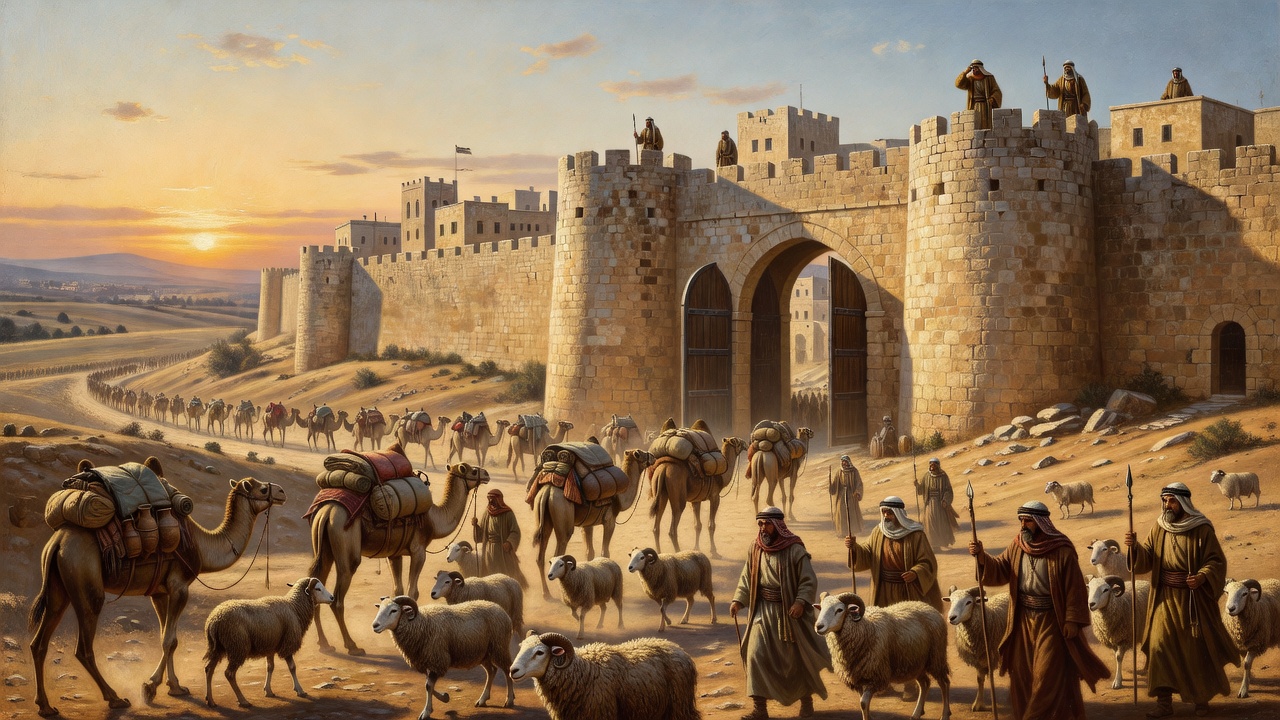
- Sheba was a kingdom in southern Arabia renowned for its ancient trade in gold and spices, while Midian was a nomadic Arabian tribe long engaged in desert commerce. Isaiah 60 envisions these distant peoples arriving on vast camel caravans, bearing gold and frankincense to praise the Lord.Sources: Sheba · Midian · the Bible text itself
- Kedar and Nebaioth trace back in biblical genealogies to the sons of Ishmael, with Kedar designating pastoral nomadic tribes of northwestern Arabia known for their large flocks and black tents. In this prophetic vision, their sheep and rams are brought to Jerusalem to be accepted as offerings upon the altar.Sources: Kedar · Nebajoth · Kedar · the Bible text itself
Notes written with AI assistance from open sources (Theographic Bible Metadata, CC BY-SA 4.0; Easton’s Bible Dictionary, public domain) and reviewed before publishing.
Places in this chapter
- Jerusalem · 31.777, 35.234 · verses 1, 14
- Ephah · Today: Midian · 28.495, 35.012 · verse 6
- Midian · 28.495, 35.012 · verse 6
- Sheba · 15.348, 44.206 · verse 6
- Kedar · 29.811, 39.868 · verse 7
- Lebanon · 33.540, 35.584 · verse 13
- Zion · Today: Jerusalem · 31.777, 35.234 · verse 14
Only places identified with high confidence are shown (90% or more according to the scholarly sources compiled by OpenBible). Period map: DARE (Digital Atlas of the Roman Empire), CC BY 4.0; modern map: © OpenStreetMap contributors; places: OpenBible.info (CC BY 4.0).
Credits and license for this translation
Bibeli Luayãtaalá
The Holy Bible in the Boko language spoken in Benin and Nigeria
copyright © 2010 SIM International
Language: Boko
Translation by: SIM International
Boko Bibeli Luayãtaala
This translation, published by the SIM au Benin, was published in 2010.
If you are interested in obtaining a printed copy, please contact the SIM at ECWA/SIM H.Q., P.M.B. 2009, Jos, Plateau State, NIGERIA.
This translation text is made available to you under the
terms of the Creative Commons License: Attribution-Noncommercial-No Derivative Works.
( http://creativecommons.org/licenses/by-nc-nd/3.0/ )
In addition, you have permission to port the text to different file formats, as long as you
do not change any of the text or punctuation of the Bible.
You may share, copy, distribute, transmit, and extract portions
or quotations from this work, provided that you include the above copyright
information:
You must give Attribution to the work.
You do not sell this work for a profit.
You do not make any derivative works that change any of the actual words or punctuation of the Scriptures.
Permissions beyond the scope of this license may be
available if you contact
us with your request.
This translation is made available to you under the terms of the
Creative Commons Attribution-Noncommercial-No Derivatives license 4.0.
You may share and redistribute this Bible translation or extracts from it in any format, provided that:
You include the above copyright and source information.
You do not sell this work for a profit.
You do not change any of the words or punctuation of the Scriptures.
Pictures included with Scriptures and other documents on this site are licensed just for use with those Scriptures and documents.
For other uses, please contact the respective copyright owners.
2014-09-25
Source: http://ebible.org/bqcsim/ · eBible.org