Isaiah 50
Bibeli Luayãtaalá · Tap a verse to see its cross-references.
1Ma Dii ma mɛ̀,
kɛ́ a mɛ̀ ma á da yà,
aà gínzila kú má ni?
Ma fĩade kpele ma á yíawài?
Aawo! Á duuna yã́i ma á yiai,
á tàaeↄ yã́i ma á da yài.
2Kɛ́ ma mↄ, bↄ́yãi mi gbɛ̃e eo ni?
Kɛ́ ma lɛzùázi,
àkɛa á gbɛ̃e i weao ni?
Ma ↄ kɛ̀ geseũ a fↄ̃ á bↄo yã̀?
Má gbãa vĩ mà á bo noa?
Ma ísia lèle, ↄ̃ gugii bↄ̀,
má tò swa gↄ̃̀ lán gbáawa.
A kpↄↄ gàga isai yã́i,
ↄ̃ aa yaikɛ̀ kɛ́ í kuo yã́i.
3Mi to gu si gbɛ̃́ↄnɛ,
mi zwã̀a sia da musuɛ.
Dii zↄ̀blena lɛ̀ àaↄ̃de
4Dii Lua ma gba lɛ́ mà yãdaonɛ́
mà yã́ pↄ́ ì gbɛ̃́ pↄ́ bùsaↄ gba sↄ̃ o.
Ìↄ ma vu lá gu lɛ́ dↄ,
ì ma swã́ nakṹ,
kɛ́ mà yãma lán yãdadana pↄ́wa.
5Dii Lua ma swã́ wɛ̃̀,
mi zazakũo, mi pↄ̀ↄbↄzãkɛo.
6Ma a kpɛ tò lia gbɛ̃́ pↄ́ aalɛ ma gbɛ̃́ↄnɛ,
ma a gɛɛ tò dↄa gbɛ̃́ pↄ́ aalɛ a kã́ woloↄnɛ.
Kɛ́ aalɛ ma sↄ̃sↄ̃, aalɛ lɛ́'ikákaa,
mi a wɛ́ ga ma sↄ̃òo.
7Ma gɛɛ a gↄ̃ kpa ma wɛ́io,
kɛ́ Dii Lua lɛ́ dↄmalɛ yã́i.
A yã́i ma aɛ dↄ súsu lán gbɛsiwa,
má dↄ̃ kɛ́ wí a ma kũo.
8Lua ma yãnakpamade kumanↄ kãi.
Démɛ a bↄbↄmanↄi?
Wà aɛdↄkↄ̃wa!
Démɛ ma káalakɛna ũi?
Aà sↄ̃ kãi!
9Dii Lua mɛ́ ì dↄmalɛ,
démɛ a fↄ̃ yãdamalai?
Ampii aa kɛ yáiyai lán pↄkasawa,
kↄ̀ↄↄ mɛ́ a ń sóso.
10Á démɛ Dii vĩa vĩ
ì aà zↄ̀blena yãmai?
Tó a bɛ gusiau filia í sai,
aà Dii náaikɛ,
i sↄ̃kpalɛ a Luazi.
11À ma, á gbɛ̃́ pↄ́ i tɛ́ka ázĩaɛ
i sɛ̃̀ tɛ́ dↄↄ,
à gɛ àↄ bɛ á tɛ́pi vuai
ge sɛ̃ pↄ́ a tɛsↄ̃̀wà gupuai.
Yã́ pↄ́ a bↄ ma ↄzĩ à á len kɛ:
Áↄ wúlɛa gu wãwãdeu!
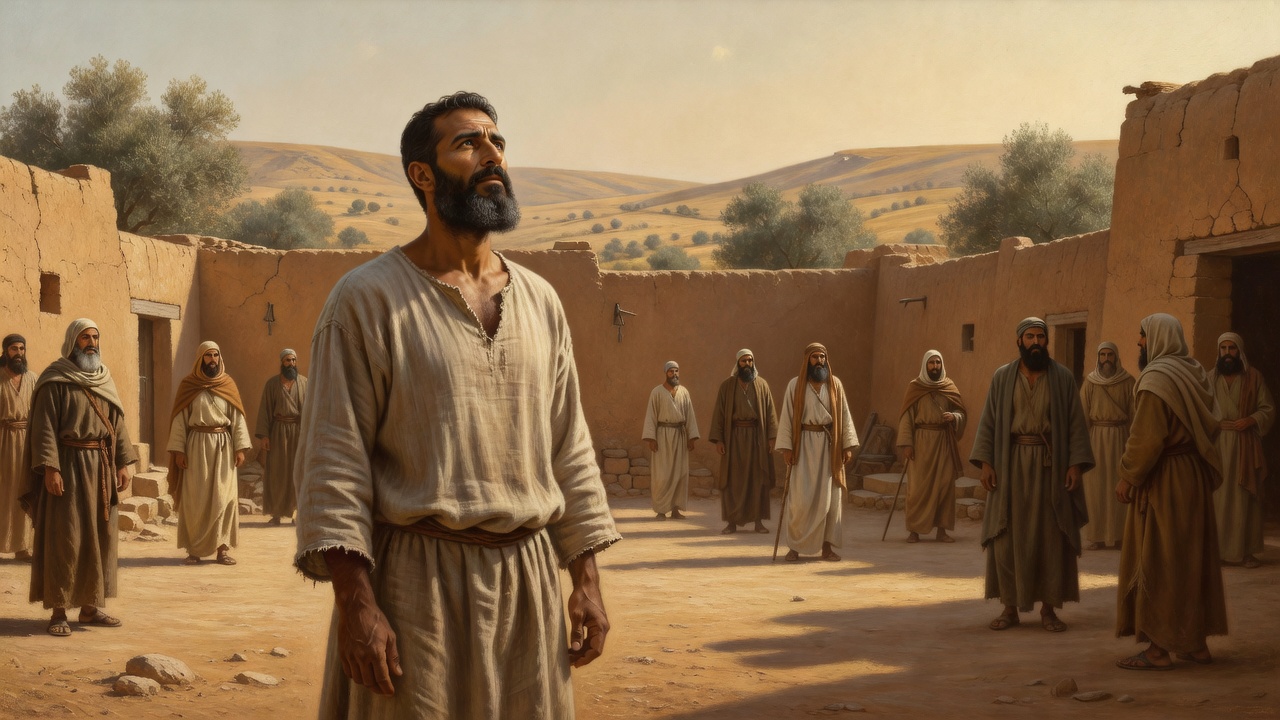
Did you know?
The Obedient Servant and Divine Vindication
- In ancient Near Eastern legal custom, a husband issued a certificate of divorce to formalize a separation, and impoverished debtors might sell their children into servitude. In Isaiah 50:1, God uses these legal metaphors to demonstrate that Israel was not abandoned due to a divine debt or permanent annulment of the covenant, but went into exile because of its own transgressions.Sources: the Bible text itself
- The speaker in Isaiah 50:4–7 portrays the posture of an attentive disciple who willingly endures physical maltreatment, including beatings, the plucking of his beard, and being spat upon. Setting one's face 'like flint' is a vivid idiom signifying resolute determination and steadfast trust in God despite public shame and hostility.Sources: the Bible text itself
Notes written with AI assistance from open sources (Theographic Bible Metadata, CC BY-SA 4.0; Easton’s Bible Dictionary, public domain) and reviewed before publishing.
Credits and license for this translation
Bibeli Luayãtaalá
The Holy Bible in the Boko language spoken in Benin and Nigeria
copyright © 2010 SIM International
Language: Boko
Translation by: SIM International
Boko Bibeli Luayãtaala
This translation, published by the SIM au Benin, was published in 2010.
If you are interested in obtaining a printed copy, please contact the SIM at ECWA/SIM H.Q., P.M.B. 2009, Jos, Plateau State, NIGERIA.
This translation text is made available to you under the
terms of the Creative Commons License: Attribution-Noncommercial-No Derivative Works.
( http://creativecommons.org/licenses/by-nc-nd/3.0/ )
In addition, you have permission to port the text to different file formats, as long as you
do not change any of the text or punctuation of the Bible.
You may share, copy, distribute, transmit, and extract portions
or quotations from this work, provided that you include the above copyright
information:
You must give Attribution to the work.
You do not sell this work for a profit.
You do not make any derivative works that change any of the actual words or punctuation of the Scriptures.
Permissions beyond the scope of this license may be
available if you contact
us with your request.
This translation is made available to you under the terms of the
Creative Commons Attribution-Noncommercial-No Derivatives license 4.0.
You may share and redistribute this Bible translation or extracts from it in any format, provided that:
You include the above copyright and source information.
You do not sell this work for a profit.
You do not change any of the words or punctuation of the Scriptures.
Pictures included with Scriptures and other documents on this site are licensed just for use with those Scriptures and documents.
For other uses, please contact the respective copyright owners.
2014-09-25
Source: http://ebible.org/bqcsim/ · eBible.org