Ezekiel 38
Bibeli Luayãtaalá · Tap a verse to see its cross-references.
Ãnabikɛkɛa Gↄgu yã́ musu
1Dii yã'òmɛɛ à mɛ̀: 2Gbɛ̃nazĩn nɛ́, wɛbiibii Gↄgu pↄ́ dɛ Mɛsɛki ń Tubali buiↄ kía ũ Magↄgu bùsuuwa, ní ãnabikɛkɛ aà yã́ musu. 3Oɛ̀ ma Dii Lua ma mɛ̀: Má fɛlɛnnↄ Gↄgu, Mɛsɛki ń Tubali buiↄ kía. 4Má n lɛ́ liaa, má kokoaↄ ka n gyaↄwai, mí bↄnnↄ ń n zĩgↄ̃ↄ píi ń n sↄ̃́ↄ ń n sↄ̃de pↄ́ an gↄ̃kɛbↄ paiↄ ń bíla pↄ́ sɛ̀ngbao nɛ́na ń a zↄ̃ↄo kũa, ampii aalɛ ń fɛ̃nda málɛↄ. 5Pɛɛsiↄ ń Etiopiↄ ń Libiiↄ kunnↄ, baade ń a sɛ̀ngbaoo ń a mↄ̀ fùao. 6Gomɛɛ zĩgↄ̃ↄ píi kú we lↄ ń Tↄgaama pↄ́ kú gugbãntoo títiu zĩgↄ̃ↄ. Bui dasipiↄ kunnↄ. 7Sↄukɛ maamaa, mpi ń bíla pↄ́ kã̀aanzipiↄ, ní dↄaanɛ́. 8Wɛ̃̀ dasi gbɛa má yã́kpalɛkɛnnↄ. Gↄↄgbɛzãzĩ ńyↄ̃ si Isaili bùsuu. Bùsupideↄ bↄ̀ zĩ̀ yã́u, aa bↄ̀ buiↄ guu dasi, aa kã̀aa ń bùsu gbɛ̀sĩsĩde pↄ́ gↄ̃̀ za zi wáiwai guu. Ma ń bↄ́lɛ buiↄ guu, ↄ̃ aa ku dↄdↄa ḿpii. 9Ńyↄ̃ si ń bùsuu lán zàa'ĩanawa, lán lou fɛlɛa pↄ́ dàguawa, mpi ń n zĩgↄ̃ↄ ń bui dasi pↄ́ kunnↄↄ.
10Ma Dii Lua ma mɛ̀, gↄↄ bee yã́ a gɛ̃ n sↄ̃u, ní làasoo vãi kɛ, 11ní mɛ ńyↄ̃ gɛ si bùsu pↄ́ kálɛa bĩ́isai guu, ní lɛ́lɛ a gbɛ̃́ pↄ́ kú dↄdↄa kílikiliↄwa. Aa bĩ́i ge bↄlɛ ge zɛ́kakabↄ gbãae vĩo. 12Ńyↄ̃ mɛ ńyↄ̃ ń pↄ́ↄ naaa ǹ ń ble, ní ɛa ↄtↄ̃ bɛzia pↄ́ wa vù depiↄwa, gbɛ̃́ pↄ́ bↄ̀ buiↄ guu, aa kã̀aa dṹnia guoguo ń ń pↄtuoↄ ń ń àizɛɛ pↄ́ diↄ. 13Seba ń Dedã bùsudeↄ ń Taasisi tagɛnaↄ ń ń kíaↄ onɛ: N mↄ pↄ́ↄ síimá yã̀? N bílapi kã̀aa, kɛ́ aa ã́nusu ń vuao ń pↄtuoↄ ń àizɛɛↄ ń pↄzↄ̃ↄↄ naaa taò dasidasi yã̀? 14A yã́i tò gbɛ̃nazĩn nɛ́, ãnabikɛkɛ, ní o Gↄguɛ ma Dii Lua ma mɛ̀, gↄↄ bee, tó ma gbɛ̃́ Isailiↄ kálɛa dↄdↄa, ↄ̃ ńyↄ̃ dazɛuo lò? 15Ńyↄ̃ bↄ n bùsu gugbãntoo títipiu, mpi ń bui pↄ́ kunnↄ dasidasiↄ, íↄ dia sↄ̃́ kpɛ ápii. Á dasi a kɛ zài zĩgↄ̃ waiwaiↄ ũ. 16Á mↄ́ lɛ́lɛi ma gbɛ̃́ Isailiↄwa lán lou fɛlɛa pↄ́ ì daguawa. Gↄgu, gↄↄgbɛzãzĩ má mↄ́nnↄ, ní lɛ́lɛ ma bùsuwa, kɛ́ bui píi e ma kuaadoakɛ dↄ̃ gↄↄ pↄ́ má tↄbↄ n musu ń wáa.
17Ma Dii Lua ma mɛ̀, ḿmɛ n gbɛ̃́ pↄ́ ma aà yãdà yãa ma zↄ̀blena Isaili ãnabiↄnɛ aa ò ũo lò? Gↄↄ bee aa ãnabikɛkɛ̀ a wɛ̃ dasikũ̀, aa mɛ̀ ńyↄ̃ lɛ́lɛmá. 18Ma Dii Lua ma mɛ̀, gↄↄ bee, tó Gↄgu lɛ̀lɛ Isaili bùsuwa, má fɛlɛ ń pↄbↄa ma níuo. 19Pↄfɛ̃ pãsĩ ń kyã̀wãao guu ma mɛ̀, tↄↄlɛ lualuaa zↄ̃ↄ aↄ ku Isaili bùsuu gↄↄ bee. 20Kpↄↄ ń bãↄ ń sɛ̃̀anↄbↄↄ ń pↄ́taa'onkuawaↄ píi ń gbɛ̃́ pↄ́ kú dṹnia guuↄ píi aa lualua ma aɛ. Gbɛ̀sĩsĩↄ gboo, yãtɛ̃ↄ kwɛ́, bĩ́iↄ lɛ́lɛ píi. 21Ma Dii Lua ma mɛ̀ má yã́ pↄ́ ì to vĩa ń kṹ píi gbaɛ Gↄgu ń a gbɛ̃́ↄwa. An baade a fɛ̃nda ka a gbɛ̃́ɛ. 22Má ĩadamá ń gagyão. Má lou bílibili ń lougbɛo ń ĩatɛ̃gbↄ̃ tɛdeo kaaàgu ń aà zĩgↄ̃ↄ ń bui dasi pↄ́ kuaànↄↄ. 23Màa má a zↄ̃ↄkɛ ń ma kuaadoakɛo ↄlↄ buiↄnɛ dasi, mí bↄmá, aai dↄ̃ kɛ́ mámɛmaa Dii.
Did you know?
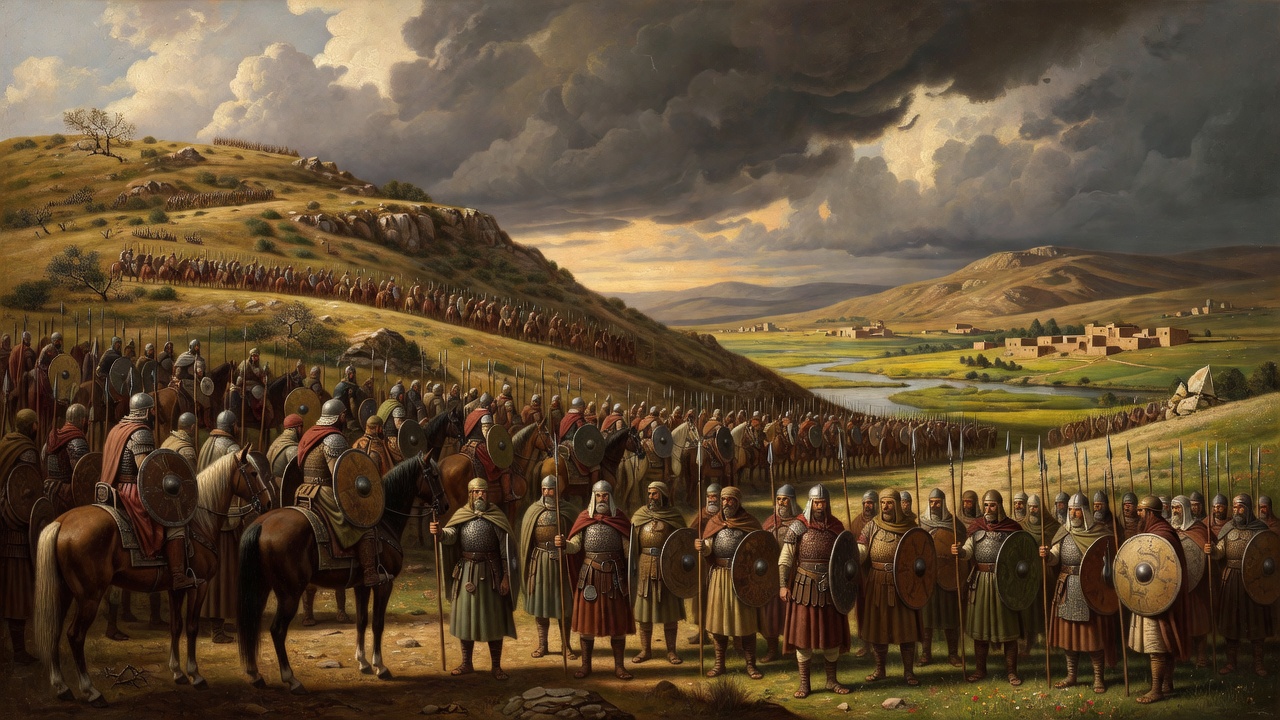
Gog and the Coalition Against Israel
- Many of the nations named in this prophecy—including Magog, Meshech, Tubal, and Gomer—trace back to the descendants of Japheth in Genesis 10. Later writers, such as the Latin church father Jerome, identified Magog with fierce Scythian tribes inhabiting the regions north of the Caucasus and Caspian Sea.Sources: Magog · Meshech · Gomer (son of Japheth) · the Bible text itself
- The coalition gathered under Gog includes peoples from opposite extremes of the ancient world. Alongside the northern tribes are Persia to the east and Cush to the far south, representing the regions bordering southern Egypt.Sources: Persia · Cush · the Bible text itself
Notes written with AI assistance from open sources (Theographic Bible Metadata, CC BY-SA 4.0; Easton’s Bible Dictionary, public domain) and reviewed before publishing.
Places in this chapter
- Meshech · Today: about 200 km around Gordion · 39.655, 31.994 · verses 2, 3
- Tubal · Today: Tabal · 37.296, 36.254 · verses 2, 3
- Cush · Today: Cush 1 · 16.935, 33.751 · verse 5
- Persia · 34.806, 48.516 · verse 5
- Gomer · Today: Asia Minor · 39.000, 32.000 · verse 6
- Sheba · 15.348, 44.206 · verse 13
Only places identified with high confidence are shown (90% or more according to the scholarly sources compiled by OpenBible). Period map: DARE (Digital Atlas of the Roman Empire), CC BY 4.0; modern map: © OpenStreetMap contributors; places: OpenBible.info (CC BY 4.0).
Credits and license for this translation
Bibeli Luayãtaalá
The Holy Bible in the Boko language spoken in Benin and Nigeria
copyright © 2010 SIM International
Language: Boko
Translation by: SIM International
Boko Bibeli Luayãtaala
This translation, published by the SIM au Benin, was published in 2010.
If you are interested in obtaining a printed copy, please contact the SIM at ECWA/SIM H.Q., P.M.B. 2009, Jos, Plateau State, NIGERIA.
This translation text is made available to you under the
terms of the Creative Commons License: Attribution-Noncommercial-No Derivative Works.
( http://creativecommons.org/licenses/by-nc-nd/3.0/ )
In addition, you have permission to port the text to different file formats, as long as you
do not change any of the text or punctuation of the Bible.
You may share, copy, distribute, transmit, and extract portions
or quotations from this work, provided that you include the above copyright
information:
You must give Attribution to the work.
You do not sell this work for a profit.
You do not make any derivative works that change any of the actual words or punctuation of the Scriptures.
Permissions beyond the scope of this license may be
available if you contact
us with your request.
This translation is made available to you under the terms of the
Creative Commons Attribution-Noncommercial-No Derivatives license 4.0.
You may share and redistribute this Bible translation or extracts from it in any format, provided that:
You include the above copyright and source information.
You do not sell this work for a profit.
You do not change any of the words or punctuation of the Scriptures.
Pictures included with Scriptures and other documents on this site are licensed just for use with those Scriptures and documents.
For other uses, please contact the respective copyright owners.
2014-09-25
Source: http://ebible.org/bqcsim/ · eBible.org