Ezekiel 14
Bibeli Luayãtaalá · Tap a verse to see its cross-references.
Yãzↄ̃lɛa tã́agbagbanaↄwa
1Isaili gbɛ̃zↄ̃ↄeↄ mↄ̀ ma kĩ́i, aa zↄ̃̀lɛ ma aɛ, 2ↄ̃ Dii yã'òmɛɛ à mɛ̀: 3Gbɛ̃nazĩn nɛ́, gbɛ̃́ɛ beeↄ tò tã́aↄ yã́ ń sↄ̃ blè, an duuna pↄ́ lɛ́ ń fupi mɛ́ lɛ́ ń gálɛ. Aa yãgbɛaaa zɛ́ vĩa? 4Yã'onɛ́ ǹ mɛ ma Dii Lua ma mɛ̀, tó Isailie tò tã́aↄ a sↄ̃ blè, mɛ́ aà duuna pↄ́ lɛ́ aà fupi mɛ́ lɛ́ aà gálɛ, tó à mↄ̀ yãgbɛai ãnabiwa, ma Dii mámɛ má yã́zãsi adewa aà tã́aↄ dasilɛu. 5Màa má Isaili pↄ́ aa gↄ̃̀mɛɛ zĩ̀loↄ ũ ń tã́aↄ yã́iↄ gbɛsi píi.
6Ayãmɛto o Isailiↄnɛ ma Dii Lua ma mɛ̀, aa nↄ̀sɛlilɛ aa mikɛ̃ ń tã́aↄ ń ń yãbɛ̃ɛkɛaↄwa. 7Tó Isailie ge bↄ̀mↄ pↄ́ kú ń guue tò tã́aↄ a sↄ̃ blè, aà duuna pↄ́ lɛ́ aà fu àlɛ aà gálɛpi tò à kɛ̃̀a, tó à mↄ̀ ãnabi lè aà yãgbɛaaɛ, mámɛ má yã́zãsiwà mazĩa, 8mí íbɛlɛsɛ ń gbɛ̃́pio, mí aà kɛ seela pↄ́ wa yãadaò ũ. Má aà bↄ ma gbɛ̃́ↄ guuɛ, íↄ dↄ̃ kɛ́ mámɛmaa Dii.
9Tó ãnabipi tò wà kↄ̃nikɛ̀ɛ, ↄ̃ à azĩa yã'ò, mámɛ ma kↄ̃nikɛ̀ɛ̀. Má ↄtↄ̃wàɛ, mí aà bↄ ma gbɛ̃́ↄ guu mà dɛ. 10Ãnabipi ń gbɛ̃́ pↄ́ mↄ̀ yãgbɛaiwàpio duuna doũɛ. An duuna a wi ń musu ḿpiiɛ, 11kɛ́ Isailiↄ su zãmɛɛ yã́wa, aai gbãlɛ ń duuna yã́ musu lↄo yã́i, aaiↄ dɛ ma gbɛ̃́ↄ ũ, míↄ dɛ ń Lua ũ. Ma Dii mámɛ má ò.
Gbɛ̃vãiↄ bↄ gbɛ̃maaↄ sabaio
12Dii yã'òmɛɛ à mɛ̀: 13Gbɛ̃nazĩn nɛ́, tó bùsudeↄ náaisaiyãkɛ̀ aa duunakɛ̀mɛɛ, mɛ́ málɛ ↄtↄ̃má, málɛ ń kũ̀sũa míↄnzↄ̃, málɛ imina zĩmá, mɛ́ aalɛ gaga ń ń pↄtuoↄ píi, 14baa tó gbɛ̃ↄn àaↄ̃ɛ beeↄ ku we, Nↄee ń Daniɛlio ń Yobuo, aa fↄ̃ gbɛ̃e misi ń gbɛ̃maakɛ yã́io, mɛ́ i kɛ anzĩa mi bàasio. Ma Dii Lua mámɛ má ò.
15Tó má tò wàiↄ pã̀ bùsupia aa bùsupi nɛ́ↄ sɛ̀lɛ píi, mɛ́ bùsupi gↄ̃̀ bɛzia ũ, gbɛ̃e lɛ́ pãa lↄo wàiↄ yã́i, 16ma Dii Lua ma mɛ̀, ń ma kuao tó gbɛ̃ↄn àaↄ̃piↄ ku we, aa fↄ̃ ń nɛgↄ̃ɛↄ ge ń nɛnↄɛↄ misio, mɛ́ i kɛ anzĩa mi bàasio, bùsupi i gↄ̃ bɛzia ũ.
17Tó má tò wà fɛ̀lɛ bùsupiwa ń zĩo, ma mɛ̀ wà pãa wà gbɛ̃nazĩnaↄ ń pↄtuoↄ dɛdɛ, 18ma Dii Lua ma mɛ̀, ń ma kuao tó gbɛ̃ↄn àaↄ̃piↄ ku we, aa fↄ̃ ń nɛgↄ̃ɛↄ ge ń nɛnↄɛↄ misio, mɛ́ i kɛ anzĩa mi bàasio.
19Tó ma gagyãkà bùsupiu, ma pↄkũmabↄ̀bↄwà, ma a gbɛ̃́ↄ ń a pↄtuoↄ dɛ̀dɛ, 20ma Dii Lua ma mɛ̀, ń ma kuao tó Nↄee ń Daniɛlio ń Yobuo ku we, aa fↄ̃ ń nɛgↄ̃ɛↄ ge ń nɛnↄɛↄ misi ń gbɛ̃maakɛ yã́io, mɛ́ i kɛ anzĩa mi bàasio.
21Ma Dii Lua ma mɛ̀, tó málɛ ĩada Yelusalɛũdeↄwa ń yã́ mɛ̀n síiↄ̃ɛ beeↄ, zĩ ń iminao ń wàio ń gagyão, málɛ ń dɛdɛ ń ń pↄtuoↄ, a kɛ zài. 22Ń beeo an gbɛ̃́ kↄ̃naↄ gↄ̃, an nɛgↄ̃ɛeↄ ń ń nɛnↄɛeↄ bↄ. Tó aa bↄ̀ mↄ̀ á kĩ́i, mɛ́ a ń dàa ń ń yãkɛaↄ è, á nↄ̀sɛ a níni vãi pↄ́ má zĩ̀ Yelusalɛũwa yã́ musu ń ĩa pↄ́ má dàwàↄ píi. 23Tó a ń dàa ń ń yãkɛaↄ è, á nↄ̀sɛ a níni, asa áↄ dↄ̃ kɛ́ yã́ pↄ́ má kɛ̀ Yelusalɛũɛ píi, mi kɛ pão. Ma Dii Lua mámɛ má ò.
Did you know?
Idolatry in the Heart and Personal Responsibility
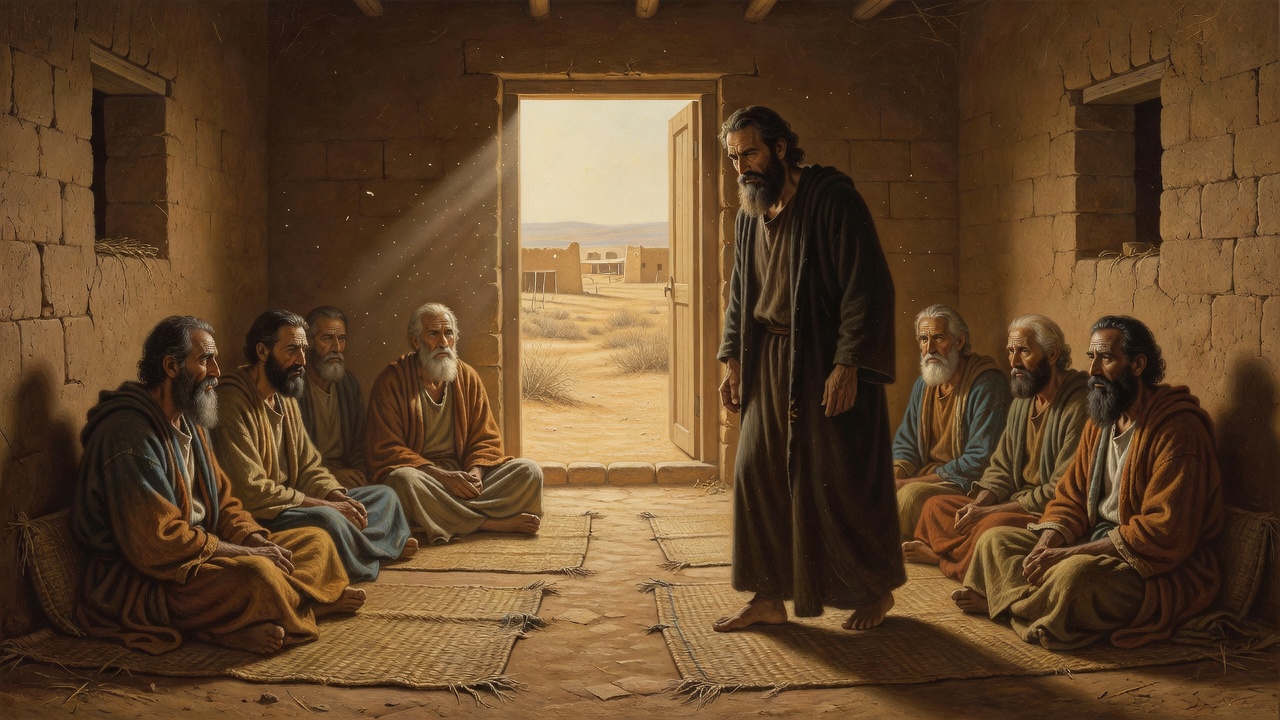
- When elders of Israel approached Ezekiel to inquire of the Lord, the prophet was told they had set up idols in their hearts. The text establishes that both the hypocritical inquirer and any enticed prophet share equal guilt, calling the house of Israel to genuine internal repentance rather than superficial inquiry.Sources: the Bible text itself
- Ezekiel singles out Noah, Daniel, and Job as renowned figures of righteousness and integrity. In the face of divine judgment upon an unfaithful land, the passage emphasizes individual accountability: even the righteousness of these three renowned men could only save themselves, not even their sons or daughters.Sources: the Bible text itself · Job · Noah · Daniel
- The chapter outlines four distinct judgments threatened against unfaithful lands: famine, wild beasts, sword, and plague. When these calamities fall upon Jerusalem, the surviving exiles would provide visible evidence of their corrupt conduct, demonstrating that the city's destruction was fully warranted.Sources: the Bible text itself · Jerusalem
Notes written with AI assistance from open sources (Theographic Bible Metadata, CC BY-SA 4.0; Easton’s Bible Dictionary, public domain) and reviewed before publishing.
Places in this chapter
Only places identified with high confidence are shown (90% or more according to the scholarly sources compiled by OpenBible). Period map: DARE (Digital Atlas of the Roman Empire), CC BY 4.0; modern map: © OpenStreetMap contributors; places: OpenBible.info (CC BY 4.0).
Credits and license for this translation
Bibeli Luayãtaalá
The Holy Bible in the Boko language spoken in Benin and Nigeria
copyright © 2010 SIM International
Language: Boko
Translation by: SIM International
Boko Bibeli Luayãtaala
This translation, published by the SIM au Benin, was published in 2010.
If you are interested in obtaining a printed copy, please contact the SIM at ECWA/SIM H.Q., P.M.B. 2009, Jos, Plateau State, NIGERIA.
This translation text is made available to you under the
terms of the Creative Commons License: Attribution-Noncommercial-No Derivative Works.
( http://creativecommons.org/licenses/by-nc-nd/3.0/ )
In addition, you have permission to port the text to different file formats, as long as you
do not change any of the text or punctuation of the Bible.
You may share, copy, distribute, transmit, and extract portions
or quotations from this work, provided that you include the above copyright
information:
You must give Attribution to the work.
You do not sell this work for a profit.
You do not make any derivative works that change any of the actual words or punctuation of the Scriptures.
Permissions beyond the scope of this license may be
available if you contact
us with your request.
This translation is made available to you under the terms of the
Creative Commons Attribution-Noncommercial-No Derivatives license 4.0.
You may share and redistribute this Bible translation or extracts from it in any format, provided that:
You include the above copyright and source information.
You do not sell this work for a profit.
You do not change any of the words or punctuation of the Scriptures.
Pictures included with Scriptures and other documents on this site are licensed just for use with those Scriptures and documents.
For other uses, please contact the respective copyright owners.
2014-09-25
Source: http://ebible.org/bqcsim/ · eBible.org