Ezekiel 12
Bibeli Luayãtaalá · Tap a verse to see its cross-references.
Taa ń Isailiↄ zĩ̀zↄↄ ũ seela
1Dii yã'òmɛɛ à mɛ̀: 2Gbɛ̃nazĩn nɛ́, ń kú swã́gbãadeↄ guuɛ. Aa wɛ́ vĩ, kási aali gu'eo, aa swã́ vĩ, kási aali yãmao, asa swã́gbãadeↄnɛ. 3Ayãmɛto gbɛ̃nazĩn nɛ́, ǹ n pↄ́ↄ naaa fãanɛ, ǹ n taa bùsu pãleu sↄukɛ, ní dazɛu ń wáa. Go n tía, ta gupãleu ń wáa. Baa kɛ́ swã́gbãadeↄn ń ũ, an wɛ́ a gí kɛ̃́ia? 4Bↄlɛ ń pↄ́ pↄ́ ń nàaapiↄ fãanɛ ń wáa. Tó aua pìla, ní bↄ wɛ̃́lɛu ń wáa lán gbɛ̃́ pↄ́ lɛ́ gɛ̃zɛawa. 5Bĩ́i fↄ̃́ ń wáa, ní bↄlɛ ń n asoↄ we. 6Asopi sɛ́ ń wáa oosiɛlɛ, ní bↄò. Ní pↄ́ku n wɛ́a, kɛ́ ńsu bùsupi eo yã́i. Ma n kɛ yã́ pↄ́ a Isailiↄ le seela ũɛ. 7Ɔ̃ má kɛ̀ lá Dii òmɛɛwa. Ma bↄ ń ma pↄ́ↄ fãanɛ lá málɛ tá bùsu pãleuwa. Kɛ́ aua pìla, ↄ̃ ma bĩ́i fↄ̃̀ ń ↄo. Oosiɛlɛ ↄ̃ ma a aso sɛ̀ ma bↄò ń wáa.
8Kɛ́ gu dↄ̀, Dii yã'òmɛɛ à mɛ̀: 9Gbɛ̃nazĩn nɛ́, Isaili swã́gbãadepiↄ i ń la bↄ́ ńlɛ kɛ màaio lé? 10Onɛ́ ma Dii Lua ma mɛ̀, yã́ pↄ́ dↄaana pↄ́ kú Yelusalɛũ ń Isaili pↄ́ kú weↄ kɛn we. 11Onɛ́ seelan n ũ, lá ń kɛ̀, a ń le sↄ̃ɛ, aai ta bùsu pãleu zĩ̀zↄↄ ũ. 12An kía a a aso da a gã̀u oosiɛlɛ, i daò zɛ́u. Wa bĩ́i fↄ̃ɛ̀, i bↄò, i pↄ́ku a wɛ́a, kɛ́ asu bùsupi eo yã́i. 13Má ba kpaɛ̀, i aà kṹ, mí taaànↄ Babɛli, Babiloni bùsuu, kási a wɛsi bùsupilɛ lↄo. We a gau. 14Má gbɛ̃́ pↄ́ liaaaàziↄ fãaa gupiiuɛ, aà dↄnlɛdeↄ ń aà dↄaiↄ píi, mí a fɛ̃nda wo mà pɛ́lɛońzi.
15Tó ma ń fãaa buiↄ guu, mɛ́ ma ń zuzu bùsu ń bùsuo, aaↄ dↄ̃ sa kɛ́ mámɛmaa Dii. 16Zĩ, nↄana, gagyã, má tó an gbɛ̃eↄ bↄ apii guu, kɛ́ aa e ń yãbɛ̃ɛkɛaↄ dau siunɛ́ bùsu pↄ́ aa tàuↄ guu, gbɛ̃́piↄ iↄ dↄ̃ kɛ́ mámɛmaa Dii.
17Dii yã'òmɛɛ à mɛ̀: 18Gbɛ̃nazĩn nɛ́, ǹ ń blɛpi ble ń sↄ̃̀deedeeo, ní ípi mi ń lualuaao yãkãakɛa guu, 19ní o bùsudeↄnɛ, ma Dii Lua mámɛ ma yã́ɛ bee ò Yelusalɛũdeↄnɛ ń Isaili bùsudeↄ píi. Aa blɛble yãkãakɛa guu, mɛ́ aa imi yãdima guu, asa wa ń bùsu kɛ yáiyai gbãamↄanɛ́ pↄ́ kↄ̃̀ ń guu yã́iɛ. 20An wɛ̃́lɛↄ gↄ̃ bɛziaↄ ũɛ, an bùsu i gↄ̃ da wàuu, í dↄ̃ kɛ́ mámɛmaa Dii.
21Dii yã'òmɛɛ à mɛ̀: 22Gbɛ̃nazĩn nɛ́, yáasi pↄ́ wì kɛ Isaili bùsu guuɛ bee dɛ kpelewa ni? Wì mɛ, àlɛ gↄↄ gá, ãnabikɛyã lɛ́ gbɛsuo. 23Onɛ́ ma Dii Lua ma mɛ̀ má yáasipi midɛ. Wa yáasipi kɛ Isaili bùsuu lↄo. Onɛ́ lↄ, gↄↄ kà kãi kɛ́ yã́ pↄ́ ãnabiↄ è a gbɛsu píi. 24Asa wa wɛ́pungu ɛɛyã ge màsokɛ lɛnakasa Isailiↄnɛ lↄo. 25Ma Dii má yã'o, mɛ́ yã́ pↄ́ má o a kɛ, a gↄↄ gága lↄo. Á swã́gbãadeↄ, yã́ pↄ́ má ò á gↄↄ, má kɛɛ. Ma Dii Lua mámɛ má ò.
26Dii yã'òmɛɛ à mɛ̀: 27Gbɛ̃nazĩn nɛ́, ma! Isailiↄ lɛ́ mɛ wɛ́pungu pↄ́ ń è yã́á zia yã́ɛ, n ãnabikɛkɛa gbɛsuagↄↄ zã̀. 28Ayãmɛto onɛ́ ma Dii Lua ma mɛ̀, ma yã́piↄ kee a gɛ̃gɛ̃ lↄo, yã́ pↄ́ má òpi gbɛ a su. Ma Dii Lua mámɛ má ò.
Did you know?
Signs of Exile and the Certainty of Judgment
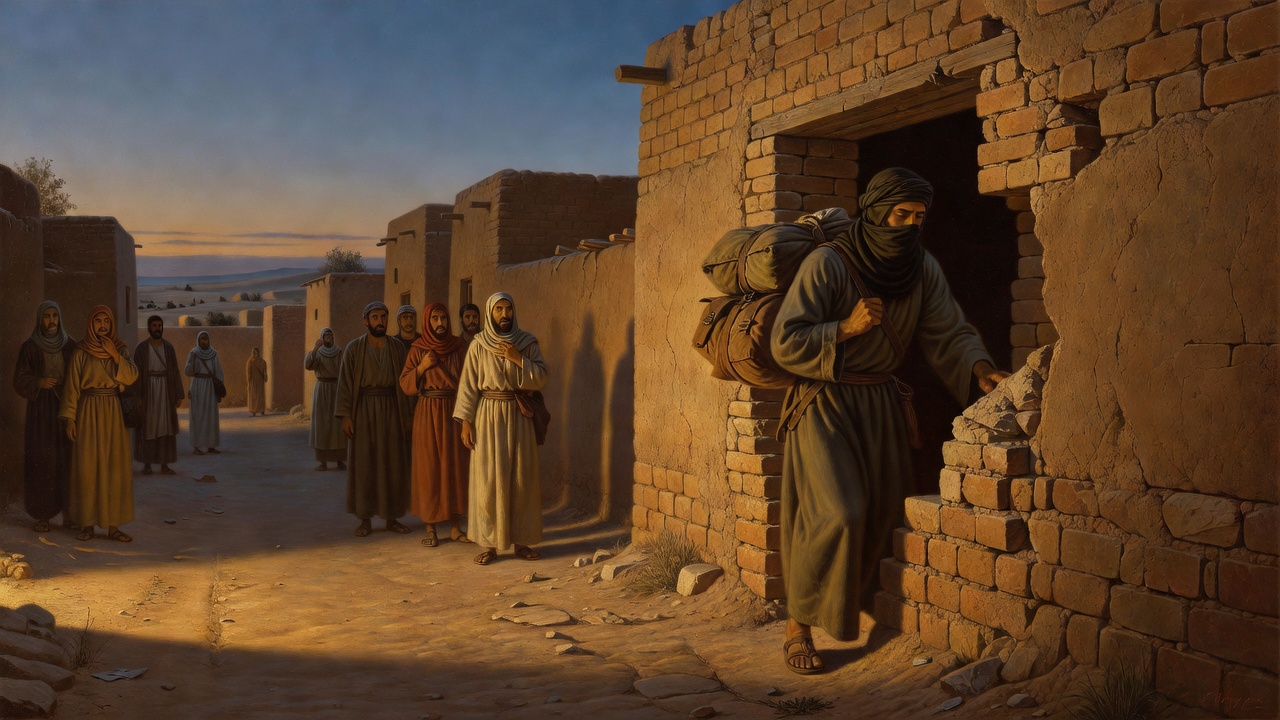
- Ezekiel was commanded to act out the coming exile as a living sign to his community. In plain view of the people, he packed an exile's bag, dug an opening through a wall by hand at dusk, and carried his load out while covering his face.Sources: the Bible text itself
- The enacted drama represented the fate of the ruler in Jerusalem. The prophecy foretold that he would attempt to escape through a breach in the city wall, be captured in a snare, and be brought captive to Babylon, where he would die without ever seeing the land.Sources: the Bible text itself · Babylon · Jerusalem
- The chapter directly addresses a popular proverb among the Israelites asserting that visions fail and prophecies only concern the distant future. In response, Ezekiel declared that the fulfillment of these judgments was imminent and would happen in their own generation.Sources: the Bible text itself
Notes written with AI assistance from open sources (Theographic Bible Metadata, CC BY-SA 4.0; Easton’s Bible Dictionary, public domain) and reviewed before publishing.
Places in this chapter
- Jerusalem · 31.777, 35.234 · verses 10, 12, 19
- Babylon · 32.543, 44.422 · verse 13
- Chaldea · 30.962, 46.104 · verse 13
Only places identified with high confidence are shown (90% or more according to the scholarly sources compiled by OpenBible). Period map: DARE (Digital Atlas of the Roman Empire), CC BY 4.0; modern map: © OpenStreetMap contributors; places: OpenBible.info (CC BY 4.0).
Credits and license for this translation
Bibeli Luayãtaalá
The Holy Bible in the Boko language spoken in Benin and Nigeria
copyright © 2010 SIM International
Language: Boko
Translation by: SIM International
Boko Bibeli Luayãtaala
This translation, published by the SIM au Benin, was published in 2010.
If you are interested in obtaining a printed copy, please contact the SIM at ECWA/SIM H.Q., P.M.B. 2009, Jos, Plateau State, NIGERIA.
This translation text is made available to you under the
terms of the Creative Commons License: Attribution-Noncommercial-No Derivative Works.
( http://creativecommons.org/licenses/by-nc-nd/3.0/ )
In addition, you have permission to port the text to different file formats, as long as you
do not change any of the text or punctuation of the Bible.
You may share, copy, distribute, transmit, and extract portions
or quotations from this work, provided that you include the above copyright
information:
You must give Attribution to the work.
You do not sell this work for a profit.
You do not make any derivative works that change any of the actual words or punctuation of the Scriptures.
Permissions beyond the scope of this license may be
available if you contact
us with your request.
This translation is made available to you under the terms of the
Creative Commons Attribution-Noncommercial-No Derivatives license 4.0.
You may share and redistribute this Bible translation or extracts from it in any format, provided that:
You include the above copyright and source information.
You do not sell this work for a profit.
You do not change any of the words or punctuation of the Scriptures.
Pictures included with Scriptures and other documents on this site are licensed just for use with those Scriptures and documents.
For other uses, please contact the respective copyright owners.
2014-09-25
Source: http://ebible.org/bqcsim/ · eBible.org