Amos 6
Bibeli Luayãtaalá · Tap a verse to see its cross-references.
Waiyoo Isailiↄ kía namablenaↄ
1Waiyoo á gbɛ̃́ pↄ́ á kú niɛniɛ Siↄnaↄ
ń á gbɛ̃́ pↄ́ á kú dↄdↄa Samali sĩ̀sĩpↄlɛuↄ,
á gbɛ̃́ pↄ́ á dɛ buiↄ mide kíaↄ ũ
gbɛ̃́ kĩniↄ wɛ́ ìↄ dↄáziↄ!
2À gɛ́ Kalenↄ à gwa!
Bↄa we í gɛ́ Amata mɛɛwiau,
í gɛ́ Gata, Filitɛ̃ mɛɛwiau.
An wɛ̃́lɛpiↄ maa dɛ wɛ̃́lɛ pↄ́ á kíaↄ kuulae?
An bùsu zↄ̃ↄ dɛ á pↄ́ae?
3Lá álɛ e Lua ĩadaawá gↄↄ zã̀,
kía pãsĩ gbãableawá kãikũ̀.
4I wúlɛ á wesa swaa liiↄwa,
i ↄli ázĩau á wúlɛkĩipiↄwa.
I sãnɛbↄlↄ ń gáaena mɛkpaao só.
5I mↄↄnalɛ lán Davidi lɛ̀wa,
i lɛ̀ dafu da ń pↄ́'ↄbↄnaↄ.
6I vɛ̃ɛmi à a dàa bↄ,
i nísi ↄde dↄↄ,
kási ili ↄ́ↄlↄ Yosɛfu buiↄ kaalɛa yã́ musuo.
7A yã́i tò áↄ ku gbɛ̃́ pↄ́ wa táńnↄ káauↄ guuɛ,
á lalasi wiiↄ i midɛ.
8Ma Dii Lua Zĩgↄ̃de
ma lɛgbɛ̃̀ ń ma kuao ma mɛ̀,
má ye Yakↄbu buiↄ ĩ́andãa gĩyãio,
má za an zɛgikĩiↄu.
Má ń mɛɛwia na ń ibɛɛↄnɛ ń ↄzĩ
ń pↄ́ pↄ́ kú a guuↄ píiɛ.
9Baa tó gↄ̃ɛↄ gↄ̃̀ uae gbɛ̃ↄn kwi, aa gagaɛ. 10Tó gbɛ̃́ mↄ̀ a daɛ gɛ sɛ́i, àlɛ bↄò à gɛ́ tɛsↄ̃iwà, mɛ́ à gbɛ̃́ pↄ́ ulɛa we là à mɛ̀: Gbɛ̃e kunnↄ we lↄe? Ade a wewà: Gbɛ̃e ku lao. Kɛ kílikili, baa Dii tↄ́, ńsu sio.
11Asa ma Dii ma yãdìlɛ ma mɛ̀,
má ua zↄ̃ↄ wiɛ kɛ́lɛkɛlɛ,
mí a nɛ́na kɛ yáiyai.
12Wì sↄ̃́ baa gbɛsi musue?
Wì sapa ń zuↄ wee?
Màa á tò yã́zɛde gↄ̃̀ɛ́ sɛwɛ ũ,
mɛ́ yãkɛa a zɛ́wa gↄ̃̀ɛ́ gↄ̃i ũ.
13Á pↄ kɛ̀na zĩblea Lodebaawawa,
a mɛ̀ a Kaanaiũ sì ń ázĩa gbãaoɛ.
14Ma Dii Lua Zĩgↄ̃de ma mɛ̀:
Isailiↄ, málɛ tɛ́kpa buieu à fɛlɛánↄ,
i wɛ́tɛ̃amↄɛ́ za Amata bↄlɛu e Ísida Wisidei.
Did you know?
Complacency and Impending Exile
- Amos addresses the ruling elite who felt secure in both Zion, the fortified hill of Jerusalem, and Mount Samaria, the capital of the northern kingdom built on an elevated summit by King Omri. Despite the natural defenses and prestige of these cities, their leaders are warned that their ease and overconfidence would end in captivity.Sources: Zion · Samaria · the Bible text itself
- The prophet challenges Israel to look at renowned foreign cities such as Calneh near the Euphrates, Hamath on the Orontes in Upper Syria, and the Philistine stronghold of Gath. These neighboring powers were neither smaller nor less protected, yet they could not escape destruction.Sources: Calneh · Hamath · Gath · the Bible text itself
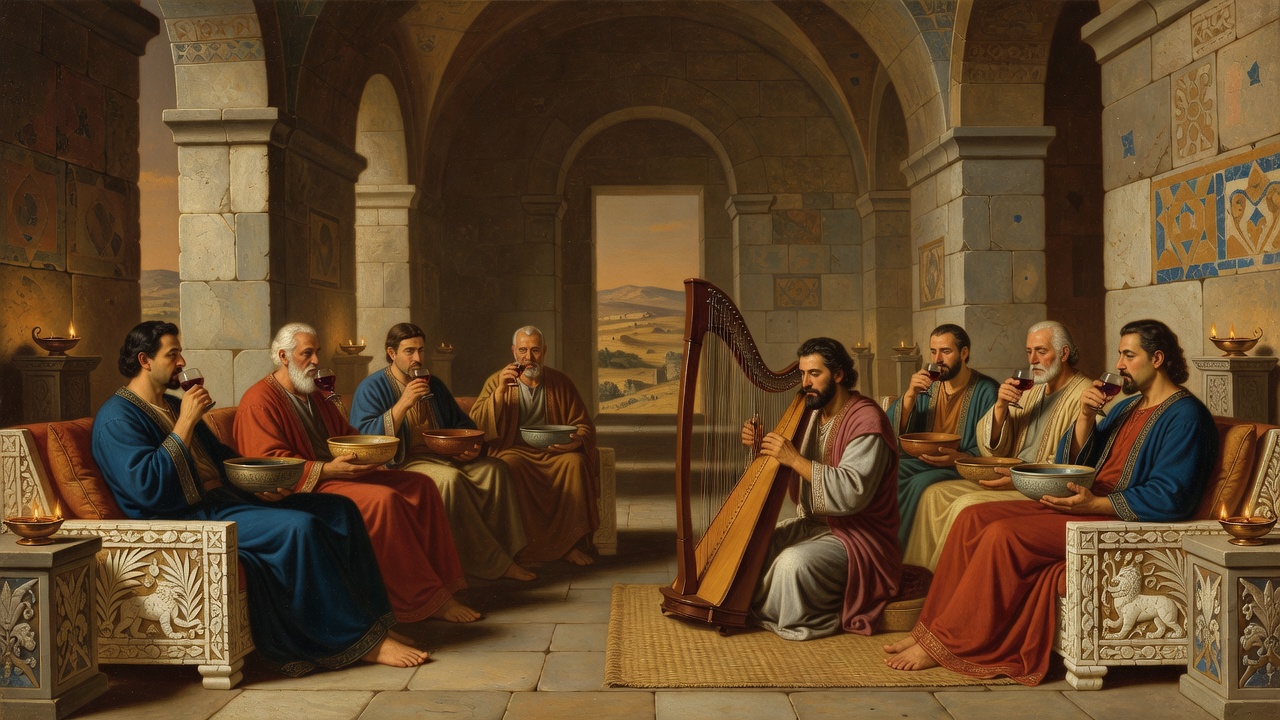
- Amos criticizes the aristocracy for indulging in extravagant banquets, resting on beds inlaid with ivory, and improvising music on harps like David, all while ignoring the impending ruin of Joseph. The name Joseph here designates the northern tribes of Israel, whose moral decay and social injustice were neglected by their wealthy leaders.Sources: David · Joseph (son of Jacob) · the Bible text itself
Notes written with AI assistance from open sources (Theographic Bible Metadata, CC BY-SA 4.0; Easton’s Bible Dictionary, public domain) and reviewed before publishing.
Places in this chapter
- Samaria · 32.276, 35.195 · verses 1, 8
- Zion · Today: Jerusalem · 31.777, 35.234 · verse 1
- Hamath · Today: Hama · 35.136, 36.750 · verse 2
- Philistia · 31.664, 34.546 · verse 2
Only places identified with high confidence are shown (90% or more according to the scholarly sources compiled by OpenBible). Period map: DARE (Digital Atlas of the Roman Empire), CC BY 4.0; modern map: © OpenStreetMap contributors; places: OpenBible.info (CC BY 4.0).
Credits and license for this translation
Bibeli Luayãtaalá
The Holy Bible in the Boko language spoken in Benin and Nigeria
copyright © 2010 SIM International
Language: Boko
Translation by: SIM International
Boko Bibeli Luayãtaala
This translation, published by the SIM au Benin, was published in 2010.
If you are interested in obtaining a printed copy, please contact the SIM at ECWA/SIM H.Q., P.M.B. 2009, Jos, Plateau State, NIGERIA.
This translation text is made available to you under the
terms of the Creative Commons License: Attribution-Noncommercial-No Derivative Works.
( http://creativecommons.org/licenses/by-nc-nd/3.0/ )
In addition, you have permission to port the text to different file formats, as long as you
do not change any of the text or punctuation of the Bible.
You may share, copy, distribute, transmit, and extract portions
or quotations from this work, provided that you include the above copyright
information:
You must give Attribution to the work.
You do not sell this work for a profit.
You do not make any derivative works that change any of the actual words or punctuation of the Scriptures.
Permissions beyond the scope of this license may be
available if you contact
us with your request.
This translation is made available to you under the terms of the
Creative Commons Attribution-Noncommercial-No Derivatives license 4.0.
You may share and redistribute this Bible translation or extracts from it in any format, provided that:
You include the above copyright and source information.
You do not sell this work for a profit.
You do not change any of the words or punctuation of the Scriptures.
Pictures included with Scriptures and other documents on this site are licensed just for use with those Scriptures and documents.
For other uses, please contact the respective copyright owners.
2014-09-25
Source: http://ebible.org/bqcsim/ · eBible.org