2 Samuel 6
Bibeli Luayãtaalá · Tap a verse to see its cross-references.
Sua ń Dii kpagoloo Yelusalɛũ
1Davidi ɛ̀a Isaili pↄ́ à ń sɛ́ↄ kã̀aa gbɛ̃ↄn ↄ̀aasↄsↄo lɛɛ baakwi (30.000). 2Ɔ̃ à fɛ̀lɛ dàńnↄ zɛ́u, aa gɛ̀ Baala pↄ́ kú Yuda bùsuu, kɛ́ aa Lua kpagolo sɛ́ wà suò. Dii Zĩgↄ̃de ìↄ zↄ̃lɛa kible kpagolopi musu malaika gã̀sĩadeↄ zãnguo, ↄ̃ wì mɛ aà tↄ́ kuwà. 3Aa kpagolopi dà zugo dafu guu Abinadabu bɛ sĩ̀sĩ musu, ↄ̃ aa dàò zɛ́u. Abinadabu nɛ́ↄ Uza ń Ahioo mɛ́ lɛ́ gɛ́ ń zugopio, 4Lua kpagolo kú a guu. Ahio mɛ́ dↄaaa, 5ↄ̃ Davidi ń Isailiↄ lɛ́ ↄ̃wã ḿpii Dii aɛ ń gbãa pua lɛ́u ń lɛsiao. Wàlɛ mↄↄnalɛ, wàlɛ kúulɛ, wàlɛ gã̀alɛ, wàlɛ faapa, wàlɛ sɛ̃́sɛ̃napa.
6Kɛ́ aa kà Nakↄ̃ ésegbɛ̃kĩi, zuↄ gɛ̃nalɛ̀, ↄ̃ Uza ↄbↄ pɛ̀ Lua kpagolopiwa. 7Ɔ̃ Dii pↄ pàaàzi, à aà lɛ̀ a dɛ̀ kpagolo saɛ we dàa pↄ́ a kɛ̀pi yã́i. 8Davidi pↄ pà kɛ́ Dii pↄ fɛ̃̀ Uzazi yã́i, ↄ̃ wì mɛ gupiɛ Pↄfɛ̃a'uzazi e ń a gbão. 9Gↄↄ bee ↄ̃ vĩa Davidi kũ̀ Dii yã́ musu à mɛ̀: Kpelewa má kɛ mà Dii kpagolo sɛ mà taòi? 10Ɔ̃ i we sùò a wɛ̃́lɛu lↄo, à lìlɛ tàò Gata gbɛ̃́ Ɔbɛdɛdↄũ bɛɛ.
11Dii kpagolo kú aà bɛ e mↄ àaↄ̃, ↄ̃ Dii ɛ̀fãaikɛ̀ɛ̀ ń aà bɛdeↄ píi. 12Wa ò kí Davidiɛ wà mɛ̀: Dii ɛ̀fãaikɛ̀ Ɔbɛdɛdↄũ bɛdeↄnɛ ń pↄ́ pↄ́ a vĩↄ píi a kpagolo yã́i. Ɔ̃ Davidi gɛ̀ we, à Lua kpagolo sɛ̀ lɛ́ suò a wɛ̃́lɛ guu ń pↄnao. 13Kɛ́ gbɛ̃́ pↄ́ Dii kpagolo sɛaↄ gbasɛ̀ gɛ̃n soolo, ↄ̃ Davidi sa'ò ń gáaeo ń zunɛbↄlↄ mɛkpaao. 14Davidi bàabaa sa'o'ula daa, àlɛ ↄ̃wã Dii aɛ a gbãa pua lɛ́u. 15Aàpi ń Isailiↄ píi aalɛ su ń Dii kpagoloo, aalɛ kúkuakɛ, aalɛ kuupɛ. 16Kɛ́ Dii kpagolo lɛ́ gɛ̃ Davidi wɛ̃́lɛu, ↄ̃ Saulu nɛ́ Mikali lɛ́ zĩ́lɛ gwa fɛnɛntiu. Kɛ́ a è kí Davidi lɛ́ vĩvĩ, àlɛ ↄ̃wã Dii aɛ, à sakàaàgu a sↄ̃ guu. 17Kɛ́ wà sù ń Dii kpagoloo, wa dìlɛ a gbɛu zwã̀akpɛ pↄ́ Davidi dↄ̀ɛ̀ guu. Ɔ̃ à sa pↄ́ wì a pↄ́ kátɛu à tɛ́kũ ò Dii aɛ ń sáaukpasao. 18Kɛ́ à sa'ò a làa, à samaa'ò gbɛ̃́ↄnɛ ń Dii Zĩgↄ̃de tↄ́o. 19Ɔ̃ à pɛ̃ɛ bìilɛ Isaili pↄ́ kãaaa weↄnɛ mɛ̀ndodo gↄ̃ɛↄ ń nↄɛↄ píi ń damina kàao mɛ̀ndodo ń vɛ̃ɛbɛ kàao mɛ̀ndodo.
20Kɛ́ Davidi lɛ́ tá samaa'oi a bɛdeↄnɛ, ↄ̃ Saulu nɛ́ Mikali bↄ̀ gɛ̀ daiaàlɛ à mɛ̀: N Isailiↄ kía, n kɛ gbian we gbãa? N nzĩa mɛ mↄ̀ n ìwaↄ nↄɛ zĩkɛnaↄnɛ, lá wisaide ì azĩa mɛ mↄnɛ́wa. 21Ɔ̃ Davidi ò Mikaliɛ: Dii ma ↄ̃wã̀ɛ̀. Dii mɛ́ ma sɛ n mae ń a bɛdeↄ gbɛu, à ma kpa a gbɛ̃́ Isailiↄ dↄaana ũ. 22Má yãfũkũ dɛ beea, mí azĩa sↄaanɛ n ea guu, ãma nↄɛ zĩkɛna pↄ́ n ń yã'òpiↄ mɛ́ aa ma kpɛla. 23Ɔ̃ Saulu nɛ́ Mikali i nɛ'io e à gɛ̀ gàò.
Did you know?
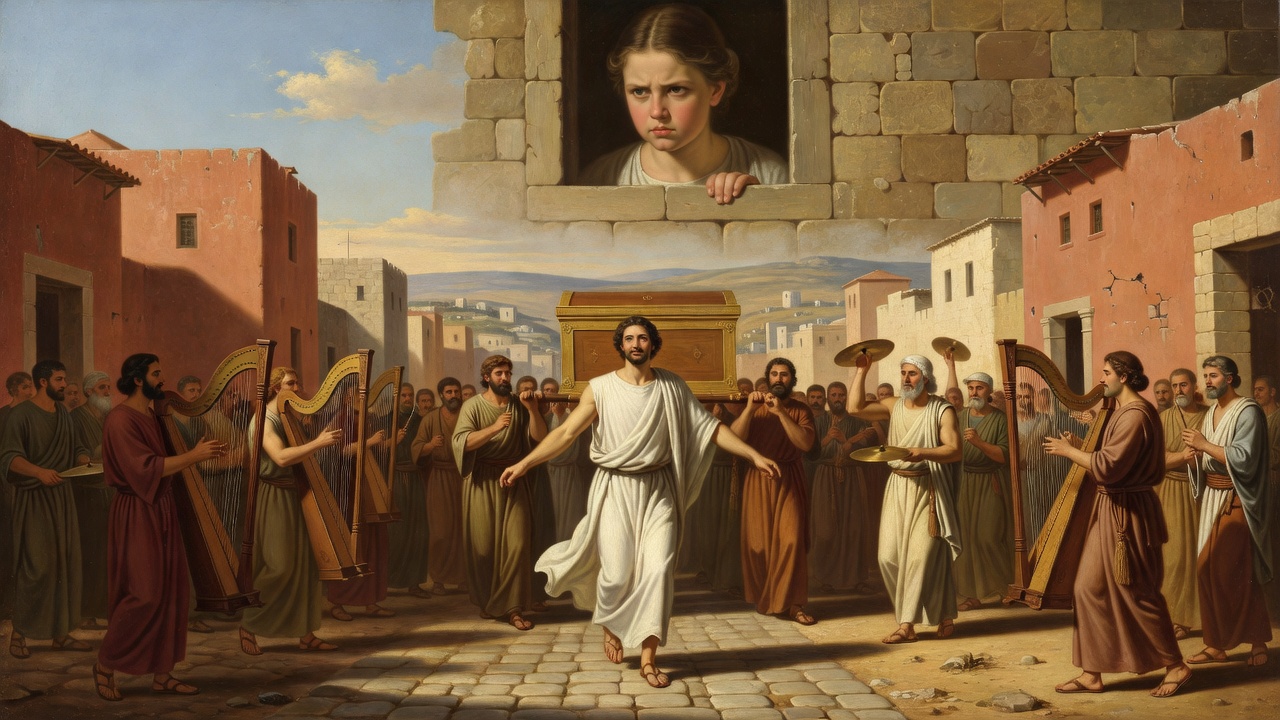
Bringing the Ark to Jerusalem
- Baale-judah is another name for Kiriath-jearim, the city where the ark of the covenant had been kept in the home of Abinadab since its return from the Philistines. King David assembled thirty thousand chosen men of Israel to bring the ark up from there to Jerusalem on a new cart guided by Abinadab's sons, Uzzah and Ahio.Sources: Baale-judah · Abinadab · Ahio · the Bible text itself
- When the oxen stumbled at the threshing floor of Nacon, Uzzah took hold of the ark to steady it and died beside it. David called the place Perez-uzzah, meaning breach of Uzzah, and temporarily diverted the ark to the house of Obed-edom the Gittite for three months before completing its journey to Jerusalem.Sources: Perez-uzzah · Uzzah · the Bible text itself
- Saul's daughter Michal, David's wife, watched from a window as the king danced and leaped before the ark wearing a linen ephod, and she despised him in her heart. When she confronted him for what she viewed as undignified behavior before the people, David defended his celebration before God, and Michal remained childless until her death.Sources: Michal · Saul · the Bible text itself
Notes written with AI assistance from open sources (Theographic Bible Metadata, CC BY-SA 4.0; Easton’s Bible Dictionary, public domain) and reviewed before publishing.
Places in this chapter
- Baale-judah · Today: Deir el Azar · 31.809, 35.104 · verse 2
- Perez-uzzah · Today: within 1 km of Jerusalem · 31.777, 35.234 · verse 8
- City of David · 31.774, 35.236 · verses 10, 12, 16
Only places identified with high confidence are shown (90% or more according to the scholarly sources compiled by OpenBible). Period map: DARE (Digital Atlas of the Roman Empire), CC BY 4.0; modern map: © OpenStreetMap contributors; places: OpenBible.info (CC BY 4.0).
Credits and license for this translation
Bibeli Luayãtaalá
The Holy Bible in the Boko language spoken in Benin and Nigeria
copyright © 2010 SIM International
Language: Boko
Translation by: SIM International
Boko Bibeli Luayãtaala
This translation, published by the SIM au Benin, was published in 2010.
If you are interested in obtaining a printed copy, please contact the SIM at ECWA/SIM H.Q., P.M.B. 2009, Jos, Plateau State, NIGERIA.
This translation text is made available to you under the
terms of the Creative Commons License: Attribution-Noncommercial-No Derivative Works.
( http://creativecommons.org/licenses/by-nc-nd/3.0/ )
In addition, you have permission to port the text to different file formats, as long as you
do not change any of the text or punctuation of the Bible.
You may share, copy, distribute, transmit, and extract portions
or quotations from this work, provided that you include the above copyright
information:
You must give Attribution to the work.
You do not sell this work for a profit.
You do not make any derivative works that change any of the actual words or punctuation of the Scriptures.
Permissions beyond the scope of this license may be
available if you contact
us with your request.
This translation is made available to you under the terms of the
Creative Commons Attribution-Noncommercial-No Derivatives license 4.0.
You may share and redistribute this Bible translation or extracts from it in any format, provided that:
You include the above copyright and source information.
You do not sell this work for a profit.
You do not change any of the words or punctuation of the Scriptures.
Pictures included with Scriptures and other documents on this site are licensed just for use with those Scriptures and documents.
For other uses, please contact the respective copyright owners.
2014-09-25
Source: http://ebible.org/bqcsim/ · eBible.org