1 Samuel 13
Bibeli Luayãtaalá · Tap a verse to see its cross-references.
Samuɛli Saulu lelea
1Saulu kɛ̀ Isailiↄ kía ũ wɛ̃̀ pla, 2à ń zĩgↄ̃ↄ sɛ̀ gbɛ̃ↄn ↄ̀aasↄsↄo lɛɛ àaↄ̃ (3.000). Gbɛ̃ↄn ↄ̀aa kwi aaↄ kuaànↄ Mimasa ń Bɛtɛli gusĩsĩdeo. Gbɛ̃ↄn ↄ̀aa sↄo aaↄ kú ń aà nɛ́ Yonatãao Gibɛa, Bɛ̃yãmɛɛ bùsuu. Ɔ̃ à gbɛ̃́ kĩniↄ gbàɛ, baade tà a bɛ.
3Yonatãa lɛ̀lɛ Filitɛ̃ gudↄ̃ana pↄ́ kú Gɛbaↄwa, ↄ̃ Filitɛ̃ↄ a baomà. Ɔ̃ Saulu zĩ̀gãalɛ̀ Isaili bùsu gupiiu à mɛ̀: Ɛbɛluↄ, à yãe ma! 4Ɔ̃ Isailiↄ mà píi wà mɛ̀, Saulu lɛ̀lɛ Filitɛ̃ gudↄ̃anaↄwa, ↄ̃ Filitɛ̃ↄ ye Isailiↄ gĩyãio. Ɔ̃ wà Isailiↄ sìsi, aa mↄ̀ nà Sauluwa Giligali. 5Ɔ̃ Filitɛ̃ↄ kã̀aa aa zĩka ń Isailiↄ. An sↄ̃́goↄ kà ↄ̀aasↄsↄo lɛɛ àaↄ̃ (3.000), an sↄ̃́godeↄ kà ↄ̀aasↄsↄo lɛɛ sooloɛ (6.000), mɛ́ an kɛ̀sɛdeↄ dasi lán ísialɛ ũfãawa. Ɔ̃ aa fɛ̀lɛ gɛ̀ bòokpà Mimasa, Bɛtavɛ̃ gukpɛ. 6Kɛ́ Isailiↄ è wà gↄ̃̀ yeelɛa, wàlɛ naaańnↄ, ↄ̃ aa ùlɛ gbɛ̀'ɛↄ ń dàoↄ ń gbɛ̀sↄↄnaↄ ń gbã́oↄ ń ɛↄ guu. 7An gbɛ̃eↄ gulɛ̀ aa bùa Yuudɛ̃wa e Gada buiↄ bùsuu ń Galada bùsuo. E tia Saulu ku Giligali, vĩa lɛ́ gbɛ̃́ pↄ́ kuaànↄↄ kũ maamaa.
8À Samuɛli dã̀ gↄↄ sopla lá a dìlɛɛwa. Kɛ́ i mↄo, ↄ̃ aà gbɛ̃́ↄ lɛ́ fãaa, aalɛ aà to we. 9Ɔ̃ Saulu mɛ̀: À mↄmɛɛ ń sa pↄ́ wì a pↄ́ kátɛu à tɛ́kũ obↄo ń sáaukpa sa'obↄↄ. Ɔ̃ à sa pↄ́ wì a pↄ́ kátɛu à tɛ́kũpi ò. 10Kɛ́ a làa, Samuɛli lɛ́ ká, ↄ̃ Saulupi gɛ̀ dàaàlɛ à gbãakpàaàzi. 11Ɔ̃ Samuɛli òɛ̀: Bↄ́ yã́ ń kɛ̀ màai? Saulu wèwà à mɛ̀: Kɛ́ má è ma gbɛ̃́ↄ lɛ́ fãaa aalɛ ma to we, mɛ́ ni mↄ gↄↄ pↄ́ ń dìlɛwao yã́iɛ. Filitɛ̃ↄ lɛ́ kↄ̃ kãaa Mimasa, 12ↄ̃ ma mɛ̀, aasu lɛ́lɛa Giligali la Dii sísisaio. Ɔ̃ ma sapi ò teasi. 13Ɔ̃ Samuɛli òɛ̀: N faasaiyã kɛ̀! Ń yã́ pↄ́ Dii n Lua dìlɛnɛ kũao. Tó ń kũa yãaɛ, Dii a to n buiↄ aaↄ kpalable gↄↄpiiɛ. 14Tia kɛ́wa ńyↄ̃ gɛ̃gɛ̃ kpalauo. Lá ń yã́ pↄ́ Dii dìlɛnɛ kũao, a gbɛ̃́ pↄ́ aà nↄ̀sɛ muaaanↄ wɛɛlɛ à aà dilɛ a gbɛ̃́ↄ dↄaana ũɛ. 15Ɔ̃ Samuɛli fɛ̀lɛ Giligali à gɛ̀ Gibɛa, Bɛ̃yãmɛɛ buiↄ bùsuu. Ɔ̃ Saulu a zĩgↄ̃ pↄ́ kuanↄↄ nào, aa kà gbɛ̃ↄn ↄ̀aa àaↄ̃ taa.
16Saulu ń a nɛ́ Yonatãao ń a zĩgↄ̃ pↄ́ kúńnↄↄ ku Gibɛa, mɛ́ Filitɛ̃ↄ bòokpà Mimasa. 17Zĩgↄ̃ gãli àaↄ̃ↄ bↄ̀lɛ Filitɛ̃ↄ bòou, aa gɛ̀ lɛ́lɛi Isailiↄwa. Gãli do gɛ̀ Ɔfɛla oi Suali bùsuu. 18Gãli do gɛ̀ Bɛtoloni oi, mɛ́ a àaↄ̃de gɛ̀ Isaili bùsu zↄ̃lɛu, sĩ̀sĩ pↄ́ bↄaa ń Semaiↄ Guzulɛo ń gbáao.
19Sia ku Isaili bùsuuo, asa Filitɛ̃ↄ mɛ̀ Ɛbɛluↄ su fɛ̃nda ge sↄ̃napioɛ. 20Filitɛ̃ↄ kĩ́i ↄ̃ Isailiↄ ì gɛ́ soonaↄ ń zusoonaↄ ń mↄoↄ ń kↄmaↄ lɛdɛdɛui. 21Soona ń zusoonlɛo kà ã́nusu ↄwatɛ̃ plapla, saaↄ ń mↄoↄ sↄ̃ ã́nusu ↄwatɛ̃ dodo. 22Ayãmɛto zĩpi kagↄↄ Saulu ń Yonatãao zĩgↄ̃ↄ fɛ̃nda ge sↄ̃na kũao, sema Saulu ń Yonatãapio bàasio.
23Filitɛ̃ gudↄ̃anaↄ gɛ̀ Mimasa gbɛbↄlɛu.
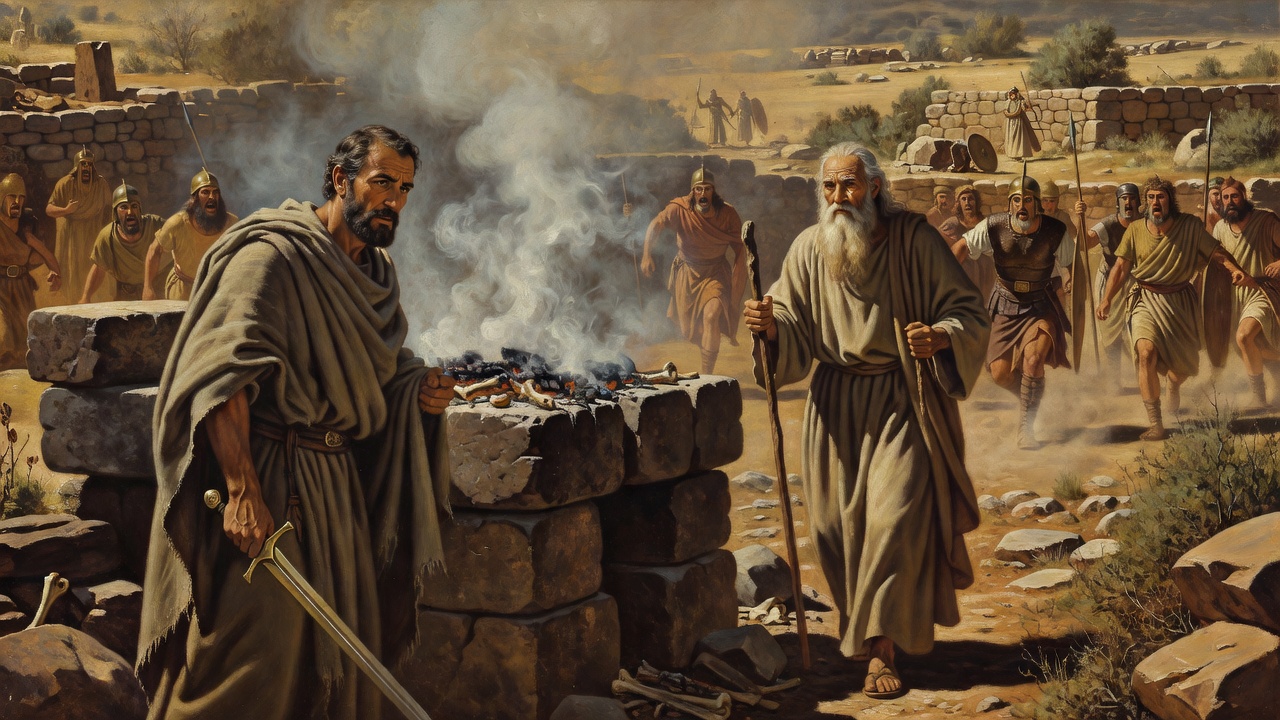
Did you know?
Saul's Impatience and the Philistine Threat
- The Philistines maintained a monopoly on metalworking to prevent the Israelites from forging weapons. As a result, the Israelites had to travel to Philistine territory and pay fees to sharpen their iron farming tools, leaving only Saul and his son Jonathan equipped with swords or spears.Sources: the Bible text itself
- When facing an overwhelming Philistine force, Saul waited seven days at Gilgal for Samuel to offer sacrifices. As his fearful soldiers began to scatter, Saul offered the burnt offering himself, prompting Samuel to declare that Saul's royal dynasty would not endure.Sources: the Bible text itself · Gilgal
- The military confrontation took place across the rugged hill country of Benjamin, with Philistine forces camped at Michmash and Saul's men stationed at Geba. A steep ravine known as the pass of Michmash separated the two opposing armies.Sources: the Bible text itself · Michmash · Geba
Notes written with AI assistance from open sources (Theographic Bible Metadata, CC BY-SA 4.0; Easton’s Bible Dictionary, public domain) and reviewed before publishing.
Places in this chapter
- Gilead · Today: Gilead 1 · 32.187, 35.692 · verse 7
- Jordan · Today: Jordan River · 31.761, 35.558 · verse 7
- Beth-horon · Today: Beit Ur al Tahta · 31.895, 35.084 · verse 18
Only places identified with high confidence are shown (90% or more according to the scholarly sources compiled by OpenBible). Period map: DARE (Digital Atlas of the Roman Empire), CC BY 4.0; modern map: © OpenStreetMap contributors; places: OpenBible.info (CC BY 4.0).
Credits and license for this translation
Bibeli Luayãtaalá
The Holy Bible in the Boko language spoken in Benin and Nigeria
copyright © 2010 SIM International
Language: Boko
Translation by: SIM International
Boko Bibeli Luayãtaala
This translation, published by the SIM au Benin, was published in 2010.
If you are interested in obtaining a printed copy, please contact the SIM at ECWA/SIM H.Q., P.M.B. 2009, Jos, Plateau State, NIGERIA.
This translation text is made available to you under the
terms of the Creative Commons License: Attribution-Noncommercial-No Derivative Works.
( http://creativecommons.org/licenses/by-nc-nd/3.0/ )
In addition, you have permission to port the text to different file formats, as long as you
do not change any of the text or punctuation of the Bible.
You may share, copy, distribute, transmit, and extract portions
or quotations from this work, provided that you include the above copyright
information:
You must give Attribution to the work.
You do not sell this work for a profit.
You do not make any derivative works that change any of the actual words or punctuation of the Scriptures.
Permissions beyond the scope of this license may be
available if you contact
us with your request.
This translation is made available to you under the terms of the
Creative Commons Attribution-Noncommercial-No Derivatives license 4.0.
You may share and redistribute this Bible translation or extracts from it in any format, provided that:
You include the above copyright and source information.
You do not sell this work for a profit.
You do not change any of the words or punctuation of the Scriptures.
Pictures included with Scriptures and other documents on this site are licensed just for use with those Scriptures and documents.
For other uses, please contact the respective copyright owners.
2014-09-25
Source: http://ebible.org/bqcsim/ · eBible.org