Romans 16
I tnalù dwata · Tap a verse to see its cross-references.
I kafaldam Fol i demen faglut
1Kayègu man di gamu too fye to Fibi, i satu libun flanekito faglut, i tmabeng i dad to faglut di banwe Sinkriya. 2Tooyu dnawat kenen, du nfun kenen Amuito Krayst Dyisas, du ani too gablà nimò i dad to faglut di Dwata. Tnabengyu kenen ku nun kliduan, du dee dad faglut tnabengan, na agu fa gtabengan.
3Tnulenyu ale Akwila na Frisila toogu ale fandam, du ale demegu di nimò i fimò Krayst Dyisas gami. 4Tagatlagad ale mati du fye tmabeng ale deg. Taman too agu mlé bong fye di dale, na là alò deg, bay i kdee dad faglut ise Dyu dini mlé ale fye di dale.
5Tnulenyu i kdee dad faglut gal stifun di gumnèla, du mangamfù di Dwata, fandamgu ale. Tnulenyu Ifinitus, i demegu sgalak toogu kando, fandamgu kenen. Kenen too tnanin to faglut di ku Krayst Dyisas ditù di banwe Asya.
6Tnulenyu Méri, i too fgal tmabeng gamu, fandamgu kenen. 7Tnulenyu Andronikus na Dyunyas fandamgu ale. Di muna, ale i dad demegu Dyu di lam i bilanggù. Na nafè ale i dad to gal dek Dyisas na faglut ale di ku Krayst Dyisas muna fa di deg.
8Tnulenyu Amfliatus i toogu kando du mdà di kafaglutmi di Amuito Dyisas Krayst, fandamgu kenen.
9Tnulenyu Urbanus i dememi di nimò fimò Krayst gami, toogu kenen fandam, na Stakis fa i satu demegu sgalak toogu kando.
10Tnulenyu Afilis fandamgu kenen. Too gsalig kenen di nimò Krayst. Tnulenyu i kdee di gumnè Aristobulus fandamgu ale.
11Tnulenyu Hérodiyon, i demegu Dyu, na i kdee dad faglut di gumnè Narsisus, fandamgu ale.
12Tnulenyu Trifina na Trifosa, i dad libun too fgal mimò i nimò Amuito Dyisas Krayst, fandamgu ale. Tnulenyu Firsis, i satu demegu sgalak toogu kando, fandamgu kenen. Kenen i satu libun too fgal mimò i nimò Amuito Dyisas Krayst.
13Tnulenyu Rufus, i too mlalò ku Krayst, fandamgu kenen na i yéan i kalnawan deg gambet too glut tingaan. 14Tnulenyu Asinkritus, Fligon, Hérmis, Fatrubas, Hérmas, na kdee dademe flanekito di kafaglut, i galla deme, fandamgu i kdeela.
15Tnulenyu Filologus, i yaanan Dyulya, Néryus, i flanekan libun, Olimfas, na i dademela faglut déén, fandamgu ale.
16Di kastifunyu tooyu fite i kasakdoyu kat man satu gamu. I kdee dad faglut dini fandamla gamu.
Sangal kafngewe Fol
17Dad flanekgu faglut, toogu fni di gamu, tooyu neye du nun dad to mayè falmo i ksasatuyu na i kafaglutyu di ku Krayst, du dnuenla i tdò gablà di kenen i gatdò di gamu. Fawag gamu di dad to én. 18Du i dad to mimò ani gine, ise én gumimòla di Amuito Krayst, bay én gumimòla i dale knayè. Na fagu di kfulungla talù, na fagu di kafdagla, fangawla i dad to là gmadè. 19Talinge kdee dad to gablà di kimenyu i Fye Tulen, na ani too gaflehew deg. Na i kayègu ku too matnù i kfulungyu mimò fye, na landè kfulungyu mimò sasè.
20Là mlo ani, Dwata i gumdà i ktanak nawa, too kenen misan ku Satanas, na fkahan kenen di falel i blìyu. Na kayègu ku banlé gamu Amuito Dyisas Krayst kafye.
21Timoti i demegu mbel Tnalù Dwata, fandaman gamu kun, na lêman Lusiyas, Dyason, na Sosifatar, i dad demegu Dyu.
22Agu Tértyus, i fsulat Fol sulat ani, fandamgu gamu, du slame ito dad faglut di Amuito Krayst.
23Gayus i dmawat deg klogu dini, fandaman gamu kun. Di gumnean i gustifun i dad faglut dini. Irastus magot i filak di banwe ani, na i flanekito di kafaglut Kwartus, fandamla gamu kun.
24Kayègu ku banlé gamu Amuito Dyisas Krayst kafye. Amén.
I kdasal Fol dmayen Dwata
25Too ito dmayen Dwata. Du kenen alò gatgal i nawaito di kafaglutito di ku Dyisas Krayst, fagu di Fye Tulen gablà di kenen i galgu tdò, na fagu di kaglut tafiten i gbuni di muna fa. 26Kabay ani, i glut tdò i gbuni di muna fa, tagfite Dwata fagu di dad sulat i dad tugadan, na fagu di dek Dwata, i mto landè gusenan, du fye nun dalan kdee dad to di klamang banwe faglut na mimen kenen.
27Taman dmayen ito Dwata landè gusenan fagu di ku Dyisas Krayst, du kenen alò too fulung na gmadè i kdee. Amén
Did you know?
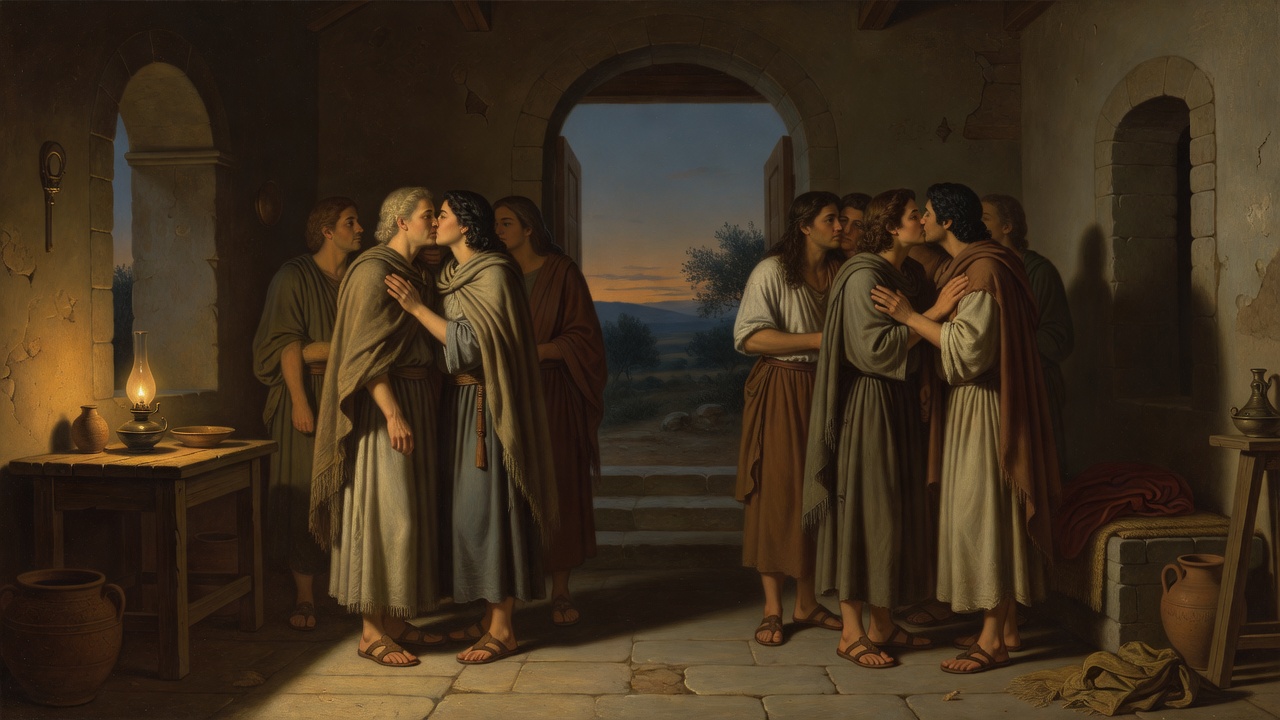
Greetings to the church in Rome
- Paul commends Phoebe, a servant of the church in Cenchrea, and asks the recipients in Rome to welcome her and help her with whatever she needs, because she has been a great help to many people, including him. Cenchrea was the eastern harbor of Corinth, about nine miles east of the city and the outlet for its trade with the Asiatic shores of the Mediterranean; Easton's Bible Dictionary (1897) says she was probably the bearer of this letter.Sources: the Bible text itself · Phebe · Cenchreae
- Paul greets Prisca and Aquila, his fellow workers in Christ Jesus, who risked their lives for him, and also the church that meets in their house; he says that not only he but all the churches of the Gentiles are grateful to them. Easton's Bible Dictionary (1897) calls her Priscilla and describes Aquila as a tent-maker from Pontus who, with his wife, left Rome because of a decree of Claudius in A.D. 50 commanding all Jews to leave the city; her name sometimes comes before his, as it does here.Sources: the Bible text itself · Priscilla · Aquila
- Near the close, Tertius, who wrote the letter down, adds his own greeting. Gaius, who has hosted Paul and all the church, also sends greetings, as do Erastus, the city treasurer, and Quartus.Sources: the Bible text itself
Notes written with AI assistance from open sources (Theographic Bible Metadata, CC BY-SA 4.0; Easton’s Bible Dictionary, public domain) and reviewed before publishing.
Places in this chapter
Only places identified with high confidence are shown (90% or more according to the scholarly sources compiled by OpenBible). Period map: DARE (Digital Atlas of the Roman Empire), CC BY 4.0; modern map: © OpenStreetMap contributors; places: OpenBible.info (CC BY 4.0).
Credits and license for this translation
I tnalù dwata
New Testament in Blaan, Sarangani
copyright © 1998 Wycliffe Bible Translators, Inc.
Language: Sarangani Blaan (Blaan, Sarangani)
Translation by: Wycliffe Bible Translators
Contributor: Wycliffe Bible Translators, Inc.
Copyright Information
© 1998, Wycliffe Bible Translators, Inc. All rights reserved.
This translation text is made available to you under the
terms of the Creative Commons License: Attribution-Noncommercial-No Derivative Works.
( http://creativecommons.org/licenses/by-nc-nd/3.0/ )
In addition, you have permission to port the text to different file formats, as long as you
do not change any of the text or punctuation of the Bible.
You may share, copy, distribute, transmit, and extract portions
or quotations from this work, provided that you include the above copyright
information:
You must give Attribution to the work.
You do not sell this work for a profit.
You do not make any derivative works that change any of the actual words or punctuation of the Scriptures.
Permissions beyond the scope of this license may be
available if you contact
us with your request.
The New Testament
in Blaan, Sarangani
© 1998, Wycliffe Bible Translators, Inc. All rights reserved.
This translation is made available to you under the terms of the
Creative Commons Attribution-Noncommercial-No Derivatives license 4.0.
You may share and redistribute this Bible translation or extracts from it in any format, provided that:
You include the above copyright and source information.
You do not sell this work for a profit.
You do not change any of the words or punctuation of the Scriptures.
Pictures included with Scriptures and other documents on this site are licensed just for use with those Scriptures and documents.
For other uses, please contact the respective copyright owners.
2015-03-17
Source: http://ebible.org/bps/ · eBible.org