Proverbs 6
I tnalù dwata · Tap a verse to see its cross-references.
I uteng i dademe
1Tingàgu, ku makang ge na ge mayad uteng i demem to,
2neyem ken mfawel ge di kfakangam.
3Tingàgu, ku tadéén ge di falel i demem to,
ani nimoam, du fye galwà ge di kfakangam.
Salu ge ditù di kenen na fdanaam i ktom,
na toom fni di kenen ku began ge falwà di kfakangam di kenen.
4Nang ge kudang balù ftud silang ku tagalwà ge.
5Falwaam i ktom di fawel, gambet i kfulung i anuk falwà i kton difawel,
ku demen uhe, falwaan i kton du mila i to dmulak.
I to là mayè mimò
6I to là mayè mimò, fye ku fafulung kenen faldam
salngad i dad gulam,
du too ale mimò.
7Landè ulula mebe dale,
8bay balù landè ulula, too ale musek i knaanla di bang i nungumwèla,
du tagàla di bang klandèla.
9Kabay ge, i là mayè mimò, tan i klom kudang?
Na kilen i kukatam?
10Tmimel i to là mayè mimò manan,
“E ftud agu na kudang agu fa làmlo.”
Ani gman i to là mayè mimò.
11Kabay klon kudang makto kel di kenen klandean,
salngad kakel i to tmaku mebe tek.
12I to sasè landè gukmamu,
balù nè gusalun gal tmulen kéng.
13Én gukmamun i dad matan,
dad blian,
na dad kmalan,
falyakan du fye nun gafgawan.
14Na too fnò sasè di nawan, du toon fandam i kiboan mimò sasè,
na balù nè gusalun, mebe kenen i ksamuk.
15Na du ani nimoan, makto kel i too sasè gaslokan,
na landè gugalwaan.
16Nun nam too knang nawa Dwata,
fitu kadì i knang nawan, na ani dunan,
17i kafdatah, i ktulen kéng,
i kbanò dad to landè salà,
18i gal faldam kibò mimò sasè,
i mlal mimò sasè,
19i kdalam di salà,
i mebe kasnang nawa i dad to sgalak.
Sasè gukel i to mlafà i yaanan
20Tingàgu, toom lalò i kafngewe maam,
na nangam nlifet i tdò yéam.
21Toom busek ani di fandamam,
na toom busek di lam i nawam,
du fye laam glifet kel di atuan.
22I kafngewela i malak ge di dalan gumagum,
na kamlung ge di kifu,
na mngewe ge di mduh.
23Du i kafngewe ani, salngad i saloam tmuyal i dalanam,
na i kngakla, tamdò ge i kiboam mebe i ktom.
24I kafngewela, kamlung ge di boyo i libun mkat lagi,
na gafadnan ge di kladal talù yaan i demem to.
25Nang ku én kibalam i kafye bawehan,
too ge fgeye i ktabugan ge fagu di keyen di ge.
26I libun mkat lagi, là mabtas i bayadam kenen,
bay klafà i yaan, too bong i bayadam du gamgebe ge di gumalmom.
27Tan i fandamam, fakay ku lamkaf ge lifoh
na là sakuf i klaweham?
28Na fakay ku mdà ge di minit bala,
na là myu i bliam?
29Salngad gukelam ku nlafaam i yaanam,
du balù simto mimò ani, là fakay ku là maflayam.
30Là mnang dad to i satu to tmaku i knaan,
ku mdà di kbitilan.
31Kabay knean, ku makfè kenen fuléan di to mangfun fitu dulêkalbongan,
kel di kti i kdee nfunan.
32Kabay mahal i satu to mlafà i yaanan, landè sa kaglabatan,
na toon falmo i kton.
33Na i dengegan too malmo, na too kenen fatduk,
na i bong kyaan là lana kel di atuan,
34du yaan i libun ani, too malbut du mingà nawan,
na landè gusen i kbalasan.
35Là magwè i kalbutan
balù tan i kalbong bayadam na blém kenen,
laan dnawat dun.
Did you know?
Warnings Against Traps, Laziness, and Discord
- The phrase striking hands refers to a gesture used to make a legal or financial pledge. The passage warns that taking on surety for another person can ensnare someone, advising immediate action without sleep to free oneself like a hunted gazelle or bird.Sources: the Bible text itself
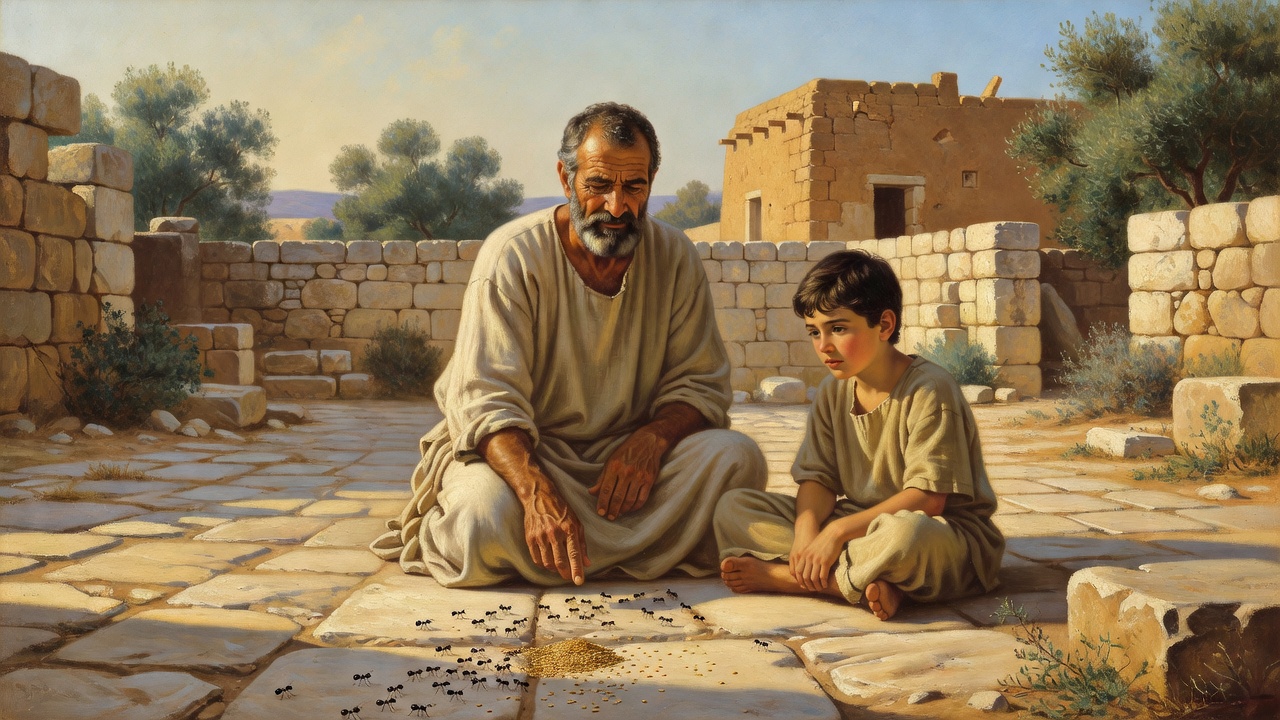
- The text points to the ant as a model of wisdom and self-directed labor because it stores food during the summer and harvest without needing a commander, overseer, or ruler.Sources: the Bible text itself
- The passage uses a graded numerical formula, listing six things the Lord hates and seven that are detestable, systematically condemning arrogance, deceit, violence, malice, false testimony, and the stirring of discord.Sources: the Bible text itself
Notes written with AI assistance from open sources (Theographic Bible Metadata, CC BY-SA 4.0; Easton’s Bible Dictionary, public domain) and reviewed before publishing.
Credits and license for this translation
I tnalù dwata
New Testament in Blaan, Sarangani
copyright © 1998 Wycliffe Bible Translators, Inc.
Language: Sarangani Blaan (Blaan, Sarangani)
Translation by: Wycliffe Bible Translators
Contributor: Wycliffe Bible Translators, Inc.
Copyright Information
© 1998, Wycliffe Bible Translators, Inc. All rights reserved.
This translation text is made available to you under the
terms of the Creative Commons License: Attribution-Noncommercial-No Derivative Works.
( http://creativecommons.org/licenses/by-nc-nd/3.0/ )
In addition, you have permission to port the text to different file formats, as long as you
do not change any of the text or punctuation of the Bible.
You may share, copy, distribute, transmit, and extract portions
or quotations from this work, provided that you include the above copyright
information:
You must give Attribution to the work.
You do not sell this work for a profit.
You do not make any derivative works that change any of the actual words or punctuation of the Scriptures.
Permissions beyond the scope of this license may be
available if you contact
us with your request.
The New Testament
in Blaan, Sarangani
© 1998, Wycliffe Bible Translators, Inc. All rights reserved.
This translation is made available to you under the terms of the
Creative Commons Attribution-Noncommercial-No Derivatives license 4.0.
You may share and redistribute this Bible translation or extracts from it in any format, provided that:
You include the above copyright and source information.
You do not sell this work for a profit.
You do not change any of the words or punctuation of the Scriptures.
Pictures included with Scriptures and other documents on this site are licensed just for use with those Scriptures and documents.
For other uses, please contact the respective copyright owners.
2015-03-17
Source: http://ebible.org/bps/ · eBible.org