Proverbs 24
I tnalù dwata · Tap a verse to see its cross-references.
1Nang mibal nawam i kagkah dad to sasè,
na nang ge mayè dmeme dale,
2du gal ale faldam i kibòla smamuk,
na galla sanman gablà di kimòla sasè di demela to.
3Fagu di kfulung i satu to gafdakan i gumnè,
na fagu di kaglabatan nun kgal i gumnean,
4na du nun gnadean,
nun mabtas na nun fye baweh kandeenan di dad sibayan.
5Fye fa i to fulung faldam di to too mgal,
du too mdatah fa i gnagan i to nun gnadè di to nun kgal,
6du ku fan ge salu di gusfati, mni ge funa i fye fngewe,
na fagu di fye kafngewe i dee mebe,
na matu ge sa di kasfati.
7I mngalam talù i to fulung faldam là glabat i to là fulungfaldam,
taman ku nun kastulen too mngalam, landè timelan du laan glabat.
8I to funan fandam i kiboan mimò sasè,
én kdagit kenen i to mimò samuk.
9I ksamuk i gal fandam i to là fulung faldam, salà sa,
na knang dad to i to gal madoy.
10Ku mlungay i nawam di nun samuk,
too glut mlungay ge.
11Faflalam falwà i to landè gugsalaan,
i fan fnati i dademe.
12Kabay ku balingam man, “Landè gadègu, nalandè labetgu di to atù,”
bay gmadè Dwata ku tan i mnè di nawam,
du kenen too meye ge, taman gadean i kdee,
taman bnalasan ge di kdee dad nimoam.
13Tingàgu, minum ge tnab, du too fye neman,
na tnab mdà di dalit i sugen too mi.
14Na too fye nem i tnab di baam, salngad i kafye i kfulung dinawam,
taman toom fkah di nawam kfulung,
du nun kadang gufyem di satu duh,
na gdohò i kafye i galam fatan.
15Nang ge meye i kfagum mlayam i to matlu, salngad i nimò i tosasè du tmaku,
na nangam falmo i gumnean,
16du balù file dulê fnugen i to matlu lêman gték,
bay i to sasè, di kakel i too sasè kalima, laan gték.
17Nang ge lehew ku nun sasè kel di to dmuen ge,
na nang flehew i nawam di kfugenan,
18du ku ani nimoam gadè sa Dwata na laan mayè dun,
na ken laan baling fanlayam i to dmuen ge.
19Nangam fsamuk i nawam gablà di dad to sasè,
demen nang mibal nawam i kagkahla,
20du dad to sasè landè fatanla,
na landè gufyela di satu duh.
21Tingàgu, fye ku nun klikoam di Dwata na i harì,
na nang ge magin i dad to là mimen dale,
22du dad to gambet ani nun kalmola tatì makto kel,
du landè gmadè ku tan i flayam blé Dwata na i harì di dale.
Nun dad gman i dad to fulung faldam
23Ani i dad dademe gman i dad to fulung faldam:
Là fye ku i to gal mukum nun nsenan di dad to nukuman.
24Du i to mukum, ku di kukuman i to gamsalà na manan landè salaan,
fanlagi kenen i dad to na kdee dad to mnang nawala kenen.
25Kabay i to mukum, ku nukuman i to gamsalà na faflayaman i toani,
nun gufyen na dnayen kenen i dad to.
26I to tmimel i too glut timel,
én ilè i to ani too fye deme sgalak.
27Funam fatlagad i nligom, du fye gadeam nun gumweam,
kafnge én fdakam gumneam.
28Nang ge tmulen gablà di demem to di gususay ku landè duenan,
na nang ge tmulen ise glut gablà di kenen.
29Na nangam man, “E, malas agu i sasè nimoan dideg.”
30Glius agu di satu nligo nfun i to malwe mimò
na là fulung faldam.
31Na di klamang nligon tatmabò dad bnas nun sual,
na salnok i dad dademe sabat, na tamalbà i labatan batu.
32Na di kitegu ani, toogu fkah di fandamgu,
na nun kagbetgu.
33I gagbetgu dini, fakay fadlug ge milè,
na fadlug kudang, na fadlug ftud,
34bay ku én alò i nimoam, klom kudang kel di ge klandeam,
salngad kakel i satu to mebe tek du tmaku.
Did you know?
Wisdom for Daily Life, Justice, and Diligence
- Proverbs 24:27 reflects the priorities of ancient agrarian life by advising that one should first prepare fields and secure an agricultural livelihood before building a house. Securing reliable food production had to take precedence over investing resources into domestic shelter.Sources: the Bible text itself
- The chapter challenges passive bystander apathy, asserting that claiming ignorance will not excuse failing to rescue those facing unjust peril or death. It similarly warns against judicial partiality in civic assemblies, strongly condemning those who exonerate the guilty.Sources: the Bible text itself
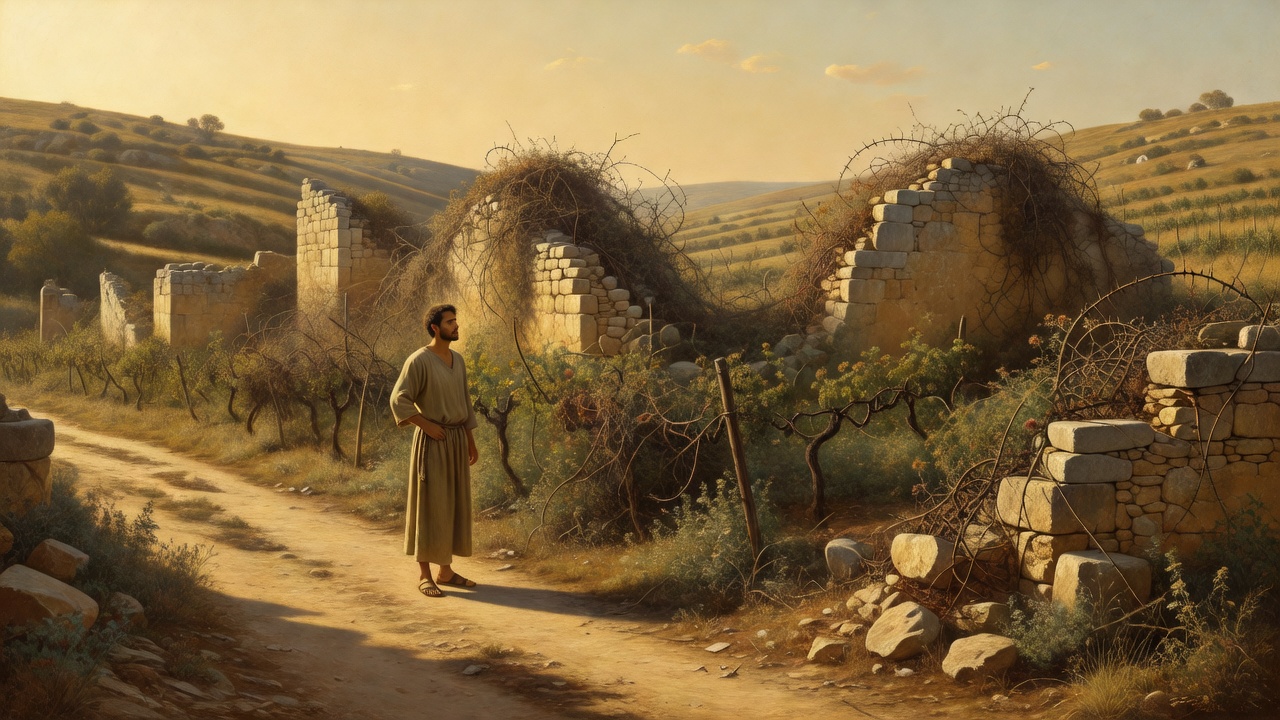
- The vivid portrait of a slacker's vineyard highlights the rapid physical decay of untended land, marked by overgrown thistles and broken stone walls. In the hill country of ancient Israel, maintaining stone terrace walls was essential for preventing soil erosion and protecting crops.Sources: the Bible text itself
Notes written with AI assistance from open sources (Theographic Bible Metadata, CC BY-SA 4.0; Easton’s Bible Dictionary, public domain) and reviewed before publishing.
Credits and license for this translation
I tnalù dwata
New Testament in Blaan, Sarangani
copyright © 1998 Wycliffe Bible Translators, Inc.
Language: Sarangani Blaan (Blaan, Sarangani)
Translation by: Wycliffe Bible Translators
Contributor: Wycliffe Bible Translators, Inc.
Copyright Information
© 1998, Wycliffe Bible Translators, Inc. All rights reserved.
This translation text is made available to you under the
terms of the Creative Commons License: Attribution-Noncommercial-No Derivative Works.
( http://creativecommons.org/licenses/by-nc-nd/3.0/ )
In addition, you have permission to port the text to different file formats, as long as you
do not change any of the text or punctuation of the Bible.
You may share, copy, distribute, transmit, and extract portions
or quotations from this work, provided that you include the above copyright
information:
You must give Attribution to the work.
You do not sell this work for a profit.
You do not make any derivative works that change any of the actual words or punctuation of the Scriptures.
Permissions beyond the scope of this license may be
available if you contact
us with your request.
The New Testament
in Blaan, Sarangani
© 1998, Wycliffe Bible Translators, Inc. All rights reserved.
This translation is made available to you under the terms of the
Creative Commons Attribution-Noncommercial-No Derivatives license 4.0.
You may share and redistribute this Bible translation or extracts from it in any format, provided that:
You include the above copyright and source information.
You do not sell this work for a profit.
You do not change any of the words or punctuation of the Scriptures.
Pictures included with Scriptures and other documents on this site are licensed just for use with those Scriptures and documents.
For other uses, please contact the respective copyright owners.
2015-03-17
Source: http://ebible.org/bps/ · eBible.org