Proverbs 11
I tnalù dwata · Tap a verse to see its cross-references.
1Knang Dwata i to mlimbung di ktimbangan,
bay i gulehewan i to tmimbang i glut ktimbang.
2I to fdag, là mlo nun bong kyaan,
bay i to fdanaan i kton nun kfulungan.
3I katlu i to matlu, mebe kenen di katlun,
bay i kabigkò i to sasè, mebe kenen di kalmon.
4I dad knunam landè gukmamum di kakel i duh kfatim,
bay i katlum, i gafalwà ge di sasè kfati.
5I katlu i to fye, én gafye i knean,
bay i ksasè i to sasè, én gafalmo kenen.
6I katlu i to gsalig, i gafalwà kenen,
bay i to là gsalig, tamgikat kenen di sasè knayean.
7Di kfati i to sasè, talandè i kdee imen nawan di tah tanà ani,
na i ksaligan di knunan landè gukelan.
8I to matlu, galwà di samuk,
bay én baling nkel i samuk i to sasè.
9I gman i to là faglut di Dwata, én gafalmo i demen to,
bay i kfulung i to matlu, én gafalwà i demen to.
10Too kanlehew i dad to di banwe ku nun fye kel di dad to matlu,
na toola kanlehew i kfati dad to sasè.
11Fagu di nimò i dad to matlu mbaling mdengeg i banwe,
bay fagu di talù i dad to sasè malmo i banwe.
12I to madoy i demen to kulang kaglabatan,
bay i to nun kaglabat landè manan.
13I to samtugad salék, là gsalig gutmulen i santulenam di kenen,
bay i to gsalig, là samtugad i santulenam di kenen.
14Malmo i banwe ku landè to fulung mebe dun,
bay ku nun dee fulung mebe na fulung mngewe, nun ktanak di banwe.
15Nsalam kadang ku makang ge mayad uteng i to laam dilè,
fye fa ku là ge makang di kenen.
16I libun fye ldam, too mgafè,
bay i lagi labè, landè mafè kenen, én aloan gwè i knun.
17Ku kamdo ge i demem to, én gafye i ktom,
bay ku fansaseam i demem to, fansaseam sa i ktom.
18I sasè to, landè fye untungan,
bay i matlu to, nun fye untung toon gdawat.
19Mlawil i to ku too ndà di nawan mimò i tlu,
bay i to too mayè mimò sasè, mlal mati.
20Knang Dwata i dad to sasè fandam,
bay én toon kanlehew i dad to mimò matlu.
21I kaglutan, là galwà i dad to sasè di kaflayam Dwata dale,
bay i dad to matlu falwaan.
22Balù tan kafye baweh i libun, bay ku landè kaglabatan i fyenimò,
salngad kenen i tising blawen di ilung sdè.
23I to matlu, én fatanan alò i fye,
bay i to sasè, én fatanan alò kalbut Dwata.
24I to too mlé, too matnù i knunan,
bay i to là mayè mlé mbaling kenen landè.
25Nun gufye di to too mlé,
du ku tnabengan i dad demen to na lêla kenen tnabeng.
26Mnang nawa dad to i satu to fatan di kagket i btas mse klon fafabli dun,
bay dagla i to fadlug fabli.
27Ku too ge mngabal fye, nafè ge,
bay ku mngabal ge sasè, sasè sa i teenam.
28I to smalig di knunan, sasè knean salngad i dad doon mlanas dibang minit,
bay i to matlu, fye knean salngad i dad doon mbaling mlunu di bangulen.
29I to mebe i ksamuk di malayan, di gusenan lana i knunan,
na i to là fulung faldam, mbaling kenen fasak di to fulung faldam.
30I bunge i nimò i to matlu, én gamlawil i demen to,
bay i klabè, én gafalmo dun.
31I kaglutan, ku glut nun untung di mgimò i to matlu di tah tanàani,
lumban fa nun untung di mgimò i to sasè na i to gamsalà.
Did you know?
Integrity, Wealth, and the Community
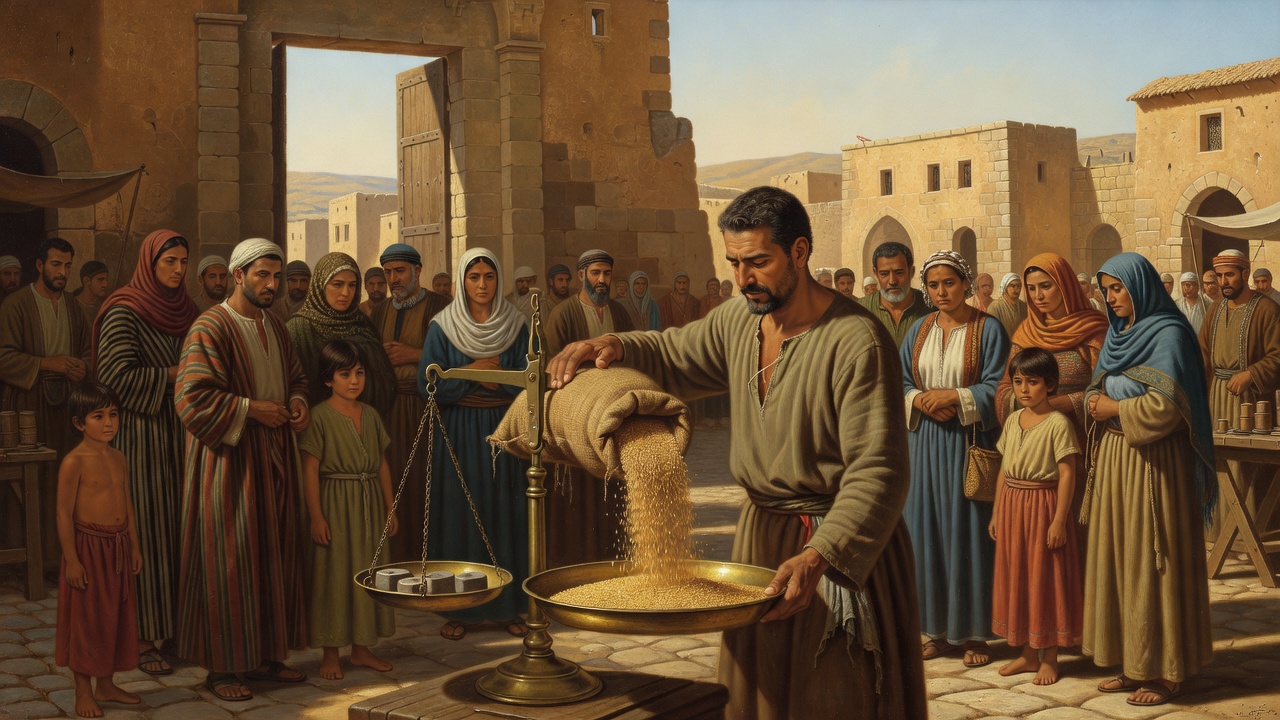
- Ancient commerce relied heavily on balance scales with stone weights to measure precious metals and goods. The chapter opens by condemning dishonest scales and praising accurate weights, emphasizing that honesty in everyday marketplace transactions reflects a person's standing before God.Sources: the Bible text itself
- Proverbs 11 highlights the civic impact of individual behavior, noting that a city's stability and joy depend on the integrity of its upright citizens, wise counselors, and fair leaders rather than the words and actions of the wicked.Sources: the Bible text itself
- In agricultural societies, withholding grain during shortages to drive up prices caused widespread suffering. The chapter contrasts the hoarder of grain, who earns the community's curse, with the merchant who readily sells food to sustain his neighbors.Sources: the Bible text itself
Notes written with AI assistance from open sources (Theographic Bible Metadata, CC BY-SA 4.0; Easton’s Bible Dictionary, public domain) and reviewed before publishing.
Credits and license for this translation
I tnalù dwata
New Testament in Blaan, Sarangani
copyright © 1998 Wycliffe Bible Translators, Inc.
Language: Sarangani Blaan (Blaan, Sarangani)
Translation by: Wycliffe Bible Translators
Contributor: Wycliffe Bible Translators, Inc.
Copyright Information
© 1998, Wycliffe Bible Translators, Inc. All rights reserved.
This translation text is made available to you under the
terms of the Creative Commons License: Attribution-Noncommercial-No Derivative Works.
( http://creativecommons.org/licenses/by-nc-nd/3.0/ )
In addition, you have permission to port the text to different file formats, as long as you
do not change any of the text or punctuation of the Bible.
You may share, copy, distribute, transmit, and extract portions
or quotations from this work, provided that you include the above copyright
information:
You must give Attribution to the work.
You do not sell this work for a profit.
You do not make any derivative works that change any of the actual words or punctuation of the Scriptures.
Permissions beyond the scope of this license may be
available if you contact
us with your request.
The New Testament
in Blaan, Sarangani
© 1998, Wycliffe Bible Translators, Inc. All rights reserved.
This translation is made available to you under the terms of the
Creative Commons Attribution-Noncommercial-No Derivatives license 4.0.
You may share and redistribute this Bible translation or extracts from it in any format, provided that:
You include the above copyright and source information.
You do not sell this work for a profit.
You do not change any of the words or punctuation of the Scriptures.
Pictures included with Scriptures and other documents on this site are licensed just for use with those Scriptures and documents.
For other uses, please contact the respective copyright owners.
2015-03-17
Source: http://ebible.org/bps/ · eBible.org