Matthew 8
I tnalù dwata · Tap a verse to see its cross-references.
I kafgulê Dyisas i to tanfig
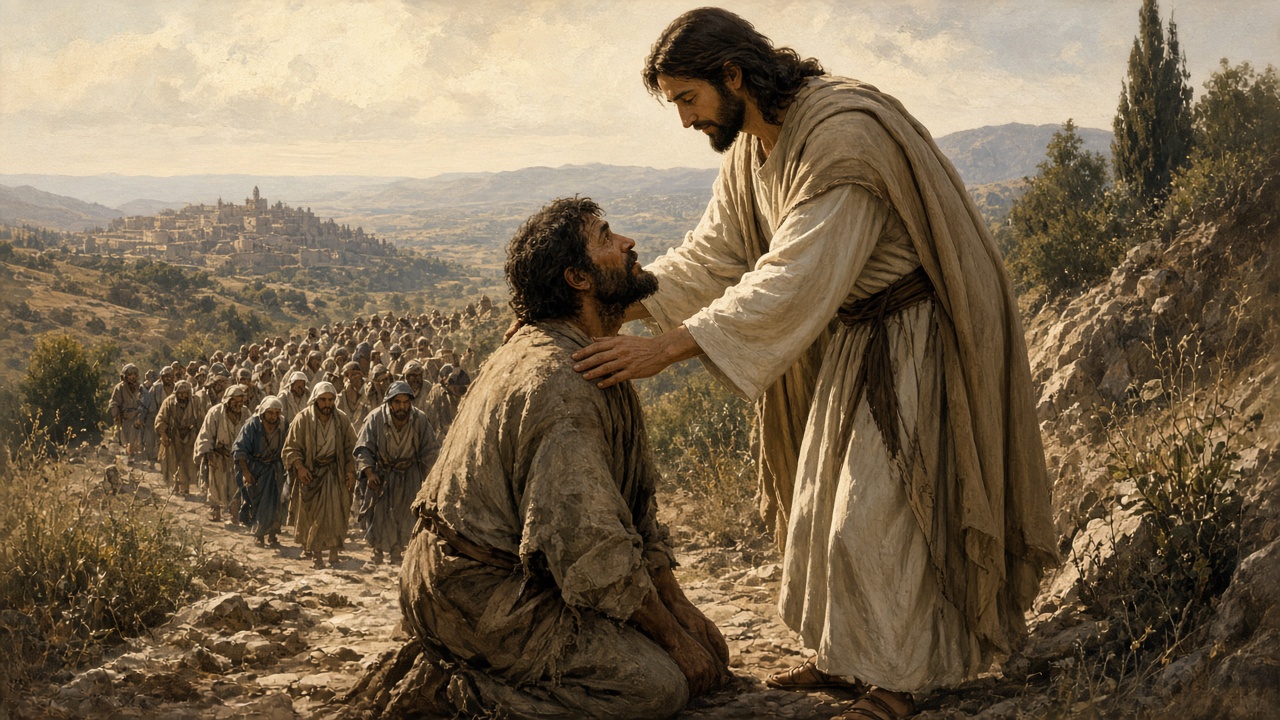
1Na di kasol Dyisas mdà di bulul gutamdoan, too dee dad to mlalò kenen. 2Na nun satu lagi tanfig fdadong di kenen, na lkuad di munan, manan, “Amu, ku beg ge mayè gaganam fgulê deg di tduk fagsik deg ani.”
3Na nagot Dyisas kenen, manan, “Mayè agu sa. Mgulê ge nan.” Na too glut, tamgulê i tfigan. 4Na man Dyisas di kenen, “Nangam tulen ani di balù simto to, bay én nimoam mdà ge, na fitem laweham di bà di Dwata na nebem di kenen i dsù di Dwata fgadè ku Mosis, du én i gugmadè i dad to too glut tamgulê ge.”
I kafgulê Dyisas i lifan satu kafitan sundalu mdà di banwe Roma
5Na salu Dyisas di lunsud Kafernaum. Kakelan déén nun satu kafitan dad sundalu mdà di banwe Roma smite kenen du mni tabeng, 6manan, “Amu, én lifangu tatì milè di gumnègu du là galyak lawehan na too sasè kaflayaman.”
7Na man Dyisas di kenen, “Salu agu ditù du fye fangulêgu kenen.”
8Kabay man i kafitan, “Amu, là agu gablà ku fusuk ge di gumnègu. Alò ge talù na mgulê i lifangu. 9Gadègu ani, du balù agu mdanà di dad mdatah ganlal, nun sa dad sundalugu mdanà fa di deg, na ku nun dekgu mdà, mdà sa. Na ku dekgu salu dini, na gasil salu dini. Na ku nun dekgu lifangu mimò balù i tan déén, nimoan. Mdatah fa ge, ku nun manam, mgimò sa.”
10Kaklinge Dyisas i manan, too kenen tikeng, na man Dyisas di dad to mlalò kenen, “Tulengu gamu i kaglutan, landè fa to teengu di bel Israél salngad ani i bong kafaglutan. 11Na ani mangu gamu, kadang di fulé duh, nun dee dad to ise Dyu kel mdà di klamang banwe, mdà di gusut i duh na di gusdafan, na kmaan ale di saféd ale Abraham, Isaak, na Dyékob di kagot Dwata di langit. 12Kabay dee dad Dyu gakuf moon di kagot Dwata du bel Israél, bay balingan ale bat di lwà di gukmifun, déén di gumlanula na gukminggat i kifanla.”
13Na lêman talù Dyisas di kafitan dad sundalu, manan, “Fakay ge mulê, du tamgimò i fnaglutam.” Na glut sa, du salngan di kman Dyisas dun, tamgulê i lifan kafitan i dad sundalu.
I kafgulê Dyisas i tewe Fiter na dademe dad to
14Kafnge én salu ale Dyisas di gumnè Fiter. Di kfusukan teenan i tewe Fiter libun milè déén du too minit i lawehan. 15Na fdadong Dyisas na nagotan i kmalan, na magwè i initan. Na gasil kenen mték, na fles mlé kenen knaan.
16Na di kasdaf i duh, nebe i dad to di ku Dyisas dee dad to nun busaw, na falwaan i dad busaw fagu alò di taluan na fanguléan i kdee nun tduk. 17I nimò Dyisas ani dunan i gman Isaya, i tugad Dwata, manan,
“Kenen mwè dad lyaloito,
na fgulê dad tdukito.”
I klalò ku Dyisas
18Na di satu duh, teen Dyisas too dee dad to stifun di safédan, taman manan di dad gal mlalò kenen, “Mifal ito i lanaw.” 19Na di là ale fa mdà nun satu to gal tamdò dad flalò blé Dwata fagu di ku Mosis fdadong di kenen, na manan, “To Tamdò, magin agu ge balù nè gusalum.”
20Na man Dyisas di kenen, “Fandamam i kalima di klalò deg, du i dad tuyun, nun ilib gumulêla, na dad anuk di bnas, nun fulalla, bay deg, i dnagit Tingà To, balù gumilègu, landè.”
21Na nun satu to gal mlalò ku Dyisas, manan di kenen, “Amu, faloham agu mulê funa du lbanggu mà.”
22Kabay man Dyisas, “Bayaam i tamati. Én lambang dun i dad to mati, i dad to là fa gamfun nawa landè sen. Kabay ge, fles ge mlalò deg.”
I kngak Dyisas i nus na lwek
23Na kafnge én, myak Dyisas di aweng na magin dad to gal mlalò kenen. 24Na di kifalla i lanaw nkel ale i bong mgal nus di talà na maglam lwek i awengla, na fan fnò yéél. Kabay Dyisas, kudang. 25Taman fdadong dad mlalò kenen, du nukatla, manla, “E Amu, tnabengam gami! Tafan ito galnab, mlimas ito kadang!”
26Na man Dyisas, “Kan ku likò gamu? Tukay kadì i ksaligyu.” Na tadag kenen na nngakan i nus na dad lwek, na mbaling too lanél i lanaw.
27Kite dad lagi én, too ale tikeng, na sasalek ale, manla, “Tan bung to ani? Balù nus na lwek mimen kenen.”
I kafalwà Dyisas dad busaw
28Kakel ale Dyisas di banwe Gadara di faltù i lanaw, nun gsitongan lwe lagi nun busaw. Lamwà ale mdà di dad ilib gulambang i dad to. Na too ale labè, na taman landè to gal magu déén. 29Na di ksitongla ku Dyisas mkit ale, manla, “Ge Tingà Dwata, tan i kiboam gami? Salu ge dini kè, du fanlayamam gami balù ise fa bangan?”
30Na nun dee dad sdè nifat samwel mdadong déén. 31Na fakdo i dad busaw, manla, “Ku falwaam gami, dekam gami fusuk di dad sdè ditù.”
32Na man Dyisas, “Na, ditù gamu.” Taman lamwà ale di lwe to én, na fles fusuk di dad sdè. Na i kdee dad sdè mti mila masol di bilil na gtufa di lanaw, na sdulê mlimas.
33Di kite i dad to mifat i dad sdè ani, mila ale salu di lunsud, na tulenla kdee mgimò di dad sdè na di dad lagi nun busaw. 34Na kdee dad to mdà di lunsud mlinge ani, salu ale ditù di ku Dyisas. Di kitela kenen fakdo ale fye ku tnagakan i banwela.
Did you know?
Healings, faith, and the sea
- Capernaum, which Jesus enters in this chapter, was a Galilean city not named in the Old Testament. Easton's Bible Dictionary (1897) says it became his “own city” after he left Nazareth, and it lists the centurion’s appeal and the healing at Peter’s house among the events set there.Sources: Capernaum · the Bible text itself
- Jesus says that many will come from east and west to share the banquet with Abraham, Isaac, and Jacob in the kingdom of heaven. Easton's Bible Dictionary (1897) calls Abraham the son of Terah and heir of the promises, Isaac Abraham’s only son by Sarah, and Jacob—also known as Israel—the younger twin son of Isaac and Rebekah.Sources: the Bible text itself · Abraham · Isaac · Jacob (Israel)
- Matthew presents that evening’s healings as fulfilling words spoken through the prophet Isaiah: “He took on our infirmities and carried our diseases.” Easton's Bible Dictionary (1897) identifies Isaiah as the son of Amoz, who prophesied in the reigns of Uzziah, Jotham, Ahaz, and Hezekiah.Sources: the Bible text itself · Isaiah
Notes written with AI assistance from open sources (Theographic Bible Metadata, CC BY-SA 4.0; Easton’s Bible Dictionary, public domain) and reviewed before publishing.
Places in this chapter
- Gadara · Today: Umm Qais · 32.656, 35.679 · verse 28
Only places identified with high confidence are shown (90% or more according to the scholarly sources compiled by OpenBible). Period map: DARE (Digital Atlas of the Roman Empire), CC BY 4.0; modern map: © OpenStreetMap contributors; places: OpenBible.info (CC BY 4.0).
Credits and license for this translation
I tnalù dwata
New Testament in Blaan, Sarangani
copyright © 1998 Wycliffe Bible Translators, Inc.
Language: Sarangani Blaan (Blaan, Sarangani)
Translation by: Wycliffe Bible Translators
Contributor: Wycliffe Bible Translators, Inc.
Copyright Information
© 1998, Wycliffe Bible Translators, Inc. All rights reserved.
This translation text is made available to you under the
terms of the Creative Commons License: Attribution-Noncommercial-No Derivative Works.
( http://creativecommons.org/licenses/by-nc-nd/3.0/ )
In addition, you have permission to port the text to different file formats, as long as you
do not change any of the text or punctuation of the Bible.
You may share, copy, distribute, transmit, and extract portions
or quotations from this work, provided that you include the above copyright
information:
You must give Attribution to the work.
You do not sell this work for a profit.
You do not make any derivative works that change any of the actual words or punctuation of the Scriptures.
Permissions beyond the scope of this license may be
available if you contact
us with your request.
The New Testament
in Blaan, Sarangani
© 1998, Wycliffe Bible Translators, Inc. All rights reserved.
This translation is made available to you under the terms of the
Creative Commons Attribution-Noncommercial-No Derivatives license 4.0.
You may share and redistribute this Bible translation or extracts from it in any format, provided that:
You include the above copyright and source information.
You do not sell this work for a profit.
You do not change any of the words or punctuation of the Scriptures.
Pictures included with Scriptures and other documents on this site are licensed just for use with those Scriptures and documents.
For other uses, please contact the respective copyright owners.
2015-03-17
Source: http://ebible.org/bps/ · eBible.org