Luke 6
I tnalù dwata · Tap a verse to see its cross-references.
I fye nimò di Duh Kaftud
1Na di satu Duh Kaftud i dad Dyu, magu ale Dyisas di dalan di satu nligo. Na di slengla magu kambang dad gal mlalò ku Dyisas là dee dad kigan trigu fule déén, na fnilula du knilewla i msen. 2Kabay nun dad Farisi déén smalek ku Dyisas, manla, “Kan ku kamtu gamu di Duh Kaftud? Là fakay sa, du fnang Dwata di flalò blén fagu di ku Mosis.”
3Na tmimel Dyisas, manan, “Kan kè? Làyu lmen masa gablà di nimò Harì Dabid du mdà di kbitilan na kbitil i dademen? 4Là kenen fansalà Dwata balù fusuk kenen di lam i Gumnè Dwata na nwean i fan blé di Dwata, na blén di dad ton, na kdeela kmaan. Na blaam én alò fakay kmaan dun i dad baito di Dwata.” 5Na manan, “Agu, i Tingà To, i nun glal mangman i fakay nimò di Duh Kaftud.”
I kafgulê Dyisas i to kengkeng i kmalan di Duh Kaftud
6Na lêman di satu Duh Kaftud i dad Dyu, fusuk Dyisas di gal gusatdò i dad Dyu na tamdò. Na nun lagi déén kengkeng i kmalan gsen di kwanan. 7Na i dad to tamdò i dad flalò blé Dwata fagu di ku Mosis na i dad Farisi toola neye ku fangulê Dyisas i to di Duh Kaftud, du fye nun gutadagla dmalam kenen di salà ditù di dad ganlal. 8Kabay gadè Dyisas i mnè di fandamla, taman manan di to kengkeng i kmalan, “Tadag ge di muna i kdee dad to ani.” Na tadag kenen di munala.
9Na man Dyisas dale, “Nun snalekta gamu. Tan man i flalò Dwata i fakay nimò di Duh Kaftud, mimò fye di demeyu to, ku mlayam? Tan i fye, tmabeng i demeyu to, ku mati to?”
10Na meye Dyisas di kdee dad to déén, na manan di to kengkeng i kmalan, “Bankem i kmalam.” Na banken sa, na di kabken dun, tamgulê sa. 11Kabay too flabè i dad Farisi na dad tamdò i flalò Dwata. Na stulen ale ku tan kibòla ku Dyisas.
I kalék Dyisas i dad sfalò lwe galan dek
12Na di bang én, mnagad Dyisas di bulul du dmasal, na tayud i butang dmasal kenen di Dwata. 13Kakwalan nan, tlon i dad gal mlalò kenen du nalékan sfalò lwe di dale. Na dnagitan i sfalò lwe ani dad galan dek. 14Na ani i dad lagi nalékan, Simon i dnagitan ku Fiter, Andru i flanek Simon, Dyém, Dyan, Filif, Bartolomyu, 15Matyu, Tomas, Dyém i tingà Alfyus, Simon i msen i banwen, 16Dyudas i tingà Dyém, na Dyudas Iskariyot i mangkal ku Dyisas.
I katdò Dyisas na i kafguléan i dad to
17Na masol ale Dyisas mdà di bulul, na tadag kenen di gudmatalan. Na nun dee gal mlalò kenen na dademe dad to stifun déén mdà di klamang banwe Dyudiya, i syudad Dyérusalém, na dad malnak banwe di kilil i mahin mdadong di dad syudad Tiro na Sidon. 18Salu ale déén du fanlingela kenen, na fafgulêla kenen i dad tdukla. Na fanguléan i dad to nun busaw. 19Na i kdee dad to déén mngabal i kfagula fye magot kenen du nun tulus déén di kenen fgulê i kdeela.
I too glut kafye
20Na meye Dyisas di dad to gal mlalò kenen, na manan,
“Nun kafyeyu, gamu dad togu landè,
du gakuf gamu di kagot Dwata.
21Nun kafyeyu, gamu dad to bitil ani,
du bsol gamu kadang.
Nun kafyeyu, gamu dad to mngel ani,
du mulé gamu kadang.
22Nun kafyeyu, gamu dad togu ku knang gamu nawa i dad to,
na ku fbayàla gamu na sansilola,
na ku manla sasè gamu du mdà di ksasatuyu di deg, i dnagit Tingà To.
23“Salngad ani kibò i dad gutambulla di dad tugad Dwata di muna, taman too gamu flehew ku kel dad kaflayam ani di gamu, du too bong untungyu kadang di langit.
24Kabay magakdo gamu dad to bong knun ani,
du tagdawatyu i fye knèyu dini.
25Magakdo gamu dad to bsol ani,
du bitil gamu kadang.
Magakdo gamu dad to mulé ani,
du mlidù gamu na mngel kadang.
26Magakdo gamu dad to gal dnayen i dad to ani,
du én sa nimò i dad gutambulla di dad ise glut tugad Dwata.
I tdò Dyisas gablà di kbalas di fye
27“Kabay ani mangu di gamu dad flinge deg, kandoyu dad to dmuen gamu, na mimò gamu fye di dad to mnang nawa gamu. 28Mni gamu di Dwata du fye banlén kafye i dad to mlagi gamu, na dnasalyu dad to fsasè gamu. 29Na ku nun to smamfak gamu di bali bawehyu, nàyu i balin. Ku nun to mwè i tahà sigalyu faginyu blé i saulyu. 30Banléyu i kdee dad to mni di gamu na ku nun to mwè knunyu, nangyu tangaad nawì. 31Na ku tan kayèyu nimò i demeyu to di gamu, én i nimòyu di dale.
32“Hae, ku én alòyu kando i dad to kamdo gamu, landè lubayyu di nimòyu én, du balù i dad to gamsalà, kandola i dad to kamdo dale. 33Na ku én alò gumimòyu fye di dad to mimò fye di gamu, landè lubayyu di nimòyu én, du balù dad to gamsalà, nun kakdola di dad to mimò fye di dale. 34Na ku én alò gufutengyu di dad to gambayad i uteng, landè lubayyu di nimòyu én, du balù i dad to gamsalà, futeng di dademela gamsalà ku gadèla i to gufutengla gambayad i kalbong utengan. 35Kabay ani nimòyu, kandoyu i dad to dmuen gamu, na mimò gamu fye di dale, na futeng gamu, balù landè imen nawayu ku fulê di gamu. Ku én nimòyu, too bong untungyu, na én i gugmadè gakuf gamu di dad ngà i Too Mdatah Dwata, du balù i dad to là fulung mlé fye di kenen na i dad to sasè, kando ale Dwata. 36Tooyu kando dad demeyu to salngad kakdo i Màyu di langit i kdee dad to.”
I tdò Dyisas gablà di kukum i dademe to
37Na man Dyisas fa, “Nang gamu mukum i demeyu to, na là gamu nukum Dwata. Nangyu fansalà i demeyu to, na là gamu fansalà Dwata. Nlifetyu i salà i demeyu to, na nlifet Dwata i salàyu. 38Mlé gamu di demeyu to, na banlé gamu Dwata. Fakay man nasakan, ningokan, na fasbélan i kafye blén di gamu. Na ku tan i kalbong bléyu di demeyu to, salngad én i kalbong blé Dwata di gamu.”
39Na talù Dyisas lêman fagu di fléd, manan, “I to butè landè kiboan malak satu to butè, du ku én i nimoan, lwe ale baling tatek di sol. 40I to tdò là mdatah di to tamdò kenen, bay ku sikof kagbetan tasalngad ale i to tamdò kenen.
41“Kan ku neyem i tukay salà gambet fuling di mata i flanekam, bay tatiam bayà i bong salà gambet bateng di ge mata? 42Na kan ku manam, ‘E flanek, nwègu kun i fulingam.’ na blaam laam teen i bong bateng di ge mata. Tay, tatì ge flingu ge fye to. Funam nwè i bateng di ge mata, du fye kitem mwè i fuling di mata i flanekam.”
I kdilè i glut tugad Dwata fagu di nimoan
43Na fadlug Dyisas talù, manan, “I fye kayu laan munge sasè, na i sasè kayu laan munge fye. 44Kat satu kayu dilè di bungen. Landè bunge fig gwè dad to di samfinit, na landè bunge grép gwè di banal. 45Na salngad én i dad to. I fye to, fye lamwà di baan du mdà di fye busekan di nawan, bay i sasè to, sasè lamwà di baan du mdà di sasè busekan di nawan. Na ku tan mnè di nawa i satu to, én i lamwà di baan.”
I fléd gablà di lwe to fdak gumnè
46Na talù Dyisas lêman, manan, “Tan duenyu tamlo deg Amu, bay làyu nimen i mangu di gamu? 47Kat to salu di deg, na mlinge i tdògu, na mimen dun, nun guflingengu kenen. 48Salngad kenen i to fulung fdak gumnè. Makol kenen i mngalam sol kel di gunun lfidas du gufdakan i dad lahan. Di kafnge i gumnean, nun kel bong dunuk, mlaf dun, bay laan sa fugen du mgal i gugafdakan. 49Kabay i to mlinge i tdògu na laan nimen, salngad i to fdak gumnè di gulumak tanà landè batu. Na kel i bong dunuk mlaf dun, mlal fugen, na mti malbà.”
Did you know?
The Sabbath, the Twelve, and the Plain
- On a Sabbath, as Jesus passed through the grainfields, his disciples picked heads of grain, rubbed them in their hands, and ate them, and some Pharisees called this unlawful. Jesus recalled that David and his hungry companions ate consecrated bread from the house of God, bread lawful only for the priests, and said that the Son of Man is Lord of the Sabbath. On another Sabbath he restored a man’s withered right hand in the synagogue while scribes and Pharisees watched for a reason to accuse him; a chronology dates both episodes to AD 28.Sources: the Bible text itself · Corn on the Sabbath · Healing a Withered Hand
- After spending the night in prayer on the mountain, Jesus called his disciples and chose twelve, whom he designated apostles. Among them were Simon, whom he named Peter, and Peter’s brother Andrew, fishermen from Bethsaida on the western coast of the Sea of Galilee, and Matthew, a tax collector at Capernaum who had formerly been known as Levi.Sources: the Bible text itself · Simon Peter · Andrew · Matthew
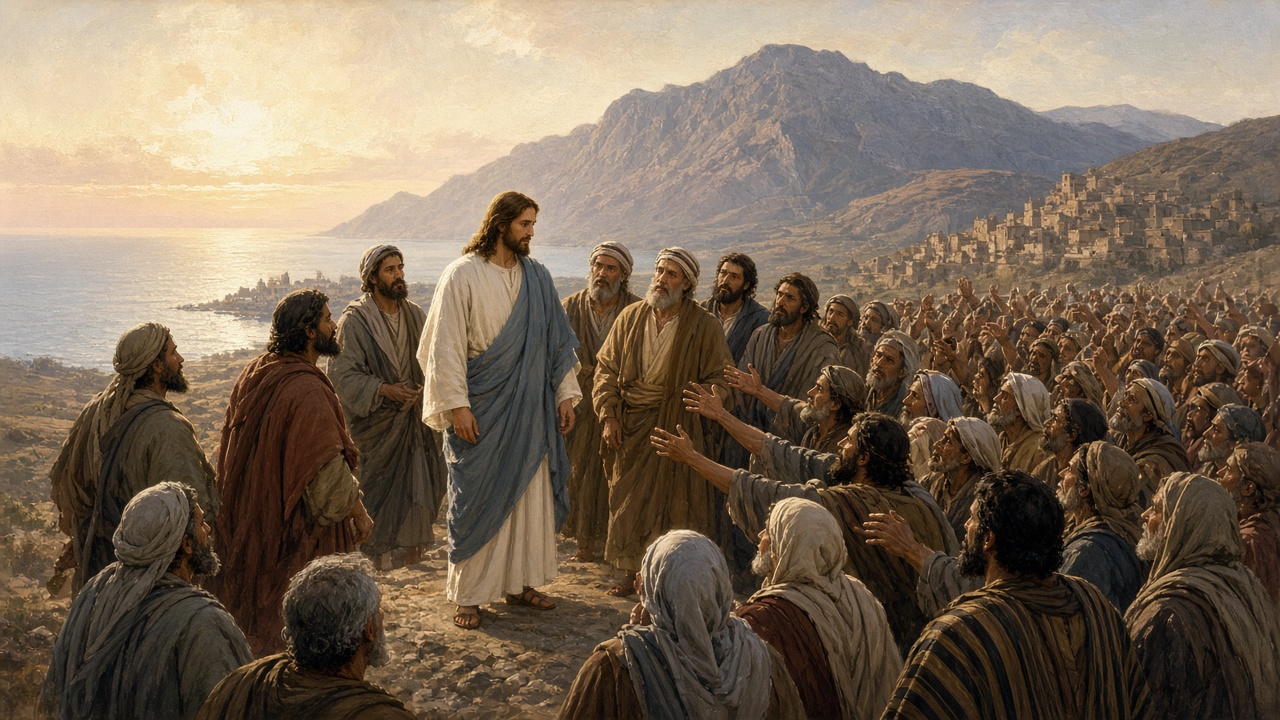
- Jesus came down with them and stood on a level place, where people from Judea, Jerusalem, and the sea coast of Tyre and Sidon had gathered to hear him and to be healed. Tyre and Sidon were ancient Phoenician cities on the Mediterranean; Sidon, the older city, lay about twenty-five miles north of Tyre. A chronology dates this teaching to AD 28 and titles it the Sermon on the Mount, though the narrative places Jesus on level ground after he came down from the mountain.Sources: the Bible text itself · Tyre · Sidon · Sermon on the Mount
Notes written with AI assistance from open sources (Theographic Bible Metadata, CC BY-SA 4.0; Easton’s Bible Dictionary, public domain) and reviewed before publishing.
Places in this chapter
- Jerusalem · 31.777, 35.234 · verse 17
- Judea · Today: Judea 1 · 31.777, 35.234 · verse 17
- Sidon · Today: Sandikli archaeological site in Sidon · 33.561, 35.372 · verse 17
- Tyre · 33.271, 35.196 · verse 17
Only places identified with high confidence are shown (90% or more according to the scholarly sources compiled by OpenBible). Period map: DARE (Digital Atlas of the Roman Empire), CC BY 4.0; modern map: © OpenStreetMap contributors; places: OpenBible.info (CC BY 4.0).
Credits and license for this translation
I tnalù dwata
New Testament in Blaan, Sarangani
copyright © 1998 Wycliffe Bible Translators, Inc.
Language: Sarangani Blaan (Blaan, Sarangani)
Translation by: Wycliffe Bible Translators
Contributor: Wycliffe Bible Translators, Inc.
Copyright Information
© 1998, Wycliffe Bible Translators, Inc. All rights reserved.
This translation text is made available to you under the
terms of the Creative Commons License: Attribution-Noncommercial-No Derivative Works.
( http://creativecommons.org/licenses/by-nc-nd/3.0/ )
In addition, you have permission to port the text to different file formats, as long as you
do not change any of the text or punctuation of the Bible.
You may share, copy, distribute, transmit, and extract portions
or quotations from this work, provided that you include the above copyright
information:
You must give Attribution to the work.
You do not sell this work for a profit.
You do not make any derivative works that change any of the actual words or punctuation of the Scriptures.
Permissions beyond the scope of this license may be
available if you contact
us with your request.
The New Testament
in Blaan, Sarangani
© 1998, Wycliffe Bible Translators, Inc. All rights reserved.
This translation is made available to you under the terms of the
Creative Commons Attribution-Noncommercial-No Derivatives license 4.0.
You may share and redistribute this Bible translation or extracts from it in any format, provided that:
You include the above copyright and source information.
You do not sell this work for a profit.
You do not change any of the words or punctuation of the Scriptures.
Pictures included with Scriptures and other documents on this site are licensed just for use with those Scriptures and documents.
For other uses, please contact the respective copyright owners.
2015-03-17
Source: http://ebible.org/bps/ · eBible.org