Luke 3
I tnalù dwata · Tap a verse to see its cross-references.
I katdò Dyan Gal Munyag
1Di gasfalò lime fali di kagot Tibiryus Sisar di banwe Roma, én gubirnador di banwe Dyudiya dunan Fontyus Filat, na i ganlal mebe di Galili dunan Harì Hérod. Na i twalin Filif i ganlal mebe di dad banwe Ituriya na Trakonitis. Na i ganlal mebe di banwe Abilin dunan Lisanyas. 2Na i dad ulu i dad Dyu dunan Anas na Kayafas, i dad gumdatah i dad bà di Dwata. Na di bang i kagot dad to ani, talù Dwata di ku Dyan, i tingà Sakaraya, di banwe landè to mnè déén. 3Én duen Dyan lamngab di klamang banwe mdadong di yéél Dyordan du tamdò, manan fye ku msal ale na tmagak i dad sasè nimòla na fbunyag du fye nlifet Dwata i dad salàla. 4Na i nimò Dyan ani i kagdohò sulat Isaya, i tugad Dwata, manan,
“Nun to tamlo mdà di banwe landè to mnè déén, manan,
‘Fatlagadyu i dalan i Amu,
na tanluyu i gumagun.
5Nlimunyu i kdee dad sbang,
na sandatalyu i kdee dad bulul.
Tanluyu i dad dalan bigkò,
na nlimunyu i dad dalan magbang.
6Na teen i kdee dad to i dalan kagalwà blé Dwata di dad to.’ ”
7Na nun dee dad to salu di ku Dyan du fbunyag ale, na man Dyan di dale, “E gamu, gambet gamu ulad mila mdà di lifoh. Simto kè tmulen gamu galwà gamu di kalbut Dwata fan kel ku alò gamu fbunyag? 8Ku too glut taknagolyu dad sasè nimòyu, fiteyu tamsal gamu fagu di fye nimòyu. Na nangyu man, ‘Gami bel Abraham, na balù là gami msal, là gami gakuf di kalbut Dwata.’ Tulengu gamu i kaglutan, balù dad batu ani gagan Dwata fbaling bel Abraham, du tlas gamu. 9Balù ani nan, too mdadong i kukum Dwata. Ku fkahta di to mbek kayu, tadéén i balyungan di foon i kayu du kat satu kayu là munge nbekan na snakufan di lifoh.”
10Na smalek i dad to di ku Dyan, manla, “Na ku én, tan i kibòmi fite taknagolmi i salàmi?” 11Na tmimel Dyan, manan, “Ani kibòyu, i to ku lwe i saulan blén i satu di to landè. Na ku nun knaanan, fye ku blén i dademe di dad to landè.”
12Na nun dad to gal mwè bayad buhis salu di kenen du fbunyag, na smalek ale, manla, “To Tamdò, tan i fye nimòmi gami?”
13Na man Dyan, “Nangyu flukas i bayad nwèyu di dad to, bay alòyu nwè i man i urdin di gubirnu.”
14Na nun dad sundalu smalek kenen, manla, “Na gami, tan i nimòmi?”
Na tmimel Dyan, “Nang gamu mwè filak fagu di leges, ku demen fagu di kdalamyu dademe to di là glut, bay fafnòyu nawayu i tadenyu.”
15Na i dad to di bang én, toola fatan i kakel i To Mgalék Dwata, taman di kaklingela i katdò Dyan, én mnè di fandamla ken kenen i dunan. 16Kabay man Dyan di dale, “Én kbunyaggu gamu ani fagu di yéél, bay nun fan kel satu to too mdatah di deg. Là agu gablà mbel i ikat talumfaan, du too agu mdanà di kenen. Kenen kbunyag gamu fagu di Mtiu Tulus na di lifoh. 17Na santanin i dad to tlu na i dad to sasè gambet i to tmaaf fali. Fakay ito man, tanagotan i taafan du fanan tnaaf i fali. I fali tamagtaaf busekan di fol, bay i afa snakufan di lifoh landè gumatin.”
18Na dee dad kfagu Dyan flau i dad to di katdoan i Fye Tulen mdà di Dwata.
19Na balù Hérod, i gumdatah di banwe Galili, nngakan du tanlaminan fayan Hérodiyas, i yaan twalin, na ise alò ani i gumngakan ku Hérod, bay too dee dademe sasè nimoan. 20Na tananuan i sasè nimoan du fbilangguan Dyan.
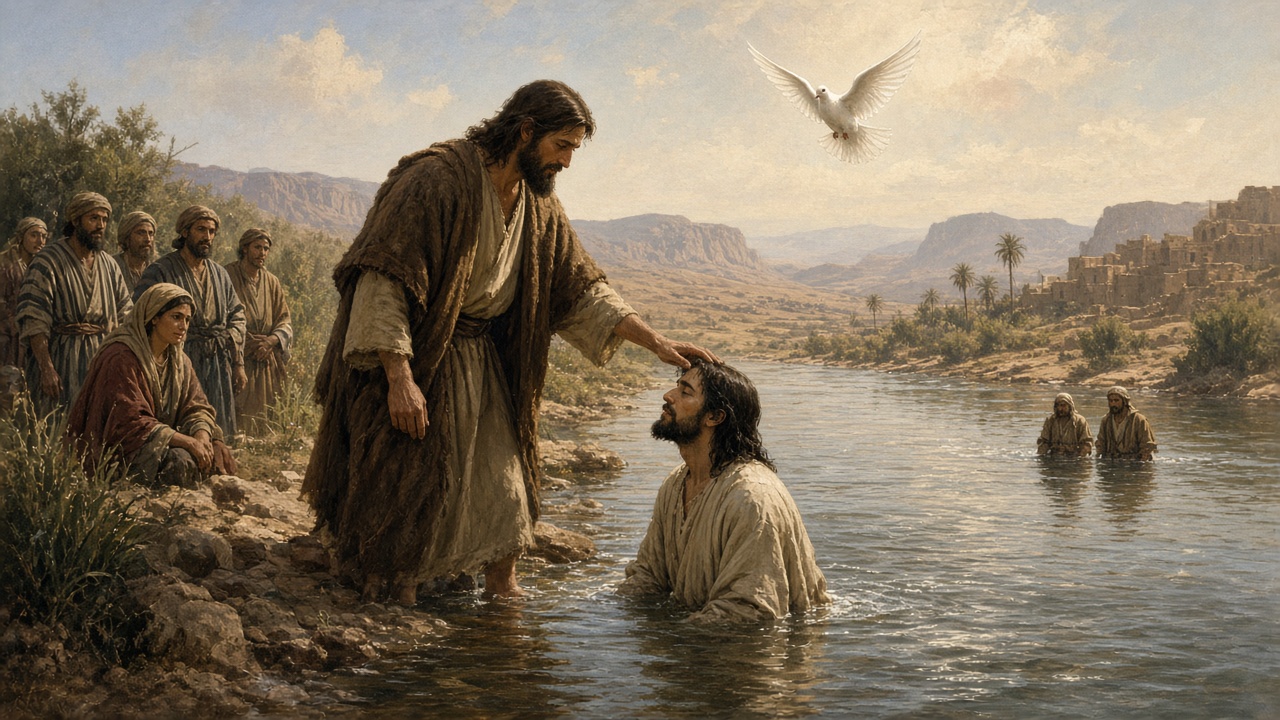
I kbunyag ku Dyisas
21Di là fa bnilanggù Dyan, dee dad to bnunyagan, na Dyisas lê bnunyag. Kafngen fbunyag, dmasal kenen, na tatì mgukà i langit. 22Na fdanà i Mtiu Tulus gambet i abun na mdaf di kenen. Na nun talù mdà di langit, manan, “Ge i tingàgu, i toogu kando, na too fye nawagu ge.”
I dad gutambul Dyisas Krayst, i To Mgalék Dwata mebe i kagotan
23Mdadong tlu falò fali i ktua Dyisas di katbuan i katdoan. Na i fandam i dad to, kenen tingà Dyosif. Na Dyosif i tingà Hili, 24i tingà Matat, i tingà Libay, i tingà Mélkay, i tingà Dyani, i tingà Dyosif, 25i tingà Matatyas, i tingà Amos, i tingà Nahum, i tingà Isli, i tingà Nagay, 26i tingà Maat, i tingà Matatyas, i tingà Simin, i tingà Dyosik, i tingà Dyoda, 27i tingà Dyoanan, i tingà Risa, i tingà Sorubabél, i tingà Saltiyél, i tingà Néri, 28i tingà Mélkay, i tingà Adi, i tingà Kosam, i tingà Ilmadam, i tingà Ir, 29i tingà Dyaswa, i tingà Élisar, i tingà Dyorim, i tingà Matat, i tingà Libay, 30i tingà Simyon, i tingà Dyuda, i tingà Dyosif, i tingà Dyonam, i tingà Ilaykim, 31i tingà Milya, i tingà Mina, i tingà Matata, i tingà Natan, i tingà Harì Dabid, 32i tingà Dyési, i tingà Obéd, i tingà Boas, i tingà Salmon, i tingà Nason, 33i tingà Aminadab, i tingà Admin, i tingà Arni, i tingà Hésron, i tingà Féris, i tingà Dyuda, 34i tingà Dyékob, i tingà Isaak, i tingà Abraham, i tingà Téra, i tingà Nahor, 35i tingà Sirug, i tingà Ru, i tingà Filig, i tingà Ibir, i tingà Sila, 36i tingà Kainan, i tingà Arfaksad, i tingà Sém, i tingà Nowa, i tingà Lamik, 37i tingà Métusila, i tingà Inok, i tingà Dyaréd, i tingà Mahalalil, i tingà Kainan, 38i tingà Inos, i tingà Sét, i tingà Adam, i tingà Dwata.
Did you know?
John the Baptist prepares the way
- Luke sets John's preaching in the fifteenth year of Tiberius Caesar, the stepson of Augustus, who succeeded him in A.D. 14 and died in A.D. 37. Easton's Bible Dictionary (1897) notes that John began his public ministry in that year, and that Pontius Pilate, the sixth Roman procurator of Judea from A.D. 26 to 36, kept his headquarters at Caesarea during a term that covered the ministries of John and Jesus. Herod Antipas, a son of Herod, was then tetrarch of Galilee.Sources: the Bible text itself · Tiberius · Pontius Pilate · Herod Antipas
- The chapter dates these events during the high priesthood of both Annas and Caiaphas. Easton's Bible Dictionary (1897) records that Annas was high priest from A.D. 7 to 14 and was deposed by the Roman procurator, and that Caiaphas, who had married Annas's daughter, was raised to that office in A.D. 25. The same entry suggests that the Jews may still have regarded Annas as the lawful high priest, since Mosaic law held the office for life, and that he probably served with Caiaphas as president of the Sanhedrin or as the high priest's deputy.Sources: the Bible text itself · Annas
- John, son of Zechariah, was of priestly descent: his father was a priest of the course of Abia, and his mother, Elizabeth, belonged to the daughters of Aaron. Easton's Bible Dictionary (1897) notes that his mission was the subject of prophecy, including Isaiah's voice crying in the wilderness, and that his birth came six months before the birth of Jesus. In this chapter he preaches a baptism of repentance throughout the region around the Jordan, and Herod the tetrarch later imprisons him after John rebukes him over Herodias.Sources: the Bible text itself · John the Baptist
Notes written with AI assistance from open sources (Theographic Bible Metadata, CC BY-SA 4.0; Easton’s Bible Dictionary, public domain) and reviewed before publishing.
Places in this chapter
- Abilene · 33.627, 36.106 · verse 1
- Galilee · 32.760, 35.527 · verses 1, 19
- Ituraea · 33.400, 35.850 · verse 1
- Judea · Today: Judea 1 · 31.777, 35.234 · verse 1
- Trachonitis · Today: Lajat · 32.969, 36.455 · verse 1
- Jordan · Today: Jordan River · 31.761, 35.558 · verse 3
Only places identified with high confidence are shown (90% or more according to the scholarly sources compiled by OpenBible). Period map: DARE (Digital Atlas of the Roman Empire), CC BY 4.0; modern map: © OpenStreetMap contributors; places: OpenBible.info (CC BY 4.0).
Credits and license for this translation
I tnalù dwata
New Testament in Blaan, Sarangani
copyright © 1998 Wycliffe Bible Translators, Inc.
Language: Sarangani Blaan (Blaan, Sarangani)
Translation by: Wycliffe Bible Translators
Contributor: Wycliffe Bible Translators, Inc.
Copyright Information
© 1998, Wycliffe Bible Translators, Inc. All rights reserved.
This translation text is made available to you under the
terms of the Creative Commons License: Attribution-Noncommercial-No Derivative Works.
( http://creativecommons.org/licenses/by-nc-nd/3.0/ )
In addition, you have permission to port the text to different file formats, as long as you
do not change any of the text or punctuation of the Bible.
You may share, copy, distribute, transmit, and extract portions
or quotations from this work, provided that you include the above copyright
information:
You must give Attribution to the work.
You do not sell this work for a profit.
You do not make any derivative works that change any of the actual words or punctuation of the Scriptures.
Permissions beyond the scope of this license may be
available if you contact
us with your request.
The New Testament
in Blaan, Sarangani
© 1998, Wycliffe Bible Translators, Inc. All rights reserved.
This translation is made available to you under the terms of the
Creative Commons Attribution-Noncommercial-No Derivatives license 4.0.
You may share and redistribute this Bible translation or extracts from it in any format, provided that:
You include the above copyright and source information.
You do not sell this work for a profit.
You do not change any of the words or punctuation of the Scriptures.
Pictures included with Scriptures and other documents on this site are licensed just for use with those Scriptures and documents.
For other uses, please contact the respective copyright owners.
2015-03-17
Source: http://ebible.org/bps/ · eBible.org