Luke 16
I tnalù dwata · Tap a verse to see its cross-references.
I fléd gablà di salig fulung meye i knean di fulé duh
1Na lêman nun tulen Dyisas satu fléd di dad to mlalò kenen, manan, “Nun satu to too bong knunan, na nun saligan gufagotan dun. Na di satu duh, nun lingen na tabaling falmo saligan i knunan. 2Di kgadean dun, fatlon i saligan, na snalekan kenen, manan, ‘Tan i lingegu ani gablà di ge? Blém di deg i gugsulat gablà di kagotam i knungu, du làgu nan fagot ge.’
3“Na man i salig di kton, ‘Tan i kibògu nan du falwà agu i amugu? Làgu gagan mimò i blat du mlungay agu na myà agu mni. 4A, tagadègu ku tan i fye nimògu du fye balù ku falwà agu, knean nun dad demegu sgalak fyak deg di gumnèla.’
5“Én nimoan, katedan i kdee dad to gamguteng di amun man satu dale. Kakel i satu, snalekan kenen, manan, ‘File utengam di amugu?’
6“Na man i to én, ‘Mlatu lata i fngalo.’
“Na man i salig, ‘Ani gugsulat i utengam. Gasil ge sudeng dini, na sulatam déén alò lime falò lata.’
7“Na lêmanan snalek i satu, manan, ‘Na ge, file utengam?’
“Na man i to én, ‘Mlibu been mse.’
“Na man i salig, ‘Ani i gugsulat i utengam. Sulatam alò walu latu.’
8“Di kaklinge i amun gablà di nimoan, dnayenan i salig mlangong di kfulungan meye kfagu i nimoan. Hae, du mdatah kfulung i dad to là faglut di Dwata di kibòla i dademela to mnè di tah tanà ani, di kfulung i dad to Dwata. 9Taman tulengu gamu ani, fandamyu i knèyu di fulé duh. Gnamityu i knunyu di ktabeng i dad to, fye nun kamdo gamu, na balù ku tamti i knunyu, dnawat gamu di gumnè landè gusenan.
10“Balù simto to gsalig di tukay, lêman gsalig di bong. Na balù simto to là gsalig di tukay, là lêman gsalig di bong. 11Taman ku là gamu gsalig di kagotyu i knun di tah tanà, simto kè smalig di gamu i glut knun ditù di langit? 12Na ku là gamu gsalig magot i knun dademe to, simto mlé gamu knun di langit?
13“Landè kibò flifan di lwe amu, du ku lwe amu satu to, knangan nawa i satu, na kandon i satu, ku demen nimenan i satu, na dnuenan i satu. Ku too bong nawayu knun, làyu gimen Dwata du landè kibò flifan di lwe.”
14Na mlinge i dad Farisi i kdee man Dyisas ani, taman snilola kenen, du too bong nawala filak. 15Kabay manan di dale, “Gamu i dad to mayè mimò fye di kite i dad to, bay gadè Dwata i mnè di nawayu. Na i nimò too mabtas di dad to, baling too knang Dwata.
16“Kel di bang Dyan Gal Munyag, én alò gal tdò, dunan i dad flalò blé Dwata fagu di ku Mosis na i sulat dad tugadan di muna fa. Kabay tambù Dyan tamdò i Fye Tulen gablà di kagot Dwata, na mdà di kaklinge dad to dun, too ale fgal du fye gfusuk ale. 17Kabay mlal fa magwè i langit na tanà, di kagwè balù tukay gsulat di dad flalò blé Dwata.
18“Ku fkahta di lagi mkah i yaanan na lêman mwè satu libun, tagamsalà du nlafaan i muna yaanan. Na salngad i lagi mwè libun takah i yaanan, gamsalà kenen du nlafaan muna yaan i libun nwean.”
I to nun bong knun na Lasarus
19Na talù fa Dyisas, manan, “Nun satu to nun bong knun gal kamlaweh i too fye baweh na too mabtas, na too fye knaanan kat i duh. 20Na nun satu lagi landè knun dnagit ku Lasarus, gal filè mdadong di gufusuk i labat di gumnè i to nun bong knun ani. Nun dad seey klamang lawehan. Na milè kenen déén, 21du ken gamkaan kenen balù alò dad samel tatek mdà di lamisa gukmaan i to nun bong knun. Too sasè kagkahan du balù i dad ayem gal salu di kenen na dmilà i dad seeyan.
22“Là mlo mati i to landè knun, na nebe kenen dad kasaligan Dwata ditù di langit saféd Abraham. Kafnge én, mati i to bong knun na lbang, 23bay én gukelan di banwe dad mati dnagit Hadis, na too maflayam kenen déén. Taman lngalà kenen na teenan Abraham di gumawagan, na ditù Lasarus di safédan. 24Na tlon Abraham, manan, ‘E Màgu Abraham, begam agu kando, na dekam Lasarus lamnab i tukè tnaloan di yéél, du fye fnatdakan i dilàgu, du fatno dun, du too sè kaflayamgu di lifoh ani.’
25“Kabay man Abraham, ‘A Tò, fandamam kneam di tah tanà. Too malami nawam di kdee fye, bay Lasarus, too kenen maflayam di dee gnagun. Kabay ani, too maglala Lasarus, bay ge, too maflayam. 26Na ise alò én, bay nun bong kbe gableng gito, du fye landè gifal mdà dini salu déén di ge, na landè gifal mdà déén salu dini di gami.’
27“Na man i to én, ‘Mà, ku én i kagkahan, begam dek Lasarus samfulê di gumnè màgu, 28du nun lime dad flanekgu lagi ditù. Fye ku began ale fanngewe du fye là ale gsalu di banwe gumaflayam ani.’
29“Kabay man Abraham, ‘Tanun di dale i dad flalò blé Dwata fagu di ku Mosis na i sulat dad tugad Dwata, fye ku fanlingela i manla.’
30“Na man i to én, ‘Là sa, Màgu Abraham, là gablà én! Kabay ku nun to mték mdà di fati tmulen dale, msal ale!’
31“Kabay man Abraham, ‘Ku là ale mimen i man Mosis na i dad tugad Dwata, là ale mgebe balù nun mték mdà di fati.’ ”
Did you know?
Wealth, two masters, and Lazarus
- In Jesus' words about the rich man and Lazarus, the rich man cries out, 'Father Abraham,' and Abraham answers, 'Child.' Easton's Bible Dictionary (1897) explains the name Abraham as 'Father of a multitude' and describes him as the heir of the promises.Sources: the Bible text itself · Abraham
- Speaking to Pharisees who were scoffing at him, Jesus says that the Law and the Prophets were proclaimed until John, and that since then the gospel of the kingdom of God is being preached. Easton's Bible Dictionary (1897) calls John the Baptist the 'forerunner of our Lord,' says that his mission was the subject of prophecy, including Isaiah 40:3 and Malachi 3:1, and states that his birth took place six months before that of Jesus.Sources: the Bible text itself · John the Baptist
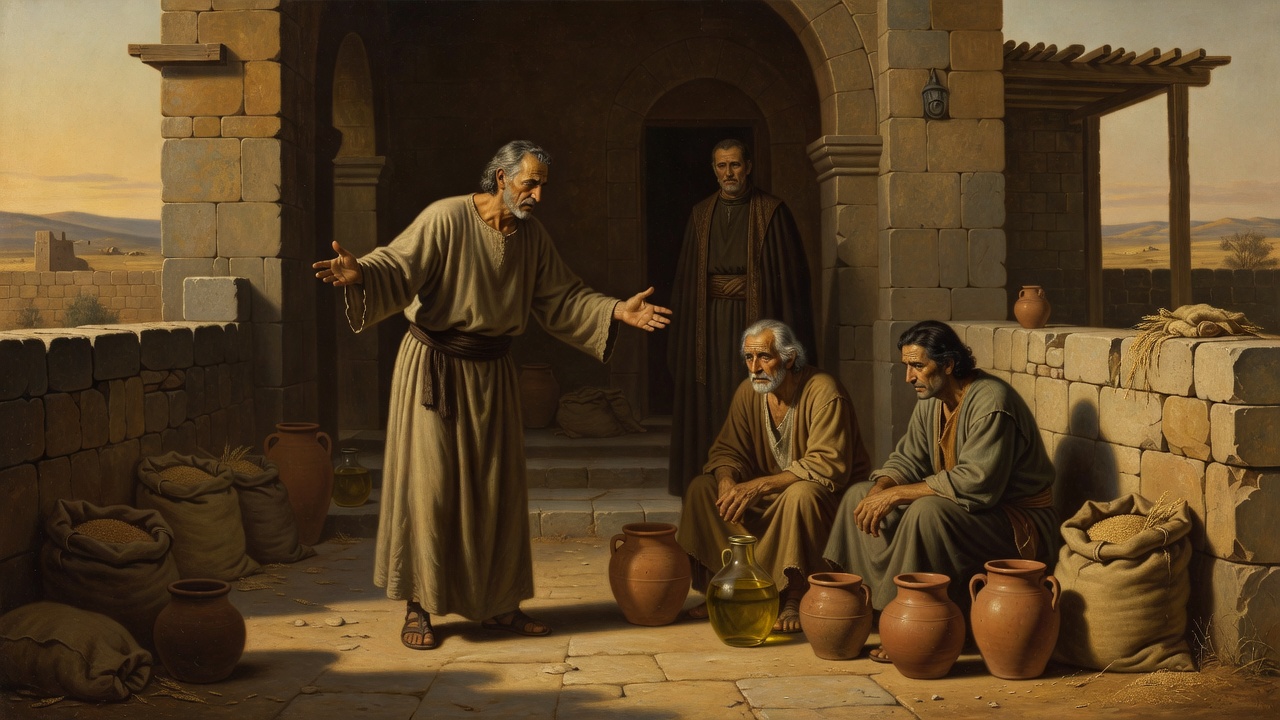
- A manager accused of wasting his master's possessions is told to turn in an account and give up his position. He has the debtors rewrite their bills, reducing a hundred measures of olive oil to fifty and a hundred measures of wheat to eighty, and the master commends the dishonest manager because he had acted shrewdly. Jesus then says that no servant can serve two masters, and that no one can serve both God and money.Sources: the Bible text itself
Notes written with AI assistance from open sources (Theographic Bible Metadata, CC BY-SA 4.0; Easton’s Bible Dictionary, public domain) and reviewed before publishing.
Credits and license for this translation
I tnalù dwata
New Testament in Blaan, Sarangani
copyright © 1998 Wycliffe Bible Translators, Inc.
Language: Sarangani Blaan (Blaan, Sarangani)
Translation by: Wycliffe Bible Translators
Contributor: Wycliffe Bible Translators, Inc.
Copyright Information
© 1998, Wycliffe Bible Translators, Inc. All rights reserved.
This translation text is made available to you under the
terms of the Creative Commons License: Attribution-Noncommercial-No Derivative Works.
( http://creativecommons.org/licenses/by-nc-nd/3.0/ )
In addition, you have permission to port the text to different file formats, as long as you
do not change any of the text or punctuation of the Bible.
You may share, copy, distribute, transmit, and extract portions
or quotations from this work, provided that you include the above copyright
information:
You must give Attribution to the work.
You do not sell this work for a profit.
You do not make any derivative works that change any of the actual words or punctuation of the Scriptures.
Permissions beyond the scope of this license may be
available if you contact
us with your request.
The New Testament
in Blaan, Sarangani
© 1998, Wycliffe Bible Translators, Inc. All rights reserved.
This translation is made available to you under the terms of the
Creative Commons Attribution-Noncommercial-No Derivatives license 4.0.
You may share and redistribute this Bible translation or extracts from it in any format, provided that:
You include the above copyright and source information.
You do not sell this work for a profit.
You do not change any of the words or punctuation of the Scriptures.
Pictures included with Scriptures and other documents on this site are licensed just for use with those Scriptures and documents.
For other uses, please contact the respective copyright owners.
2015-03-17
Source: http://ebible.org/bps/ · eBible.org