Jonah 4
I tnalù dwata · Tap a verse to see its cross-references.
I kaflabè Dyona i katlas Dwata i Amu i fandaman
1Na di katlas Dwata i Amu i fandaman là gaflehew ku Dyona, bay baling gumdaan too flabè. 2Taman, dmasal kenen, manan, “E Dwata i Amu, mangu di làgu fa mdà di banwegu, ani i klikògu di ge ku matlas i fandamam. Én duen agu mayè mila ditù di Sfén, du gadègu too ge fye, na là mgili i kakdom, na nun ktahà i nawam, na too mula katlasam i fandamam di kafalmom i dad to. 3Taman Dwata i Amu, nweam i nawagu, du fye fa baling ku mati agu.”
4Kabay tmimel Dwata i Amu, manan, “Fandamam, landè duenam flabè.”
5Taman mdà Dyona lamwà di syudad gsen di gusut i duh, na sudeng kenen. Na ditù nimoan i tukay gufsilungan na sudeng di gugalungan du fatanan ku tan i mkel di Ninibi.
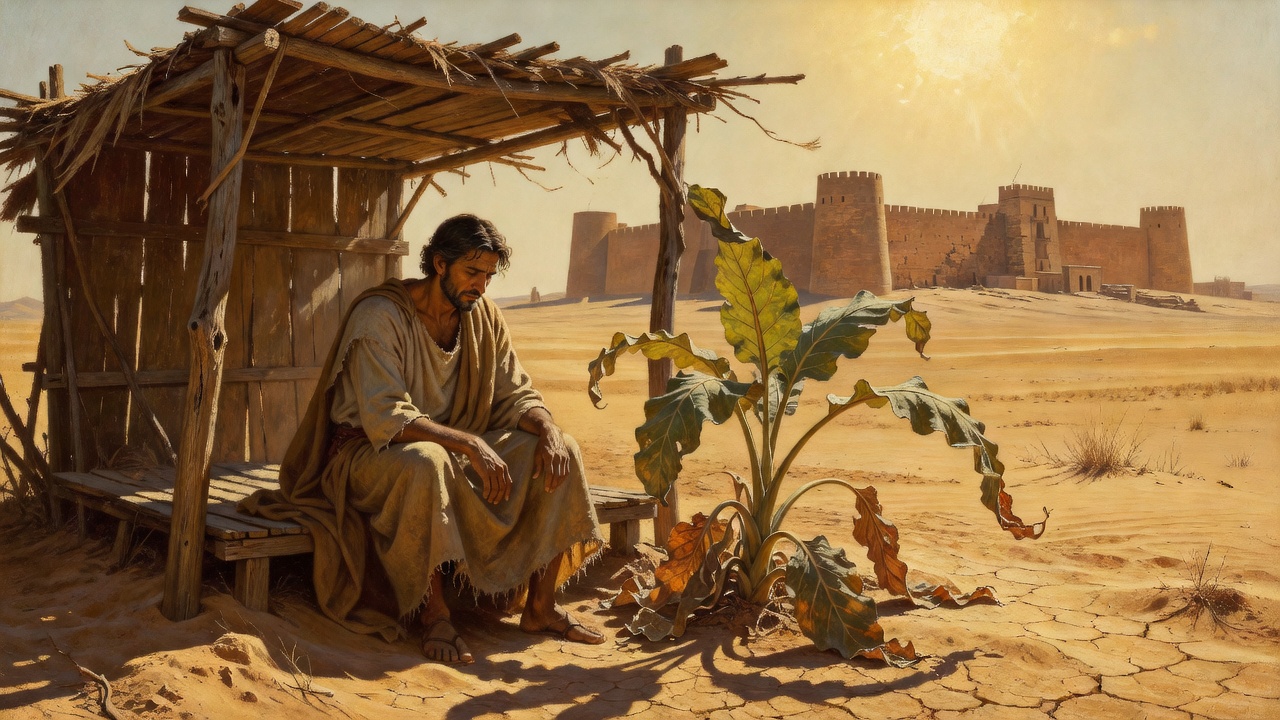
6Na nun ftabò Dwata i Amu walad nun doon, na falnokan di tah Dyona fye nun gamsalung kenen, du fye gamlé kenen kafye nawan. Na walad ani too gaflehew ku Dyona.
7Kabay di ksut i duh, dek Dwata i Amu satu safat du kmaan foon i walad, taman mlanas i doonan, na mati.
8Na di kneng i duh, fbal Dwata i Amu i nus mdà di gusut i duh, na too bong kinitan, taman fan mtafì Dyona mdà di kinit i duh too mneng di tah ulun. Taman kayean ku mati, na manan, “Fye fa baling ku mati agu.”
9Kabay man Dwata i Amu di kenen, manan, “Fandamam, landè duenam flabè gablà di walad gamsalung ge.”
Na tmimel Dyona, manan, “Too agu flabè fye fa ku mati agu.”
10Na man Dwata i Amu, manan, “Walad ani ftabògu na falnokgu di alò sbutang, na di tmadol butang mati. Landè sa flayamam ftabò na falnok dun, bay knean bong i kakdom dun. 11Kabay mdatah fa di walad i kakdogu i dad to di banwe Ninibi, du nun mlukas mlatu lwe falò libu dad ngà i là mimò sasè, na nun fa dad lmanaf. Taman làgu falmo dun.”
Did you know?
Jonah's Anger and God's Compassion
- Jonah admits that he originally attempted to flee toward Tarshish precisely because he knew God is gracious, compassionate, slow to anger, and relents from sending disaster. His distress arose when God chose to spare Nineveh rather than destroy it.Sources: the Bible text itself · Tarshish
- Nineveh, the flourishing capital of the Assyrian empire, is described at the conclusion of the book as home to more than 120,000 people who cannot discern between their right and left hand, along with many cattle. God highlights this massive population to contrast divine compassion with Jonah's concern for a single withered plant.Sources: the Bible text itself · Nineveh
Notes written with AI assistance from open sources (Theographic Bible Metadata, CC BY-SA 4.0; Easton’s Bible Dictionary, public domain) and reviewed before publishing.
Places in this chapter
- Nineveh · 36.359, 43.153 · verse 11
Only places identified with high confidence are shown (90% or more according to the scholarly sources compiled by OpenBible). Period map: DARE (Digital Atlas of the Roman Empire), CC BY 4.0; modern map: © OpenStreetMap contributors; places: OpenBible.info (CC BY 4.0).
Credits and license for this translation
I tnalù dwata
New Testament in Blaan, Sarangani
copyright © 1998 Wycliffe Bible Translators, Inc.
Language: Sarangani Blaan (Blaan, Sarangani)
Translation by: Wycliffe Bible Translators
Contributor: Wycliffe Bible Translators, Inc.
Copyright Information
© 1998, Wycliffe Bible Translators, Inc. All rights reserved.
This translation text is made available to you under the
terms of the Creative Commons License: Attribution-Noncommercial-No Derivative Works.
( http://creativecommons.org/licenses/by-nc-nd/3.0/ )
In addition, you have permission to port the text to different file formats, as long as you
do not change any of the text or punctuation of the Bible.
You may share, copy, distribute, transmit, and extract portions
or quotations from this work, provided that you include the above copyright
information:
You must give Attribution to the work.
You do not sell this work for a profit.
You do not make any derivative works that change any of the actual words or punctuation of the Scriptures.
Permissions beyond the scope of this license may be
available if you contact
us with your request.
The New Testament
in Blaan, Sarangani
© 1998, Wycliffe Bible Translators, Inc. All rights reserved.
This translation is made available to you under the terms of the
Creative Commons Attribution-Noncommercial-No Derivatives license 4.0.
You may share and redistribute this Bible translation or extracts from it in any format, provided that:
You include the above copyright and source information.
You do not sell this work for a profit.
You do not change any of the words or punctuation of the Scriptures.
Pictures included with Scriptures and other documents on this site are licensed just for use with those Scriptures and documents.
For other uses, please contact the respective copyright owners.
2015-03-17
Source: http://ebible.org/bps/ · eBible.org