Hebrews 5
I tnalù dwata · Tap a verse to see its cross-references.
I kakdo Dyisas i too mdatah baito
1I kdee mdatah bà di Dwata déén di gumangamfù dad Dyu tamgalék mdà di dale, du ale sa mlé di Dwata i dad dsù i dad to di Dwata, du fye magwè dad salàla. 2Na i mdatah bà di Dwata alò to, na gamsalà kenen, taman nun ktahà i nawan di dad demen to gamsalà i là gmadè i salàla. 3Na ise sa alò ku i salà i dad to i gumdaan mlé dsù di Dwata, bay i kenen salà, du lê kenen sa i to gamsalà. 4Landè to tatì nalékan i kton mgimò mdatah bà di Dwata, bay Dwata alò malék gambet kalékan ku Aron.
5Gambet én ku Dyisas Krayst. Laan sa fdatah na nalék i kton du mgimò mdatah bà di Dwata, bay Dwata malék kenen di kangmanan di kenen, manan,
“Ge i tingàgu,
na di duh ani tafdatahta ge, du tafgadègu agu i maam.”
6Na nun lêman man Dwata di Tnaluan, manan,
“Tanalékta ge du mbaling bà i dad togu di deg, kel di landè sen,
salngad ku Harì Mélkisidék i bà di deg di muna fa.”
7Di knè fa Dyisas dini di tah tanà, too dmasal di Dwata, na too mlanu, na tamdak i lwakan di laman dmasal, du alò Dwata gmagan falwà kenen mdà di fatin. Na du toon fdanà i kton di knayè Dwata, linge Dwata i dasalan. 8Na balù kenen Tingà Dwata, knean fagu di dad kaflayam gnagun, ganbetan ku tan ulê i kimen i knayè Dwata. 9Na di kafngen mimò i kdee fimò Dwata kenen, mbaling kenen i gumdà i kagalwà i kdee dad to mimen kenen, du fye nun nawala landè sen. 10Na tanalék Dwata kenen du mgimò mdatah bà di kenen, salngad ku Mélkisidék i bà di kenen di muna fa.
I dad ngà fa di kafaglut
11Too dee fa moon kayègu tdò di gamu gablà di ku Mélkisidék na Dyisas i dad bà di Dwata, bay too malima mubad di gamu, du malima gamu gamlabat. 12Tamlo fnaglutyu Dyisas. Taman gablà gamu moon mgimò dad to tamdò. Kabay tan i kibòyu tamdò, du nun fa kamuyu to tamdò gamu lêman i dad là mngalam tdò di Tnalù Dwata. Gambet gamu i dad ngà fadlug tmutù i là fa fulung kmaan i knaan. 13Di tingà ito fa alò ito tmutù. Salngad én i to alò gamlabat i tdò là mngalam, du laan glabat gusahal i fye na i sasè. 14Kabay di ktua ito fakay ito kmaan i knaan, dunan glabatito i mngalam tdò na gadeito i gusahal i fye na i sasè.
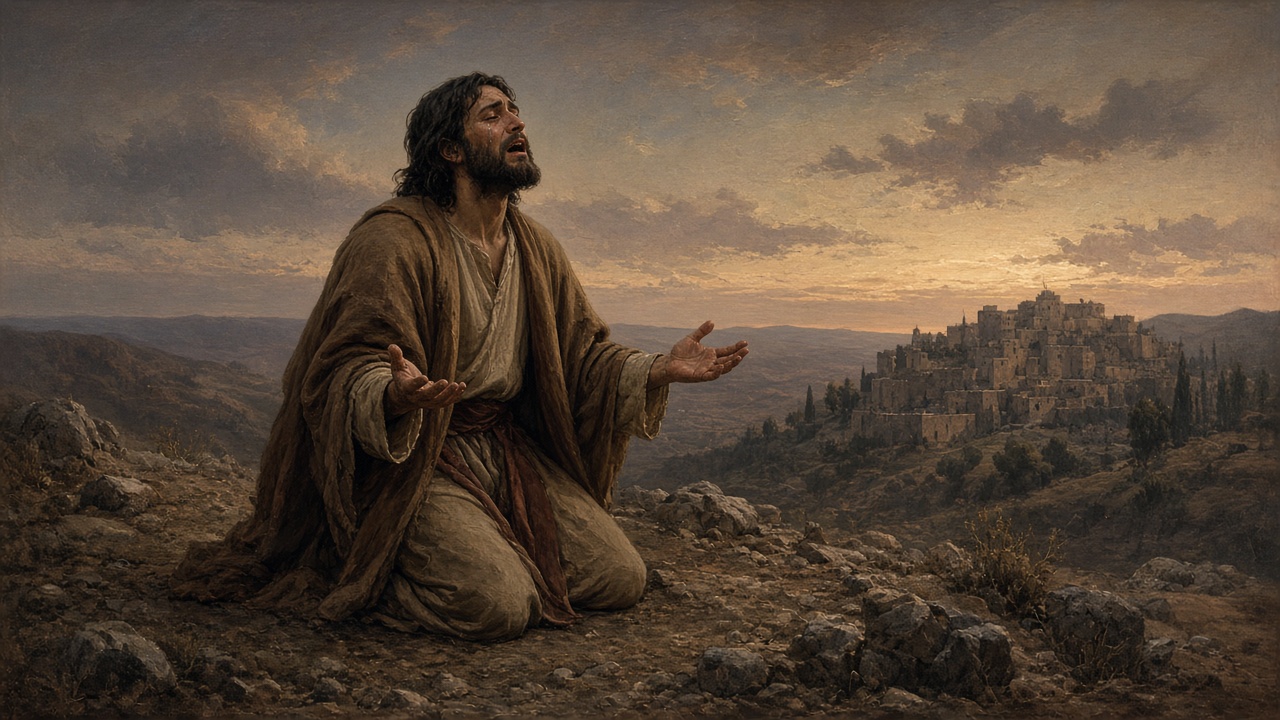
Did you know?
A High Priest Called by God
- Hebrews 5 presents Aaron as the pattern of a high priest who does not take the honor upon himself but is called by God. Aaron, eldest son of Amram and Jochebed, was born in Egypt three years before his brother Moses. When the time drew near for Israel’s deliverance from Egypt, God sent him to meet his long-absent brother so that they might work together toward the Exodus.Sources: the Bible text itself · Aaron
- Melchizedek, whose name Easton's Bible Dictionary (1897) explains as “king of righteousness,” was king of Salem. All that the Old Testament records of him is in Genesis 14:18–20, and he is mentioned only once more, in Psalm 110:4. Hebrews 5 applies to Christ the words “You are a priest forever in the order of Melchizedek,” and the same dictionary says that Hebrews 7 sets out the significance of his story in detail and presents his priesthood as superior to Aaron’s, noting that Abraham paid him tithes and that Melchizedek blessed Abraham.Sources: the Bible text itself · Melchisedec
Notes written with AI assistance from open sources (Theographic Bible Metadata, CC BY-SA 4.0; Easton’s Bible Dictionary, public domain) and reviewed before publishing.
Credits and license for this translation
I tnalù dwata
New Testament in Blaan, Sarangani
copyright © 1998 Wycliffe Bible Translators, Inc.
Language: Sarangani Blaan (Blaan, Sarangani)
Translation by: Wycliffe Bible Translators
Contributor: Wycliffe Bible Translators, Inc.
Copyright Information
© 1998, Wycliffe Bible Translators, Inc. All rights reserved.
This translation text is made available to you under the
terms of the Creative Commons License: Attribution-Noncommercial-No Derivative Works.
( http://creativecommons.org/licenses/by-nc-nd/3.0/ )
In addition, you have permission to port the text to different file formats, as long as you
do not change any of the text or punctuation of the Bible.
You may share, copy, distribute, transmit, and extract portions
or quotations from this work, provided that you include the above copyright
information:
You must give Attribution to the work.
You do not sell this work for a profit.
You do not make any derivative works that change any of the actual words or punctuation of the Scriptures.
Permissions beyond the scope of this license may be
available if you contact
us with your request.
The New Testament
in Blaan, Sarangani
© 1998, Wycliffe Bible Translators, Inc. All rights reserved.
This translation is made available to you under the terms of the
Creative Commons Attribution-Noncommercial-No Derivatives license 4.0.
You may share and redistribute this Bible translation or extracts from it in any format, provided that:
You include the above copyright and source information.
You do not sell this work for a profit.
You do not change any of the words or punctuation of the Scriptures.
Pictures included with Scriptures and other documents on this site are licensed just for use with those Scriptures and documents.
For other uses, please contact the respective copyright owners.
2015-03-17
Source: http://ebible.org/bps/ · eBible.org