Genesis 9
I tnalù dwata · Tap a verse to see its cross-references.
I fakang Dwata ku Nowa
1Na banlé Dwata kafye Nowa na i dad ngaan na manan di dale, “Too gamu mngà du fye dee dad ngàyu, du fye mbaling dee belyu kadang mbel di klamang banwe. 2Na mdà ani, i kdee bung dad lmanaf na dad anuk di bnas, na dad nalaf, likò gamu. Na gamu magot i kdeela. 3Na tafakay gamu kmaan kdee bung dad lmanaf. Hae, du di muna fa, falohgu gamu kmaan dad tmabò di tanà, bay ani fakayyu knaan i kdee.
4“Alò satu i làyu fakay knaan, dunan ungad ku là fa faloh i litean. Én duenan fnanggu ani, du i gumdà i dad kdee dad mto, dunan di litè. 5Ku satu to manò i dademen to, fanlayamgu kenen. Na ku nun lmanaf mati to, kenen fnati. 6Dad to mgimò Dwata salngad i kenen kagkah, taman i to manò i dademen to kenen fnati. 7Kabay gamu, too gamu mngà du fye dee dad ngàyu, du fye mbaling dee dad belyu kadang mbel di klamang banwe.”
8Kafnge én, man Dwata di ku Nowa na di dad ngaan, 9“Ani, too nun fakanggu gamu kel di dad belyu kadang, 10na kel di dad kdee mto, dunan dad anuk di bnas, na kdee dad lmanaf, i kdee magin gamu lamwà di aweng. 11Na ani i fakanggu gamu. Làgu lêman falmo i dad kdee mto di tah tanà ani fagu di dunuk, na i klamang banwe ani, làgu lêman falmo fagu di dunuk.”
12Na fadlug talù Dwata, manan, “Ani nimògu ilè du fye gadèyu dnohògu i fakanggu gamu na i kdee i dad mto kel di landè sen. 13Fkahgu lawélawé ditù di dad labun, na ani ilè i fakanggu di kdee dad to mnè di tah i tanà. 14Klitgu flabun i langit na msut i lawélawé, 15én i banggu faldam i tafakanggu di gamu na i kdee dad mto di tah tanà ani. Na làgu lêman falmo i kdee fagu di dunuk. 16Di ksut i lawélawé di dad labun, teengu kadang na fandamgu i fakanggu di kdee dad mto di tah tanà ani kel di landè sen.
17“Ani sa i ilè i fakang i tafakanggu di kdee mnè di tah i tanà.”
Én gman Dwata di ku Nowa.
Nowa na i dad ngaan lagi
18Na i dad ngà Nowa lamwà di aweng dunan, Sém, Ham, na Dyafét. (Na Ham i mà Kanaan.) 19I dad tlu lagi tingà Nowa ani, i dad gutambul i kdee dad to mnè di klamang banwe.
20Na du Nowa too fulung mimò di tanà, kenen i muna mule i walad dnagit grép. 21Na di kinuman i binu i mgimoan mdà di grép, langal kenen, na mdà di klangalan flaweh kudang di slungan. 22Na Ham i mà Kanaan, toon neye i maan flaweh, na di keyen lamwà kenen na tnulenan i lwe flanekan. 23Kabay Sém na Dyafét mwè i klaweh na dafatla di ftubungla na fudul ale fusuk di sibay màla na knayabla kenen. Là ale falê, du fye làla teen i màla flaweh.
24Na di kwas i klangal Nowa, na di kgadean i nimò Ham di kenen, 25manan, “Kadang satu duh, fanlayam Dwata Kanaan, tingà Ham, na mbaling kenen mgimò lifan i dad flanekan. 26Dnayenito Dwata i Amu, i Dwata Sém. Kanaan moon mgimò kadang lifan Sém. 27Too fbel Dwata kadang moon i bel Dyafét. Na fnean ale moon di bel Sém. Kabay i bel Kanaan moon mgimò kadang lifan i bel Dyafét.”
28Di kakubu i dunuk mto fa Nowa kel di tlu latu lime falò fali. 29Na mati Nowa di syem latu lime falò falin.
Did you know?
Noah's Covenant and the Words about His Sons
- God makes a covenant with Noah, with his descendants, and with every living creature that came out of the ark, promising never again to destroy all life by a flood. The sign is a rainbow set in the clouds, for all generations. One chronology dates this covenant to 2346 BC.Sources: the Bible text itself · God makes a covenant with Noah
- Genesis 9 says the whole earth was populated from Shem, Ham, and Japheth. Shem is explained as 'a name' or 'renown,' probably the eldest and the ancestor of the Israelites, though Japheth is also described as perhaps first by birth. Japheth means 'wide spreading,' a play on the Hebrew 'God shall enlarge Japheth,' and is linked to many tribes in the east of Europe and the north of Asia; Ham, meaning 'warm' or 'hot,' and hence the south, is called Noah's youngest son.Sources: the Bible text itself · Shem · Japheth · Ham
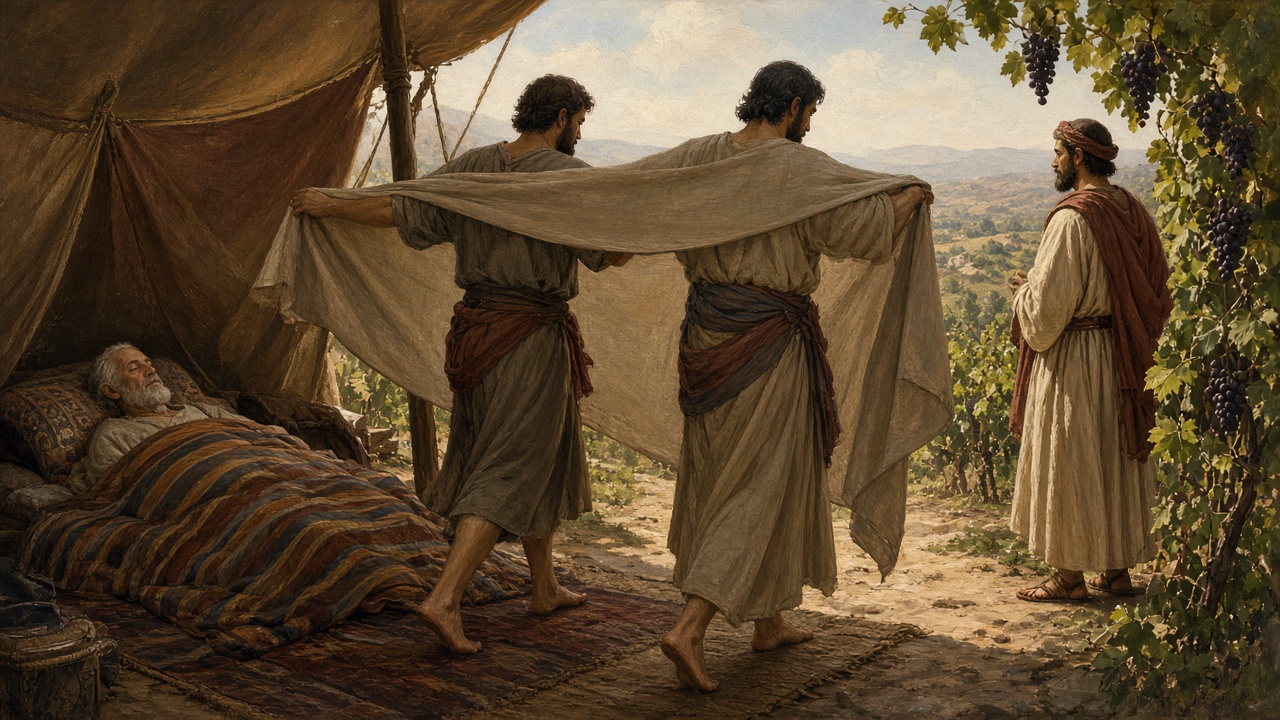
- Noah, a man of the soil, plants a vineyard, drinks the wine, and lies uncovered in his tent. Shem and Japheth cover him while walking backward, faces turned away, an act a dictionary calls filial piety and the occasion of the prophecy that Japheth's descendants would spread. The curse is spoken against Canaan, Ham's fourth son, because of what his father had done; one chronology dates the episode to 2345 BC.Sources: the Bible text itself · Japheth · Canaan · Noah gets drunk and Canaan is cursed
Notes written with AI assistance from open sources (Theographic Bible Metadata, CC BY-SA 4.0; Easton’s Bible Dictionary, public domain) and reviewed before publishing.
Credits and license for this translation
I tnalù dwata
New Testament in Blaan, Sarangani
copyright © 1998 Wycliffe Bible Translators, Inc.
Language: Sarangani Blaan (Blaan, Sarangani)
Translation by: Wycliffe Bible Translators
Contributor: Wycliffe Bible Translators, Inc.
Copyright Information
© 1998, Wycliffe Bible Translators, Inc. All rights reserved.
This translation text is made available to you under the
terms of the Creative Commons License: Attribution-Noncommercial-No Derivative Works.
( http://creativecommons.org/licenses/by-nc-nd/3.0/ )
In addition, you have permission to port the text to different file formats, as long as you
do not change any of the text or punctuation of the Bible.
You may share, copy, distribute, transmit, and extract portions
or quotations from this work, provided that you include the above copyright
information:
You must give Attribution to the work.
You do not sell this work for a profit.
You do not make any derivative works that change any of the actual words or punctuation of the Scriptures.
Permissions beyond the scope of this license may be
available if you contact
us with your request.
The New Testament
in Blaan, Sarangani
© 1998, Wycliffe Bible Translators, Inc. All rights reserved.
This translation is made available to you under the terms of the
Creative Commons Attribution-Noncommercial-No Derivatives license 4.0.
You may share and redistribute this Bible translation or extracts from it in any format, provided that:
You include the above copyright and source information.
You do not sell this work for a profit.
You do not change any of the words or punctuation of the Scriptures.
Pictures included with Scriptures and other documents on this site are licensed just for use with those Scriptures and documents.
For other uses, please contact the respective copyright owners.
2015-03-17
Source: http://ebible.org/bps/ · eBible.org