Genesis 44
I tnalù dwata · Tap a verse to see its cross-references.
I tabù Dyosif
1Na di kafngela kmaan man Dyosif di saligan, “Fananoam i dad saku i dad lagi ani kalbong i gagan nebe i dad dongkila. Kafdu én, fuléam kdee filak nebela, na fkaham di tah di lam i saku i kat satu dale. 2Na di kafkaham kadang i filak di lam i saku i twalila, fakufam i tabùgu salafì.” Na nimen i salig Dyosif i dekan kenen. 3Na di kwal én too flafus, fdaan i dad saflanek ani. 4Di là ale fa too mawag di banwe én, man Dyosif di saligan, “Faflal ge, laloam ale. Na di kgumaham dale tulenam dale i mangu ani, manam, ‘Tan kè duenyu malas sasè di kafye mgimò i ganlal di gamu? 5Tan kè duenyu tmaku i tabù salafì? I tabù én galan guminum, na galan gumeye fye gadean ku tan knayè i Dwata. I nimòyu ani too sasè.’ ”
6Na di kgumah i salig dale, tulenan dale i kdee gman Dyosif. 7Kabay tmimel ale, manla, “Tabyà, tulenam gami tan kè duenam mangman ani? Gami i dad lifanan, là gami sa mimò én, làmi sa tnaku i tabù i ganlal. 8Gafaldamam sa kè i kasfulêmi di banwe Kanaan, i filak teenmi di lam i dad sakumi fulêmi sa. Taman tan ku mayè gami tmaku i salafì ku demen blawen di gumnè amum? 9Tabyà ku teenam i tabù én di satu di gami, fakayam fnati, na dademe di gami nimoam lifanam.” 10Na tmimel i salig, manan, “Hae, nimògu i manyu ani gine. Balù di simto to gumitegu i tabù én, kenen alò nimògu lifangu. Na i dademe kadang fakay mulê.”
11Na fnaflal nawas i dad saflanek i dad saku di dad dongki na fkahla di tanà na nukalla. 12Kafnge én, tanbù nan i salig too mngabal, fandaan di saku i sangal twege, kel di saku i sangal twali. Na i gumiten i tabù én baling di saku Bénhamin. 13Taman i saflanek ani knasêla i klawehla, du mdà di too sasè klidùla. Na lêmanla lulen dad saku di dad dongkila na samfulê ale di syudad Idyif.
Fakdo Dyuda di ku Dyosif gablà ku Bénhamin na i dad dademe flanekan.
14Na di kasfulê Dyuda na i dad flanekan di gumnè Dyosif, déén fa kenen, na gasil ale lkuad di munan. 15Na man Dyosif di dale, “Tan kè duenyu tmaku i tabùgu ani? Làyu kè gadè i dad ulu gambet deg gmagan gmadè i dad gbuni?” 16Na Dyuda tmimel, manan, “Landè kibòmi msen i ktomi, taman landè fakaymi man di ge, du tafite Dwata too nun salàmi. Kdeemi ani, i lifanam nan, là alò twalimi, i gumite i tabuam.” 17Kabay man Dyosif, “Là agu mayè mimò gambet i manam gine. Alò i to gumite i tabùgu kadang i nimògu lifangu. Kabay i dademe di gamu fakay mulê di màyu.”
18Kaklinge i saflanek i man Dyosif, fdadong Dyuda di kenen, na manan, “Amumi, là agu gablà talù di ge, du gadègu i glalam salngad i glal i harì. Bay begam agu faloh moon talù di ge. Na nang ge flabè deg i lifanam. 19Amu, gafaldamam kè aye di ksalekam gami ku nun màmi na ku nun dademe fa flanekmi lagi. 20Na gmanmi di ge, nun màmi too tua nan, na nun twalimi sut di taktua màmi nan. Na smibi kenen tamati, taman alò kenen gdè di satu yaan mà, taman kenen too kando i màmi.
21“Na di muna fa, toom fni di gami, gami i dad lifanam, ku faginmi dini twalimi, du fye sitem. 22Na tatulenmi too malima di màmi ku faginmi twalimi dini, du ku faginmi, na nun gaslokan, én kadang gamfati i màmi. 23Kafnge én, manam di gami, là gami fakay samfulê di ge, silang ku faginmi i twalimi. 24Na di kulêmi di màmi, tulenmi kenen i kdee gmanam gami, ge i amumi.
25“Na là mlo dek gami màmi samfulé dini di Idyif, du mayad fali. 26Kabay manmi di kenen, là fakay, du là gami fakay samfulê di ge, silang ku magin gami i twalimi.
27“Kafnge én, man i màmi di gami, ‘Gadèyu, alò lwe dad ngàgu lagi mdà di satu yaangu Rakél. 28Na tamati nan i satu, du fnati kè i labè lmanaf di bnas. Na kel sadni làgu kenen teen. 29Na ani ku lêmanyu fagin i satu ani, na ku nun gaslokan di dalan, gamfati deg di bong klidù nawagu kenen.’ Ani gman màmi. 30Taman, ku samfulê agu ditù di màmi i lifanam, na teenan là gagin twalimi ani, mati sa kenen, du ani i tingaan toon kando. Na du too tua kenen, i klidù nawan ani kadang i gamfati kenen. 32Lêgu fakang di màgu, agu mifat i twaligu ani, du fye landè gaslokan. Na mangu fa ku làgu gebe samfulê, agu sa i kmakif i salàgu kel di kfatigu. Ani i gmangu di màgu aye.
33“Na Amumi, fneam agu dini di ge, du fye nimoam agu lifanam tlas i twalimi. Na faloham kenen moon mulê gagin di dademe flanekgu. 34Tan i kibògu mulê di màmi ku là gagin i twalimi? Landè kibògu! Là agu mayè mite kadang i bong klidù i nawa màgu.”
Did you know?
The Hidden Cup and Judah's Plea
- Judah, Jacob's fourth son by Leah, speaks for the brothers and offers to remain as a slave in the boy's place so that Benjamin may return with his brothers. Easton's Bible Dictionary (1897) notes that Judah had earlier intervened to spare Joseph's life, and that he took the lead in the family's affairs, including in the appeal recorded in this chapter.Sources: Judah (patriarch) · the Bible text itself
- Benjamin was the younger of Jacob's two sons by Rachel; she died giving birth to him and called him Ben-oni, "son of my pain," before his father named him Benjamin. The brothers tell Joseph that the boy is the only son of his mother still living, and that their father believes the other was torn to pieces. They say this to Joseph himself—Rachel's elder son, loved by Jacob as the child of his old age—while still speaking to him as a lord equal to Pharaoh.Sources: Benjamin (patriarch) · Joseph (son of Jacob) · the Bible text itself
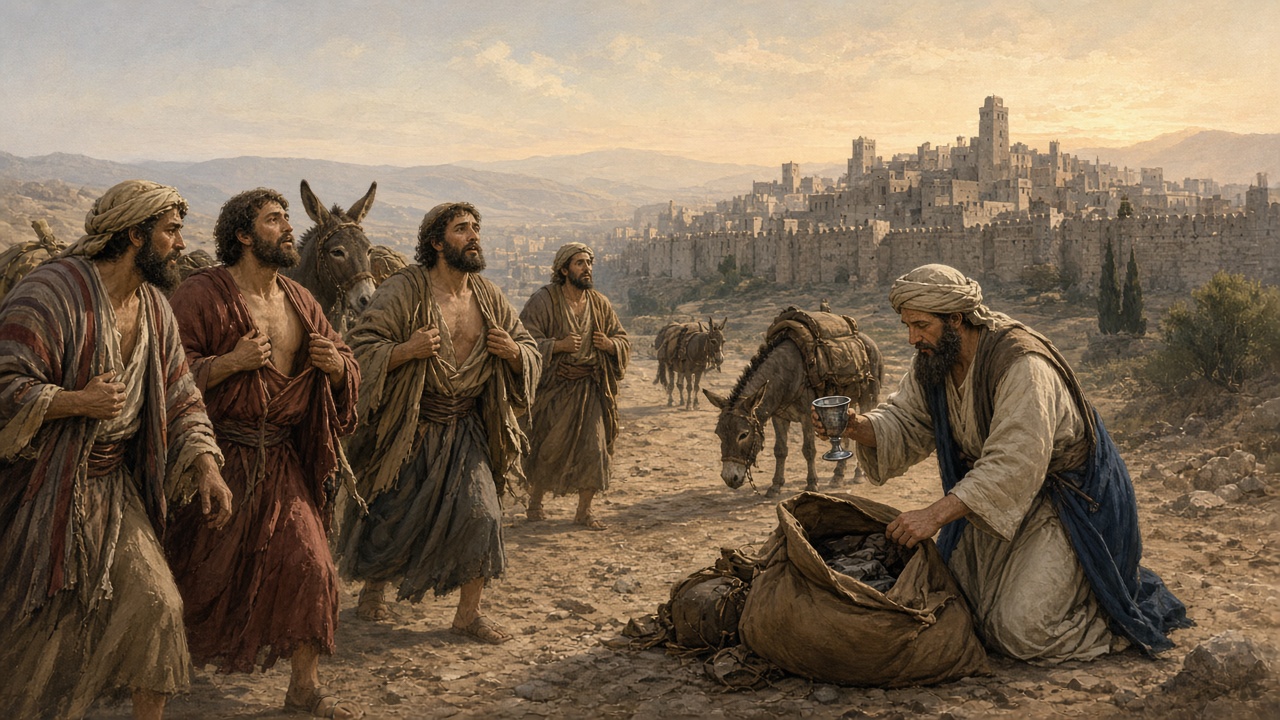
- On Joseph's orders, the steward hid Joseph's silver cup—the cup he drank from and used for divination—in Benjamin's sack, along with the silver paid for the grain. When it was found, the brothers tore their clothes and returned to the city. Joseph then asked whether they did not know that a man like him could divine the truth, although the narrative shows that he had arranged for the cup to be found.Sources: the Bible text itself
Notes written with AI assistance from open sources (Theographic Bible Metadata, CC BY-SA 4.0; Easton’s Bible Dictionary, public domain) and reviewed before publishing.
Places in this chapter
- Canaan · 32.767, 35.333 · verse 8
Only places identified with high confidence are shown (90% or more according to the scholarly sources compiled by OpenBible). Period map: DARE (Digital Atlas of the Roman Empire), CC BY 4.0; modern map: © OpenStreetMap contributors; places: OpenBible.info (CC BY 4.0).
Credits and license for this translation
I tnalù dwata
New Testament in Blaan, Sarangani
copyright © 1998 Wycliffe Bible Translators, Inc.
Language: Sarangani Blaan (Blaan, Sarangani)
Translation by: Wycliffe Bible Translators
Contributor: Wycliffe Bible Translators, Inc.
Copyright Information
© 1998, Wycliffe Bible Translators, Inc. All rights reserved.
This translation text is made available to you under the
terms of the Creative Commons License: Attribution-Noncommercial-No Derivative Works.
( http://creativecommons.org/licenses/by-nc-nd/3.0/ )
In addition, you have permission to port the text to different file formats, as long as you
do not change any of the text or punctuation of the Bible.
You may share, copy, distribute, transmit, and extract portions
or quotations from this work, provided that you include the above copyright
information:
You must give Attribution to the work.
You do not sell this work for a profit.
You do not make any derivative works that change any of the actual words or punctuation of the Scriptures.
Permissions beyond the scope of this license may be
available if you contact
us with your request.
The New Testament
in Blaan, Sarangani
© 1998, Wycliffe Bible Translators, Inc. All rights reserved.
This translation is made available to you under the terms of the
Creative Commons Attribution-Noncommercial-No Derivatives license 4.0.
You may share and redistribute this Bible translation or extracts from it in any format, provided that:
You include the above copyright and source information.
You do not sell this work for a profit.
You do not change any of the words or punctuation of the Scriptures.
Pictures included with Scriptures and other documents on this site are licensed just for use with those Scriptures and documents.
For other uses, please contact the respective copyright owners.
2015-03-17
Source: http://ebible.org/bps/ · eBible.org