Genesis 14
I tnalù dwata · Tap a verse to see its cross-references.
Tmabeng Abram ku Lat
1Na di bang atù, Amrafél i harì di banwe Sinar, Ariok i harì di Élasar, Kadorlaomar i harì di Élam, na Tadal i harì di Goyim. 2Na i dad harì ani, sasatu fandamla sfati di lime dademe harì, dunan Bara harì di Sodom, Birsa harì di Gomora, Sinab harì di Adma, Sémébér harì di Séboyim, na harì di Béla, na i satu dagit i banwe én dunan Sor. 3Na lime dad harì gine sasatu fandamla, na stifun i dad sundalula di datal tanà mdadong di banwe Sidim, di sadni dagitan Lanaw Kahì. 4I satu harì dunan Kadorlaomar, magot i dad lime harì ani gine di sfalò lwe fali. Kabay kakél di gasfalò tlu fali kalwela i kagotan dale.
5Na kakel di gasfalò fat fali, Kadorlaomar ani na i dademe dad harì msen di kenen na lêman i dad sundalula, sanfatila dad to di dademe dad banwe. Na fnisanla dad to mdà di banwe Réfay ditù di banwe Astérot Karnaim. Na balù fnisanla i dad to mdà di banwe Susi ditù di banwe Ham, na i dad to mdà di banwe Émi ditù di banwe Sabék Kiritaim. 6Na fnisanla i dad to mdà di banwe Hori di dad bulul di Séir kel ditù di Él Faran mdadong di banwe gulandè to. 7Kafnge én, samfulê ale di banwe Én Misfat, dunan Kadis i satu dagitan, na fnisanla i dad kdee dad to mnè di tanà i sbung dad to dnagit Amalék, na fnisanla i sbung dad to dnagit Amori i mnè di banwe Hasason Tamar.
8Na fasfulê ito di dad lime harì gine di banwe Sidim. Na i dad harì ani mdà di dad banwe Sodom, Gomora, Adma, Séboyim, na Béla dunan Sor, na i dad sundalula, fatlagad ale di kasfati déén di datal tanà mdadong di Sidim. 9Na dad dademe harì sanfatila dunan Kadorlaomar i harì di Élam, Tadal i harì di Goyim, Amrafél i harì di Sinar, na Ariok, i harì di Élasar. Taman dad lime harì sanfati i dad fat harì ani gine. 10Na i datal tanà mdadong di Sidim ani dee dad sol i nun too sadkat. Na di kila i dad harì di Sodom na Gomora du fisan ale, nun dademe i dad sundalula baling ale mtatek di dad sol ani, na i dademe gila di dad bulul.
11Kafnge én, i dad fat harì gladla kdee knun, na balù i kakaan di banwe Sodom na Gomora, na mdà ale. 12Na balù Lat i asal tingà Abram kanfèla, na gladla i nfunan, du ditù sa i gumnean di Sodom.
13Kabay kadì nun satu to galwà, na tnulenan Abram i Hibru, gablà di kdee ani gine. Du bang ani, mnè Abram mdadong di malbang dad kayu nfun Mamri, i satu to mdà di sbung to dnagit ku Amori. Na Mamri ani nun lwe flanekan lagi dnagit ku Éskol na Anér. Abram na i tlu ani gal ale stabeng.
14Kaklinge Abram tamakfè i tingà i flanekan santifunan i kdee dad saligan i fulung sfati na lamnok di ifatan, na kdeela masdagub tlu latu sfalò walu. Na mdà ale tmafik i fat harì ani kel di banwe Dan. 15Na di butang én, faslumbuk Abram i dad ton, na natudla dad harì na fnisanla ale. Tmafik ale Abram dad harì na i dad sundalula kel di banwe Hoba di gufdu i sabnal di banwe Damaskus. 16Na gawì Abram i kdee knun i gladla. Na gafalwaan Lat di kakfè kenen, na fuléan ku Lat i kdee dad nfunan. Na dad libun na i dademe dad to tamakfè, gafalwà ale Abram.
Di ksite Abram na Mélkisidék
17Di kulê Abram nan di kafngen misan ku Kadorlaomar na i dademen harì, snitong kenen i harì di banwe Sodom ditù di Datal Sabék, i satu dagitan dunan Datal i Harì.
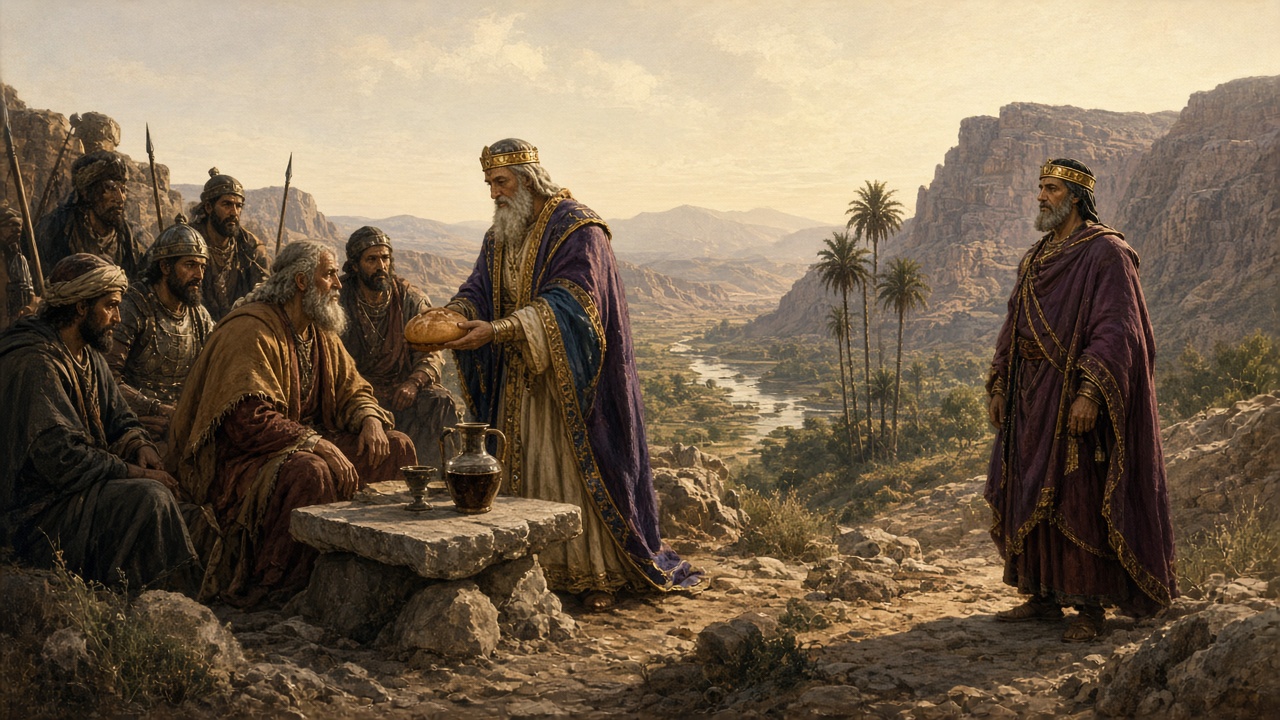
18Kafnge én, Mélkisidék, i harì di banwe Salém, smitong ku Abram. Mélkisidék ani i satu bà di Dwata i Too Mdatah. Na mebe kenen fan na binu di ku Abram. 19Na banlén kafye Abram, manan, “I Dwata Too Mdatah mlé kafye di ge, i Dwata tamimò i langit na i klamang banwe.
20“Magdayen Dwata i Too Mdatah, du tnabengan ge di kfisanam i dad dmuen ge.”
Kagmanan ani, blé Abram ku Mélkisidék i gasfalò i kdee gwean di dad fat harì i fnisanan.
21Kafnge én, man i harì di Sodom, “Ge sa mfun i kdee nfunmi, i gweam di dad harì gladla mdà di gami. Kabay fuléam alò di deg i kdee dad togu.”
22Kabay tmimel Abram, manan, “Tasmafà agu nan di Dwata i Amu, i Too Mdatah, i Mgimò i langit na i klamang banwe. 23Makang agu ge, landè balù tan i ge nfun, i làgu fulê di ge, balù fa i tukay sinulib ku demen ikat i lafin bliam, du fye laam fakay man kadang agu mbaling to nun du mdà di ge. 24Landè falus nwègu du nfungu. Én alò gdawatgu i tagkaan i dad togu, na én i làgu fulê. Kabay mni agu alel du blégu di dad to magin deg dunan Anér, Éskol, na Mamri.”
Did you know?
The Campaign of the Four Kings
- Easton's Bible Dictionary (1897) identifies the four invading kings with names on ancient inscriptions: Chedorlaomer with Khudur-Lagamar of Elam, Amraphel with Khammu-rabi of Shinar (southern Chaldea), Arioch, king of Ellasar, with Eri-Aku of Larsa, and Tidal with Tudkhula. It explains Eri-Aku as an Elamite name meaning “servant of the moon-god,” later changed to Rimsin, and takes Goiim—“nations”—as Gutium, east of the Tigris and north of Elam.Sources: Chedorlaomer · Amraphel · Arioch (king of Ellasar) · Tidal
- The five local kings drew up for battle in the Valley of Siddim, which this chapter equates with the Salt Sea, and the valley was full of tar pits into which some of the fleeing men fell. Easton's Bible Dictionary places that valley at the south end of the Dead Sea, between Engedi and the cities of the plain, and calls the pits bitumen pits.Sources: the Bible text itself · Vale of Siddim
- Abram lived near the oaks of Mamre the Amorite, a brother of Eshcol and Aner, and the three were bound by treaty to him. Easton's Bible Dictionary calls Mamre and Eshcol Amorite chiefs and Aner a Canaanite chief, and notes that they joined Abram in pursuing Chedorlaomer and recovering Lot.Sources: the Bible text itself · Mamre · Eshcol · Aner
Notes written with AI assistance from open sources (Theographic Bible Metadata, CC BY-SA 4.0; Easton’s Bible Dictionary, public domain) and reviewed before publishing.
Places in this chapter
- Elam · 32.189, 48.258 · verses 1, 9
- Shinar · Today: Babylonia · 32.543, 44.422 · verses 1, 9
- Salt Sea · Today: Dead Sea · 31.500, 35.500 · verse 3
- Shaveh-kiriathaim · Today: within 1 km of Al Qurayyat · 31.541, 35.686 · verse 5
- Dan · Today: Tel Dan · 33.249, 35.652 · verse 14
- Damascus · 33.511, 36.306 · verse 15
- Valley of Shaveh · Today: intersection of Kidron Valley and Valley of Hinnom · 31.767, 35.236 · verse 17
- Salem · Today: Jerusalem · 31.777, 35.234 · verse 18
Only places identified with high confidence are shown (90% or more according to the scholarly sources compiled by OpenBible). Period map: DARE (Digital Atlas of the Roman Empire), CC BY 4.0; modern map: © OpenStreetMap contributors; places: OpenBible.info (CC BY 4.0).
Credits and license for this translation
I tnalù dwata
New Testament in Blaan, Sarangani
copyright © 1998 Wycliffe Bible Translators, Inc.
Language: Sarangani Blaan (Blaan, Sarangani)
Translation by: Wycliffe Bible Translators
Contributor: Wycliffe Bible Translators, Inc.
Copyright Information
© 1998, Wycliffe Bible Translators, Inc. All rights reserved.
This translation text is made available to you under the
terms of the Creative Commons License: Attribution-Noncommercial-No Derivative Works.
( http://creativecommons.org/licenses/by-nc-nd/3.0/ )
In addition, you have permission to port the text to different file formats, as long as you
do not change any of the text or punctuation of the Bible.
You may share, copy, distribute, transmit, and extract portions
or quotations from this work, provided that you include the above copyright
information:
You must give Attribution to the work.
You do not sell this work for a profit.
You do not make any derivative works that change any of the actual words or punctuation of the Scriptures.
Permissions beyond the scope of this license may be
available if you contact
us with your request.
The New Testament
in Blaan, Sarangani
© 1998, Wycliffe Bible Translators, Inc. All rights reserved.
This translation is made available to you under the terms of the
Creative Commons Attribution-Noncommercial-No Derivatives license 4.0.
You may share and redistribute this Bible translation or extracts from it in any format, provided that:
You include the above copyright and source information.
You do not sell this work for a profit.
You do not change any of the words or punctuation of the Scriptures.
Pictures included with Scriptures and other documents on this site are licensed just for use with those Scriptures and documents.
For other uses, please contact the respective copyright owners.
2015-03-17
Source: http://ebible.org/bps/ · eBible.org