Exodus 40
I tnalù dwata · Tap a verse to see its cross-references.
I kafdak Mosis i gumangamfù di Dwata i Amu
1Na lêman talù Dwata i Amu, di ku Mosis, na manan, 2“Di tnanin duh, di tnanin bulen, fdakyu i gumangamfùyu i galyu gustifun. 3Fkaham di lam i bong kaban nlafin blawen, i gumkah i lwe batu gugsulat i sfalò flalò, na tlawéngam i satu kurtina di munan. 4Nebem di lam i lamisa na fkaham i dad kandeenan di tahan. Kafnge én, nebem di lam i gumkah dad salò na fkaham i dad saloan. 5Na fkaham i gudamsù blawen, i gumtam i fye bun, di muna i bong kaban maglafin blawen, i gumkah i lwe batu gugsulat i sfalò flalò. Na léam tlawéng i satu kurtina di gufusuk di gumangamfù.
6“Na fkaham i gudamsù i gusmakuf i dad lmanaf, di muna i gufusuk. 7Fkaham i gal gumalob di gutngà i gufusuk di gumangamfù, na i gal gudamsù, na nlamam yéél. 8Kafnge én, nlanebam i glibut di lwà i gumangamfù, na tlawéngam i satu kurtina di gufusuk di nasel i gumlanebam ani.
9“Na nweam i fngalo, i fngalo ilè i kablé di Dwata, na snabulam i gumangamfù ani, na i kdee kandeenan di lam. Én nimoam duh ani, dunan ilè kdee ani, agu mfun, agu Dwata i Amu. 10Na kafnge én, salngad nimoam di gudamsù i gusmakuf i dad lmanaf, na i kdee kandeenan, du ilè i gudamsù ani agu mfun, agu Dwata i Amu. 11Na léam snabul i fngalo ani, di gumalob na i gumkah dun, du ilè agu mfun nan, agu Dwata i Amu.
12“Kafnge én, faginam Aron na i dad ngaan lagi di gufusuk i gumangamfù na falobam ale. 13Na di kalobla falsakam Aron too fye klawehan, i klawehan lsakan di kadsuan di deg, na nlamogam kenen fngalo, na blém kenen di dagu, du ani ilè kenen mbaling i bàgu. 14Na i dad ngaan lagi, fdadongam déén, na léam falsak dale. 15Na nlamogam ale fngalo, salngad kiboam i màla, du fye mbaling ale gal bàgu, na mimò ale di dagu. Du di klamogam dale fngalo, i kgimòla gal bà, là tlag bay kel di kdee dad bella, kel di landè sen.”
16Na nimò Mosis i kdee dek Dwata i Amu kenen. 17Taman di tnanin duh di tnanin bulen di galwen fali i kagalwàla mdà di banwe Idyif, fafdak Mosis i gumangamfù di Dwata i Amu, i galla gustifun.
I gumangamfù too fnò i bong kneng Dwata i Amu
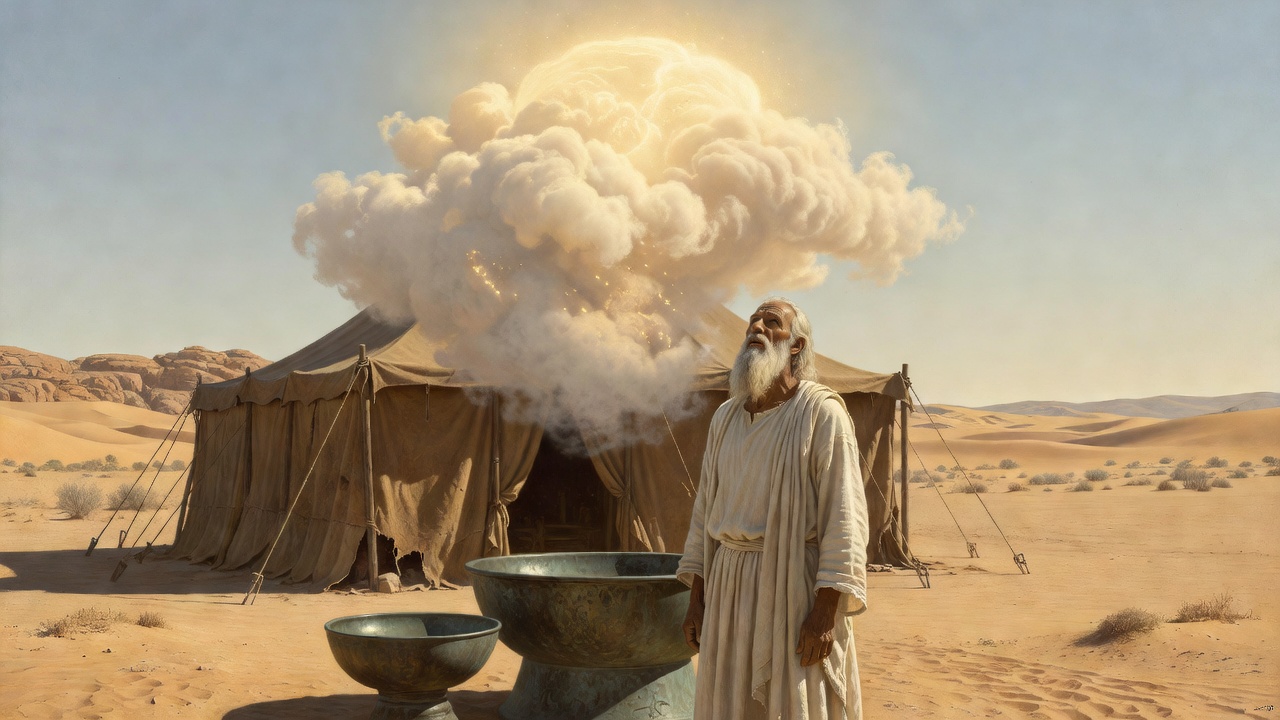
34Di kafngela mimò i gumangamfù di Dwata galla gustifun, maglimun labun i gumangamfù ani, na di lam too fnò i bong kneng Dwata i Amu. 35Du maglimun labun i gumangamfù galla gustifun, na du ditù di lam too fnò i bong kneng Dwata i Amu, là gfusuk Mosis.
36Ku magket i labun na mgili mdà di gumangamfùla, lê magu i dad bel Israél, du lalòla. 37Kabay ku là magket i labun di gumangamfùla, là ale magu, silang ku magket na mgili i labun. 38Taman i labun Dwata i Amu, mlimun i gumangamfùla di mduh, na di butang dminè i labun salngad i lifoh. Na di dad kagu i dad bel Israél, fakayla teen i kasnagin Dwata i Amu dale, du teenla i labun ani di mduh, na i labun ani dminè di butang.
Did you know?
Setting Up the Tabernacle
- The Tabernacle was erected on the first day of the first month in the second year after the Israelites departed Egypt. Moses positioned each sacred furnishing—including the Ark of the Testimony, the table of showbread, the lampstand, and the altars—and consecrated them with anointing oil.Sources: the Bible text itself
- A bronze basin positioned between the Tent of Meeting and the altar of burnt offering was designated for ritual purification. Moses, Aaron, and Aaron's sons were required to wash their hands and feet with water from this basin whenever they approached the altar or entered the sanctuary.Sources: the Bible text itself
- Upon the completion of the sanctuary, a cloud covered the Tent of Meeting and divine glory filled the space, preventing even Moses from entering. This cloud served as a continuous visual guide for Israel's journeys, remaining over the sanctuary by day and appearing as fire by night.Sources: the Bible text itself
Notes written with AI assistance from open sources (Theographic Bible Metadata, CC BY-SA 4.0; Easton’s Bible Dictionary, public domain) and reviewed before publishing.
Credits and license for this translation
I tnalù dwata
New Testament in Blaan, Sarangani
copyright © 1998 Wycliffe Bible Translators, Inc.
Language: Sarangani Blaan (Blaan, Sarangani)
Translation by: Wycliffe Bible Translators
Contributor: Wycliffe Bible Translators, Inc.
Copyright Information
© 1998, Wycliffe Bible Translators, Inc. All rights reserved.
This translation text is made available to you under the
terms of the Creative Commons License: Attribution-Noncommercial-No Derivative Works.
( http://creativecommons.org/licenses/by-nc-nd/3.0/ )
In addition, you have permission to port the text to different file formats, as long as you
do not change any of the text or punctuation of the Bible.
You may share, copy, distribute, transmit, and extract portions
or quotations from this work, provided that you include the above copyright
information:
You must give Attribution to the work.
You do not sell this work for a profit.
You do not make any derivative works that change any of the actual words or punctuation of the Scriptures.
Permissions beyond the scope of this license may be
available if you contact
us with your request.
The New Testament
in Blaan, Sarangani
© 1998, Wycliffe Bible Translators, Inc. All rights reserved.
This translation is made available to you under the terms of the
Creative Commons Attribution-Noncommercial-No Derivatives license 4.0.
You may share and redistribute this Bible translation or extracts from it in any format, provided that:
You include the above copyright and source information.
You do not sell this work for a profit.
You do not change any of the words or punctuation of the Scriptures.
Pictures included with Scriptures and other documents on this site are licensed just for use with those Scriptures and documents.
For other uses, please contact the respective copyright owners.
2015-03-17
Source: http://ebible.org/bps/ · eBible.org