Exodus 2
I tnalù dwata · Tap a verse to see its cross-references.
I ksut Mosis
1Na di bang én, nun lagi di bel Israél mdà di tingaan Libay, mwè yaan lêman mdà di bel Libay. 2Na satlamin ale, na mbaling maltien i libun, na mngà tingà lagi. Di kiten i too fye baweh tingà ani, na too fye lawehan, bunin klo i tlu bulen. 3Kabay di talaan gagan i muni kenen, du tabong nan, nwean i balyas, nimò mdà di tablo, na sneletan di lam, du fye là fnusuk yéél. Na filean i tingaan di lam i balyas ani, na fkahan di lam i tablo di kilil i yéél. 4Na satu libun, i twege i tukay tingà lagi ani, tadag là too mawag di yéél ani, du neyen ku tan mkel di twalin ani gine.
5Na di bang ani, i tingà libun Faraon, salu di yéél du dyo. Kenen na i dad libun gal tmabeng kenen, magu ale di kilil i yéél. Na là mlo teenan i balyas di lam i tablo, na fafwean i lifanan libun. 6Di kukal tingà Faraon i balyas teenan i tingà kamwak. Na kandon i tingà ani, na manan, “I tingà ani kè Hibru.”
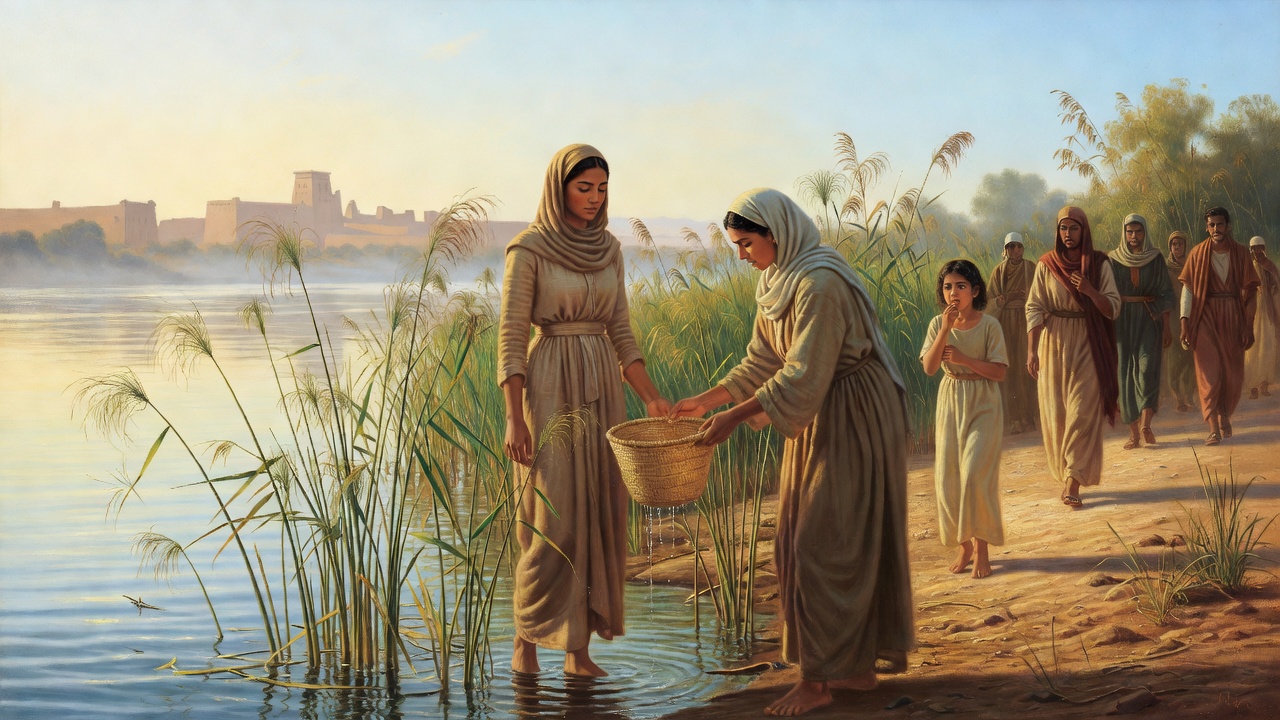
7Na i twege i tingà ani, fdadong di libun tingà Faraon, na manan, “Fakay agu kè meye satu libun Hibru mliton, du fye nun mliton dun ge?”
8Na tmimel tingà Faraon, manan, “Hae sa, meye ge deg.” Taman faflal mulê twege tukay tingà ani, na nngén i too glut yéan. 9Kakella ditù, man tingà i harì di yê i tukay tingà, “Nebem i tingà ani, du nifatam deg na tnadenta ge.” Taman neben i tukay tingà na nifatan.
10Midul i duh na midul i butang, na tabong i tingà lagi ani. Taman nebe i too glut yéan samfulê, di libun tingà i harì. Na fandam i libun ani i tingà lagi ani salngad i kenen too tingà. Na dagitan kenen Mosis, du manan, “Nwègu tingà ani di yéél.”
I kila Mosis di banwe Midyan
11Satu duh, di taktua Mosis, nlauyan i dad ton Hibru, na teenan nleges ale fimò i too blat nimò. Na léan teen i satu to di dad ton Hibru too fatduk i to Idyif kel di kfatin. 12Falê Mosis di glibutan na di landè teenan dademe to, fnatin i to Idyif. Kafnge én, bunin na nlimunan falak. 13Na di gamtadol duh, lêmanan nlauy i dad ton na teenan i lwe Hibru saglà. Na manan di nun salà, “Nangam bnunal i flanekam Hibru.”
14Man i to ani di ku Mosis, “Simto ge kè, landè labetam mdek na mukum gami. Fanam agu fnati salngad kfatim i to di Idyif malfabi?” Di kgadè Mosis nun dad to gmadè i mgimoan too kenen likò.
15Na di kgadè Faraon i mgimò Mosis, fakfean moon du kayean fnati. Kabay galwà Mosis di banwe Idyif, na mila di mawag banwe Midyan. Kakelan ditù, sudeng Mosis mdadong i satu ktufa. 16Na di bang ani, nun fitu libun, i dad ngà i satu tyà bà di Dwata di banwe Midyan, dnagit ku Dyétro, salu di ktufa ani, du smulu ale, du kokla di gal guminum i dad bilibili na kambing i màla. 17Kabay di kakel i dad lagi mifat i dad dademe bilibili, ndalla dad libun ani gine. Taman di kite Mosis ani, tnabengan dad libun én, na balù kenen smulu, du finuman i dad lmanafla.
18Na di kasfulê i dad libun di màla, snalekan ale, manan, “Na kan ku mlal ksuluyu ninum i dad lmanafito?” 19Na tmimel ale, manla, “Satu to mdà di Idyif i tmabeng gami di kdal i dad lagi mifat i dad bilibili gami. Na balù fa kenen smulu gami, na fninuman i dad lmanafito.” 20Smalek i màla, manan, “Na tanean sa? Kan ku tnagakyu kenen ditù? Neyeyu sa kun, na faginyu dini, du fye kmaan kenen di safédito.”
21Na tamnè Mosis di safédla. Na blé Dyétro i tingaan dnagit ku Sifora, du nimoan yaan Mosis.
22Kafnge én, mngà Sifora lagi na dnagit Mosis ku Gérson, du manan di nawan, “Dnagitgu kenen Gérson, du agu satu to alò gbat di banwe ani.”
23Tatoo mlo, mati i harì di Idyif. Na i dad bel Israél too maflayam fa mdà di kaglifanla. Too ale dmalong na mni ale tabeng di Dwata. 24Na fanlinge Dwata i dalongla, na laan glifet i fakangan di dad gutambulla, Abraham, Isaak, na Dyékob. 25Teenan i ksasè kaflayam i dad bel Israél, na too mlidù i nawan dale.
Did you know?
The birth and flight of Moses
- Pharaoh’s daughter named the child Moses, explaining that she had drawn him out of the water. Easton's Bible Dictionary (1897) links his name with “drawn,” or with the Egyptian word mesu, “son”—the element from which the dictionary also explains Rameses as “royal son.”Sources: the Bible text itself · Moses
- In Exodus 2 a daughter of Levi hides her son for three months, and Pharaoh’s daughter, finding him among the Nile reeds, recognizes a Hebrew child. Easton's Bible Dictionary (1897) links the Israelites’ affliction to “the new king who knew not Joseph,” long supposed to be Aahmes I, called Amosis by Josephus, though the dictionary, citing discoveries then recent, names Seti instead. Their hardship, it says, began after the Hyksos, masters of Egypt for some five centuries, were driven out and the old dynasty restored.Sources: the Bible text itself · Pharaoh
- After Pharaoh sought to kill him, Moses fled to Midian and sat down beside a well; he later married Zipporah, one of the seven daughters of the priest of Midian. The Midianites were nomadic Arabians descended from Midian, Abraham’s fourth son by Keturah, and they pastured their flocks in the Sinai peninsula and in the desert north of the Arabian peninsula. This chapter calls the priest Reuel, whom Easton's Bible Dictionary (1897) names Raguel, regarding that form as his personal name and Jethro—“excellency”—as an official title if the two are identified.Sources: the Bible text itself · Midian · Midian · Jethro
Notes written with AI assistance from open sources (Theographic Bible Metadata, CC BY-SA 4.0; Easton’s Bible Dictionary, public domain) and reviewed before publishing.
Places in this chapter
- Nile · Today: Nile River · 31.465, 30.367 · verses 3, 5
- Midian · 28.495, 35.012 · verses 15, 16
- Egypt · 30.129, 31.308 · verse 23
Only places identified with high confidence are shown (90% or more according to the scholarly sources compiled by OpenBible). Period map: DARE (Digital Atlas of the Roman Empire), CC BY 4.0; modern map: © OpenStreetMap contributors; places: OpenBible.info (CC BY 4.0).
Credits and license for this translation
I tnalù dwata
New Testament in Blaan, Sarangani
copyright © 1998 Wycliffe Bible Translators, Inc.
Language: Sarangani Blaan (Blaan, Sarangani)
Translation by: Wycliffe Bible Translators
Contributor: Wycliffe Bible Translators, Inc.
Copyright Information
© 1998, Wycliffe Bible Translators, Inc. All rights reserved.
This translation text is made available to you under the
terms of the Creative Commons License: Attribution-Noncommercial-No Derivative Works.
( http://creativecommons.org/licenses/by-nc-nd/3.0/ )
In addition, you have permission to port the text to different file formats, as long as you
do not change any of the text or punctuation of the Bible.
You may share, copy, distribute, transmit, and extract portions
or quotations from this work, provided that you include the above copyright
information:
You must give Attribution to the work.
You do not sell this work for a profit.
You do not make any derivative works that change any of the actual words or punctuation of the Scriptures.
Permissions beyond the scope of this license may be
available if you contact
us with your request.
The New Testament
in Blaan, Sarangani
© 1998, Wycliffe Bible Translators, Inc. All rights reserved.
This translation is made available to you under the terms of the
Creative Commons Attribution-Noncommercial-No Derivatives license 4.0.
You may share and redistribute this Bible translation or extracts from it in any format, provided that:
You include the above copyright and source information.
You do not sell this work for a profit.
You do not change any of the words or punctuation of the Scriptures.
Pictures included with Scriptures and other documents on this site are licensed just for use with those Scriptures and documents.
For other uses, please contact the respective copyright owners.
2015-03-17
Source: http://ebible.org/bps/ · eBible.org