Exodus 15
I tnalù dwata · Tap a verse to see its cross-references.
Lingag Mosis
1Kafnge én, mlingag Mosis na i dad bel Israél, i kdayenla Dwata i Amu. Na ani i lingagla, manla,
“Mlingag agu di Dwata i Amu,
du mdatah kenen na fagu di bong gnaganan, too kenen matu.
Du i dad kudà na i dad snakay,
tatian ale bat di lam i mahin.
2Dwata i Amu, i gumlingaggu na gumdà i galgu.
Kenen i falwà deg di dad to dmuen deg.
Kenen i Dwatagu, taman, dnayengu kenen.
Kenen i Dwata fnangamfù dad gutambulgu, taman, dnayengu i kdatahan.
3Dwata i Amu, too fulung di kasfati,
Dwata i Amu i dagitan.
4I dad snakay Faraon, na i dad sundalun,
tatian bat ditù di mahin.
Na i dad mdatah ganlal Faraon
tamlimas ale di Fulè Mahin.
5Maglimun ale i bong mngalam mahin,
na galnab di too gumngalaman, gambet i batu.
6Amugu Dwata, i sigalam kwanan
too nun gnaganan.
Hae, du i sigalam kwanan
gmagan misan, na falmo i dad to dmuen dagu.
7Na di kdatah i katum,
fnisanam i dad to dmuen ge.
I kaflabeam too minit gambet i lifoh,
taman, malmo ale gambet lami di lifoh.
8Tanyufam i mahin,
na masatngà na mastifun salu tah.
Na tadag i mahin gambet i diding,
na mbaling kafag na mgal tanà di gumngalam i mahin.
9Na fdag i dad to dmuen gami du manla,
“E, tnafikmi ale, na kanfèmi ale kadang
Na sansalelmi i dad knunla,
na i kalbong knayèmi nwè, nwèmi.
Nsòmi fais di lumàmi,
du nwèmi i kdee nfunla.”
Én i kafdag i dad to dmuen gami.
10Kabay di alò sulê kyufam,
na maglimun ale i mahin.
Tì ale galnab gambet i tamla bat
di gumngalam i mahin.
11E, Amugu Dwata, simto dad mule i gasngad ge?
Simto i salngad ge, i ktium too mdatah?
Simto i salngad ge, i bong knengam too gamtikeng?
Simto i salngad ge, i bong gnaganam di kimoam dad tnikeng?
12Tatayalam sigalam kwanan,
na nlimun i mahin i dad to dmuen gami.
13Fagu di kakdom landè kgilin, dnohoam kadang i fakangam
na nalakam i dad to tansoam mdà di falel i dad to dmuen dale.
Fagu di bong gnaganam, gmagan ge malak dale
di banwe i gumneam, i tagaam dale.
14Linge kadang, kdee bung dad to, gablà di kafalwaam gami di banwe Idyif,
na kankal ale di klikòla.
Na too sè klikò i dad to Filistin.
15I dad ulu, i dad to di banwe Idom, too ale likò.
Na i dad to, i too nun glal, di banwe Moab, kankal ale.
Na kadang, i dad to di banwe Kanaan, lana i klabèla mdà di klikòla.
16Fisan ale i klikòla.
E, Amugu Dwata, di kitela i bong gnaganam,
là ale galyak, du mdà di sè klikòla,
kel di klius i dad tom,
i dad to tansoam mdà di kaglifanla.
17Satu du kadang, Amugu Dwata, nebem ale, na fneam ale di bululam
i banwe tanalékam i gumneam,
i gumneam i too mabtas,
i gumneam ge mimò dun.
18E, Amugu Dwata, ge i magot kadang i klamang banwe kel di landè sen.”
Ani gine lingag Mosis.
I lingag Miriam
19I dad bel Israél tamagu di mahin di kafag tanà, di gumasatngà i mahin. Kabay di klalò i dad to Idyif, i mebe i dad snakay na i dad kudà, tasansulê Dwata i Amu i mahin, na maglimun ale.
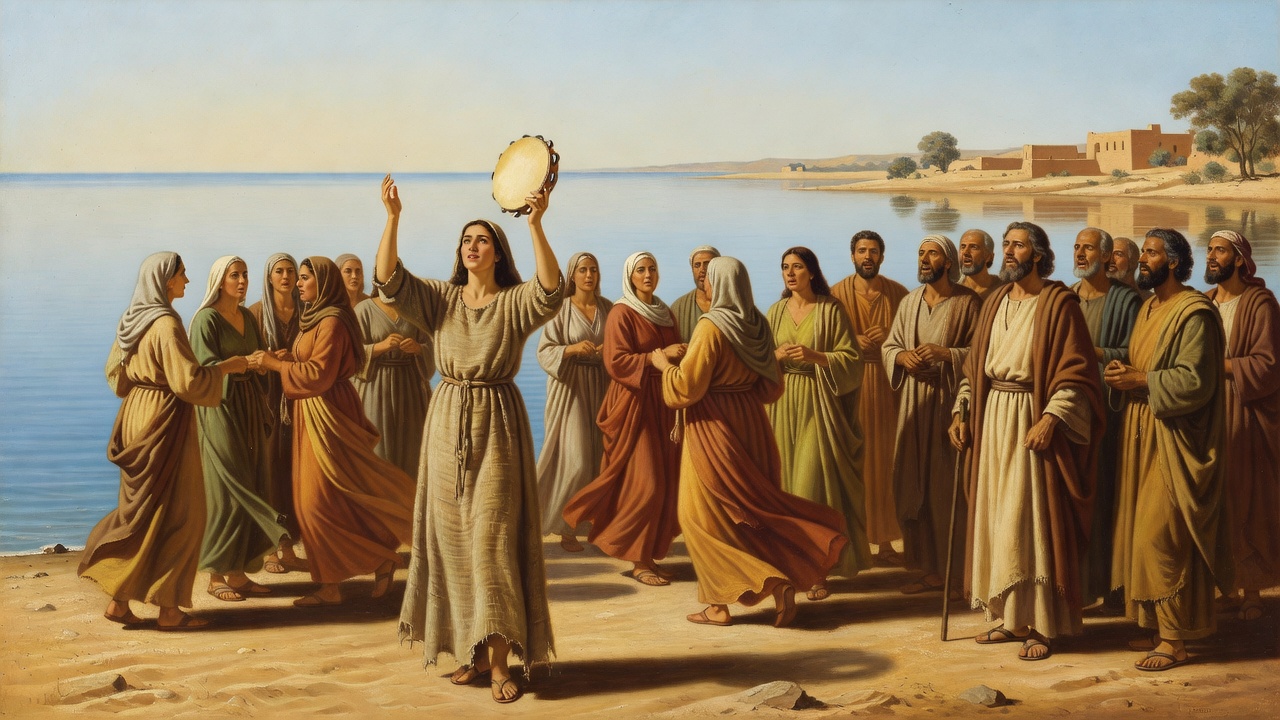
20Na Miriam, satu tugad Dwata, i flanek Aron na Mosis libun, tufì mlingag. Nwean i satu bung agafla dnagit tamburin, na i kdee dad dademen libun lê mwè i dale tamburin, na mlalò Miriam magaf i dad agafla én na kdeela sayew dmayen Dwata. 21Na mlingag Miriam dale na ani i lingagan, manan,
“Mlingag ito di Dwata i Amu,
du mdatah kenen, na fagu di bong gnaganan, too kenen matu.
Hae, du i dad kudà na i dad snakay mdà di Idyif
tatian ale bat di lam i mahin.”
I banwe Marah na Ilim
22Na di kdayenla Dwata, malak Mosis i dad bel Israél magu mdà di Fulè Mahin salu di banwe gulandè to dnagit Sur. Tlu du i klola magu déén di banwe gulandè to, na landè teenla yéél. 23Kafnge én, kel ale di banwe Marah, bay là ale gamginum i yéélan, du too féét, taman dnagitla Marah, du gumtatek i dagitan féét. 24Taman, nugak i dad to Mosis, na snalekla, “Na, tan sa i ninumito?”
25Di kaklinge Mosis i ugakla, too kenen fakdo mni tabeng di Dwata i Amu, na fiten di kenen i kayu lbatù. Nwè Mosis kayu én, na batan ditù di yéél, na i yéél talaan nan féét.
Klola mnè déén, banlé ale Dwata i Amu dad flalò gablà di knèla, na tnilewan i ksaligla di kenen. 26Na manan di dale, “Ku tooyu agu nimen, na i nimòyu too matlu di kitegu, na làyu fbayà bay nimenyu i dad flalògu gamu, làta gamu fanlayam di balù tan i tduk i taflayamgu aye i dad to Idyif. Agu sa Dwata i Amu, i fgulê gamu.”
27Kafnge én, mdà ale na là mlo kel ale di satu banwe dnagit Ilim. Na di Ilim ani, nun sfalò lwe sfuten, na fitu falò kayu dnagit falmira. Na flo ale mnè mdadong di dad sfuten.
Did you know?
The Song at the Red Sea
- Miriam, sister of Moses and Aaron, is called a prophetess in this chapter. She took the lead in the song of triumph after Israel passed through the Red Sea, and the women followed her with tambourines and dancing.Sources: Miriam · the Bible text itself
- From the Red Sea, Moses led Israel into the Desert of Shur, a wilderness on Egypt’s northeastern border extending toward Philistia. The name, meaning a wall, was probably taken from Egyptian fortifications, running from Pelusium to Heliopolis, built to defend that frontier from desert tribes. For three days they walked without finding water, and at Marah the water was bitter, which is why the place was so named.Sources: Shur · the Bible text itself
- The song says that anguish will grip Philistia, the land of the Philistines; that the chiefs of Edom, a rugged mountain land on the east side of the Arabah, from the head of the Gulf of Akabah to the foot of the Dead Sea, will be dismayed; and that trembling will seize the leaders of Moab, east of the Jordan and the Dead Sea and south of the Arnon. It also says that those who dwell in Canaan will melt away.Sources: the Bible text itself · Philistia · Edom · Moab
Notes written with AI assistance from open sources (Theographic Bible Metadata, CC BY-SA 4.0; Easton’s Bible Dictionary, public domain) and reviewed before publishing.
Places in this chapter
- Philistia · 31.664, 34.546 · verse 14
- Canaan · 32.767, 35.333 · verse 15
- Edom · 30.746, 35.604 · verse 15
- Moab · Today: Moab 1 · 31.181, 35.701 · verse 15
- Egypt · 30.129, 31.308 · verse 26
Only places identified with high confidence are shown (90% or more according to the scholarly sources compiled by OpenBible). Period map: DARE (Digital Atlas of the Roman Empire), CC BY 4.0; modern map: © OpenStreetMap contributors; places: OpenBible.info (CC BY 4.0).
Credits and license for this translation
I tnalù dwata
New Testament in Blaan, Sarangani
copyright © 1998 Wycliffe Bible Translators, Inc.
Language: Sarangani Blaan (Blaan, Sarangani)
Translation by: Wycliffe Bible Translators
Contributor: Wycliffe Bible Translators, Inc.
Copyright Information
© 1998, Wycliffe Bible Translators, Inc. All rights reserved.
This translation text is made available to you under the
terms of the Creative Commons License: Attribution-Noncommercial-No Derivative Works.
( http://creativecommons.org/licenses/by-nc-nd/3.0/ )
In addition, you have permission to port the text to different file formats, as long as you
do not change any of the text or punctuation of the Bible.
You may share, copy, distribute, transmit, and extract portions
or quotations from this work, provided that you include the above copyright
information:
You must give Attribution to the work.
You do not sell this work for a profit.
You do not make any derivative works that change any of the actual words or punctuation of the Scriptures.
Permissions beyond the scope of this license may be
available if you contact
us with your request.
The New Testament
in Blaan, Sarangani
© 1998, Wycliffe Bible Translators, Inc. All rights reserved.
This translation is made available to you under the terms of the
Creative Commons Attribution-Noncommercial-No Derivatives license 4.0.
You may share and redistribute this Bible translation or extracts from it in any format, provided that:
You include the above copyright and source information.
You do not sell this work for a profit.
You do not change any of the words or punctuation of the Scriptures.
Pictures included with Scriptures and other documents on this site are licensed just for use with those Scriptures and documents.
For other uses, please contact the respective copyright owners.
2015-03-17
Source: http://ebible.org/bps/ · eBible.org