Acts 19
I tnalù dwata · Tap a verse to see its cross-references.
I ksalu Fol di Ifisus
1Na di klo Afolos déén di banwe Korintu, magu Fol di dad bulul, i satu dalan salu di Ifisus. Na di kakellan déén teenan i dademe dad to mlalò ku Dyisas. 2Na snalekan ale, manan, “Di kafaglutyu ku Dyisas, tagdawatyu kè i Mtiu Tulus?” Na tmimel ale, manla, “Là, landè lingemi ku nun Mtiu Tulus.” 3Na lêman ale snalek Fol, manan, “Na tan dé i fnaglutyu di kafbunyagyu?” Na tmimel ale, manla, “Fnaglutmi i tdò Dyan Gal Munyag.”
4Na man Fol, manan, “Bnunyag Dyan i dad to tamsal na tmagak i dad salàla. Kabay i tdoan i dad to fye ku faglut ale di to tmadol kenen, dunan Dyisas.”
5Taman di kaklingela i man Fol, fbunyag ale lêman fagu di dagit Amuito Dyisas. 6Na di kafkah Fol i falelan di dale, kel i Mtiu Tulus di dale, na baling ale talù i dee bung talù, na tulenla i Tnalù Dwata. 7Na i kdeela nun kè sfalò lwe dad lagi.
I katdò Fol di dad to faglut di Ifisus lwe fali
8Na klo tlu bulen salu Fol di gal gusatdò i dad Dyu na tamdò i dad to di landè klikoan, na too kenen stulen di dale gablà di kagot Dwata, du fye faglut ale. 9Kabay nun dademe di dale too mgal i ulula na là ale mayè faglut, na baling ale talù sasè di muna i dad to gablà di dalan mlalò ku Dyisas. Taman tnagak ale Fol na faginan i dad to mlalò ku Dyisas, na klit i duh stulen ale déén di skwila gutamdò satu to dnagit ku Tiranus. 10Na lwe fali i klola mimò ani, na taman kdee dad to mnè di banwe Asya, i dad Dyu na i dad ise Dyu, sdulê ale mlinge Tnalù Dwata gablà ku Dyisas.
I dad ngà Skiba
11Na mimò Dwata i dad too gamtikeng fagu di ku Fol. 12Du balù i dad lasulun na i safut labédan di awekan, nebe di dad to nun tduk, na tatì mgulê i tdukla, na lamwà di dale i dad busaw. 13Na nun dademe dad Dyu gal magu du falwàla dad busaw. Na tilewla falwà dad busaw fagu di dagit Amuito Dyisas. Na ani manla di dad busaw, “Di dagit Dyisas i gal tdò Fol, dekta gamu lamwà.” 14Na i mimò ani dunan i fitu dad ngà Skiba lagi. Na Skiba ani gumdatah i dad bà di Dwata.
15Kabay i busaw gine baling tmimel dale, manan, “Dyisas dilègu, na gadègu Fol, bay simto gamu kè?”
16Na kafnge én, i to nun busaw, toon ale bnunù, na fnisanan kdeela. Na du too sasè i kbunuan dale, nilala i gumnean na mlitè ale na mti kasê i klawehla. 17Na di kaklinge i kdee dad Dyu na i dad ise Dyu mnè di Ifisus i mkel ani, too sè klikò i kdeela, na lumban nan baling kafèla i dagit Amuito Dyisas. 18Na dee di dad to tafaglut di ku Dyisas tmulen di muna i dademela i dad sasè tamgimòla. 19Na dee dad mloos di kafaglutla di ku Dyisas, santifunla i dad librula i gumwèla i kfulung Satanas, na snakufla di muna i kdee dad to. Na sandagubla i btas i kdee dad libru ani, na mdadong lime falò libu btasan. 20Taman fagu ani, i Tnalù Dwata too mbel na too gfisan i dad sasè.
I samuk di banwe Ifisus
21Na kafnge én, i fandam Fol salu kenen di banwe Dyérusalém magu di banwe Masidunya na Akaya. Na manan, “Na mdà di Dyérusalém, too agu salu di banwe Roma.” 22Taman Timoti na Irastus, lwe di dad gal tmabeng kenen, dekan ditù di Masidunya, bay kenen mnè fa di Asya.
23Na di bang ani, mbaling nun bong samuk déén di Ifisus du mdà di katdò Fol gablà di dalan mlalò ku Dyisas. 24Na nun satu lagi dnagit ku Dimitriyus too fulung tmunal salafì. Na nimoan dad malnak gumnè kafbaweh i gumnè gumangamfùla di satu dwatala dnagit ku Artimas. Na i dad to tmabeng kenen di nimoan, too bong gwèla mdà di nimòla. 25Taman santifunan i dademen na balù i dademe dad to mimò salngad i kenen nimò, na manan di dale, “E gamu, gadèyu mdà di nimoito ani gamweito bong knun. 26Na tateenyu na talingeyu gablà di nimò Fol. I manan i dad dwata nimò i dad to ise ku glut dwata, na tadee dad to i mgeben di kafaglutan, là alò dini di Ifisus bay di klamang banwe Asya. 27Taman ani kanlikoito, ken nun talù sasè gablà di nimoito. Na là alò én, bay balù i gumangamfù i mdatah dwataito Artimas ken baling landè gukmamu dun, na malmo i dengeg Artimas, na landè sa kadang mangamfù di kenen, i fnangamfù i kdee dad to di Asya, na balù di klamang banwe.”
28Na kaklinge i dad to i man Dimitriyus, too ale flabè di katdò Fol, na mkit ale, manla, “Too mdatah Artimas, i dwata fnangamfù i dad to di banwe Ifisus.” 29Na di là mlo tambel i samuk di klamang i syudad. Na dee dad to kamfè ku Gayus na Aristarkus, lwe to mdà di Masidunya gal magin ku Fol magu, na gasilla ale nebe di gal gustifun i dad to di syudad Ifisus. 30Na mayè Fol talù di muna i dad to, bay klen kenen i dademen dad mlalò ku Dyisas. 31Na balù i dademe dad ganlal di Asya, i dademe Fol sgalak, fakdola ku Fol nang fusuk di gustifun.
32Na i dad to stifun déén là gmadè i nawala, du sahal man i kdee dad to mkit déén, du nun dee là gmadè i duenla stifun. 33Na nun dademe, man nawala Alihandro i fanlabèla, na lugad kenen i dad Dyu di muna i dad to. Tayalan i kmalan du fye fafanakan ale, du kayean fgadè di dad to i kaglut. 34Kabay di kdilèla na Dyu kenen, baling ale salngan mkit kel di lwe uras, manla, “Mdatah Artimas i dwata fnangamfù i dad to di Ifisus.”
35Na i to mebe i syudad, fafanak i dad to, manan, “Gamu dad to di Ifisus, tagadè i kdee dad to di klamang banwe, gito dini di Ifisus i mifat gumnè i gumangamfù di ku Artimas i mdatah dwataito, na i kafbawehan batu mtatek mdà di langit. 36Taman du landè fakay gafkéng dun, fye ku fanak gamu na nang gamu smamuk. 37Tanebeyu dini dad to ani, balù landè tnakula di gal gumangamfuito demen landè manla sasè gablà di dwataito. 38Na kaflingenta dun, ku mayè Dimitriyus na dad to mimò di kenen mlé salà di balù simto, fakayla sa nebe di usay, na nun dad to gal mukum déén, na déén sa gumléla salàla. 39Kabay ku nun fa dademe kayèyu santulen, fakayyu nebe di kastifunito di duh galito ksusay. 40Na i mgimoito di duh ani fakay ku i dad ganlalito mlé salà di gito. Na ku én nimòla landè sa timelito di dale du landè sa kaglut duenito mimò samuk.” 41Na kafnge én, dekan i dad to mulê.
Did you know?
Paul, the Way, and Artemis in Ephesus
- Ephesus was the capital of proconsular Asia, the Roman province covering the western part of Asia Minor, and in Roman times it bore the title of the first and greatest metropolis of Asia. The city was distinguished for the temple of Artemis, whom the Romans called Diana, built outside the walls and reckoned one of the seven wonders of the ancient world. At its center stood an ancient image of the goddess, reputed to have fallen from the sky.Sources: Ephesus · Diana · Asia
- Demetrius, a silversmith at Ephesus, made silver shrines of Artemis, models of her temple or of her statue, which sold readily to visitors from all over Asia Minor. Acts says this trade was the craftsmen's source of prosperity, and that Demetrius warned them of danger to their business and to the honor of the temple of Artemis, the goddess he said was worshiped throughout the province of Asia and the whole world.Sources: Demetrius · the Bible text itself
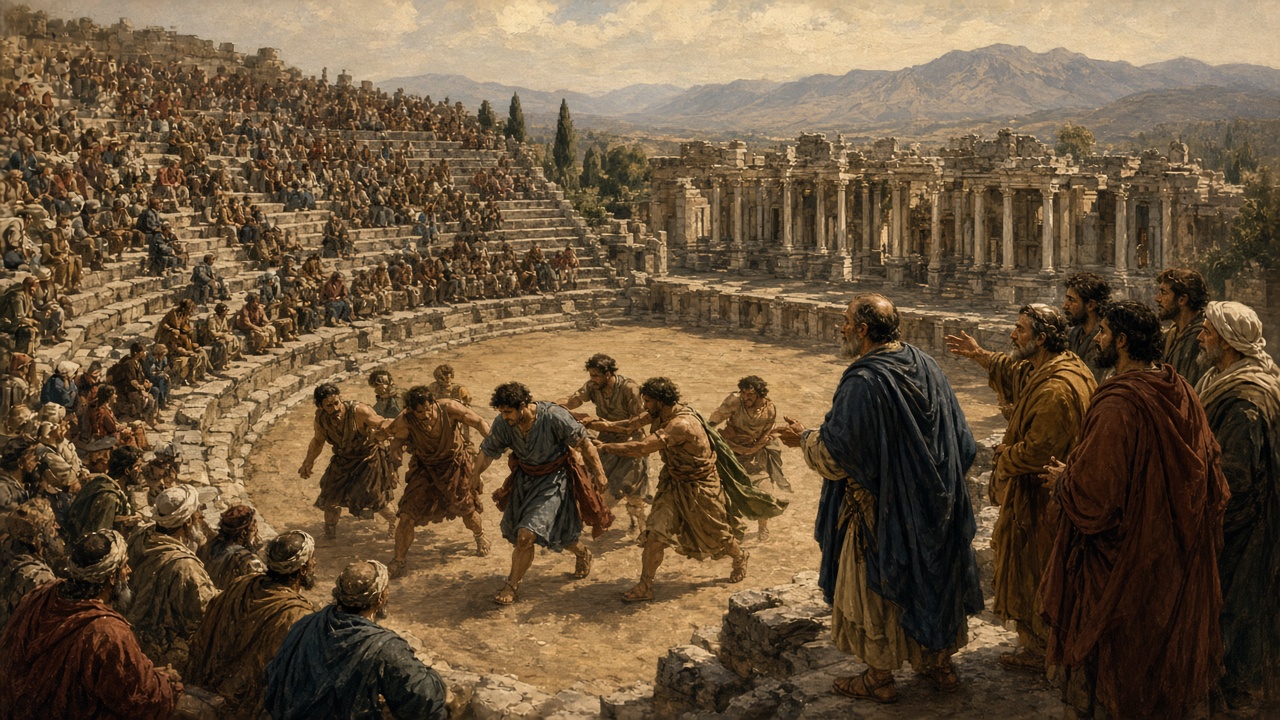
- The crowd rushed into the theatre of Ephesus, which Easton's Bible Dictionary (1897) describes as the largest in the world, open to the sky and able to hold 50,000 spectators. Friends of Paul among the chiefs of Asia, wealthy citizens elected each year to preside over the games and religious festivals of their cities, begged him not to go in. The city clerk then reminded the assembly that Ephesus was guardian of the temple of the great Artemis and of her image, said to have fallen from heaven.Sources: Ephesus · Asia · the Bible text itself
Notes written with AI assistance from open sources (Theographic Bible Metadata, CC BY-SA 4.0; Easton’s Bible Dictionary, public domain) and reviewed before publishing.
Places in this chapter
- Corinth · 37.906, 22.879 · verse 1
- Ephesus · 37.939, 27.341 · verses 1, 17, 23, 26, 35
- Asia · 38.400, 28.300 · verses 10, 22, 26, 27, 31
- Achaia · 38.720, 22.540 · verse 21
- Jerusalem · 31.777, 35.234 · verse 21
- Macedonia · 41.600, 22.540 · verses 21, 22, 29
- Rome · 41.892, 12.485 · verses 21, 40
Only places identified with high confidence are shown (90% or more according to the scholarly sources compiled by OpenBible). Period map: DARE (Digital Atlas of the Roman Empire), CC BY 4.0; modern map: © OpenStreetMap contributors; places: OpenBible.info (CC BY 4.0).
Credits and license for this translation
I tnalù dwata
New Testament in Blaan, Sarangani
copyright © 1998 Wycliffe Bible Translators, Inc.
Language: Sarangani Blaan (Blaan, Sarangani)
Translation by: Wycliffe Bible Translators
Contributor: Wycliffe Bible Translators, Inc.
Copyright Information
© 1998, Wycliffe Bible Translators, Inc. All rights reserved.
This translation text is made available to you under the
terms of the Creative Commons License: Attribution-Noncommercial-No Derivative Works.
( http://creativecommons.org/licenses/by-nc-nd/3.0/ )
In addition, you have permission to port the text to different file formats, as long as you
do not change any of the text or punctuation of the Bible.
You may share, copy, distribute, transmit, and extract portions
or quotations from this work, provided that you include the above copyright
information:
You must give Attribution to the work.
You do not sell this work for a profit.
You do not make any derivative works that change any of the actual words or punctuation of the Scriptures.
Permissions beyond the scope of this license may be
available if you contact
us with your request.
The New Testament
in Blaan, Sarangani
© 1998, Wycliffe Bible Translators, Inc. All rights reserved.
This translation is made available to you under the terms of the
Creative Commons Attribution-Noncommercial-No Derivatives license 4.0.
You may share and redistribute this Bible translation or extracts from it in any format, provided that:
You include the above copyright and source information.
You do not sell this work for a profit.
You do not change any of the words or punctuation of the Scriptures.
Pictures included with Scriptures and other documents on this site are licensed just for use with those Scriptures and documents.
For other uses, please contact the respective copyright owners.
2015-03-17
Source: http://ebible.org/bps/ · eBible.org