Revelation 6
I Falami Kasafnè (New Testament) · Tap a verse to see its cross-references.
Dad fitu fadkat
1Kafnge ayé, teen-gu i kwè Ngà Bilibili i tnanin di dad fitu fadkat, klogu lminge talù i satu maltulus salngad lugung, manan, “Salu ge dini.” 2Na lê nun teen-gu kudà bukay, na i smakay dun, nun nagotan bohol, na banléla kenen kyangen. Na mdà kenen salngad i to mdà sfati na gamfisan.
3Na kafnge ayé, lê nwè Ngà Bilibili i galwe fadkat, na flesgu linge talù i galwe maltulus, manan, “Salu ge dini.” 4Na lê nun lamwà satu kudà too fulè, na i smakay dun, banléla ktoo mebe kasfati dini di tah tanà du sbanò i dad to. Na lê nun too tahà sundang bléla di kenen.
5Na kafnge ayé, lê nwè Ngà Bilibili i gatlu fadkat, na flesgu linge talù i gatlu maltulus, manan, “Salu ge dini.” Na kantogu meye, nun teen-gu kudà fitam, na i smakay dun, nun nagotan timbang. 6Na kafnge ayé, lê nun lingegu talù mdà di bleng i dad fat maltulus, manan, “Ta lo tlu sufa trigo gwè satu to i sukéyan di sdu, na lo sgantang barli gwè satu to i sukéyan di sdu. Bay là fakay falmo i olib na i grép.”
7Na kafnge ayé, lê nwè Ngà Bilibili i gfat fadkat, na flesgu linge talù i gfat maltulus, manan, “Salu ge dini.” 8Na kantogu meye, lê nun teen-gu kudà bukes. Na yé dagit i smakay dun Fati, na yé tmadol dun Hadis. Na banléla ale ktoo fmati dee dad to di tah tanà fagu di sundang, na di kbitil, na di dad tduk, na di dad lmanaf labè. Na yé kdee dad to mati, tngà di tngà i kdeela mnè dini di tah tanà.
9Na kafnge ayé, lê nwè Ngà Bilibili i glime fadkat, na flesgu teen di dungan gudamsù layef i dad to ta fnati mdà di kaftoola na kafdufla tmulen Tnalù Dwata. 10Na toola falbong i talùla du fakdo ale di Dwata, manla, “E Amu Maltulus, ge i too mtiu na gsalig. Kilen kè kaflayamam i dad to di tah tanà ani du balas i kfatila gami?” 11Na kat satu dale, nun gdawatla tahà saul bukay. Na yé flaun dale fatan ale là mlo du nun dademela snalig i Dwata, i dad flanekla di kaftoo lê fan fnati gambet dale, na silang gdohò kaflayaman dad to fmati dale ku ta sdulê.
12Na kafnge ayé, lê nwè Ngà Bilibili i gnam fadkat, na fles nun bong linol. Na i du, ta mgimò fitam gambet falnas too fitam, na i bulen, ta mbaling fulè gambet litè. 13Na mtatek i dad blatik kel di tanà gambet i benge fig tlabo muhad mdà di kgal nus. 14Na tadè mlanas i kmawang salngad di klulun i sulat. Na kdee dad bulul na dad fungul, mgidul ale.
15Na kafnge ayé, i kdee dad harì, na i dademe ganlal dini di tah tanà, na i dad ulu i dad sundalu, i dad to bong knun, i dad to kamgis, na i kdee dademe dad to, baling fasak, ku demen ise fasak, sdulê ale salbuni di lam i dad ilib na di bleng i dad malbang batu di dad bulul. 16Na tlola i dad bulul na i dad batu, manla, “Mtubak gamu di tahmi fye maglidung gami di kanfe i sudeng di trunu, na là gafat di gami i kalbut i Ngà Bilibili. 17Du ta kel i dula falmayam, na landè to gmagan famgal nawan di kaflayam ani.”
Did you know?
The Opening of the Six Seals
- The first four seals reveal four riders on white, bright red, black, and pale green horses, summoned one by one by the four living creatures. Each horseman brings a distinct affliction across the earth, ranging from conquest and the loss of peace to widespread famine, plague, and death.Sources: the Bible text itself
- The third horseman holds a pair of scales, accompanied by a proclamation setting the price of a quart of wheat or three quarts of barley at a denarius, reflecting severe inflation and food rationing while oil and wine are preserved.Sources: the Bible text itself
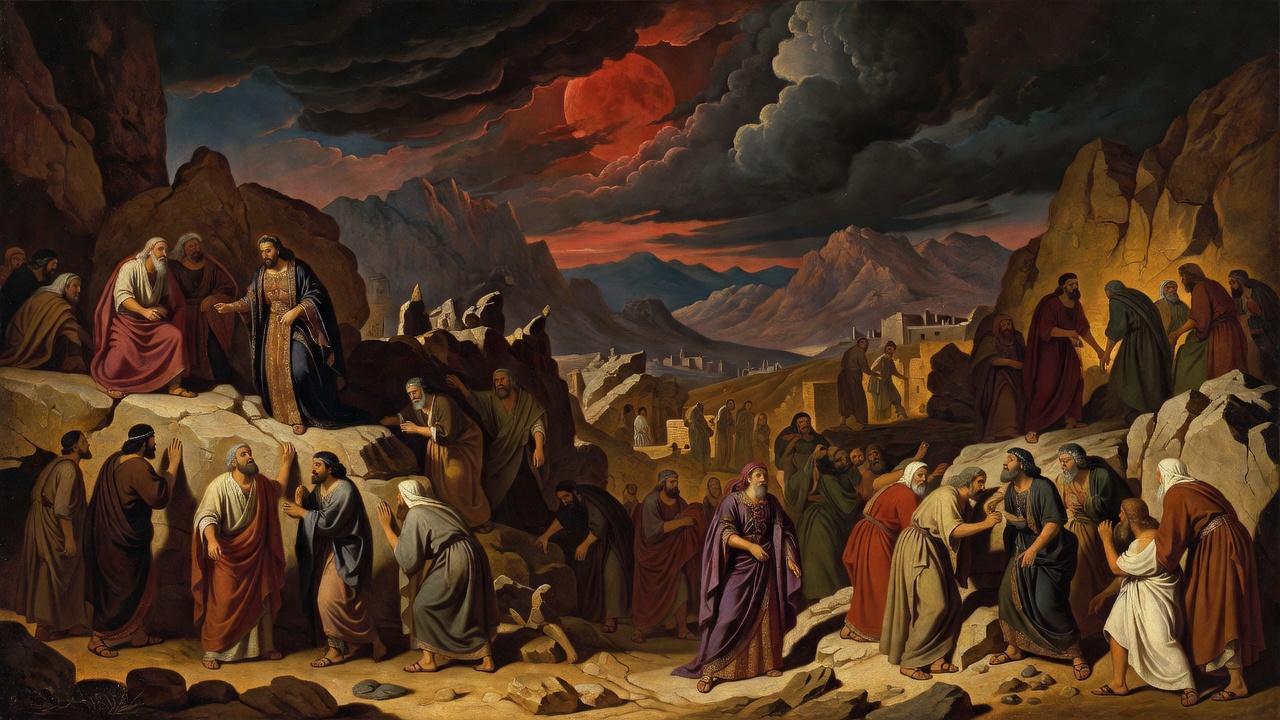
- When the fifth and sixth seals are opened, the focus shifts to the souls of slain believers waiting under the altar, followed by immense cosmic and earthly upheavals that lead people of every social station to hide in mountain caves.Sources: the Bible text itself
Notes written with AI assistance from open sources (Theographic Bible Metadata, CC BY-SA 4.0; Easton’s Bible Dictionary, public domain) and reviewed before publishing.
Credits and license for this translation
I Falami Kasafnè (New Testament)
New Testament in Blaan, Koronadal
copyright © 1995 Wycliffe Bible Translators, Inc.
Language: Koronadal Blaan (Blaan, Koronadal)
Translation by: Wycliffe Bible Translators, Inc.
Copyright Information
© 1995, Wycliffe Bible Translators, Inc. All rights reserved.
This translation text is made available to you under the
terms of the Creative Commons License: Attribution-Noncommercial-No Derivative Works.
( http://creativecommons.org/licenses/by-nc-nd/3.0/ )
In addition, you have permission to port the text to different file formats, as long as you
do not change any of the text or punctuation of the Bible.
You may share, copy, distribute, transmit, and extract portions
or quotations from this work, provided that you include the above copyright
information:
You must give Attribution to the work.
You do not sell this work for a profit.
You do not make any derivative works that change any of the actual words or punctuation of the Scriptures.
Permissions beyond the scope of this license may be
available if you contact
us with your request.
The New Testament
in Blaan, Koronadal
© 1995, Wycliffe Bible Translators, Inc. All rights reserved.
This translation is made available to you under the terms of the
Creative Commons Attribution-Noncommercial-No Derivatives license 4.0.
You may share and redistribute this Bible translation or extracts from it in any format, provided that:
You include the above copyright and source information.
You do not sell this work for a profit.
You do not change any of the words or punctuation of the Scriptures.
Pictures included with Scriptures and other documents on this site are licensed just for use with those Scriptures and documents.
For other uses, please contact the respective copyright owners.
2014-08-06
Source: http://ebible.org/bpr/ · eBible.org