Matthew 9
I Falami Kasafnè (New Testament) · Tap a verse to see its cross-references.
I kafgulê Dyisas i satu to là galyakan i lawehan
1Di satu du, lê smakay ale Dyisas di aweng, na nifalla i bong lanaw ayé, na salu ale di banwe gumdàan. 2Na nun dad lagi kel déé, na nun nebela satu to là galyakan i lawehan, milè di igeman. Na kanto teen Dyisas i bong ksalig i dad to mebe dun, manan di to ayé, “E Tò, fan-galam i nawam. Ta magfasinsya nan dad salàam.” 3Na nun dad to tamdò dad uldin Dwata fagu di ku Mosis déé. Na di kman Dyisas ayé, yé mnè di fandamla, “Ta nladan i kdatah Dwata.” 4Na gadè Dyisas i mnè di fandamla. Na yé duenam man, manan di dale, “Kan ku baling sasè i mnè di fandamyu? 5Man nawayu ku landè glalgu fmasinsya salà i to ani? Bay yé too ilè na nun glalgu ku ta man-gu di kenen, ‘Mték ge na magu ge,’ na gagu kenen. 6Na yé kayègu ku gadèyu na do, dunan i dnagit Ngà To, nun glalgu dini di tah tanà fmasinsya salà.” Na kafnge Dyisas man ayé di dale, ta talù di to là galyak, na manan, “Mték ge, nwèam i gumilèam, na mulê ge.” 7Na tadè tadag i to ayé na mulê. 8Kanto teen i kdee dad to i nimò Dyisas ayé, too ale likò na dnayenla i Dwata du mdà di kablén gnagan salngad ani di satu to.
I klak Dyisas ku Matyu
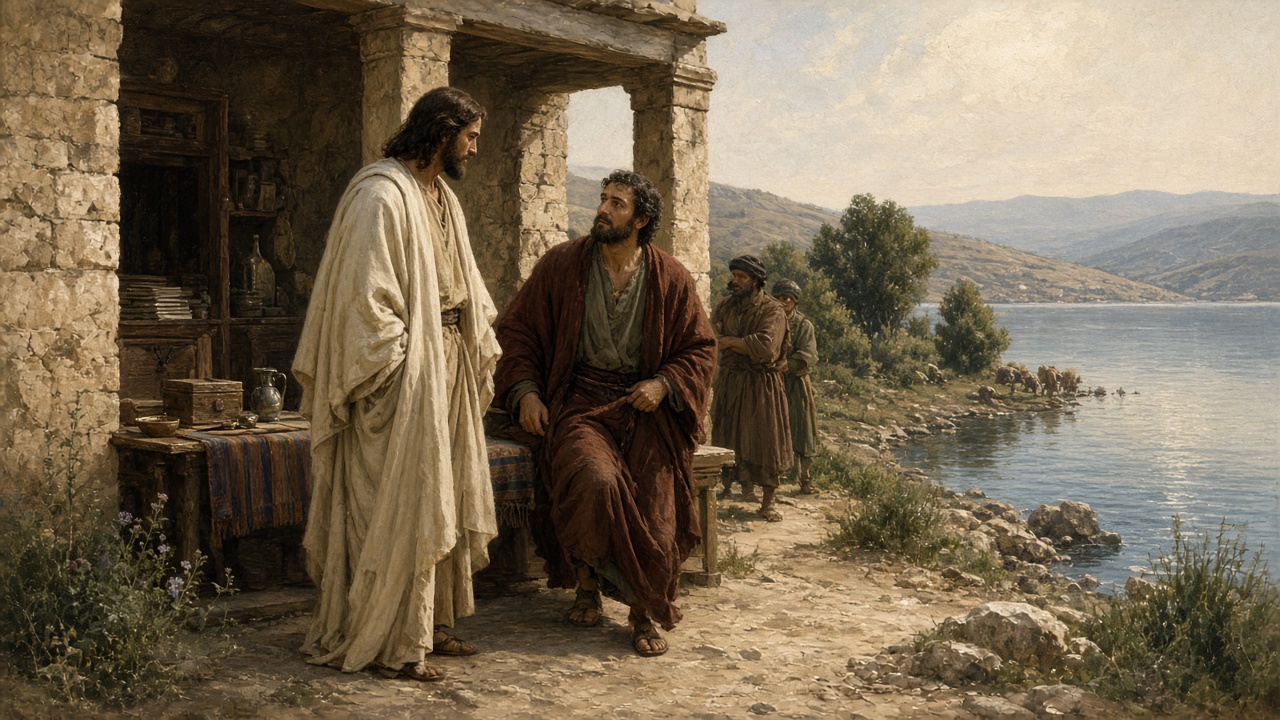
9Na lê mdà ale Dyisas, na ligòla magu, nun teenan satu lagi, yé dagitan Matyu. Déé kenen di gutalbahò i dad to gal mwè bayad i buhis du yé sén i knalaman nimò. Na man Dyisas di kenen, “Magin ge do.” Na ta tadag Matyu, na fles magin ku Dyisas. 10Na kmaan ale Dyisas di gumnè Matyu. Na di ligòla kmaan, lê nun kel déé dademe dad to gal mwè bayad i buhis na i dademe dad to gal lmafà i uldin Dwata, na kmaan ale di saféd Dyisas. 11Na lê nun dad Farisi déé, na kantola teen ayé, snalekla i dad to gal tdò Dyisas, manla, “Kan ku kmaan i to tamdò gamu di saféd i dad to gal mwè bayad i buhis na i dademe dad to lmafà i uldin Dwata?” 12Na linge Dyisas i manla ayé, na manan, “I to fandas, nun gukmamun i to mulung. Bay i to landè fdasan, landè gukmamun i to mulung. 13Na tooyu fandam i gumtatek i man ani di Tnalù i Dwata, ‘Ise ku yé toogu knayè i kabléyu dad dsù, bay yé kayègu i kasakdoyu.’ Ise ku i dad to tluh i fanngabalgu, bay yé fanngabalgu i dad to gamsalà.”
I salek gablà di kafwasa
14Na nun dad to gal tdò Dyan Gal Munyag, salu ale di ku Dyisas, na smalek ale, manla, “Kan ku là fwasa i dad to galam tdò? Bay gami na i dad Farisi, gal gami fwasa.” 15Na tmimel Dyisas fagu di fléd, manan, “Ku fkahta di dad to nlak magin samsong, là mlidù ale ku sana kdéé di safédla i lagi sansong. Bay nun du kadang ku ta là dini di safédla i lagi sansong ani, na yé klola fwasa.
I dad guflingen Dyisas gablà di kasbool i dad muna tdò na i dad falami tdòan
16“Là fakay klafang i falami falnas di labi klaweh ta baltok du ku saksang i klafang ayé, na ta baling bong i kasêan. 17Na là fakay kah di lam i labi kulit i falami binu, du keng btù i kulit na malmo i binu na lê man i kulit. Yé duenam man, yé gumkah i falami binu di falami kulit.”
I kafgulê Dyisas i libun sigi maloh litèan na i ktékan i ngà mati
18Di lam Dyisas talù, nun fdadong di kenen satu ulu di gumnè gal gustifun i dad Dyu. Na kanto kel déé, lkuad kenen di muna Dyisas, manan, “Falami mati i ngàgu libun. Beg ge magin do, na nagotam kenen du fye mték.” 19Na tadag Dyisas du magin, na lê man dad to galan tdò.
20Na di kagula, nun satu libun déé ta sfalò lwe fali klon sigi maloh i litèan. Fdadong kenen di kagol Dyisas, na nagotan kilil i saulan, 21du yé fandaman, “Ku logu gagot i saulan, mgulê agu.” 22Na di kagotan i saul Dyisas, kmangél Dyisas, na manan dun, “Fan-galam i nawam. Ta mgulê ge du mdà di nun kaftoom di do.” Na di kman Dyisas ayé, tadè mgulê i libun ayé.
23Na kanto kel ale Dyisas di gumnè Dyairus, dunan i ulu di gumnè gal gustifun i dad Dyu, fusuk kenen, na teenan i dad to salmali gal magin di kalbang, na i dademe dad to mugak mdà di klidùla. 24Na manan di dale, “Lamwà gamu. Là sa mati i ngà ani, bay lo kudang.” Na balingla kenen nadoy. 25Kanto lamwà dad to, fles Dyisas fusuk di snifil gumilè i ngà ayé klon magot i sigalan, na tadè mték i ngà. 26Na too mbel i santulen gablà di nimò Dyisas di kabal i banwe ayé.
I kafgulê Dyisas i lwe lagi butè
27Fles ale Dyisas magu mdà di banwe ayé. Na di kagula, nun lwe lagi butè tmadol ku Dyisas, manla, “E bel Dabid, begam gami kando.” 28Na kanto fusuk ale Dyisas di satu gumnè, lê magin i lwe butè ayé. Na snalekan ale, manan, “Ftoo gamu kè na gaganta gamu fan-gulê?” Na tmimel ale, manla, “Hee, Amu.” 29Na nagotan i dad matala, na manan, “Mgulê gamu du mdà di kaftooyu.” 30Na mdà déé, ta mite ale. Bay too falnau Dyisas ale, manan, “Là fakay ku tulenyu ani di balù simto dun.” 31Bay knèan, baling ale magu di kabal i banwe ayé du tulenla i ta mkel di dale.
I kafalwà Dyisas i busaw di to umu
32Na di ta kdà i dad lagi ayé, lê nun dademe dad to kel du nun nebela di ku Dyisas satu lagi umu du mdà di knè i busaw di kenen. 33Na kafnge Dyisas falwà i busaw ayé, ta gtalù i to ayé. Na too tikeng i kdee dad to, na manla, “Landè fa lmento teen gambet ani di kabal i banwe Israél.” 34Bay talù i dad Farisi, manla, “Yé mlé kenen glal falwà dad busaw dunan i gumdatah i dad busaw.”
I kakdo Dyisas di dad to
35Na magu Dyisas di kdee dad syudad na dad malnak banwe du tamdò kenen di dad gumnè galla gustifun. Yé tdòan i Fye Tulen gablà di Kagot Dwata, na fan-gulêan i kdee dad to di dad sahal tdukla. 36Na kanton teen i kdee dad to, too sè kakdon dale du too ale maflayam na magakdo ale, na salngad ale i dad bilibili landè to mifat dale. 37Na man Dyisas di dad to galan tdò, “Too mabal i kantu, bay kulang i dad to kamtu. 38Yé duenam man, mni gamu di Amuto, dunan i mfun i tanà, du fye nun dademe dekan kamtu.”
Did you know?
Mercy, Healing, and New Wine
- Matthew, son of Alphaeus, was a publican, or tax collector, at Capernaum. Jesus, coming up from the side of the lake, passed the custom-house where Matthew sat and said, “Follow me.” He had formerly been known as Levi; that same day he gave a great feast, described as a farewell, for Jesus, the disciples, and probably many of his old associates.Sources: Matthew · the Bible text itself
- Those who ask why they and the Pharisees fast so often, while Jesus’ disciples do not, are disciples of John the Baptist. John is called the forerunner; he was of priestly descent, his father Zacharias a priest of the course of Abia and his mother Elisabeth one of the daughters of Aaron.Sources: John the Baptist · the Bible text itself
- One chronology places the healing of the paralyzed man, the call of Matthew, the question about fasting, and the parable of the wineskins in AD 28.Sources: Healing the Man with Palsy · Jesus Calls Matthew · Fasting Question · Parable of the Winseskins
Notes written with AI assistance from open sources (Theographic Bible Metadata, CC BY-SA 4.0; Easton’s Bible Dictionary, public domain) and reviewed before publishing.
Places in this chapter
- Sea of Galilee · 32.819, 35.590 · verse 1
Only places identified with high confidence are shown (90% or more according to the scholarly sources compiled by OpenBible). Period map: DARE (Digital Atlas of the Roman Empire), CC BY 4.0; modern map: © OpenStreetMap contributors; places: OpenBible.info (CC BY 4.0).
Credits and license for this translation
I Falami Kasafnè (New Testament)
New Testament in Blaan, Koronadal
copyright © 1995 Wycliffe Bible Translators, Inc.
Language: Koronadal Blaan (Blaan, Koronadal)
Translation by: Wycliffe Bible Translators, Inc.
Copyright Information
© 1995, Wycliffe Bible Translators, Inc. All rights reserved.
This translation text is made available to you under the
terms of the Creative Commons License: Attribution-Noncommercial-No Derivative Works.
( http://creativecommons.org/licenses/by-nc-nd/3.0/ )
In addition, you have permission to port the text to different file formats, as long as you
do not change any of the text or punctuation of the Bible.
You may share, copy, distribute, transmit, and extract portions
or quotations from this work, provided that you include the above copyright
information:
You must give Attribution to the work.
You do not sell this work for a profit.
You do not make any derivative works that change any of the actual words or punctuation of the Scriptures.
Permissions beyond the scope of this license may be
available if you contact
us with your request.
The New Testament
in Blaan, Koronadal
© 1995, Wycliffe Bible Translators, Inc. All rights reserved.
This translation is made available to you under the terms of the
Creative Commons Attribution-Noncommercial-No Derivatives license 4.0.
You may share and redistribute this Bible translation or extracts from it in any format, provided that:
You include the above copyright and source information.
You do not sell this work for a profit.
You do not change any of the words or punctuation of the Scriptures.
Pictures included with Scriptures and other documents on this site are licensed just for use with those Scriptures and documents.
For other uses, please contact the respective copyright owners.
2014-08-06
Source: http://ebible.org/bpr/ · eBible.org