Luke 23
I Falami Kasafnè (New Testament) · Tap a verse to see its cross-references.
I kebela ku Dyisas salu di ku Pilato
1Na kafnge ayé, i kdee dad ganlal stifun déé, sdulê ale tadag, na nebela Dyisas salu di kanfe Gubirnador Pilato. 2Na tanbùla tmifù kenen, manla, “Ta gnumahmi i to ani. Fagasyatan i dadememi Dyu, na manan là fakay mlé bayad buhis di ku Sisar, i ganlal di Roma, na yé manan kenen i Mgalék Dwata mgimò harìmi.” 3Mdà ayé, snalek Pilato kenen, manan, “Ge kè Harì i dad Dyu?” Na tmimel Dyisas, manan, “Ta manam sa.” 4Na fgadè Pilato di dad ganlal di kafaglut i dad Dyu na kel di dademe dad to, manan, “Landè gadègu salàan ku gumdàgu falmayam dun.” 5Bay baling midul kakitla, manla, “Snamukan i kdee dad to di kabal Dyudiya fagu di dad tdòan. Yé gutambùan di Galili, na ta gafat i katdòan dini.”
I kebela ku Dyisas salu di ku Hérod
6Na kanto linge Pilato ayé, smalek kenen, manan, “Nè gumdà i to ani kè, mdà di Galili?” 7Na kanto gadè na yé gumdàan di Galili, dunan i banwe nagot Harì Hérod, ta feben Dyisas salu ditù di ku Hérod, du lê déé Hérod di Dyérusalém di du ayé. 8Na kanto teen Hérod Dyisas, too kenen lehew du ta dee lingen gablà ku Dyisas na ta too mlo nan kayèan sansite. Na yé kayèan ku nun nimò Dyisas tnikeng. 9Na too smalek Hérod, bay là tmimel Dyisas, balù ku landè salàan. 10Na i dad ganlal di kafaglut i dad Dyu, na dad to gal tamdò i uldin Dwata fagu di ku Mosis, tadag ale na toola tnifù Dyisas. 11Na Hérod na dad sundalun, toola kenen fyà, na nadoyla kenen. Falsakla ku Dyisas i saul too fye baweh, klola lê fulê dun gatù di ku Pilato. 12Na di du ayé, yé katbù ale Hérod na Pilato sakdo, du tagnè ale suteh nawa di munan.
I kukumla ku Dyisas di fati
13Na mdà Pilato, santifunan i dad ganlal di kafaglut i dad Dyu, na i dademe dad ganlal, na balù i dad btal to. 14Na manan di dale, “Ta nebeyu dini i to ani na manyu fagasyatan i dad to. Bay ta toogu kenen snalek di kanfeyu, na landè sa teen-gu salàan ku gumdàgu falmayam kenen. 15Na balù Hérod, landè teenan salàan, du ta lêan man fulê di gito. Salngad i teenyu ani, too landè salà Dyisas ku gumdàgu fafati kenen. 16Taman, logu fafas, klogu falwà kenen.” 17Yé duen Pilato man ayé du kat fali di Fista Du Kaglius, galan falwà satu to di blanggù.
18Bay salngan mkit i dad to, manla, “Fnati Dyisas ayé, na yé falwàam gami Barabas.” 19I to manla Barabas ayé, blanggù kenen du sanfatin i dad to magot i banwe ayé, na ta gambanò kenen. 20Na too fakdo Pilato di dad to du yé kayèan ku falwàan Dyisas. 21Bay too ale mkit, manla, “Fnati kenen! Fnatak di krus!” 22Na ta lê talù Pilato di gatlun dulê, manan, “Kan? Dét salàan? Landè teen-gu salàan ku gumdàgu fafati kenen. Yé duenam man, logu faflayam klogu falwà dun.”
23Bay too ale mkit du too ale mayè fafatak ku Dyisas di krus, na fagu di kakitla, gfisanla Pilato. 24Na mdà ayé, ta nagin Pilato i knayèla. 25Ta falwàan Barabas, i to blanggù du mdà di kasfatin i dad to magot i banwe ayé, na mdà di kbanòan, du yé fnila. Na blén Dyisas di dale du nimòla i knayèla.
I kfatakla ku Dyisas di krus
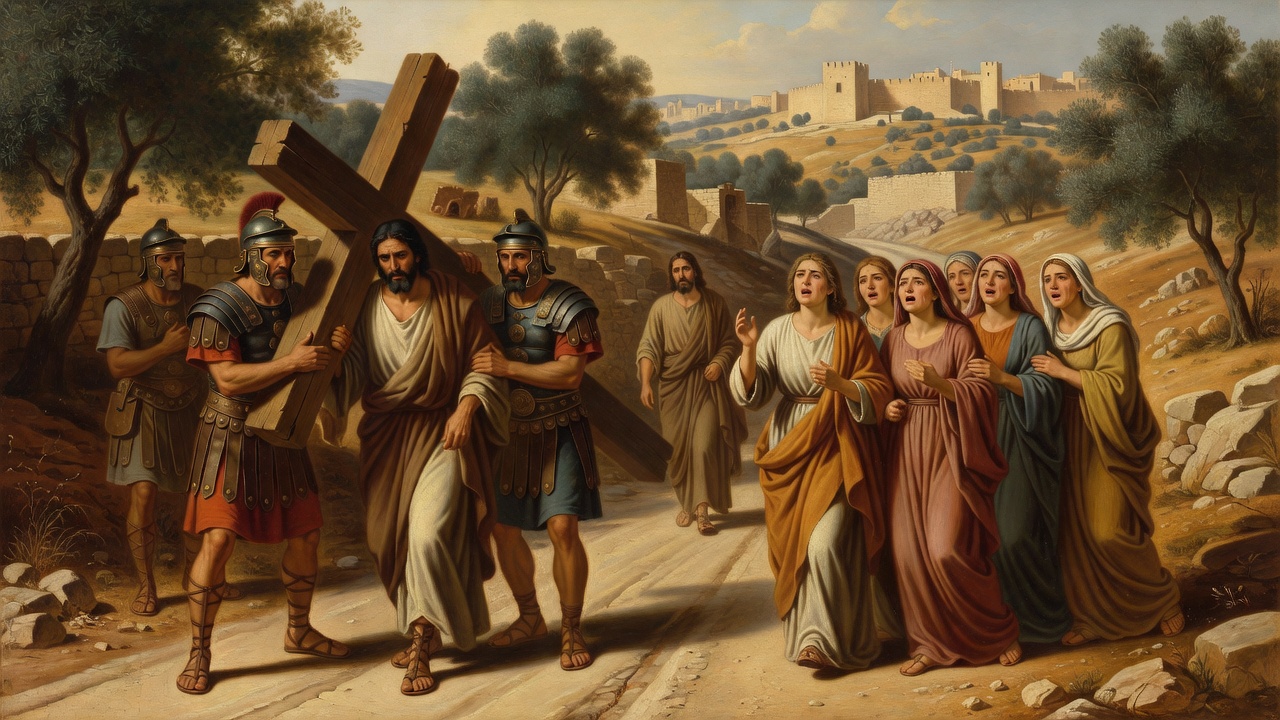
26Na kantola nebe Dyisas, nun to gsitongla, yé dagitan Simon, na mdà kenen di banwe Sirini. Salu kenen di syudad, na yé gufdun di bulul. Na kantola gsitong, fnegesla kenen mebe i krus Dyisas, na ftadolla kenen ku Dyisas.
27Na nun dee dad to tmadol ku Dyisas. Nun dad libun, too ale mngel du mdà di kalbà nawala kenen. 28Bay kmangél Dyisas, manan, “E dad libun mdà di Dyérusalém, nangyu agu nngel. Yé nngelyu moon i ktoyu na dad ngàyu. 29Du nun du kel kadang na baling man dad to, ‘Fye nawa i dad to là lmen maltien, dunan i dad libun là lmen mngà na tnutù ngà.’ 30Na di bang ayé, baling man i dad to di dad malbang bulul, ‘Tankanyu gami.’ Na manla di dad malnak bulul, ‘Lnimunyu gami fye mati gami.’ 31Du ku gaganla mbek i kayu matà, matnù fa kgaganla mbek i dad kayu ta dafuk.”
32Na lê nun lwe sasè to, nebela ale ditù du fnatila salngan di kfatila ku Dyisas. 33Na ta kel ale di bulul dnagit Banwe Klakub Ulu, na fnatakla Dyisas di krus gagin dad lwe sasè to ayé, satu gsen di bibengan na satu gsen di kwananan. 34Na dnasal Dyisas i dad to fmati kenen, manan, “E Mà, fnasinsyam i salàla, du là glabatla i nimòla.” Na sansalel i dad sundalu i klawehan fagu di kasbunut. 35Na nun dee dad to tadag déé du damweng ale, na balù i dad ganlal, nadoyla kenen, manla, “Ta falwàan i dademe dad to. Fye ku lêan falwà i kton ku kenen sa Krayst, i Mgalék Dwata.”
36Na lê fdadong déé i dad sundalu, na nadoyla kenen. Na fsafla kenen binu masam, 37na manla, “Ku ge i Harì dad Dyu, falwàam i ktom.” 38Na nun sulatla gsen tah i ulun, manan, “Ani i Harì i dad Dyu.”
39Na satu di dad sasè to gagin fnatak di krus, nadoyan Dyisas, manan, “Ise ge kè Mgalék Dwata? Falwàam i ktom na lê man gami.” 40Na mdà i satu, nngakan, na manan, “Kan? Landè klikòam di Dwata? Tlu ato slame nukum di fati. 41Na gite i gablà fnati salngad ani du nun salàta. Bay i to ani, landè salàan.” 42Na lê kenen talù di ku Dyisas, manan, “Dyisas, begam agu fandam ku ta kel ge di banwe nagotam.” 43Na tmimel Dyisas, manan, “Tulenta ge i kaglutan. Di mdu ani, ta mnè ge di safédgu di Paraiso, dunan i fan-gu gusalu.”
I kfati Dyisas
44Na di kaltu i du, tadè kmifuh i klamang banwe kel di tngà masol i du, 45du ta là mneng i du. Na i bong kurtina di gutngà i Bong Gumnè Gal Gumangamfù di Dwata, tadè kasê di gutngàan. 46Na falbong Dyisas i talùan, manan, “Mà, fagotta ge i nawagu ani.” Na kanton man ayé, ta ftoh i nawan. 47Na i ulu i dad sundalu, kanton teen i mgimò ayé, dnayenan i Dwata, manan, “Di kaglutan, i to ani too ti tluh.” 48Na i dad to stifun déé na damweng, kantola teen i mgimò ayé, ntungla kfela du mdà di sasè klidùla, na ta mdà ale mulê. 49Na i kdee dad to gmadè kenen, kel di dad libun tmadol di kenen mdà di Galili, tadag ale di gumawagan du fye teenla i kdee mkel.
I kalbangla ku Dyisas
50Na nun satu lagi, yé dagitan Dyosip. Too kenen tluh to, na balù ku kenen satu di dad to gal mukum i dad Dyu, 51là naginan i ayèla fmati ku Dyisas. Yé gumdàan di Arimatiya, satu banwe i dad Dyu, na fatanan i Kagot Dwata. 52Na salu kenen di ku Pilato, na mbal kenen du nwèan i laweh Dyisas. 53Na kafnge ayé, ta nwèan i laweh Dyisas mdà di krus, na lnabédan falnas bukay, klon mkah dun di satu ilib fakay gulambang ta fala fnge nakol di gugdak i bulul, na landè lmen lbang déé. 54Na i du kfati Dyisas, yé dula fatlagad di Du Kaftud. Na ta fan tambù i Du Kaftud nan, du ta fan sdaf i du.
55Na i dad libun ta magin ku Dyisas mdà di Galili, magin ale ku Dyosip, na teenla ilib na balù i kibò Dyosip lambang dun déé. 56Na kafnge ayé, ta mulê ale du fatlagadla dad fangbun i fakayla lunà di laweh Dyisas. Bay di du ayé, ftud ale du nimenla i uldin Dwata fagu di ku Mosis gablà di Du Kaftud.
Did you know?
Trial, Cross, and Burial
- Pontius Pilate, identified by Easton's Bible Dictionary (1897) as the sixth Roman procurator of Judea (A.D. 26–36), kept his headquarters at Caesarea but often went up to Jerusalem. The council’s accusations in this chapter are political: that Jesus was subverting the nation, forbidding the payment of taxes to Caesar, and proclaiming himself Christ, a king.Sources: Pontius Pilate · the Bible text itself
- When Pilate learned that Jesus was a Galilean and under Herod’s jurisdiction, he sent him to Herod Antipas, a son of Herod by Malthace, who was then in Jerusalem. Herod had long wanted to see Jesus and hoped for a miracle, but Jesus did not answer his questions. After Herod and his soldiers mocked Jesus and dressed him in a fine robe, they sent him back, and that day Herod and Pilate, who had been enemies, became friends.Sources: Herod Antipas · the Bible text itself
- The place of crucifixion is called The Skull; a Latin form, Calvaria, translated the Greek Kranion, which rendered the Hebrew Gulgoleth. It probably took this name from its shape, a low, rounded, bare rise somewhat like a human skull, and Scripture nowhere calls it a hill. The crucifixion took place outside the city walls and near a public road.Sources: Skull · the Bible text itself
Notes written with AI assistance from open sources (Theographic Bible Metadata, CC BY-SA 4.0; Easton’s Bible Dictionary, public domain) and reviewed before publishing.
Places in this chapter
- Galilee · 32.760, 35.527 · verses 5, 6, 7, 49, 55
- Jerusalem · 31.777, 35.234 · verses 5, 7, 19, 28
- Judea · Today: Judea 1 · 31.777, 35.234 · verses 5, 51
- Cyrene · 32.821, 21.851 · verse 26
Only places identified with high confidence are shown (90% or more according to the scholarly sources compiled by OpenBible). Period map: DARE (Digital Atlas of the Roman Empire), CC BY 4.0; modern map: © OpenStreetMap contributors; places: OpenBible.info (CC BY 4.0).
Credits and license for this translation
I Falami Kasafnè (New Testament)
New Testament in Blaan, Koronadal
copyright © 1995 Wycliffe Bible Translators, Inc.
Language: Koronadal Blaan (Blaan, Koronadal)
Translation by: Wycliffe Bible Translators, Inc.
Copyright Information
© 1995, Wycliffe Bible Translators, Inc. All rights reserved.
This translation text is made available to you under the
terms of the Creative Commons License: Attribution-Noncommercial-No Derivative Works.
( http://creativecommons.org/licenses/by-nc-nd/3.0/ )
In addition, you have permission to port the text to different file formats, as long as you
do not change any of the text or punctuation of the Bible.
You may share, copy, distribute, transmit, and extract portions
or quotations from this work, provided that you include the above copyright
information:
You must give Attribution to the work.
You do not sell this work for a profit.
You do not make any derivative works that change any of the actual words or punctuation of the Scriptures.
Permissions beyond the scope of this license may be
available if you contact
us with your request.
The New Testament
in Blaan, Koronadal
© 1995, Wycliffe Bible Translators, Inc. All rights reserved.
This translation is made available to you under the terms of the
Creative Commons Attribution-Noncommercial-No Derivatives license 4.0.
You may share and redistribute this Bible translation or extracts from it in any format, provided that:
You include the above copyright and source information.
You do not sell this work for a profit.
You do not change any of the words or punctuation of the Scriptures.
Pictures included with Scriptures and other documents on this site are licensed just for use with those Scriptures and documents.
For other uses, please contact the respective copyright owners.
2014-08-06
Source: http://ebible.org/bpr/ · eBible.org