John 10
I Falami Kasafnè (New Testament) · Tap a verse to see its cross-references.
I fléd gablà di to mifat dad bilibili
1“Too ti glut i man-gu di gamu, nè to là magu di bà takab i kukub dad bilibili, bay baling mkef, i to ani tmaku na tulisan. 2Bay i to fusuk di bà takab i kukub dad bilibili, kenen mifat dale. 3Na mdà i to mantay takab, nukàan du fafusukan i to mifat dad bilibili. Na falninge dad bilibili i talùan, na tlon dagit i kat satu bilibilin, na nalakan ale lamwà. 4Na di kalakan dale lamwà, mnè kenen tukè munala, na tmadol dad bilibili ani di kenen, du ta dilèla sa i talùan. 5Bay là ti tmadol dad bilibili ani di mahal to, bay baling ale milah du là dilèla i talùan.” 6Yé fléd tulen Dyisas di dad to, bay knèan là glabatla i gumtatekan.
7Taman, ta lê talù Dyisas di dale, manan, “Too ti glut i man-gu di gamu, na do sa bà takab kukub i dad bilibili. 8I kdee dad muna di do salu dini, dad tmaku na tulisan. Taman, là falninge dad bilibili i talùla. 9Do sa bà takab du nè to fusuk fagu di do, galwà di dad salàan. Fusuk kenen, na lamwà di kukub du fye mite gumateban. 10Yé duen i to tmaku salu dini du tmaku, na fmati, na falmo. Bay do, salu agu dini du fye gamdawat dad to i nawa too fnò. 11Do i fye mifat dad bilibili du i fye mifat, gatlagad mlé i kton di fati du mdà di dad bilibili. 12I to snukéy mifat dad bilibili na ise kenen mfun dale, di kiten i tuyun salu di dad bilibili, milah na tnagakan ale. Taman, nakét i tuyun ale, na sanbalétan ale. 13Yé duenan milah du lo kenen snukéy, na là mabtas i dad bilibili di kenen. 14Do i fye mifat dad bilibili. Ku nè kasdilèmi Mà, salngad ayé kasdilèmi dad bilibiligu, na gatlagad agu mlé i ktogu di fati du mdà di dale. 16Lê nun fa dademe bilibiligu, là fa dini ale di lam kukub ani. Yé duenam man, toogu ale lê nebe dini du nifatgu ale. Na flinge ale di talùgu, na mgimò ale lo satu lumbuk, di lo satu mifat dale. 17Na bong nawa Mà do, du gatlagad agu mlé i ktogu di fati du fye lêgu gdawat samfulê. 18Landè to gmagan fmati do, bay tadègu tan-gaad mlé i ktogu di fati. Nun kdatahgu mlé dun, na lê nun kdatahgu mawì dun, du ani i dek Mà do.” 19Kanto linge dad Dyu i man Dyisas ayé, ta lê sahal i fandamla. 20Dee di dale i man dun, “Nun busawan, na ta book. Kan ku flinge gamu di kenen?” 21Bay yé man dademe, “I to nun busaw, ise gambet ayé i talùan. Na landè kibò i busaw famgulè i dad butè.”
I là kaftoo dad Dyu di ku Dyisas
22Nun satu fista dnagit Kaftiu i Bong Gumnè Gumangamfù di Dwata di Dyérusalém, na gaslà di dangan i katno. 23Na salu Dyisas di gumnè ayé, na lmalan magu di Balkun Solomon déé. 24Na salnibut dad Dyu Dyisas, na manla di kenen, “Kilen kè ktulenam gami i kaglutan? Ku ge i Mgalék Dwata, fbatengam di gami.” 25Na tmimel Dyisas, manan, “Ta tulen-gu sa di gamu, bay knèan là ftoo gamu di do. I dad nimògu di dagit Mà, yé tmulen gablà di do. 26Bay là sa ftoo gamu du ise gamu dad bilibiligu, 27du i dad bilibiligu, falningela i talùgu, na dilègu ale, na tmadol ale di do. 28Na banlégu ale nawa landè sen, na là ti malmo ale, na landè gamlad dale mdà di lam falelgu. 29Mà i mlé dale di do, na too kenen mdatah di kdee, na landè gamlad dale mdà di lam falelan. 30Mà na do, lo satu.” 31Taman, lê mulut dad Dyu batu du dakla ku Dyisas. 32Bay man Dyisas di dale, “Ta dee fitegu di gamu i dad fye nimò ta dek Mà do. Nè kè di dad nimò ani gumdàyu mdak do batu?” 33Na tmimel dad Dyu ayé, manla di kenen, “Ise ku dad fye nimòam i duenmi mdak ge. Bay yé salàam nladam i kdatah Dwata, du lo ge to, na fasalngadam i ktom di kenen.” 34Bay tmimel Dyisas, manan, “Ta fsulat Dwata fagu di satu tugadan, manan, ‘Gamu i dad dwata.’ 35Gadèto na là gsalà i Tnalù Dwata. Ku yé katlon dad to gumlén i Tnalùan dad dwata, 36na kan ku manyu gablà di do i Mgalék Mà na i dekan dini di tah tanà, na nladgu kdatah i Dwata di logu kman dun do Ngà Dwata? 37Taman, nang gamu ftoo di do ku làgu nimò i dad nimò Mà. 38Kabay ku ta nimògu i kdee ayé, fantooyu i dad nimògu fye gadèyu na Mà mnè di do, na do, mnè agu di ku Mà.” 39Na lêla kanfè moon Dyisas, bay lamwà kenen di blengla.
40Na ta lê mdà Dyisas mifal di Dyordan, dunan i gumunyag Dyan di muna, na mnè kenen ditù di là mlo. 41Na nun dee dad to salu di kenen, na manla, “Landè tnikeng nimò Dyan di munan, kabay i kdee tulenan gablà di to ani, slame glut.” 42Na too dee dad to ditù ftoo di ku Dyisas.
Did you know?
The Good Shepherd
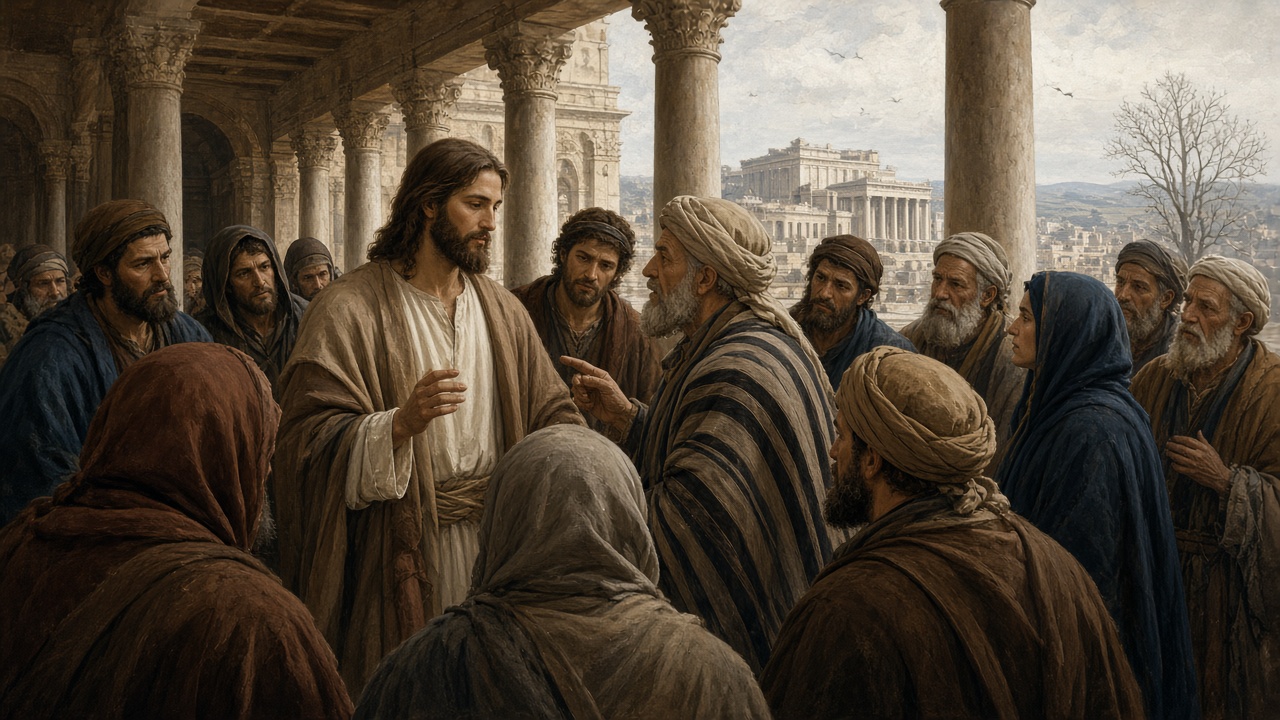
- During the Feast of Dedication in Jerusalem it was winter, and Jesus was walking in the temple courts in Solomon's Colonnade. The name Jerusalem, in a dual form, means "possession of peace" or "foundation of peace"; that form probably refers to the mountains of Zion and Moriah, or, as some suppose, to the upper and lower city. Solomon's Hebrew name, Shelomoh, means "peaceful."Sources: the Bible text itself · Jerusalem · Solomon
- A chronology of Gospel events dates the Good Shepherd teaching to AD 29, and dates a time of teaching and healing from Perea to Jerusalem to AD 30.Sources: The Good Shepherd Teaching · Teaching and Healing in Perea to Jerusalem
- Jesus then went back across the Jordan to the place where John had first been baptizing, and many people there believed in him. John was of priestly descent: his father, Zacharias, was a priest of the course of Abia, and his mother, Elisabeth, was of the daughters of Aaron. His birth, six months before that of Jesus, was foretold by an angel; those who came said that John never performed a sign, yet everything he had said about Jesus was true.Sources: the Bible text itself · John the Baptist
Notes written with AI assistance from open sources (Theographic Bible Metadata, CC BY-SA 4.0; Easton’s Bible Dictionary, public domain) and reviewed before publishing.
Places in this chapter
- Jerusalem · 31.777, 35.234 · verse 22
- Solomon’s Portico · Today: in Jerusalem · 31.777, 35.234 · verse 23
- Jordan · Today: Jordan River · 31.761, 35.558 · verse 40
Only places identified with high confidence are shown (90% or more according to the scholarly sources compiled by OpenBible). Period map: DARE (Digital Atlas of the Roman Empire), CC BY 4.0; modern map: © OpenStreetMap contributors; places: OpenBible.info (CC BY 4.0).
Credits and license for this translation
I Falami Kasafnè (New Testament)
New Testament in Blaan, Koronadal
copyright © 1995 Wycliffe Bible Translators, Inc.
Language: Koronadal Blaan (Blaan, Koronadal)
Translation by: Wycliffe Bible Translators, Inc.
Copyright Information
© 1995, Wycliffe Bible Translators, Inc. All rights reserved.
This translation text is made available to you under the
terms of the Creative Commons License: Attribution-Noncommercial-No Derivative Works.
( http://creativecommons.org/licenses/by-nc-nd/3.0/ )
In addition, you have permission to port the text to different file formats, as long as you
do not change any of the text or punctuation of the Bible.
You may share, copy, distribute, transmit, and extract portions
or quotations from this work, provided that you include the above copyright
information:
You must give Attribution to the work.
You do not sell this work for a profit.
You do not make any derivative works that change any of the actual words or punctuation of the Scriptures.
Permissions beyond the scope of this license may be
available if you contact
us with your request.
The New Testament
in Blaan, Koronadal
© 1995, Wycliffe Bible Translators, Inc. All rights reserved.
This translation is made available to you under the terms of the
Creative Commons Attribution-Noncommercial-No Derivatives license 4.0.
You may share and redistribute this Bible translation or extracts from it in any format, provided that:
You include the above copyright and source information.
You do not sell this work for a profit.
You do not change any of the words or punctuation of the Scriptures.
Pictures included with Scriptures and other documents on this site are licensed just for use with those Scriptures and documents.
For other uses, please contact the respective copyright owners.
2014-08-06
Source: http://ebible.org/bpr/ · eBible.org