Revelation 7
Dónbeenì páaníi fĩnle vũahṹ · Tap a verse to see its cross-references.
Le Dónbeenì bò le fĩ̀iminì mí ton-sáwá ɓuráa wán
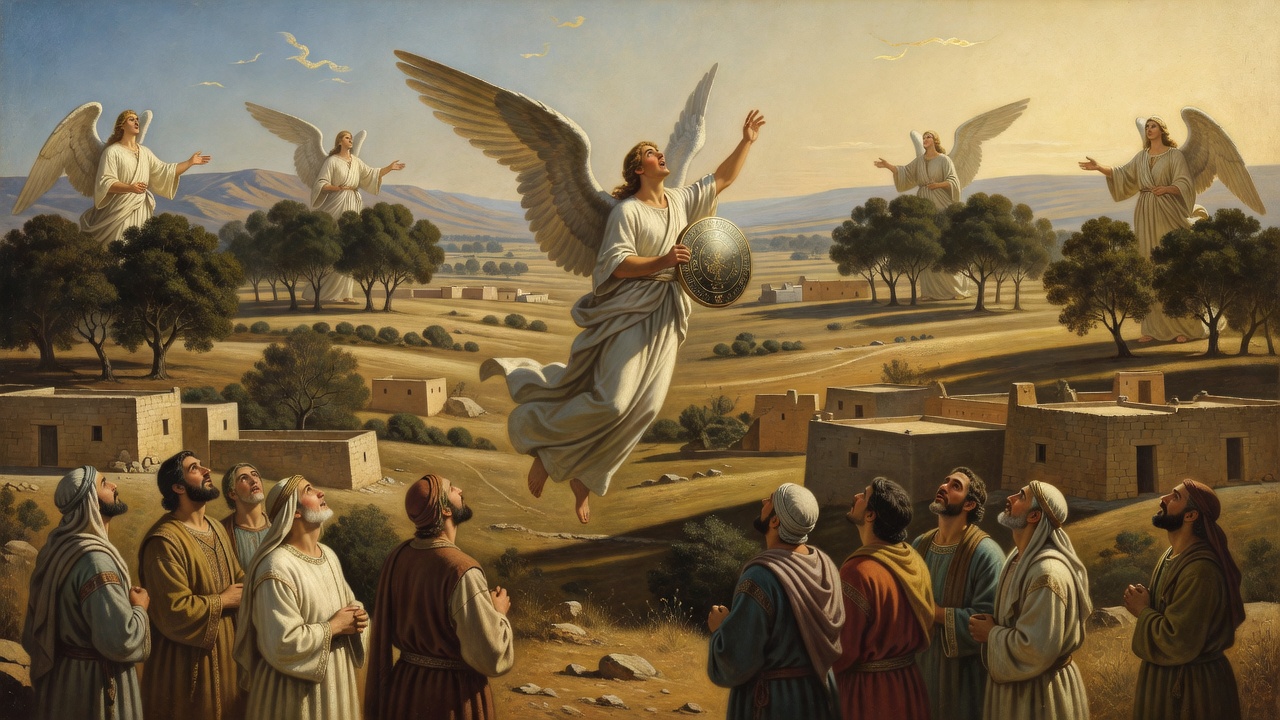
1Bṹn mɔ́n, á ĩ mɔn le Dónbeenì tonkarowà nùwã náa à ɓa dĩ̀n ho dĩ́míɲá sã́a mí bìo náa yi á hò ho pinpiró hen na ɓa dĩ̀nka yi, à ho yí và ho tá, lè mu ɲun-beera, lè hã vĩ̀nsĩ̀a wán. 2Á ĩ bĩnía le ĩ loń, á ĩ mɔn le Dónbeenì tonkaro veere ò o ló lè le wii hɛ̀ɛníi. Le dɛ̀ɛ na le Dónbeenì, dìo lé le mukãnì ɓànso, á wee bè lè mí fĩ̀iminì ó o ɓuan. Ò o bía bìo kà pɔ̃́npɔ̃́n lè le Dónbeenì tonkarowà nùwã náa mu, bìa le nɔn ho pànká yi à ɓa yáaráa ho tá lè mu ɲun-beera: 3«Ho tá lè mu ɲun-beera lè hã vĩ̀nsĩ̀a á mi dĩǹ yí yáa ká wa yí bò le fĩ̀iminì wàn Dónbeenì ton-sáwá ɓuráa wán yí vó.» 4Á bìa le fĩ̀iminì mu bò wán á ɓa zéenía ɲii làa mi. Ɓa ɓúenɓúen wó nùpua muaaseé ɓúará-hèɲun làa muaaseé náa. Ɓa ló a *Isirayɛɛle nìpomu zĩ-ɲúná ɓúenɓúen yi. 5O *Zudaa zĩ-ɲúhṹ nùpua na le fĩ̀iminì mu bò wán lée muaaseé pírú ɲun. Ó o Urubɛ̃n, là a Kaade, là a Azɛɛre, là a Nɛfutalii, là a Manasee, là a Simiɔn, là a Levii, là a Izakaare, là a Zabulon, là a Zozɛɛfu, là a Bɛ̃nzamɛɛ, bán ɓúenɓúen zĩ-ɲúná nùpua muaaseé pírú ɲun ɲun á le fĩ̀iminì mu bò wán.
Ɓa zã̀amá-kúii dĩ̀n o Pioza yahó
9Bṹn mɔ́n, á ĩ le ĩ loń, à lée minka zã̀amá-kúii na. Ɓa ɲii yí dà máa zũń. Ɓa ló ho dĩ́míɲá kãna nùpua lè mí sìíwà ɓúenɓúen yi, hàrí ɓa wé lùe lée lùe, hàrí ɓa bío bíonì lée bíonì. Ĩ mɔn ɓa à ɓa dĩ̀n mu bá-zàmu kanmúiní yahó, là a Pioza yahó. Ɓa zã́ hã sĩ̀-poa, á ɓuanka hã yùkúio vɔ̃nna à zéení le mí sĩa wan. 10Bìo kà lé bìo ɓa wee bío pɔ̃́npɔ̃́n:
«Wàn Dónbeenì na kará mu bá-zàmu kanmúiní wán là a Pioza,
lé bán kã̀nía wɛn.»
11Á ho wáayi tonkarowà ɓúenɓúen dĩ̀n kĩ́nía ɓa nì-kĩ́a ɓóní làa nùwã náa, lè ɓa bùaa bùaa náa na dĩ̀n kĩ́nía mu bá-zàmu kanmúiní yi á lií ɓúrá le yahó, á wee ɓùaaní le Dónbeenì 12ká ɓa a bío:
«*Amiina!
Mu bè-zũńminì lè ho dàńló lè ho pànká á bìo sã̀ wàn Dónbeenì yi.
Le ko lè le kɔ̃̀nbii lè ho cùkú.
Wa ko wa khòoní le à dé le bárákà fɛ́ɛɛ hã lúlúio na ɲii mía yi.
*Amiina!»
13Á ɓa nì-kĩ́a nì-kéní wã́a tùara miì: «Ɓa sĩ̀-poa ɓànsowà mu á fo zũ le? Ɓa wee lé wen?» 14Á ĩ bía nɔn wo yi: «Wàn maá, ũnɛ́n lé fo zũ ɓa.» Ó o nì-kĩ́nle mu bĩnía bía: «Bìa kà lé bìa kã́a le lònbe-be-beenì yi. Ɓa sɛɛra mí sĩ̀-zĩ́nia o Pioza cãni yi á hã wee ce pṹiapṹia. 15Lé bṹn te bìo ɓa dĩ̀nnáa le Dónbeenì bá-zàmu kanmúiní yahó. Ɓa wee sá na le Dónbeenì yi le wisoni lè mí tĩ́nàahṹ fɛ́ɛɛ le zĩ-beenì na bìo sã̀ le yi yi. Á le Dónbeenì, dìo kará mu bá-zàmu kanmúiní wán á à kɛń làa ba, á à pa ɓa bìo.
16Hĩni làa ɲu-hãní máa bĩní máa dàń ɓa.
Wii máa bĩní máa ɲí ɓa,
á wunwuró mún máa bĩní máa beé ɓa lò.
17Lé bìo ó o Pioza na wi mu bá-zàmu kanmúiní sĩi yi á à pa ɓa bìo làa bìo ó o pi-pa wee wé paráa mí pia bìo. O wé è dí ɓa yahó á à varáa le ɲun-dã́ní yi, dìo wee na le mukãnì binbirì, á le Dónbeenì á à sùuka ɓa yèn-caa ɓúenɓúen.»
Did you know?
The sealed tribes and the great multitude
- Revelation 7 numbers the sealed as 144,000, twelve thousand from each of the tribes of Israel named in the chapter. Israel was another name for Jacob, the second-born of the twin sons of Isaac and Rebekah; Easton's Bible Dictionary (1897) explains Jacob's name as someone who follows on another's heels, or a supplanter.Sources: the Bible text itself · Jacob (Israel)
- Although Reuben was the eldest son of Jacob and Leah, the list of the sealed begins with Judah and then names Reuben. The list also includes both Joseph and Manasseh; Manasseh was Joseph's elder son, and Jacob adopted him and his brother Ephraim as his own sons.Sources: the Bible text itself · Reuben · Manasseh (son of Joseph)
- After the sealing, the vision shows a multitude too large to count, from every nation, tribe, people, and tongue, standing before the throne and the Lamb, wearing white robes and holding palm branches. One of the elders says they have come out of the great tribulation and have washed their robes and made them white in the blood of the Lamb.Sources: the Bible text itself
Notes written with AI assistance from open sources (Theographic Bible Metadata, CC BY-SA 4.0; Easton’s Bible Dictionary, public domain) and reviewed before publishing.
Credits and license for this translation
Dónbeenì páaníi fĩnle vũahṹ
New Testament in Buamu (UV:box:Buamu)
copyright © 2012 Wycliffe Bible Translators, Inc.
Language: Buamu
Translation by: Wycliffe Bible Translators, Inc.
Copyright Information
© 2012, Wycliffe Bible Translators, Inc. All rights reserved.
This translation text is made available to you under the
terms of the Creative Commons License: Attribution-Noncommercial-No Derivative Works.
( http://creativecommons.org/licenses/by-nc-nd/3.0/ )
In addition, you have permission to port the text to different file formats, as long as you
do not change any of the text or punctuation of the Bible.
You may share, copy, distribute, transmit, and extract portions
or quotations from this work, provided that you include the above copyright
information:
You must give Attribution to the work.
You do not sell this work for a profit.
You do not make any derivative works that change any of the actual words or punctuation of the Scriptures.
Permissions beyond the scope of this license may be
available if you contact
us with your request.
The New Testament
in Buamu
© 2012, Wycliffe Bible Translators, Inc. All rights reserved.
This translation is made available to you under the terms of the
Creative Commons Attribution-Noncommercial-No Derivatives license 4.0.
You may share and redistribute this Bible translation or extracts from it in any format, provided that:
You include the above copyright and source information.
You do not sell this work for a profit.
You do not change any of the words or punctuation of the Scriptures.
Pictures included with Scriptures and other documents on this site are licensed just for use with those Scriptures and documents.
For other uses, please contact the respective copyright owners.
2014-04-23
Source: http://ebible.org/boxNT/ · eBible.org