John 16
Dónbeenì páaníi fĩnle vũahṹ · Tap a verse to see its cross-references.
1«Ĩ wee bío bṹn na mia à mi yí bĩní ĩ mɔ́n. 2Mi kàránló zĩní zoró á ɓa khíi wé è hè làa mia. Hàrí pã̀ahṹ ɓúi khíi dã, á bìa wee ɓúe mia pá à leéka le mí wee sá na le Dónbeenì yi kà síi. 3Ɓa à wé mu lé bìo ɓa yí zũ a Maá Dónbeenì, á mún yí zũ ĩnɛ́n 4Ká ĩ wee bío mu làa mia bèra a na ká ɓa khíi hĩ́nɔn wee wé mu, à mi bĩní leéka le ĩ bía mu nɔn mia. Ĩ tonló ɓúakáró pã̀ahṹ, á ĩ yí bía mu làa mia, lé bìo á ĩ lá wi làa mia.»
Le Dónbeenì Hácírí bè-wénia
5«Hã laà na kà wán, á ĩ bĩnía wee va yìa tonkaa mi cɔ̃́n, á mi tĩ́ahṹ á nì-kéní kà yí tùara miì le lé wen á ĩ wee va yi? 6Ɛ̀ɛ ká lé bìo á ĩ bía mu nɔn mia lé bṹn wee vá mia. 7Ká mu ɓɛ̀n lé ho tũ̀iá á ĩ mì á à na mia: Mu sṹaaní minɛ́n cɔ̃́n à ĩ lɛ́n. Ká ĩ yí wà, ó o Séenílo máa ɓuen mi cɔ̃́n. Ɛ̀ɛ ká ĩ van, á ĩ ì tonka a ó ò ɓuen mi cɔ̃́n. 8Ká a khíi ɓuara, ó o ɓueé zéení lè ho dĩ́míɲása le ɓa wee vĩ́iní míten mu bè-kora, làa bìo térénna, lè le Dónbeenì cítíi bìo dã́ní yi. 9O ò zéení le ɓa wó mu bè-kohó, lé bìo ɓa yí dó mí sĩa miì. 10O ò zéení le ĩ térénna bìo á ĩ wee va a Maá cɔ̃́n á mi máa bĩní máa mi mi bìo yi. 11Le Dónbeenì cítíi bìo dã́ní yi, o ò zéení le le Dónbeenì dɛ̀ɛnía cítío ho dĩ́míɲá na kà ɲúhṹso á síinía ɲúhṹ.
12«Bìo cɛ̀rɛ̀ɛ á ĩ lá wi à ĩ bío na mia, ká ĩ dĩǹ máa bío mu lé bìo mu here po mia. 13Ká le Dónbeenì Hácírí tũ̀iá poni ɓànso khíi ɓueé dɔ̃n, á le è wé á mi ì zũń le Dónbeenì tũ̀iá poni ɓúenɓúen. Hã bíoní na le è bío máa lé lerɛ́n mí bɛɛre cɔ̃́n. Ká bìo le ɲá ĩ cɔ̃́n ɓúenɓúen lé bṹn á le khíi bío, á à bue bìo ko à mu ɓuen bìo. 14Le è zéení ĩ cùkú lé bìo le è lá bìo á ĩ le le zéení á à bue è na mia. 15Bìo bìo sã̀ a Maá yi ɓúenɓúen bìo sã̀ miì, lé bṹn nɔn á ĩ wee bíoráa mu na mia le le è lá bìo á ĩ le le zéení ɓúenɓúen á à bue è na mia.»
Mi yara sèró mɔ́n mi sĩa á à wa
16«Hen làa cĩ́inú ká mi máa mi mi, ká cĩ́inú bṹn mɔ́n á mi ì bĩní ì mi mi.» 17Ó o nì-kenínia nùwã yɛn wee bío mín yi: «Bìo kà kúará lée webio coon? O bía: ‹Hen làa cĩ́inú ká mi máa mi mi, ká cĩ́inú bṹn mɔ́n á mi ì bĩní ì mi mi› làa bìo ó o bĩnía bía: ‹Bìo á ĩ wee va a Maá cɔ̃́n.› 18Ho cĩ́inú na ó o wee bío bìo kúará lée webio? Wa ɓɛ̀ntĩ́n yí zũ bìo ó o wee bío.»
19Bìo ó o Yeesu zũna le ɓa wi ɓa tùa wo yi, ó o bía nɔn ɓa yi: «Bìo á ĩ bía le hen làa cĩ́inú ká mi máa mi mi, ká cĩ́inú bṹn mɔ́n á mi ì bĩní ì mi mi, lé bṹn bìo yi á mi wee tùakaráa mín yi le? 20Àwa, le ĩ mì ho tũ̀iá na mia: Mi khíi wé è wá ká mi ì zúnzúrá ká ho dĩ́míɲása bán wee zã̀maka. Mi yara khíi sè, ɛ̀ɛ ká mi yara sèró mu màhã́ á à yèrèmá à wé le sĩ-wɛɛ. 21Hen ká a hã́a wee te à mu wé le lònbee o wán hón pã̀ahṹ so yi. Ká a ton vó, ò o sĩi wa, lé bìo ó o yú a kúnkúza. O wé nɔnsã le lònbee na yú a yi. 22Minɛ́n mún bìo ka kà. Bìo kà wán, á mi yara sò, ɛ̀ɛ ká ĩ bĩní ì mi mia, hón pã̀ahṹ so ká mi sĩa á à wa. Dén sĩ-wɛɛ so á nùpue máa hè yi làa mia. 23Ká dén wizonle so khíi dɔ̃n, á mi máa bĩní máa tùa miì làa bìo ɓúi. Le ĩ mì ho tũ̀iá na mia: Bìo ɓúenɓúen na mi khíi fìo o Maá cɔ̃́n ĩ yèni yi ó o ò na mia. 24Mi lá dĩǹ yí fìora bìo ɓúi ĩ yèni yi. Mi wé fìo, á mi ì yí, bèra a na à mi sĩ-wɛɛ ɲii sí.
25«Ĩ wà hã wàhio á bíaráa bìo kà ɓúenɓúen nɔn mia. Ká pã̀ahṹ ɓúi khíi dã, ká ĩ máa wé è wà wàhio máa na mia. Ĩ khíi wé è bío bìo bìo ciran o Maá wéréwéré á à na mia. 26Ká hón pã̀ahṹ so khíi dɔ̃n, á mi wé è fìo o Maá Dónbeenì yi ĩ yèni yi. Ĩ máa bío máa na mia le ĩ wé è fìo o Maá mu yi mi bìo yi. 27Mu bon. O Maá Dónbeenì mí bɛɛre wa mia, lé bìo mi wa mi á tà le ĩ ló a cɔ̃́n bìo bon á ɓuara. 28Ĩ ló a cɔ̃́n á ɓuara ho dĩ́míɲá yi. Bìo kà wán, á ĩ wee lé ho dĩ́míɲá yi á à bĩní ì va a Maá cɔ̃́n.» 29Ó o nì-kenínia bía nɔn wo yi: «Ó, o! Fo màhã́ wã́a wee bío làa wɛn wéréwéré ká fo máa wà wàhio. 30Bìo kà wán, á wa wã́a zũ le fo zũ mu bìo ɓúenɓúen. Ũ màkóo mía à ũ pa le o ɓúi tùa foǹ. Bṹn lé bìo nɔn á wa tà le fo ló le Dónbeenì cɔ̃́n bìo bon.» 31Ó o Yeesu bía nɔn ɓa yi: «Mi tà mu hã laà na kà wán le? 32Ɛ̀ɛ ká ho pã̀ahṹ lua, ho yàá ɓueé dɔ̃n vó, ká mi ì kɛ́nná á à lɛ́n mìn ɲúná yi á à día mi ĩ dòn. Ɛ̀ɛ ká ĩ mía ĩ dòn, o Maá Dónbeenì wi làa mi. 33Ĩ bía bṹn ɓúenɓúen nɔn mia bèra a na à mi yí ho hɛ́ɛrà mi páaníló làa mi bìo yi. Mi lò ò be ho dĩ́míɲá pànká-sũmáa níi yi, ɛ̀ɛ ká mi hení mi sĩa, lé ĩ dàńna hã.»
Did you know?
Departure, the Advocate, and joy after grief
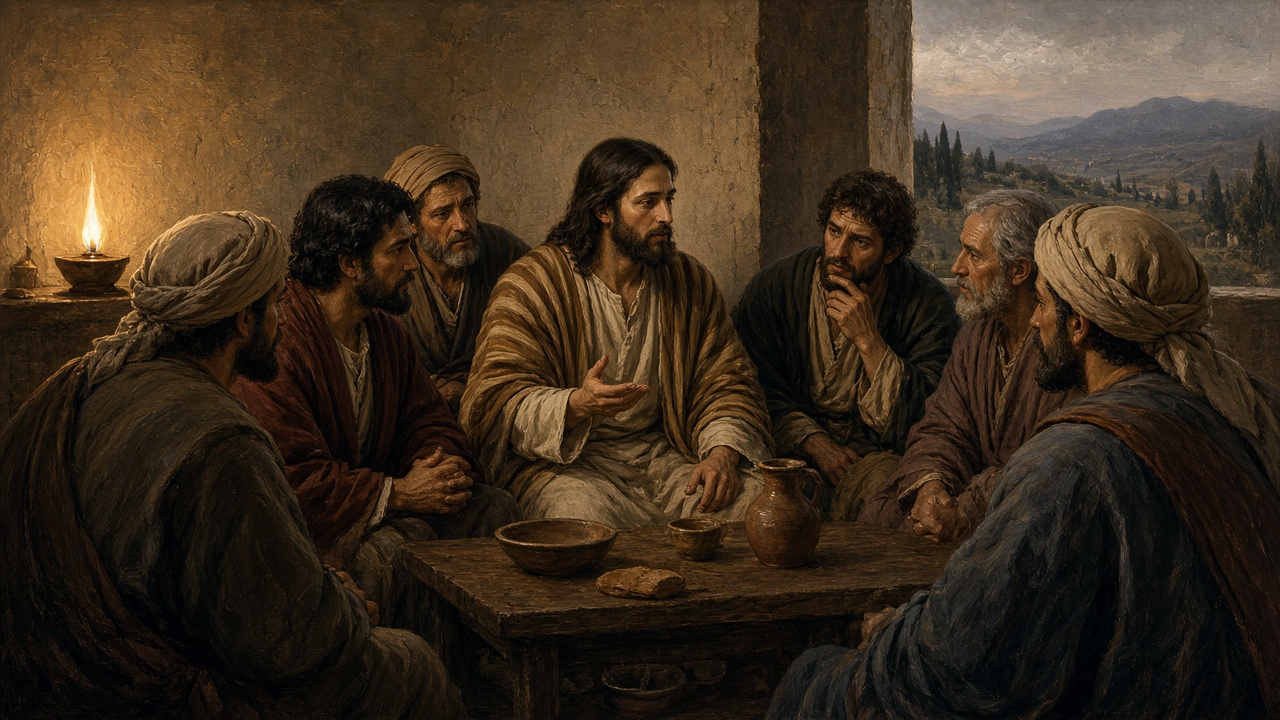
- Event notes place this chapter in the Upper Room Discourse, a one-day episode within Holy Week, which those notes list as eight days.Sources: Upper Room Discourse · Holy Week
- Jesus tells the disciples they will be put out of the synagogues. He adds that a time is coming when anyone who kills them will think he is offering a service to God, because they have not known the Father or him.Sources: the Bible text itself
- He says it is for their benefit that he is going away, because unless he goes, the Advocate will not come. When the Spirit of truth comes, he will guide them into all truth, not speaking on his own but saying what he hears and declaring what is to come.Sources: the Bible text itself
Notes written with AI assistance from open sources (Theographic Bible Metadata, CC BY-SA 4.0; Easton’s Bible Dictionary, public domain) and reviewed before publishing.
Credits and license for this translation
Dónbeenì páaníi fĩnle vũahṹ
New Testament in Buamu (UV:box:Buamu)
copyright © 2012 Wycliffe Bible Translators, Inc.
Language: Buamu
Translation by: Wycliffe Bible Translators, Inc.
Copyright Information
© 2012, Wycliffe Bible Translators, Inc. All rights reserved.
This translation text is made available to you under the
terms of the Creative Commons License: Attribution-Noncommercial-No Derivative Works.
( http://creativecommons.org/licenses/by-nc-nd/3.0/ )
In addition, you have permission to port the text to different file formats, as long as you
do not change any of the text or punctuation of the Bible.
You may share, copy, distribute, transmit, and extract portions
or quotations from this work, provided that you include the above copyright
information:
You must give Attribution to the work.
You do not sell this work for a profit.
You do not make any derivative works that change any of the actual words or punctuation of the Scriptures.
Permissions beyond the scope of this license may be
available if you contact
us with your request.
The New Testament
in Buamu
© 2012, Wycliffe Bible Translators, Inc. All rights reserved.
This translation is made available to you under the terms of the
Creative Commons Attribution-Noncommercial-No Derivatives license 4.0.
You may share and redistribute this Bible translation or extracts from it in any format, provided that:
You include the above copyright and source information.
You do not sell this work for a profit.
You do not change any of the words or punctuation of the Scriptures.
Pictures included with Scriptures and other documents on this site are licensed just for use with those Scriptures and documents.
For other uses, please contact the respective copyright owners.
2014-04-23
Source: http://ebible.org/boxNT/ · eBible.org