Revelation 21
Píívyéébé ihjyu: jetsocríjyodítyú cáátúnuháámɨ · Tap a verse to see its cross-references.
Béhné iiñújɨma níjkyejɨ
1Átsihdyúu idyé ó ájtyumɨ́ béhné iiñújɨ́ íévéhóówari íjcyánéhjɨma bóhówaavéné ɨ́hdéenéhjɨ́ tsúúca wágóóóvéné boóne. Árónáacáa tsáhájuco móañe íjcyatúne. 2Áijyúu o ɨ́ɨ́ténáa béhné Jerotsaréé niityé níjkyéjɨtu Píívyéébedítyu. Ácoomíi tsaímíyé ɨ́ɨ́né imíjyaú éhne múúne walle ityájɨ́váné wañéhjɨ́ pañe ímíbájkímyeídyu. 3Áánáacáa tsaapi níjkyéjɨtu kéévánécoba nééhií:
—Ícyooca Píívyéébe ihñéjtéj pɨɨne íjcyaabéréjuco diityéké túkévéjtsoíñe. Áábema íjcyaímyé tsaímiyéjuco. 4Áámema tsáhájuco kímóóve, dsɨjɨ́vé, panévá ɨ́cúbáhraméí, íjcyájúcóóityú tsúúca dibye páneere tsíhdyuréjuco cápáyoácónélliíhye.
5Ehdúu dibye nééné boone íavyéjú ijyáwá hallúrí ácuúcunúúbé nééhií:
—Panéváré béhnéréjuco o ípívyejtsóne.
Átsihdyúu oke neébe:
—Cáátunu íñe úúma o íhjyuváne. Tsá álliu tene íjcyatúne. Muurá ɨ́mɨáánéré teéne. Aane múu cáhcujtsóhi.
6Átsihdyúu tsiiñe oke neébe:
—Áyu tsúúca páneere muhdú o néhdújuco pájtyene. Aabe panévatúré ɨ́htsútuube tapíívyema o íjcyátuube iíjcyadúré o íjcyaabe ímichi téhɨjpɨ oo páneerée o ípívyéjtsoóbe. Áhdure nɨ́jke oo páneere o nɨ́jkévátsóiíbye. Aabe áátsɨɨmédú nééme ímítyunévú táhjátsámeítyúmé tsaímíyé iíjcyáíyóneri tsúúrámeímyeke ó ájcuú ɨ́mɨá bóhɨɨvu áhdóratúne. Áámé Piivyéébé ó íjcyaáhi. 8Áánetu oke iúráávyéné déjúcotu ɨɨ́cúbáhrámeííyóneri iíllityéne cáhcújtsotúmee, dsɨ́jɨvétso múnaa, íhdícyámema dómácócatsíhijcyámee, níjcyotájteke dúúrúvahíjcyámee, waabyénu múnaa, állíu múnaa, éhdume wágóóóveé cúújuwa atsóóperémá péétécunúwá pañévu. Ehdu botsíi ávyétá wágoóóveréjuco ditye méénuíñe. Ehdúu oke Píívyéébe nééhií.
Béhcóómi Jerotsarée
9Átsihdyúu tsaapi níjkyéjɨ múnáajpi éhnée 7-mevádítyú nihñéenéré ɨ́cúbáhraméí íjcyáíhlloma íjcyaabe oke nééhií:
—Cáhawáá uke o úújétso Obééjáwuúdú néébé uráávye múnaa éhne múúne tsáápí taaba íjcyadu néémedívu. 10Aanée teene naavédú nééne o ɨ́ɨ́téné pañe oke tsajtyéébé cáméhbáú nɨ́jcaúvu. Átsihdyúu oke úújétsoobe Píívyéébe cóómí Jerotsaréé imíwu nécoomi níjkyéjɨtu ííñujɨ́vú níítyécoomívu. 11Ácoomítyúu ávyeta Píívyéébé ámɨ́tsaráhcó cádiúcunú éhne ‘jájpeé’ némeíñé neewáyú ‘raúráú’ nééu imíwu ‘rutúrútú’ néhduú. 12Ácoomí mɨ́jcóo cáámé mɨ́jcócoba ávyéta pɨ́ɨ́mɨ́ némɨjcótú 12-wava lléhowááne. Panéjcuvátúu 3-wavátsá 4-tsɨhjɨ́vatu. Áwáhjɨtúu ijraéémú dohjɨ́bá 12-neva íjcyáne mémeháñé caatúvá téwavádu. Áwahjɨ́ɨ níjkyéjɨ múnaa tsáápiitsa tehméhi. 14Áhdurée idyé témɨjcótú 12-uva néwáyúcobáné ímichi témɨjco éjkeúhjɨ. Áúhjɨtúu idyé téuvádú tsáápiitsa Obééjáwuúdú néébé mamyému mémeháñé caatúváhi.
15Áijyúu diibye níjkyéjɨ múnáajpi óóma íhjyúváábedi óórówa eevéwá dibye tééwari técoomi iééve páneere témɨjco íllehówáánemájuco. 16Ácoomíi ávyeta tsahdú cóómíyé páhijyáwá nécoomi muhdú mɨ́amúnaa meéévehíjcyádú panéjcuváré icyáámema íwatyúúve éhnéjcú ééveebe tsahájchotáré 2,200 kiróómetro. Áánetúu técoomí mɨjcój pɨ́ɨ́mɨ́ ééveebe 64 ééveta.
18Ámɨjcóo méénúmeí tsanééré ‘jájpeé’ némeíñé newáyúúnetu. Áánetúu ipácóómí tsanééré óórótu méénúmeícyóómí mɨ́ɨ́cúmɨjɨ́dú ɨ́ɨ́né imíjyaú ‘rutúrútu’. 19Ácoomí mɨjcóo ímichi éjkéné newáyúcobáné ícyáávétsámeí ‘jájpeé, tsapííroo, áágataa, ejmeráádaa, óónitsee, coonaríínaa, critsóóritoo, berííroo, topáátsioo, critsopráátsaa, jatsíjtoo, amatíjtaa’, némeíñé newáyúúné imíwu páhduváré néuhjɨ́tu. 21Áánetúu técoomí mɨjcó llehówááné 12-wava méénúmeí téhdunéré 12-uva péérá newáyúúnetu. Áánetúu pañétúejɨ́jtó técoomí ulléjɨ́jtó téénere óórótu méénúmeíjɨ́jtó mɨ́ɨ́cúmɨjɨ́dú ímíwu ‘rutúrútu’.
22Árónáacáa ihdyu tsá o ájtyúmɨtú duurúvaja técoomíyí panévatúré ɨ́htsútumútsí Obééjáwuúdú néébema Píívyéébemútsí tééjadu néémutsi íjcyánélliíhye. 23Ácoomi muurá tsáhájuco núhbamútsí ájchúnej tééveri íjcyáityúne. Muurá ihdyu Píívyéébé ámɨ́tsaráhcoréjuco Obééjáwuúdú néébedítyú ájchúcunúnej tééveri técoomi íjcyaíñe. 24Áábej tééveri pámeere mɨ́amúnaa panévá iiñújɨ́ɨ́né avyéjujtémá tsaímíyé íjcyame técoomi ávyéjújtsoóhi. 25Ácoomí llehówááné tsá wátáhájcatyéityú tene múijyú ííjyunúítyúnélliíhye. 26Muurá técoomívú panévá iñújɨ́ɨ́né avyéjú dóbééveéhi. 27Ácoomíyí tsá ɨɨná ímityúné íjcyáityúne. Tsá núcójpɨ́tsó nénehjɨ méénúmema álliúúmé téhullévú úújetéityúne. Apáámyéré ihdyu múhdumé pájtyetéme mémeháñé Obééjáwuúdú néébedi íjcyáháámɨtu cáátuvámé técoomívú úújéteéhi.
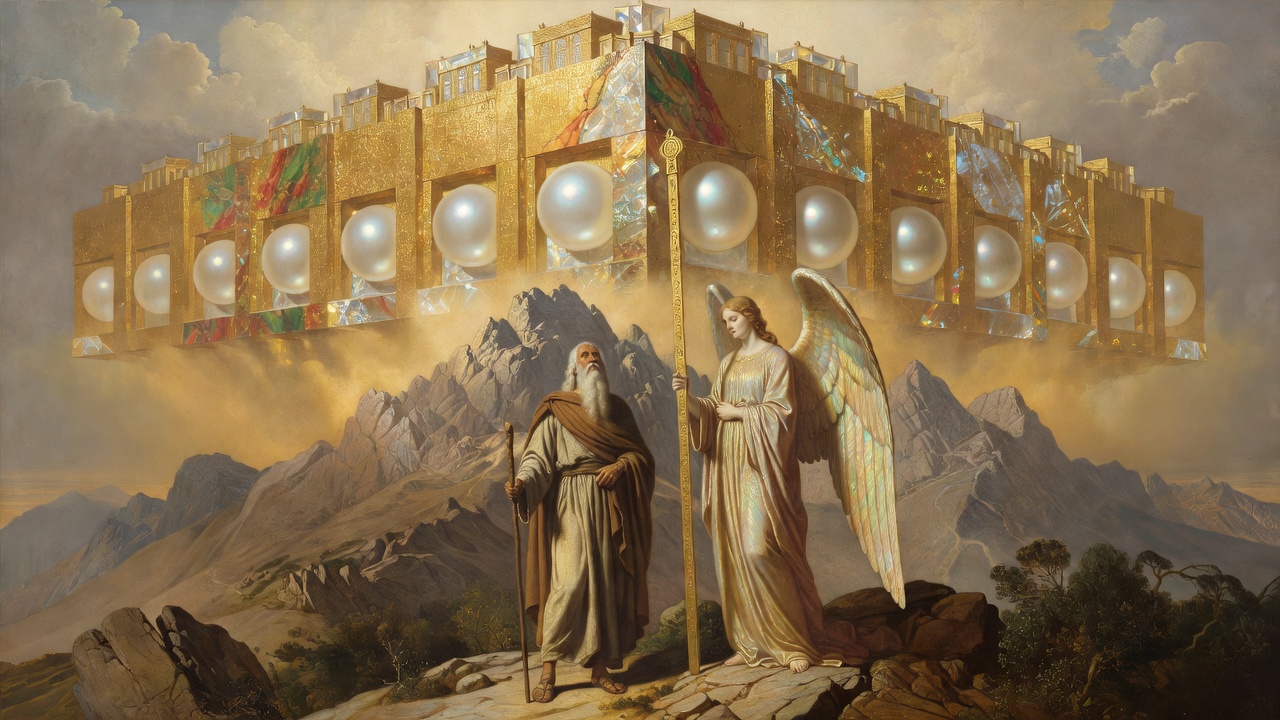
Did you know?
The New Jerusalem
- In this vision the city coming down from heaven is called the holy city, the new Jerusalem. Jerusalem was also known as the holy city and the city of God, and in Arabic it is el-Khuds, meaning the holy. Its name is in a dual form and means possession of peace or foundation of peace.Sources: the Bible text itself · Jerusalem
- The seer is carried in the Spirit to a great and high mountain and shown that holy city descending. Jerusalem is described as a mountain city enthroned on a mountain stronghold, and the dual form of the name probably refers to the two mountains on which it was built, Zion and Moriah, or, as some suppose, to the upper and lower city.Sources: the Bible text itself · Jerusalem
- The city wall has twelve gates, three on each side, inscribed with the names of the twelve tribes of Israel. Israel is another name for Jacob, explained as one who follows on another's heels, or as a supplanter.Sources: the Bible text itself · Jacob (Israel)
Notes written with AI assistance from open sources (Theographic Bible Metadata, CC BY-SA 4.0; Easton’s Bible Dictionary, public domain) and reviewed before publishing.
Places in this chapter
Only places identified with high confidence are shown (90% or more according to the scholarly sources compiled by OpenBible). Period map: DARE (Digital Atlas of the Roman Empire), CC BY 4.0; modern map: © OpenStreetMap contributors; places: OpenBible.info (CC BY 4.0).
Credits and license for this translation
Píívyéébé ihjyu: jetsocríjyodítyú cáátúnuháámɨ
New Testament in Bora (PE:boa:Bora)
copyright © 2008 Wycliffe Bible Translators, Inc.
Language: Bora
Translation by: Wycliffe Bible Translators, Inc.
Boara [boa], Peru
Copyright Information
© 2008, Wycliffe Bible Translators, Inc. All rights reserved.
This translation text is made available to you under the
terms of the Creative Commons License: Attribution-Noncommercial-No Derivative Works.
( http://creativecommons.org/licenses/by-nc-nd/3.0/ )
In addition, you have permission to port the text to different file formats, as long as you
do not change any of the text or punctuation of the Bible.
You may share, copy, distribute, transmit, and extract portions
or quotations from this work, provided that you include the above copyright
information:
You must give Attribution to the work.
You do not sell this work for a profit.
You do not make any derivative works that change any of the actual words or punctuation of the Scriptures.
Permissions beyond the scope of this license may be
available if you contact
us with your request.
The New Testament
in Bora
© 2008, Wycliffe Bible Translators, Inc. All rights reserved.
This translation is made available to you under the terms of the
Creative Commons Attribution-Noncommercial-No Derivatives license 4.0.
You may share and redistribute this Bible translation or extracts from it in any format, provided that:
You include the above copyright and source information.
You do not sell this work for a profit.
You do not change any of the words or punctuation of the Scriptures.
Pictures included with Scriptures and other documents on this site are licensed just for use with those Scriptures and documents.
For other uses, please contact the respective copyright owners.
2014-04-22
Source: http://ebible.org/boaNT/ · eBible.org