Matthew 3
Píívyéébé ihjyu: jetsocríjyodítyú cáátúnuháámɨ · Tap a verse to see its cross-references.
Tsojtsó múnáajpi Jóáa úwaabóne
1Téijyúhjáa Jóáa tsojtsó múnáajpi úwáábohíjcyá mɨ́amúnáake Jodéá iiñújɨri ɨ́ɨ́néubárá píívyétútsihyi. 2Íllúhjáa úwáábohíjcyaábe:
—Méɨhvéjtsó ímítyú ámuha meícyahíjcyáne. Ááne ámúhá ɨ́jtsaméí mécápayóóvé ɨ́mɨánejcúvuréjuco. Muurá níjkyéjɨri íjcyaabe Píívyéébe íavyéjúejte meíjcya meke újcuíñé tsúúca méhdivu pɨɨhɨ́jucóóhií.
3Diibyéhjáa Jóáádityu Píívyéébé ihjyú uubálle múnáajpi Itsaíá nééhií:
Méllééboó ɨ́ɨ́néubárá píívyétúné iiñújɨri íjcyaabe keeváwu íllu úwaabóne: “Méímibáávyé ímítyú ámuha meícyahíjcyánetu tsaímíyéjuco ámuha meíjcyámeke Ávyéjuube iájtyumɨ́vaki.”
4Aanéhjáa diibye Jóáa camééllómú ɨhjɨ́netu méénúmeíñé wajyámúúnema íjcyáábéj pɨɨnétú ócájɨmɨ́ɨ́hé chiúcunúhi. Aabéhjáa tséréémuke dohíjcyáhi. Téhduréhjáa íímúhojpácyó ádohíjcyaábe. 5Áábé uwáábóhjáa illéébúcunú tsáácunúhijcyámé pahúllevátú Jerotsarée múnaaa, pámeere teene Jodéá iiñújɨ múnaa, Joodááj pɨɨhɨ́rí íjcyáné iiñújɨ múnaa, íjcyame. 6Áámedítyúhjáa muhdú iícyahíjcyanéhjɨ́ úúbállémeímyekéjuco dibye tsótsohíjcyáné teene Joodáatu.
7Áijyúhjáa tétsihyi mítyame paritséó imyémé íjcyáha múnáama, tsadotséó imyémé íjcyáha múnaa íjcyame idyé imíllerá téhdure itsójtsótsámeíñé peecútére. Árómekéhjáa íllure tsɨjpájuúbe. Neebéhjápeé:
—Ávyeta ámuha ííñimyémúeméjté meíjcyámeke ¿múha ámúhakye néé peecútéré ámuha teene meméénúneri mepájtyetéiyóné Píívyéébe meke méimítyuháñé hallútú ɨ́cúbáhraíñé méúmɨ́wari íjcyánetu? 8Ɨ́mɨááné ámuha metsójtsótsámeíñé meímílléhajchíí ímityúné ámuha meícyahíjcyáné meɨ́hvéjtsóne ɨ́mɨáámeréjuco meíjcyá tééneréjuco ámúhadítyú ibóhówaúcunúki. 9Tsá múu néétune: “Muha muurá Aavaráaúvúj tsɨɨménémúhaabe meíjcyámeke tsá ɨɨná múúhakye pajtyéityúne.” Tsá múu ehdu íhjyúvatúne. Muurá íñe néwayúúné íjcyárónetu Píívyéébe ípívyéjtsóiyá tsíjtyeke Aavaráaúvúj tsɨɨménémúháábeke. 10Aabe muurá téhmehíjcyá ímítyúmeke iwáágóoíñé éhne múúne tsaapi ibájtsoháñetu ímiñe néévátuhéhjɨ́ iíllóne cóvajtsódu. 11Muurá ihdyu ɨ́mɨááné ámúhakye ó tsótsohíjcyá nújpácyori ámúhá imítyú ámuha meɨ́hvéjtsómé ɨ́jtsaméí tsíhdyuréjuco cápáyóóvémeke. Áánetu ihdyu íjcyaabe táhboone úwáábóiibye ávyeta táehnííñevu ɨ́htsútuube íjcyáábeke íjtyúhápáájɨ́ubáré o tácórɨúcu dííbyedívú o pɨ́ɨ́hɨ́véítyúroóbe. Diibye ihdyu ɨ́mɨááné cáhcújtsómé pañévú pícyoó Píívyéébé Apíícho. Áánetu cáhcújtsótúmeke cúújúwá pañévú waagóóiíbye. 12Aabe muurá mɨ́amúnáake iímíbájchómeke dówajcároó ímítyúmedítyu. Ááne tsaímíyé pícyóóiibye diitye ɨ́mɨáámeke. Áánetu ímítyúmeke waagóóiibye cúújúwá pañévú éhne múúne tríígotu íimíúhjɨ́ meújcúne íatéréene téjuuhójɨma mecóvajtsódu. Ehdúhjáa paritséómuke neebe Jóáaá.
Jetsóó tsójtsótsámeíñe
13Téijyúhjáa Gariréá iiñújɨtu Jetsóó péé Joodáavu Jóáa téhulle íjcyáábe éllevu dííbyedívú itsójtsótsámeíki. 14Árónáacáhjáa Jóáa néé dííbyeke:
—¿Aca muhdú cáábyerá uke ó tsójtsoó oke u tsójtsóíyóóbeke?
15Árónáacáhjáa neebe dííbyeke:
—Árónáa ihdyu ú méénuú tehdu Píívyéébé ímillédújuco.
Ehdúhjáa dibye néénéllii Jóáa tsojtsó dííbyeke. 16Aabéhjáa itsójtsótsámeítsihdyu íjchívyeebe ɨ́ɨ́ténáa cáámetu Píívyéébé Apííchó ɨ́juuúdú bóhówaavéné niityé dííbyedívu. 17Áánáacáhjáa idyé téhullétúré cáámetu Píívyéébe nééhií:
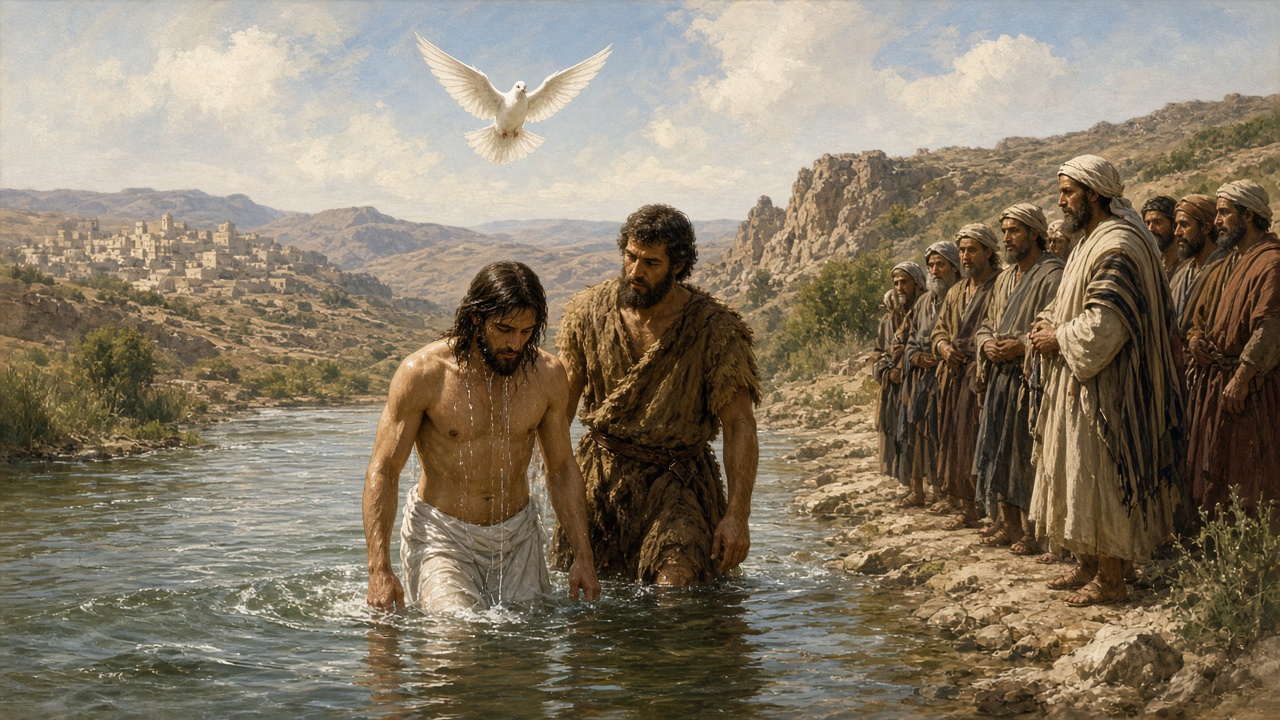
—Áánu Hájchíwúuke o wájyúúbedi mítyane ó imíjyúúhií.
Did you know?
Repentance and Baptism at the Jordan
- Matthew identifies John the Baptist as the one spoken of through the prophet Isaiah: a voice calling in the wilderness, “Prepare the way for the Lord.” Easton's Bible Dictionary (1897) records that John’s mission was the subject of prophecy, citing this passage, Isaiah 40:3, and Malachi 3:1, and that he was of priestly descent—his father Zacharias a priest of the course of Abia, and his mother Elisabeth of the daughters of Aaron. A chronology dates both the beginning of John’s ministry and his baptism of Jesus to AD 26.Sources: the Bible text itself · John the Baptist · John the Baptist Begins Ministry · John Baptizes Jesus
- John came preaching in the wilderness of Judea, and people went out to him from Jerusalem, all Judea, and the whole region around the Jordan, confessing their sins and being baptized in the Jordan River. Easton's Bible Dictionary (1897) notes that under the Romans, in the time of Christ, Judea denoted the southernmost of the three divisions of Palestine, as distinguished from Galilee and Samaria, and included the territories of Judah, Benjamin, Dan, Simeon, and part of Ephraim. Jesus came from Galilee—called Galil by the Jews—to the Jordan to be baptized by John.Sources: the Bible text itself · Judea · Galilee
- John warned the Pharisees and Sadducees not to rely on the claim, “We have Abraham as our father,” saying that God could raise up children for Abraham from the stones. Easton's Bible Dictionary (1897) explains the name Abraham as “father of a multitude” and describes him as the son of Terah, named before his older brothers because he was the heir of the promises.Sources: the Bible text itself · Abraham
Notes written with AI assistance from open sources (Theographic Bible Metadata, CC BY-SA 4.0; Easton’s Bible Dictionary, public domain) and reviewed before publishing.
Places in this chapter
- Judea · Today: Judea 1 · 31.777, 35.234 · verses 1, 5
- Jerusalem · 31.777, 35.234 · verse 5
- Jordan · Today: Jordan River · 31.761, 35.558 · verses 5, 6, 13
- Galilee · 32.760, 35.527 · verse 13
Only places identified with high confidence are shown (90% or more according to the scholarly sources compiled by OpenBible). Period map: DARE (Digital Atlas of the Roman Empire), CC BY 4.0; modern map: © OpenStreetMap contributors; places: OpenBible.info (CC BY 4.0).
Credits and license for this translation
Píívyéébé ihjyu: jetsocríjyodítyú cáátúnuháámɨ
New Testament in Bora (PE:boa:Bora)
copyright © 2008 Wycliffe Bible Translators, Inc.
Language: Bora
Translation by: Wycliffe Bible Translators, Inc.
Boara [boa], Peru
Copyright Information
© 2008, Wycliffe Bible Translators, Inc. All rights reserved.
This translation text is made available to you under the
terms of the Creative Commons License: Attribution-Noncommercial-No Derivative Works.
( http://creativecommons.org/licenses/by-nc-nd/3.0/ )
In addition, you have permission to port the text to different file formats, as long as you
do not change any of the text or punctuation of the Bible.
You may share, copy, distribute, transmit, and extract portions
or quotations from this work, provided that you include the above copyright
information:
You must give Attribution to the work.
You do not sell this work for a profit.
You do not make any derivative works that change any of the actual words or punctuation of the Scriptures.
Permissions beyond the scope of this license may be
available if you contact
us with your request.
The New Testament
in Bora
© 2008, Wycliffe Bible Translators, Inc. All rights reserved.
This translation is made available to you under the terms of the
Creative Commons Attribution-Noncommercial-No Derivatives license 4.0.
You may share and redistribute this Bible translation or extracts from it in any format, provided that:
You include the above copyright and source information.
You do not sell this work for a profit.
You do not change any of the words or punctuation of the Scriptures.
Pictures included with Scriptures and other documents on this site are licensed just for use with those Scriptures and documents.
For other uses, please contact the respective copyright owners.
2014-04-22
Source: http://ebible.org/boaNT/ · eBible.org