Leviticus 24
A Nitana Vure · Tap a verse to see its cross-references.
A Vinara ni Matakari a Lam
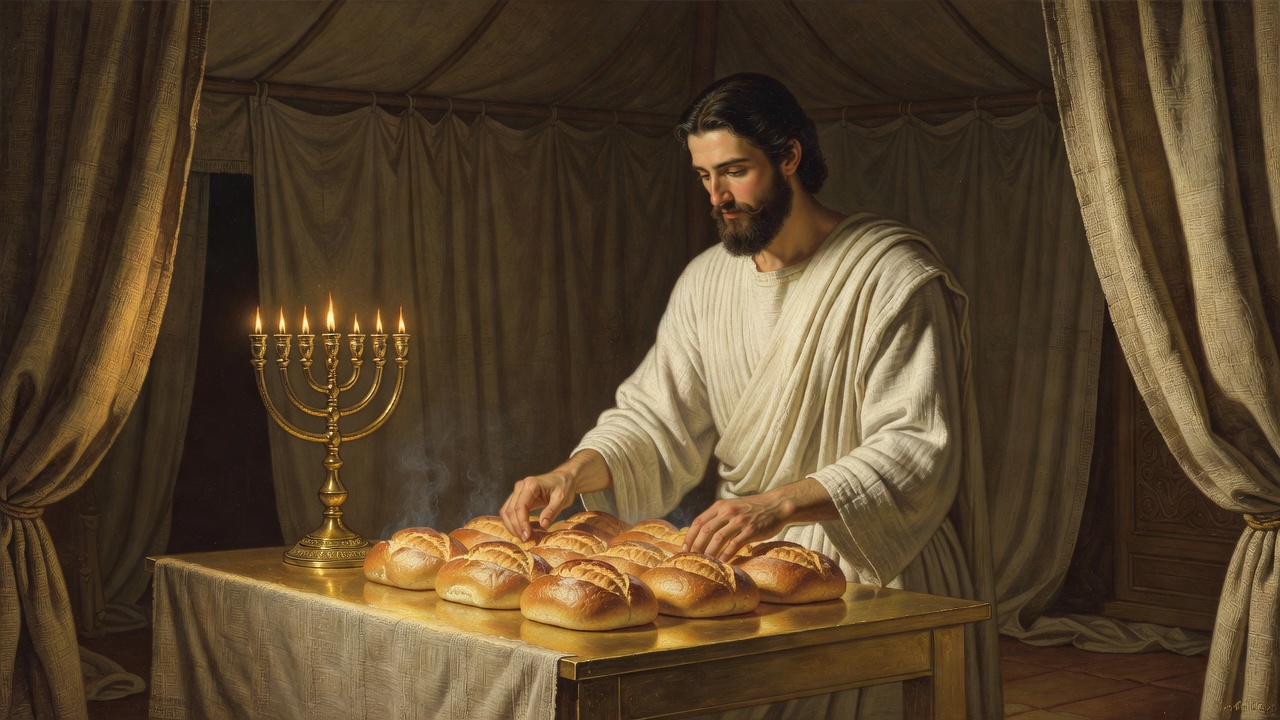
1E BAKOVI DAGI i takia e Moses, 2“O vakuku e huriki a Israel ri gi bole valai a namona oliv, ne vona a maka lam ri tabuli pololilo na kape nau. E huriki a prister ri gi nami na rodo vakaroro a lam nga. 3E Aron ge nami ria na malunga liu, ri gi para na rodo ge harena na hatelanga pokopoko. A lam nga ri gi tabuli polovavo na kala dagi i naviri mule a Tava na Ngava Dagi na Kape na Vaponga. A vinara iea, a habia ne mua, mu gu ramai vakaroroa. E huriki a hamone mua ranga, ri gi ramaia. 4E Aron ge matakari kamumu a maka lam ri tabuli langa na butu ni rata na gol kabakaba, ri gi para vakaroro na matane BAKOVI DAGI.
A Bret Ni Habi ne BAKOVI DAGI
5“O bole a plaoa kamumu o rata a bret ge ravulu a polona i rua. O guru tala a kilo ge rua na plaoa, o ratea a bret ge taku. 6Muri o ru a bret nga na dede ni rata na gol na matagu. O ru na tete ge rua a maka bret, a bret ge polotara na tete i taku. 7O ru ranga havu mangisipa ni gi rungani, ge huli a mangina turana a tete na bret ge rua, muri ri gi habi ne BAKOVI DAGI a havu mangisipa, ge a nihabi ni gutu na kanono, ge ratea e BAKOVI DAGI ge luhoi mule ra bret nga. 8E Aron ge ru na dede na matane BAKOVI DAGI a maka bret na Parava Nimalo lobo. A nihabi iea, a nihabi ne huriki a Israel, ri gi ramai vakaroroa a ngava dagi iea, ri gi ratea a naro iea. 9Ra bret nga ne vona e Aron turane huriki a prister na kabu vona. Ri gi kani pololilo na Tabeke Nitaba, a vuhuna ra maki ni kani nga a kalavana nihabi ni taba hateka, ni gutu na kanono ni habi nau. Ra kalavana nga, ne vona e huriki a prister ri gi kani vakaroro.”
A Viri i Harogi a Vure Ni Gi Vakamadihi
10A bakovi tara, e tamana a Egipto, e kinana a Israel. A rane kinana e Selomit, e tune Dibri na kabu ne Dan. Re tune Selomit i made na mada, i vaubi turana a Israel tara. Na tahuna ru vaubi, ra bakovi iea i kurahi a rane BAKOVI DAGI i harogia. Muri ri turari lakea ne Moses. 12Lakea e Moses i ru dilia na bavi, ge davea e BAKOVI DAGI, ge takia na a ra naro ge rata virihia vona.
13Lakea e BAKOVI DAGI i takia e Moses, 14“O turari talea na mada a bakovi iea. E huriki ri longoa i harogi iau, ri gi ru langa na gina a limane ria. Ri rata mavonga, ri gi vakasiria ra bakovi iea i tahoka a maregoa pali, ri gi padimatea na kedo. 15Muri o taki e huriki a Israel, e rei a viri i harogi iau, i tahoka a ngava. Bara i bole a vuranga vona. 16A Israel, o a mosi i kurahi a ragu na tahuna i harogirogi, ra bakovi iea ni gi padimate na kedo.
A Naro ni Koli
17“E rei a viri i rabalaki a bakovi, ni gi rabalaki. 18E rei a viri i rabalaki a kanirau na bakovi tara, ge kolia a kanirau na bakovi iea. 19Bara bakovi i ratapile a kakaina viri, mu koli mu ratapilea a kakaina. 20Bara bakovi i ubiputu a tuhana viri, mu koli mu ubiputua a tuhana. A bakovi i ratapile a matana viri, mu koli mu ratapilea a matana. A bakovi i ubisigo a ngina viri, mu koli mu ubisigo a ngina. A bakovi i rata hale navai a viri, mu koli mu rata mavongea. 21A bakovi i rabalaki a kanirau, ge kolia a kanirau i rabalakia. Pali a bakovi i rabalaki a viri, a bakovi iea ni gi rabalaki. 22Ra vinara iea ne vona e mua e huriki a tahotanga ne Israel, turana a mosi ri made turane mua. Iau e BAKOVI DAGI, a Vure ne mua, a takia a ngava iea.”
23Muri e Moses i taki e huriki a Israel, ri turari talea ra bakovi i harogia a Vure, ri padimatea na kedo. Na naro iea kunana e huriki a Israel ri ramaia a vinara e BAKOVI DAGI i vakuku e Moses vona.
Did you know?
Tabernacle Lamps, Showbread, and Equal Justice
- Aaron was commanded to tend the golden lampstand outside the veil of the Testimony every evening until morning, using pure oil of pressed olives brought by the Israelites. Beside the lampstand stood a pure gold table holding twelve loaves of bread arranged in two rows with pure frankincense, renewed each Sabbath and eaten exclusively by Aaron and his sons in a holy place.Sources: the Bible text itself · Aaron
- A dispute in the camp involved a man whose mother, Shelomith daughter of Dibri, belonged to the tribe of Dan, while his father was Egyptian. When the man blasphemed the Name during a fight, he was held in custody until Moses received divine instruction regarding how justice should be administered.Sources: the Bible text itself · Shelomith · Dibri · Dan
- The legal ruling given in this passage established that the same legal standard applied equally to foreign residents and native-born Israelites. It also reiterated the principle of proportional justice, often summarized as fracture for fracture, eye for eye, and tooth for tooth.Sources: the Bible text itself
Notes written with AI assistance from open sources (Theographic Bible Metadata, CC BY-SA 4.0; Easton’s Bible Dictionary, public domain) and reviewed before publishing.
Credits and license for this translation
A Nitana Vure
Genesis, Exodus, Leviticus, Numbers, Deuteronomy, Joshua, Ruth, Jonah, and the New Testament in the Bola language of Papua New Guinea
Sampela hap Buk Baibel long tokples Bola long Niugini
copyright © 2011 Wycliffe Bible Translators, Inc.
Language: Bola
Translation by: Wycliffe Bible Translators
This translation is made available to you under the terms of the
Creative Commons Attribution-Noncommercial-No Derivatives license 4.0.
You may share and redistribute this Bible translation or extracts from it in any format, provided that:
You include the above copyright and source information.
You do not sell this work for a profit.
You do not change any of the words or punctuation of the Scriptures.
Pictures included with Scriptures and other documents on this site are licensed just for use with those Scriptures and documents.
For other uses, please contact the respective copyright owners.
2014-12-03
Source: http://png.bible/bnp/ · eBible.org