Genesis 29
A Nitana Vure · Tap a verse to see its cross-references.
E Iakop i Bele o Padan-Aram
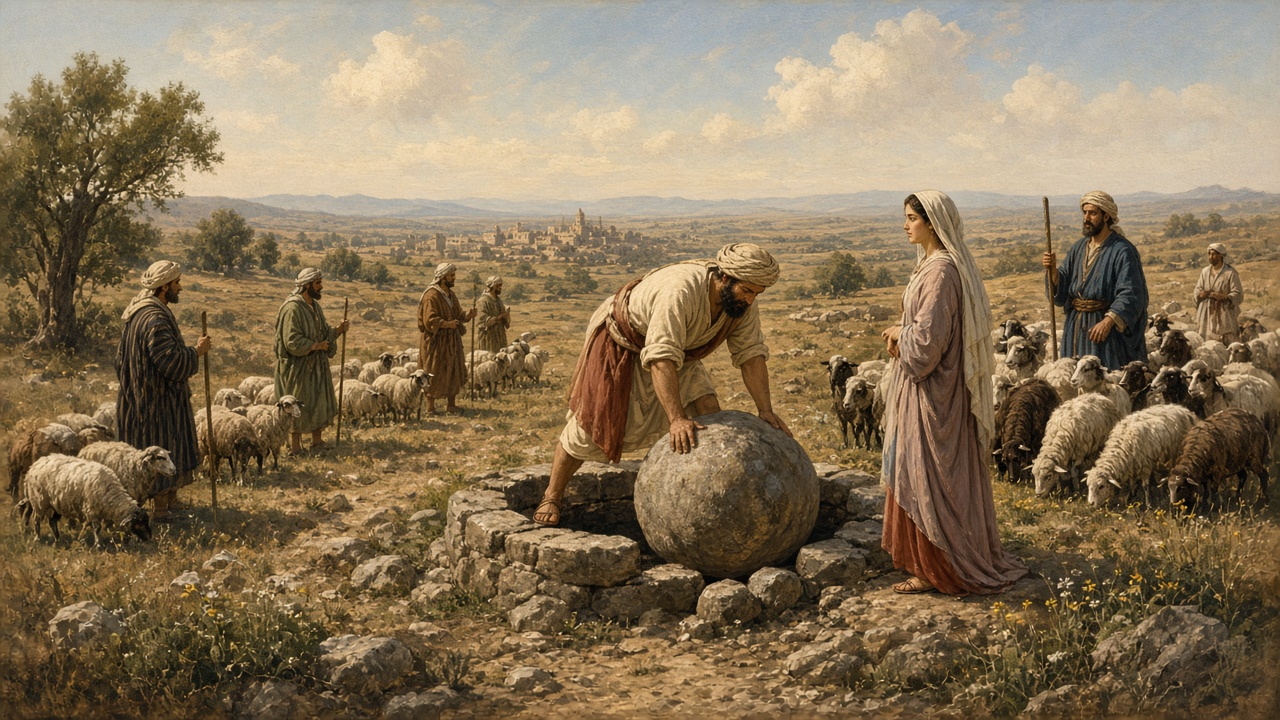
1Muri e Iakop i laho liu i bele na robo ne huriki na nirikena haro. 2Na tahuna i bele, i matai a kabuna sipsip i tolu, ri mahita tabukoi na lomu, a vuhuna a lomu iea, a naru ne ria. A lomu ni kavitagu na kedo dagi. 3Na tahuna a maka kabuna sipsip ri bele palupu ni ninu, e huriki a vora ni matakari a sipsip bara ri kule talea a kedo dagi i kavitagu a lomu ri ninu a maka sipsip, muri ri kavitagu tabua.
4E Iakop i nana e huriki a matakari na sipsip, “Turagu mai, mua a viri vai?”
Ri koli mule ri ta maea, “Mia a bakovi o Haran.”
5Lake i nana tabu, “E Leban, e tubune Nahor, mu lohoka vona o i uka?”
Ri koli mule, ri ta maea, “Mi lohoka vona.”
6Muri i nana tabu, “Pali i kamumu, o i uka?”
Ri koli mule, ri ta maea, “I kamumu kunana. Mata lakea, e Resel, e tuna a ngatavine i valai turana a kabu na sipsip vona.”
7Lakea e Iakop i ta maea, “Pali mua? A haro i tabana, pali i navai mu malaviriri hateka mu gale palupu a kabu na sipsip? Mu vakaninu, mu bole hamule ria, ri gi kani a varili.”
8Ri koli mule, ri ta maea, “I uka ma mi gi rata mavonga. A kabuna sipsip bara ri bele palupu taro, muri bara mi kule talea a kedo ni tukari a lomu vona, mi vakaninu ria.”
9E Iakop i tabana na ni ta turane huriki a matakari na sipsip, i bele e Resel turana a kabu na sipsip ne tamana, a vuhuna ia tara a matakari na sipsip. 10Na tahuna i masia e Resel, e tune hana, e Leban, i valai turana a kabuna sipsip vona, i vano i kule talea a kedo na matana lomu, i vakaninu a maka sipsip ne hana. 11Lakea e Iakop i ngurua e Resel, i vakatubu ni tangi. 12I vakalongoa e Resel ia e tune Rebeka, e kurabane tamana. Lakea e Resel i nunu lakea na tanga, i vakalongoa e tamana.
13Na tahuna e Leban i longoa a velenga ne Iakop, e tune kurabana, i bele, i laho malaviriri kunana, ge tagui ia. Lakea i rakoa, i ngurua, i tuli lakea na ruma. I tuverei ne hana na maki i bele vona. 14Lakea e Leban i takia e Iakop, “Muholi, ioe a daragu.”
E Iakop i Parangi e Lea Rua e Resel
E Iakop i made turane Leban na keva i taku, 15lakea e Leban i takia, “Ioe e tune kurabagu muholi. Pali a koi ioe go leho tavula. O taki iau, ge riva a mapana leho vomu?”
16E Leban i tahoka e tuna ngatavine ala rua. A tabua e Lea, e tarina e Resel. 17E Lea, a matana i havuhavu, pali e Resel, i labeka, i mata kamumu. 18E Iakop i ngarua e Resel, lakea i takia e Leban, “Ga leho taro vomu na pida ge polorua, muri ga parangi vona e Resel, e tumu kiroko.”
19Lakea e Leban i ta maea, “I kamumu bara o bolea, ma ge nabirei vona a viri na kabu tara. Ngane o made turagu.”
20Lakea e Iakop i leho na pida i polorua, ge bolea e Resel, pali ra pida nga, i manga a parava popote kunana, a vuhuna i ngaru hatekea e Resel.
21Muri e Iakop i takia e Leban, “O habia nau ngane e tumu, ga parangi vona. A vakalobo pali a pida o taki ga leho vona.”
22Lakea e Leban i gale palupu e huriki na tanga, i ratea a habu. 23I rodo a hini, i bolea e Lea, i habia ne Iakop, i mahita turana. 24E Leban i habia ne Lea a vorakato ngatavine, a rana e Silpa, ge a vora vona.
25Na hatelanga, i turutu vona e Lea i mahita turana. Lakea e Iakop i takia e Leban, “Ioe o rata navai iau? Iau a leho vomu ta ga parangi vona e Resel. I navai a hini o tami iau?”
26Lakea e Leban i koli mulea, “I uka ma a rabune mia koea a ngatavine i muri ge parangi languia a viri i muga. 27Pali ngane, o vakalobo taroa a parava na habu ge polorua ne marua e Lea muru parangi. Muri ga habi tabua vomu e tarina. Pali ioe bara o leho tabu na pida i polorua.”
28E Iakop i longo vona a ngava iea. Muri i lobo a parava i polorua na habu, lakea e Leban i habi tabua vona e tuna e Resel, ge girihina. 29E Bila, a vorakato ngatavine, i habi tabua ne Resel ge ia a vora vona. 30E Iakop i mahita turane Resel, a vuhuna i ngaru hatekea ne Lea. Muri i leho tabu ne Leban na pida i polorua.
E Huriki e Tune Iakop
31E BAKOVI DAGI i masia e Lea, i uka ma i ngaru hatekea e Iakop, lakea i tuhoria i tahoka a koma, pali e Resel i lame. 32E Lea i singou. Muri i podea a koma bakovi, i vunua e Reuben. Lakea i ta maea, “E BAKOVI DAGI i masia pali a nimadihi nau. Pali ngane e girihigu bara i ngaru iau.”
33Muri e Lea i singou tabu. Na tahuna i poda tabua tara koma bakovi, i ta maea, “E BAKOVI DAGI i longo e Iakop i uka ma i ngaru iau, lakea i habi tabua nau a koma bakovi.” Lakea i vunua e Simion.
34Muri e Lea i singou tabu. Na tahuna i poda a koma bakovi tabu i ta maea, “Ngane e girihigu bara i madoko nau, a vuhuna a poda vona pali a koma bakovi ala tolu.” Lakea i vunua e Levi.
35E Lea i singou tabu. Na tahuna i poda tabua tara koma bakovi, i ta maea, “Ngane bara kavurikea a rane BAKOVI DAGI.” Lakea i vunua e Iuda. Muri i lobo ni singou.
Did you know?
Jacob’s Marriages in Haran
- Jacob fled to Haran, where his uncle Laban lived, in the land of the people of the east. The city, also called the city of Nahor and identified with Harran, stood on the Belik, a tributary of the Euphrates, about seventy miles above the Belik’s junction with that river, in Upper Mesopotamia. Laban was the son of Bethuel and the grandson of Nahor, Abraham’s brother; Laban’s sister Rebekah was Isaac’s wife.Sources: Haran · Laban · Nahor (brother of Abraham) · the Bible text itself
- The well was closed by a large stone that the shepherds rolled away only after all the flocks had gathered, then put back in place. Rachel, whose name is given as “ewe,” was a shepherdess bringing her father’s sheep, and Jacob, who had himself lived as a shepherd, moved the stone and watered his uncle’s flock.Sources: Rachel · Jacob (Israel) · the Bible text itself
- Leah, the elder sister, is called “weary,” and she is described as weak-eyed, or tender-eyed; Rachel, the younger, was shapely and beautiful. Jacob served seven years for Rachel, but at the evening feast Laban gave him Leah, saying it was not the custom there to give the younger daughter in marriage before the older, and then gave him Rachel for another seven years—fourteen in all. Leah’s first sons were Reuben, whose name is given as “Behold a son,” and then Simeon, Levi, and Judah; in naming them she spoke of the LORD seeing her affliction, hearing that she was unloved, her husband becoming attached to her, and her praise of the LORD.Sources: Leah · Rachel · Reuben · the Bible text itself
Notes written with AI assistance from open sources (Theographic Bible Metadata, CC BY-SA 4.0; Easton’s Bible Dictionary, public domain) and reviewed before publishing.
Places in this chapter
- East · Today: region around Amman · 31.955, 35.934 · verse 1
- Haran · Today: Harran · 36.864, 39.033 · verse 4
Only places identified with high confidence are shown (90% or more according to the scholarly sources compiled by OpenBible). Period map: DARE (Digital Atlas of the Roman Empire), CC BY 4.0; modern map: © OpenStreetMap contributors; places: OpenBible.info (CC BY 4.0).
Credits and license for this translation
A Nitana Vure
Genesis, Exodus, Leviticus, Numbers, Deuteronomy, Joshua, Ruth, Jonah, and the New Testament in the Bola language of Papua New Guinea
Sampela hap Buk Baibel long tokples Bola long Niugini
copyright © 2011 Wycliffe Bible Translators, Inc.
Language: Bola
Translation by: Wycliffe Bible Translators
This translation is made available to you under the terms of the
Creative Commons Attribution-Noncommercial-No Derivatives license 4.0.
You may share and redistribute this Bible translation or extracts from it in any format, provided that:
You include the above copyright and source information.
You do not sell this work for a profit.
You do not change any of the words or punctuation of the Scriptures.
Pictures included with Scriptures and other documents on this site are licensed just for use with those Scriptures and documents.
For other uses, please contact the respective copyright owners.
2014-12-03
Source: http://png.bible/bnp/ · eBible.org