Genesis 14
A Nitana Vure · Tap a verse to see its cross-references.
E Abram i Koria e Lot
1Na tahuna iea, e Amrapel a hariki o Sinar re Babilon, e Ariok, a hariki o Elasar, e Kedor a hariki o Elam, e Tidal a hariki o Goim, ri vadili vapopo a tara, 2ri vaubi turana a tara ne Bera a hariki o Sodoma, e Birsa a hariki o Gomora, e Sinab a hariki o Adma, e Semeber a hariki o Seboim. A hariki o Bela re Soar, ia tara i dili turane ria. 3Re huriki a hariki nga ri vadili vapopo ri ru palupu a tara ne ria na maloku ne Sidim ra Dari Mate. 4Re huriki nga, e Kedor i matakari ria na pida i ravulu a polona i rua. Pali na tahuna ri bele na pida i ravulu a polona i tolu, ri koi na narone Kedor, lakea ri vaubi turana e huriki a tara vona. 5Na pida i ravulu a polona i va, e Kedor turana e huriki a hariki ri muri vona, ri vaubi turana a tara ne Repait iea o Asterot Karanaim. Ri ratapile a tara ne Sus iea o Ham. Ri ratapile a tara ne Em iea o Save Kiriataim. 6Ri ratapile a tara ne Hori na lolo na robo e Seir, i vano i harena o El Paran tabukoi na tabeke i ngeki. 7Ri vuru mule vonga, ri lakea mai e En-Mispat re Kades, ri rata a vabinga. Ri bole lobo a robo ne huriki a Amalek turana a robo ne huriki a Amor ra ri made o Hasason-Tamar.
8Muri a hariki i ala lima na tanga e Sodoma, e Gomora, e Adma, e Seboim, e Bela re Soar, ri puru na Maloku ne Sidim. 9Ri paha taga vonga, ri dava a tara ne Kedor a hariki o Elam, e Tidal a hariki o Goim, e Amrapel a hariki o Sinar, e Ariok a hariki o Elasar. A tara na hariki o Sodoma i lima, a tara na hariki o Elam i va. 10Ra Maloku ne Sidim i tahoka a maka lovo na kolta. Na tahuna ri ha a tara na hariki o Sodoma o Gomora, ri boru puru na lovo ranga, pali ranga ri ha sike na kupona. 11Lakea e huriki a tara ne huriki a hariki ala va ri bole lobo a maka mahala, a maki ni kani ne huriki a tara ne Sodoma e Gomora, ri vano turana. 12E Lot, e tune tarine Abram, i made o Sodoma na tahuna iea. Ia tara ni lakavu, ni bole turana a maka mahala vona.
13A bakovi i ha na vabinga, i vano i vakalongoa e Abram, ra Hibru. E Abram i made tabukoi na maka kai dagi ne Mamare. E Mamare e turana e Eskol e Aner, tou a hamone Amor, pali to taga turane Abram. 14Na tahuna e Abram i longo ni lakavu e tune tarina, i gale palupu e huriki a tara ni vaubi ala 318, na kabu vona kunana, ri vano ri matakana a hariki ala va nga, ri harena na tanga e Dan. 15Na rodo e Abram i kalipopoa a tara vona, ri valili vona e huriki a pile, ri vano ri harena o Hoba meli o Damaskus. 16E Abram i bole mulea e Lot, e tuna e tarina, turana a maka mahala vona, e huriki a ngatavine turana e huriki a viri ranga. 17E Abram i ratapilea a tara ne Kedor turana e huriki a hariki ri taga palupu, muri i hamule. A hariki o Sodoma i longoa, i vano i halala ia na Maloku e Save ra Maloku na Hariki.
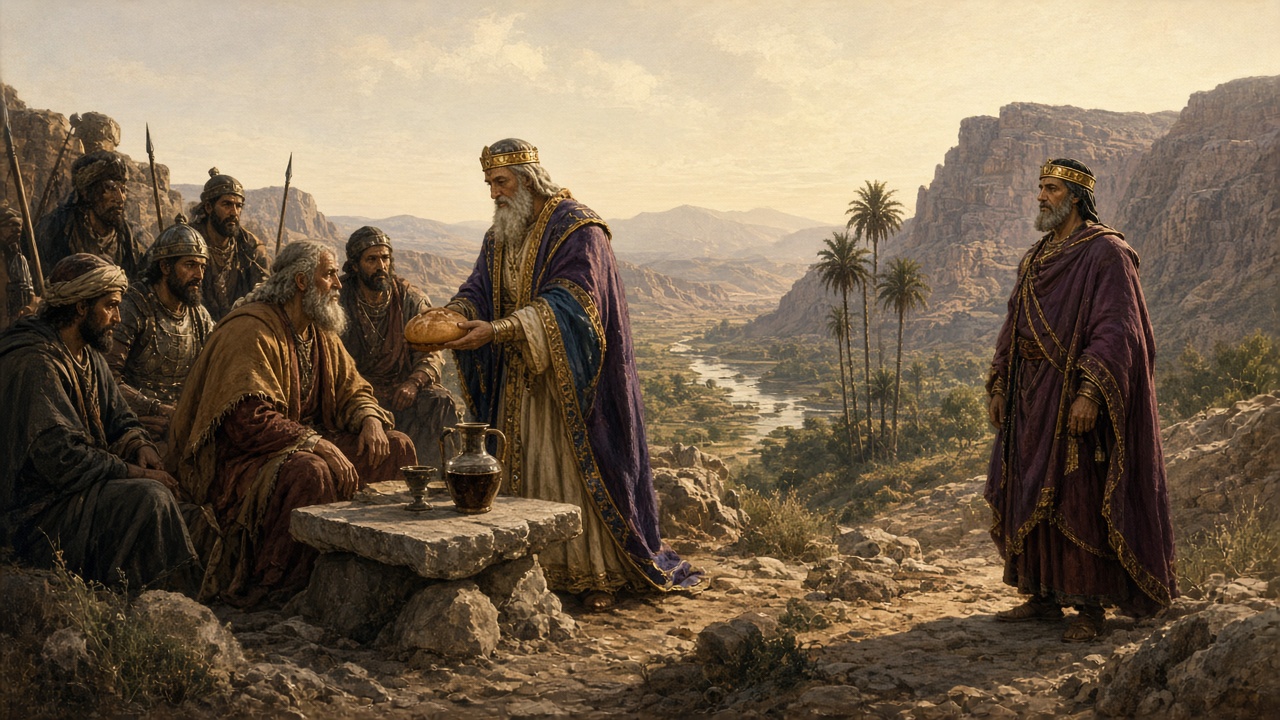
18Muri e Melkisadek, a hariki o Salem i bole valai a bret a vain. E Melkisadek ia a prister na Vure Meli Liu. 19I gamaia ngane e Abram i ta maea,
“A Vure Meli Liu
i rata rike a hunu a malala i gamai ioe.
20Ni gi kavurike a Vure Meli Liu,
i ru na limamu e huriki a pile vomu.”
Lakea e Abram, i ru na naguna i ravulu a maki lobo i bole, i habi ne Melkisadek a naguna i taku.
21A hariki o Sodoma i takia e Abram, i ta maea, “A ngaru go bole lobo a maka mahala, pali e huriki a bakovi nau kunana ri gi hamule mai iau.”
22Pali e Abram i koli mule, i ta maea, “Iau a kaba pali ne BAKOVI DAGI, a Vure Meli Liu, i rata rike a hunu a malala. Iau a rata a ngava dagi pali, 23i uka ma ga bole ranga maki vomu. A maki lili kiroko i manga a motana vahapolo ranga i uka ma ga bole, a vuhuna muri ma bara o ta maea, ‘Iau kunana a tuhoria e Abram i tahoka a mahala i kupo.’ 24Iau i uka ma ga bolea tara maki. A maki bara bole kunana ra maki ri kani pali e huriki a tara nau. Pali a turagu nga ala tolu e Aner, e Eskol, e Mamare, to go bole ne tou.”
Did you know?
The Campaign of the Four Kings
- Easton's Bible Dictionary (1897) identifies the four invading kings with names on ancient inscriptions: Chedorlaomer with Khudur-Lagamar of Elam, Amraphel with Khammu-rabi of Shinar (southern Chaldea), Arioch, king of Ellasar, with Eri-Aku of Larsa, and Tidal with Tudkhula. It explains Eri-Aku as an Elamite name meaning “servant of the moon-god,” later changed to Rimsin, and takes Goiim—“nations”—as Gutium, east of the Tigris and north of Elam.Sources: Chedorlaomer · Amraphel · Arioch (king of Ellasar) · Tidal
- The five local kings drew up for battle in the Valley of Siddim, which this chapter equates with the Salt Sea, and the valley was full of tar pits into which some of the fleeing men fell. Easton's Bible Dictionary places that valley at the south end of the Dead Sea, between Engedi and the cities of the plain, and calls the pits bitumen pits.Sources: the Bible text itself · Vale of Siddim
- Abram lived near the oaks of Mamre the Amorite, a brother of Eshcol and Aner, and the three were bound by treaty to him. Easton's Bible Dictionary calls Mamre and Eshcol Amorite chiefs and Aner a Canaanite chief, and notes that they joined Abram in pursuing Chedorlaomer and recovering Lot.Sources: the Bible text itself · Mamre · Eshcol · Aner
Notes written with AI assistance from open sources (Theographic Bible Metadata, CC BY-SA 4.0; Easton’s Bible Dictionary, public domain) and reviewed before publishing.
Places in this chapter
- Elam · 32.189, 48.258 · verses 1, 9
- Shinar · Today: Babylonia · 32.543, 44.422 · verses 1, 9
- Salt Sea · Today: Dead Sea · 31.500, 35.500 · verse 3
- Shaveh-kiriathaim · Today: within 1 km of Al Qurayyat · 31.541, 35.686 · verse 5
- Dan · Today: Tel Dan · 33.249, 35.652 · verse 14
- Damascus · 33.511, 36.306 · verse 15
- Valley of Shaveh · Today: intersection of Kidron Valley and Valley of Hinnom · 31.767, 35.236 · verse 17
- Salem · Today: Jerusalem · 31.777, 35.234 · verse 18
Only places identified with high confidence are shown (90% or more according to the scholarly sources compiled by OpenBible). Period map: DARE (Digital Atlas of the Roman Empire), CC BY 4.0; modern map: © OpenStreetMap contributors; places: OpenBible.info (CC BY 4.0).
Credits and license for this translation
A Nitana Vure
Genesis, Exodus, Leviticus, Numbers, Deuteronomy, Joshua, Ruth, Jonah, and the New Testament in the Bola language of Papua New Guinea
Sampela hap Buk Baibel long tokples Bola long Niugini
copyright © 2011 Wycliffe Bible Translators, Inc.
Language: Bola
Translation by: Wycliffe Bible Translators
This translation is made available to you under the terms of the
Creative Commons Attribution-Noncommercial-No Derivatives license 4.0.
You may share and redistribute this Bible translation or extracts from it in any format, provided that:
You include the above copyright and source information.
You do not sell this work for a profit.
You do not change any of the words or punctuation of the Scriptures.
Pictures included with Scriptures and other documents on this site are licensed just for use with those Scriptures and documents.
For other uses, please contact the respective copyright owners.
2014-12-03
Source: http://png.bible/bnp/ · eBible.org