Exodus 8
A Nitana Vure · Tap a verse to see its cross-references.
A Ruana Vuranga
A Maka Bura
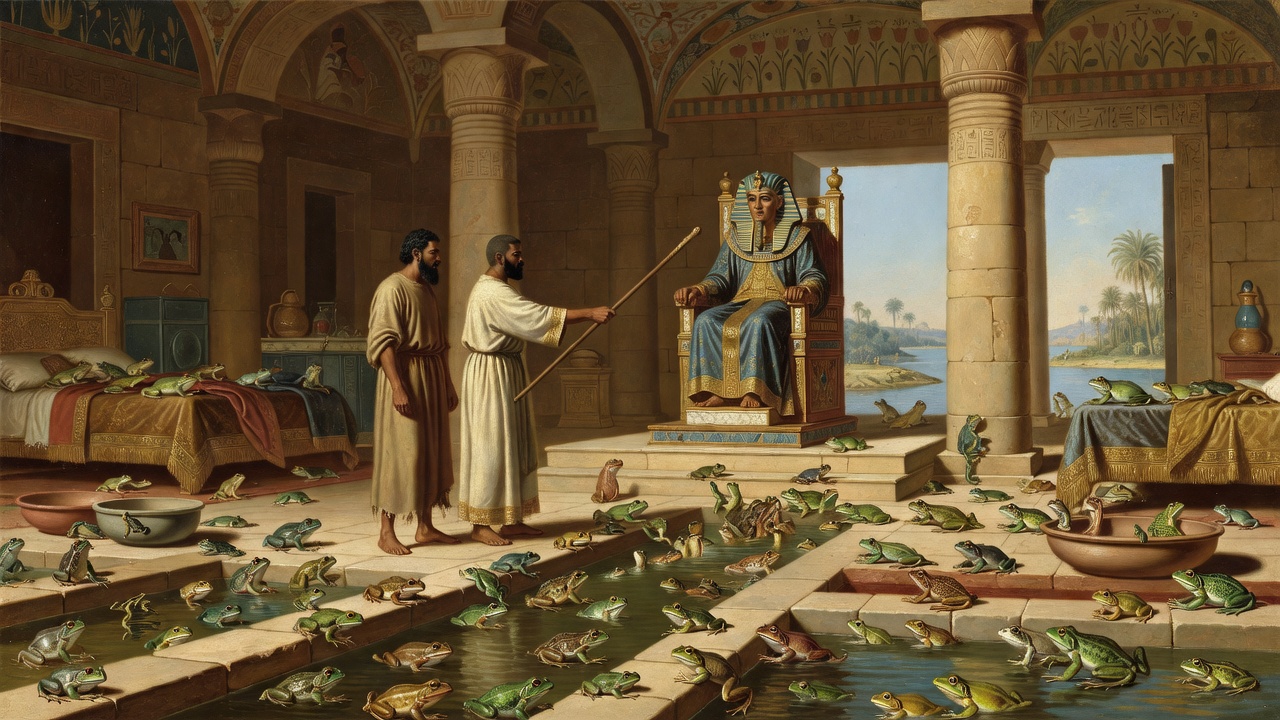
1Muri e BAKOVI DAGI i takia e Moses ge lakea ne Parao ge takia, “E BAKOVI DAGI i ta maea, ‘O longo vona e huriki a viri nau ri gi valai, ri gi vasileki nau. 2Ioe i uka ma go longo ne ria ri gi valai, bara rudu a maka bura ri gi ratapilea a malala vomu. 3A maka bura bara ri bele, ri vakavonua e Nail. Muri bara ri pe a naru, ri dili na ruma-hariki vomu, ri dili na tabeke ni mahita na kiri vomu, na ruma ne huriki a bolekori vomu, na ruma ne huriki a viri vomu. Bara ri dili na murina kanono, na murina hini ni rata bret. 4Bara ri page rike vomu, ri page rike ne huriki a viri vomu, a bolekori vomu.’”
5Muri e BAKOVI DAGI i takia e Moses, “O takia e Aron ge toto langa a kodo vona na maka naru dagi, na naru kiroko, na naru na golu, na lomu, na darilomu. Ge rata a maka bura ri gi bele kupo hateka na robo e Egipto.”
6Lakea e Aron i toto langa na maka naru ne Egipto a limana. Muri a maka bura ri bele ri vakavonua a robo. 7E huriki a bakovi na malulu, ria ranga ri rata mavonga. Ri rata a maka bura ri pe a naru ri rike na malala ne Egipto.
8Lakea e Parao i gale valai vona e Moses e Aron i taki rua, “Muru vasileki ne BAKOVI DAGI ge lili vuroki a maka bura na tabeke ne mia, muri bara longo vona e huriki a viri ne mua ri gi vano, ri gi habi a nihabi ne BAKOVI DAGI.”
9Lakea e Moses i koli, i ta maea, “O vulakia tara parava ga vasileki, ga tuhori ioe turana e huriki a bolekori vomu, e huriki a viri vomu. Muri a maka bura bara ri pe a ruma ne mua, ri hamule puru ne Nail.”
10Lakea e Parao i ta maea, “O vasileki kuduvi.”
E Moses i koli, i ta maea, “Ga rata manga a hini o taki, bara o lohoka vona i uka tara viri ge manga e BAKOVI DAGI, a Vure ne mia. 11A maka bura bara ri pe a ruma vomu, ri pe e huriki a bolekori vomu, a viri vomu, ri hamule puru na naru dagi.”
12Muri e Moses e Aron ru pea e Parao ru vano. Lakea e Moses i vasileki ne BAKOVI DAGI ge lili vuroki a maka bura. 13E BAKOVI DAGI i longo vona a nivasileki ne Moses, lakea a maka bura ri tabuli na ruma, na poridala, na hania ri mate. 14E huriki ri poi a maka bura ri ru kadolu, a robo i mavuru. 15Na tahuna e Parao i matai a maka bura ri mate lobo, i gigitora, i uka ma i longo mai e Moses e Aron, i manga a ngava e BAKOVI DAGI i taki.
A Toluna Vuranga
A Maka Namo
16Muri e BAKOVI DAGI i takia e Moses, “O takia e Aron ge toto talea a kodo vona ge lagu a habulo na malala, ge mapulo ge ria a namo, ri gi bebe viliha na robo e Egipto. 17Lakea ru rata mavonga. E Aron i toto tala a kodo, i lagu a habulo na malala. A habulo lobo na robo e Egipto, ri mapulo ri manga a namo, ri kani e huriki a bakovi, a maka livoa. 18Pali e huriki a bakovi na malulu ri toni ni vakabele a namo, ri keri. A maka namo ri ratapile e huriki a bakovi, a maka livoa. 19Lakea e huriki a bakovi na malulu ri takia e Parao, “A Vure kunana i ratea a maki iea.” Pali e Parao i gigitora, i uka ma i longo mai a nitane Moses e Aron, i manga a ngava e BAKOVI DAGI i taki.
A Vana Vuranga
A Maka Lango
20E BAKOVI DAGI i takia e Moses, “Na hatelanga pokopoko e Parao bara i puru na naru dagi. O vano o taguia, o takia, ‘E BAKOVI DAGI i ta maea: O longo vona e huriki a viri nau ri gi vano ri gi kavurike iau. 21Ioe i uka ma o longo ne ria, bara rudu a maka lango, ri lakene vomu, ne huriki a bolekori vomu, ne huriki a viri vomu. A ruma ne huriki a Egipto bara i vonu vona a lango. A hini i pesi vona a ruma ranga, bara i voi vona a lango.
22“‘Na tahuna a maka lango ri gi bele, ga matakaria a malala e Gosen, ra tabeke i made vona e huriki a viri nau. A maka lango i uka ma ge vonu vonga, bara o lohoka vona, iau e BAKOVI DAGI na malala iea. 23Iau i uka ma ga ratea na viri nau a naro iea, ge manga a naro a ratea na viri vomu. Ra nivakasiri iea ge bele kuduvi.’” 24Lakea e BAKOVI DAGI i rata a maka lango ri dili na ruma-hariki vona, na ruma ne huriki a bolekori, a viri vona, ri ratapilea e Egipto.
25Muri e Parao i gale e Moses e Aron i taki rua, “Mu vano mu habi a nihabi na Vure ne mua. Mu rata kunana koea na malala iea.”
26Pali e Moses i koli, i ta maea, “Bara mi rata mavonga, i uka ma ge kamumu. A maka nihabi mi gi habi ne BAKOVI DAGI a Vure ne mia, i uka ma ge mata kamumu na matane huriki a Egipto. Bara mi rata mavonga, bara ri tahate ne mia, ri padi mia na kedo. 27Mi gi laho na parava ge tolu na tabeke i ngeki, mi gi habi a nihabi ne BAKOVI DAGI a Vure ne mia, i manga a hini i taki mia vona.”
28Lakea e Parao i ta maea, “Ngane a longo ne mua mu gu vano, mu gu habi a nihabi ne BAKOVI DAGI a Vure ne mua na tabeke i ngeki. Pali naha ni laho basi hateka. Ngane mu vasileki ge tuhori iau.”
29Lakea e Moses i takia, “Muri ga pe ioe, ga vasileki ne BAKOVI DAGI ge lili vuroki a maka lango. Kuduvi a maka lango bara ri ha tala na ruma-hariki vomu, na ruma ne huriki a bolekori vomu, na ruma ne huriki a viri vomu. Pali naha ni tami mia tabu, go hatekakari mia, nahea mi gi vano mi gi habi a nihabi ne BAKOVI DAGI.”
30E Moses i pea e Parao i vano i vasileki ne BAKOVI DAGI. 31Lakea e BAKOVI DAGI i rata a maki e Moses i nana vona. I lili vuroki a maka lango ne Parao, ne huriki a bolekori, ne huriki a viri vona, i uka ma ni matai tabu ranga lango. 32Pali e Parao i tababana ni gigitora, i marikoi ne huriki a Israel ri gi vano.
Did you know?
Three Plagues on Egypt
- The frogs of this chapter swarm up from the Nile, a name the Old Testament does not use. Easton's Bible Dictionary says the river appears as Sihor, “the black stream,” or simply “the river,” and that the White Nile and the Blue Nile unite at Khartoum, then run 1,800 miles and enter the Mediterranean through two branches. Aaron stretches his staff over the rivers, canals, and ponds, and the frogs cover the land of Egypt.Sources: Nile · the Bible text itself
- When flies fill the houses of the Egyptians and ruin the land, the chapter says none will be found in Goshen, where the Israelites live, as a distinction between the two peoples. Easton's Bible Dictionary describes Goshen as a district east of the Nile, apparently not far from the royal residence, also called the land of Rameses because Pithom and Rameses lay within its borders, and it also links the district with Zoan, or Tanis. The same entry calls it “the best of the land.”Sources: Goshen · the Bible text itself
- Moses and Aaron speak with Pharaoh in person. Easton's Bible Dictionary (1897) places the Pharaoh of the Exodus at Zoan, the setting of his interviews with them recorded in Exodus, but leaves his identity an open question between Menephtah, called there the fourteenth and eldest surviving son of Rameses II, and Seti II, adding that some think the evidence favors Seti II.Sources: Pharaoh (of the Exodus) · the Bible text itself
Notes written with AI assistance from open sources (Theographic Bible Metadata, CC BY-SA 4.0; Easton’s Bible Dictionary, public domain) and reviewed before publishing.
Places in this chapter
- Nile · Today: Nile River · 31.465, 30.367 · verses 3, 9, 11
- Egypt · 30.129, 31.308 · verses 5, 6, 7, 16, 17, 21, 24
- Goshen · Today: Goshen 1 · 30.799, 31.834 · verse 22
Only places identified with high confidence are shown (90% or more according to the scholarly sources compiled by OpenBible). Period map: DARE (Digital Atlas of the Roman Empire), CC BY 4.0; modern map: © OpenStreetMap contributors; places: OpenBible.info (CC BY 4.0).
Credits and license for this translation
A Nitana Vure
Genesis, Exodus, Leviticus, Numbers, Deuteronomy, Joshua, Ruth, Jonah, and the New Testament in the Bola language of Papua New Guinea
Sampela hap Buk Baibel long tokples Bola long Niugini
copyright © 2011 Wycliffe Bible Translators, Inc.
Language: Bola
Translation by: Wycliffe Bible Translators
This translation is made available to you under the terms of the
Creative Commons Attribution-Noncommercial-No Derivatives license 4.0.
You may share and redistribute this Bible translation or extracts from it in any format, provided that:
You include the above copyright and source information.
You do not sell this work for a profit.
You do not change any of the words or punctuation of the Scriptures.
Pictures included with Scriptures and other documents on this site are licensed just for use with those Scriptures and documents.
For other uses, please contact the respective copyright owners.
2014-12-03
Source: http://png.bible/bnp/ · eBible.org